Let's be frank: the settlement offer from your insurance company for your damaged or totaled motorhome is probably a lot lower than what you were expecting. It’s not personal—it’s just business. Insurance companies lean on automated software designed to minimize what they pay out, not to calculate the true, real-world value of your RV.
Why Your Insurance Offer Is Lower Than You Expect
After an accident, getting a lowball settlement offer for your beloved motorhome can feel like a punch to the gut. You’ve paid your premiums on time, year after year, yet the figure they give you seems to completely disregard what makes your RV unique. The hard truth is their standard valuation process was built for mass-produced cars, not for complex investments like a motorhome.
Insurance adjusters typically turn to valuation software like CCC ONE or Mitchell. While these platforms are great for standard cars and trucks, they fall flat when trying to price an RV. They rely on generic data from a national pool, creating an "apples-to-oranges" comparison that almost always works against you.
Where Insurers Miss the Mark
This automated-first approach consistently overlooks the very things that give a motorhome its actual worth. A certified appraiser, on the other hand, digs deep into the details.
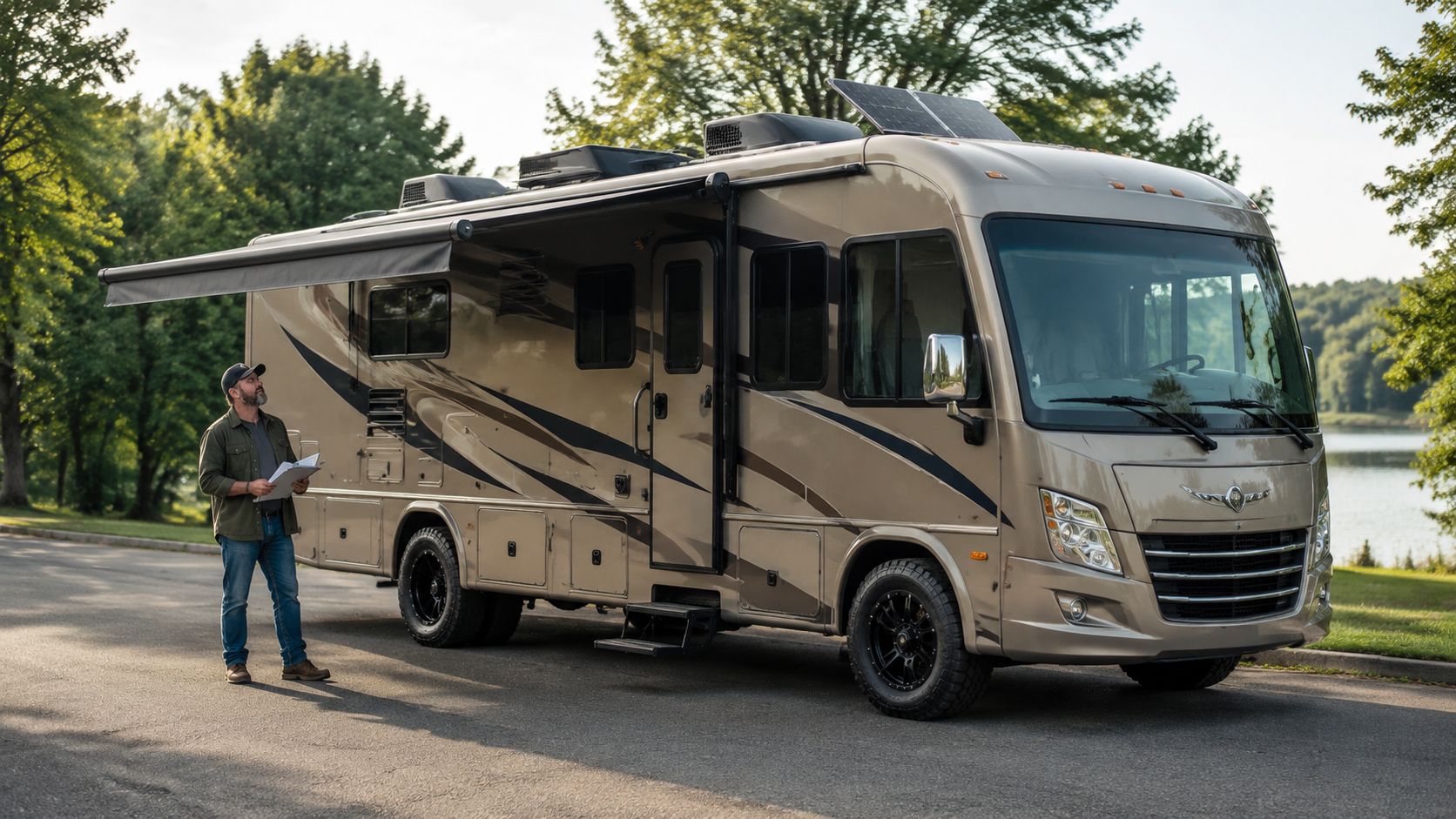
- Custom Upgrades and Add-Ons: That solar panel system you installed? The upgraded suspension, custom cabinetry, or high-end entertainment center? An insurer’s software often ignores these entirely. A professional appraiser documents and assigns real value to every single one.
- Exceptional Maintenance: Have you kept every service record and maintained your motorhome in showroom condition? Standard valuations offer no credit for that kind of diligence. An appraisal uses those records as concrete proof of higher value.
- Regional Market Conditions: The demand for motorhomes in Oregon and Washington is very different from the market in Florida or Arizona. Insurance software often relies on national averages, failing to account for the strong local demand in the Pacific Northwest that drives prices up.
Your Most Effective Counter-Offer
You need to think of the insurance company’s valuation as their opening bid in a negotiation. It's just a starting point, not the final word. But to counter it effectively, you need more than a gut feeling that it’s too low—you need cold, hard evidence.
An independent appraisal is your single most powerful tool for leveling the playing field. It replaces the insurer's low, automated number with a detailed, evidence-backed report that reflects your motorhome's true pre-accident market value.
This professional document gives you a solid foundation for negotiating a fair settlement, whether you're dealing with a total loss or a diminished value claim. To really see how a motorhome appraisal service establishes this real-world price, you can learn more about the vehicle market valuation process and how it protects consumers. It’s the essential next step toward getting the compensation you're truly owed.
Total Loss and Diminished Value Explained for RV Owners
If you've been in an accident with your motorhome, you're about to become very familiar with two terms from your insurance company: Diminished Value and Total Loss. Understanding what these really mean—from their perspective, not yours—is your first and most important line of defense against a lowball settlement. These aren't just vocabulary words; they're concepts that can cost you tens of thousands of dollars.
Think of Diminished Value as the permanent financial stain on your motorhome's record. Even with flawless repairs that make it look brand new, it now has an accident history. When you eventually go to sell, any savvy buyer who pulls a vehicle history report will use that accident to negotiate a lower price. They'll always choose an identical, accident-free rig over yours if the price is the same.
That difference in what someone will pay is called inherent diminished value. It's not about the quality of the repair work; it's about the stigma of the crash itself. A professional motorhome appraisal service is specifically designed to calculate this loss in market value, giving you the documentation you need to claim it from the at-fault party's insurance.
What Makes a Motorhome a Total Loss
The term "Total Loss" can be even more misleading. Most people picture a smoldering wreck that’s beyond repair, but that’s not what it means to an insurer. For them, it’s a simple business calculation.
Your RV is declared a total loss when the estimated cost of repairs, plus what they could get for it as salvage, gets too close to its Actual Cash Value (ACV) before the accident. Every state has a rule for this, called a total loss threshold. It’s often around 75-80%. So, if fixing your $50,000 motorhome will cost $40,000, the insurance company will almost certainly just write it off.
Here’s the catch: the entire decision hinges on that ACV number. And how they get that number is the real problem.
The Flaw in Standard Insurance Valuations
Insurance companies use software like CCC ONE to come up with your motorhome's pre-accident value. It’s fast and cheap for them, but it’s a terrible system for you. This software was never built to find the true value of a unique vehicle like a motorhome; it's built to find a number that's just high enough to be legally defensible.
These automated systems are not designed to find the true market value; they are designed to find the lowest justifiable value. They systematically ignore the very factors that make your motorhome worth more.
Their generic databases simply can’t account for the things that actually create value in an RV. Here’s what their software almost always misses:
- Unique Upgrades: That $10,000 custom solar and lithium battery system you installed? The upgraded suspension, the satellite dish, the high-end mattress? To their software, it might as well not exist.
- Meticulous Condition: There's no checkbox for an owner who waxed the roof twice a year and kept it in climate-controlled storage. A pristine, "babied" motorhome gets valued the same as one that was used hard and shows its age.
- Desirable Floor Plans: Some layouts and models are legendary. They command a huge premium on the used market, but the software is completely blind to these real-world demand factors.
Because this process is fundamentally flawed, the ACV they offer you is often thousands—or even tens of thousands—below what you would actually need to buy a comparable replacement. A certified motorhome appraisal is your counter-move. It builds a case for your RV's true worth based on hard evidence, not a generic algorithm, giving you the leverage to fight for a fair settlement.
Using the Appraisal Clause in Your Insurance Policy
When your insurance company comes back with a shockingly low total loss offer for your motorhome, it’s easy to feel powerless. You might think they hold all the cards, but you have a powerful tool tucked away in the fine print of your policy: the Appraisal Clause.
This clause is your contractual right to formally dispute the insurer's valuation. Think of it as your official way to say, "I don't agree, and I demand a fair reassessment." Invoking it forces the conversation away from their automated software and toward a process based on real-world evidence and expert analysis. It’s your legal right to hire an independent, certified appraiser and get a true valuation for your motorhome.
How the Appraisal Clause Works
The process is surprisingly straightforward, but you have to be the one to set it in motion. It starts with formally notifying your insurance company, typically in writing, that you are invoking the Appraisal Clause in your policy. From there, you hire your appraiser, and the insurance company hires theirs.
A typical Appraisal Clause reads something like this: "If we and you do not agree on the amount of loss, either may demand an appraisal of the loss. In this event, each party will select a competent and impartial appraiser. The two appraisers will select an umpire. The appraisers will state separately the actual cash value and the amount of loss. If they fail to agree, they will submit their differences to the umpire. A decision agreed to by any two will be binding."
This means your expert and their appraiser will each build a case for the motorhome's value. More often than not, a detailed, evidence-backed report from a certified professional is enough to get the insurer to agree to a much fairer settlement.
The infographic below shows exactly why this becomes necessary. It breaks down how an initial insurance offer can be far too low, making the Appraisal Clause your most important next step.
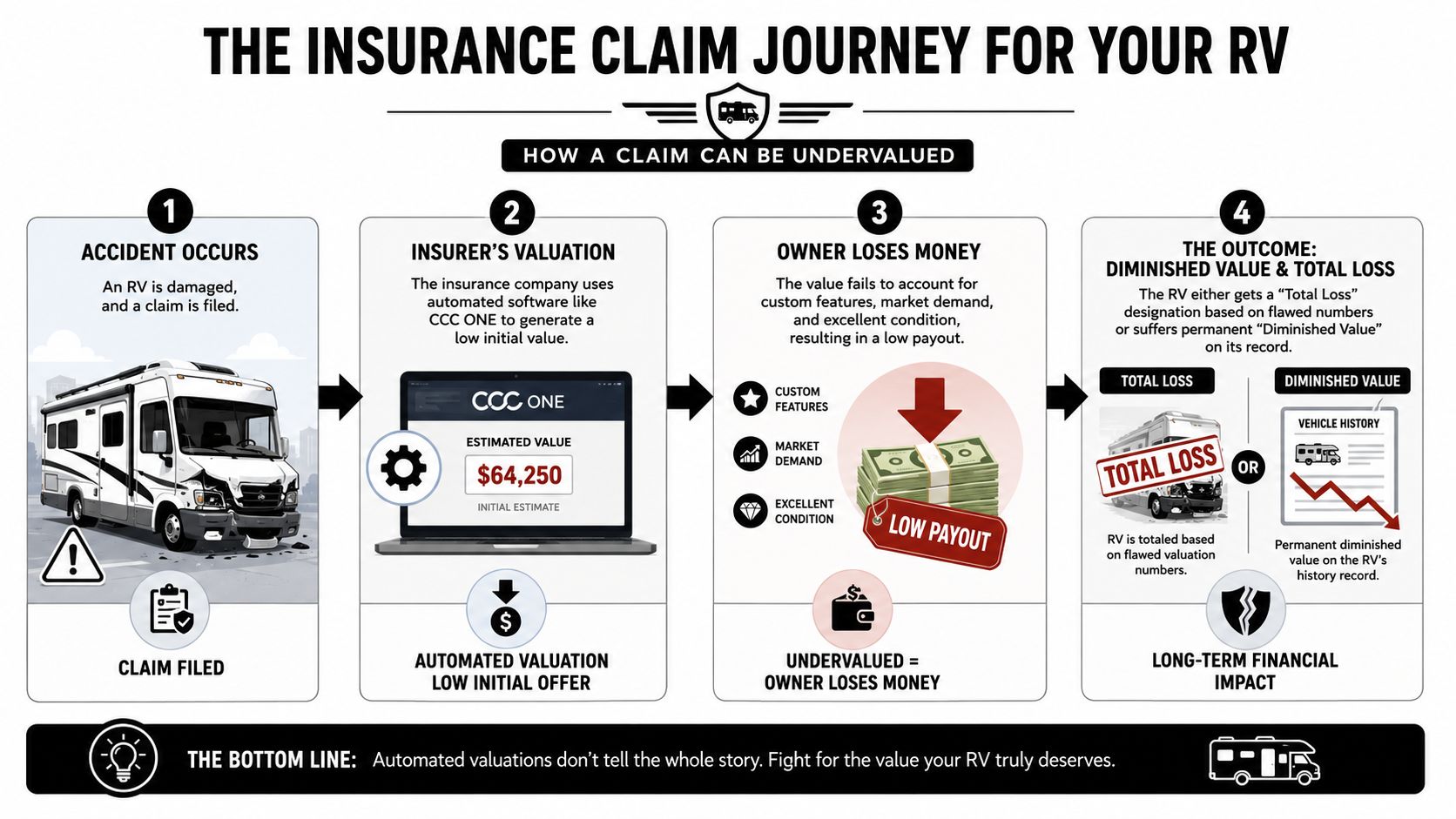
As you can see, those automated valuation systems often miss the very details that give your motorhome its true value. A professional motorhome appraisal service is essential to correct their oversight and fight for the money you're owed.
The Role of the Umpire
So, what happens if the two appraisers—yours and the insurance company's—just can't agree on a value? That’s where the umpire steps in to break the deadlock.
- Selection: Both appraisers agree on a neutral, third-party umpire. This person must also be an impartial and competent expert in vehicle valuation.
- Review: The umpire examines the reports and evidence from both sides, including all supporting market data and documentation.
- Decision: The umpire then makes a final determination of value. A settlement amount agreed upon by any two of the three parties (your appraiser, the insurer's appraiser, or the umpire) becomes the final, binding amount.
This three-person panel structure is designed to prevent a single biased or lowball estimate from winning the day. It’s a powerful consumer protection mechanism built right into your policy.
To see a complete walkthrough of this process, you can get more details in our guide to the insurance appraisal process. It’s a must-read for any RV owner facing a total loss claim.
What to Expect from a Professional Motorhome Appraisal
Hiring a professional for motorhome appraisal services is a world away from getting a quick, back-of-the-napkin estimate from a dealership. Think of it as a forensic investigation into your RV's real market value. A certified appraisal report takes your claim from a simple he-said, she-said disagreement into a negotiation grounded in hard facts.
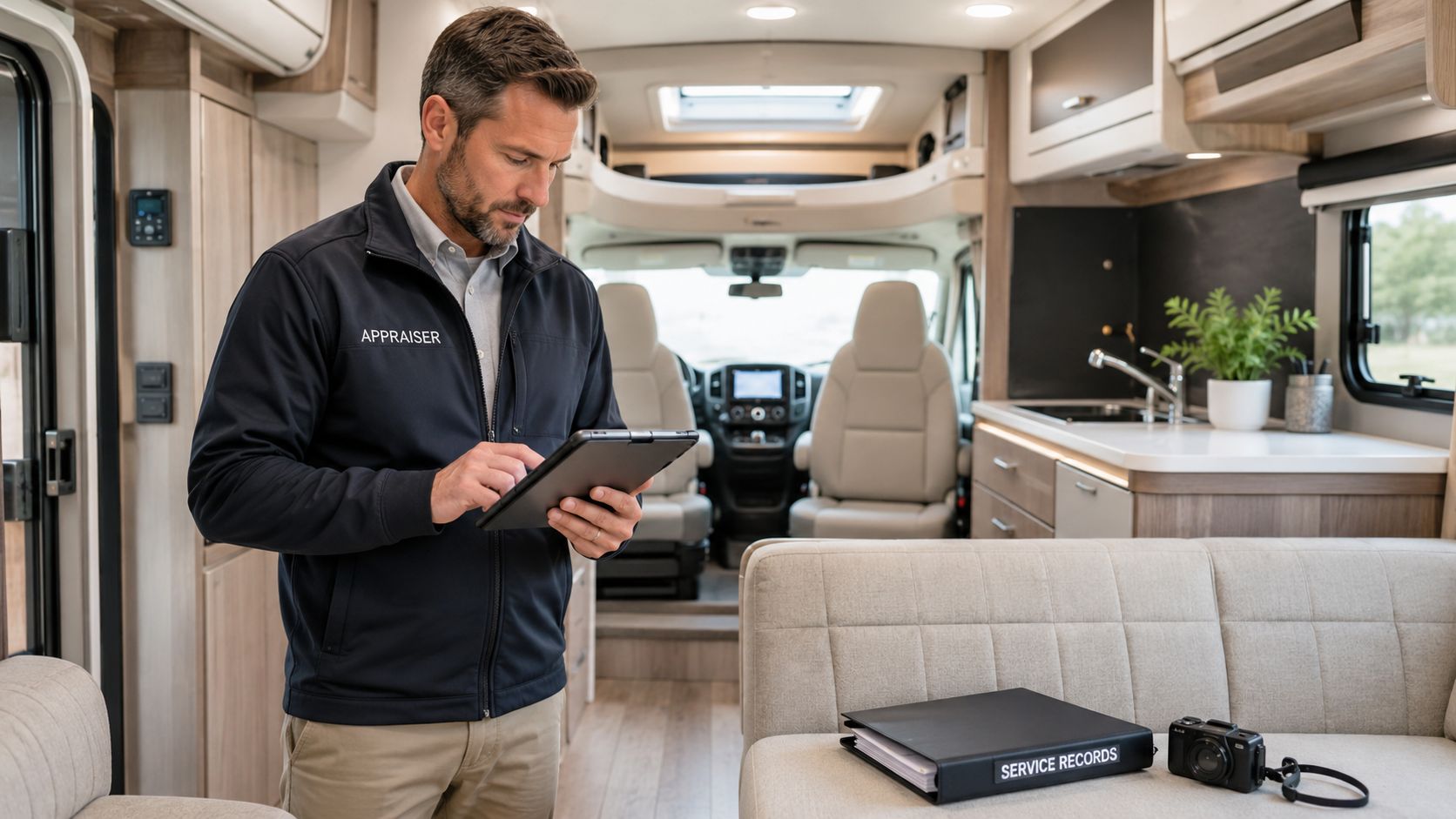
This isn't just a walk-around. It’s a methodical process where every last detail is uncovered and documented to build a final, defensible value. Let’s pull back the curtain on the process so you can see exactly why an independent appraisal carries so much more weight than an insurance company's automated number.
The Initial Consultation and Documentation Gathering
Everything starts with a detailed consultation. This isn't just a formality; it's where the foundation for your entire case is laid. In this stage, you're the number one expert on your motorhome, and your job is to arm the appraiser with the proof they need to build a rock-solid argument.
Your appraiser will ask for some key paperwork that establishes your RV’s value far beyond its basic make and model. Get ready to dig up:
- Repair Estimates: The complete, itemized estimate from the body shop is a must.
- Service Records: This proves you've taken exceptional care of your rig, which directly impacts its condition and value.
- Upgrade Invoices: Did you add solar panels, a suspension upgrade, or custom cabinetry? The receipts are your proof.
- Original Bill of Sale: This helps establish the coach’s value right off the lot, including any dealer-installed options.
Think of yourself as a historian for your RV. Every piece of paper you find is a piece of evidence that shows your motorhome wasn't just another unit on the road—it was special. The more you provide, the stronger the final report will be.
The Comprehensive Inspection
With your documentation in hand, the appraiser then performs a comprehensive physical or virtual inspection. The goal here is simple: to document the motorhome's exact condition, unique features, and overall quality. This is where a seasoned appraiser truly earns their fee, because they know precisely what adds value and what to look for.
An insurance adjuster might spend a few minutes glancing things over. A certified appraiser, on the other hand, will meticulously document everything from the condition of the roof sealant to the specific brand of the appliances, connecting each feature to its contribution to the RV’s market value.
This is the step that catches all the critical details that automated valuation tools completely miss. The appraiser will take dozens of high-resolution photos, confirm every custom upgrade is present and functional, and assess the coach's condition far beyond a vague "good" or "fair" rating.
The Deep-Dive Market Analysis
Here's where the real magic happens. This is easily the most critical and time-consuming part of the job. Your appraiser takes all the data from the inspection and dives deep into the current market, hunting for legitimate comparable sales—or "comps."
A true comp isn't just any similar RV for sale. It’s a motorhome of the same or a nearly identical make, model, and year that has actually sold recently. The appraiser then meticulously analyzes these comps, adjusting the value up or down for any differences in mileage, condition, options, and even geographic location. This market research ensures the final value isn't a guess; it's a figure backed by real-world transactions. For more on how market dynamics and industry guides affect this process, a good primer is understanding used RV prices in Utah.
The final report lays all of this evidence out in a clear, logical format, creating an undeniable case for your motorhome’s true worth.
How to Choose the Right Appraiser in Oregon and Washington
Honestly, choosing the right person to appraise your motorhome is probably the most critical decision you'll make in this whole process. A good appraiser isn't just some vendor you hire; they become your number one advocate, the expert in your corner fighting for a fair settlement.
Especially here in the Pacific Northwest, where the RV market has its own unique quirks, you absolutely need someone with local knowledge and the right credentials. Finding the right partner for motorhome appraisal services goes way beyond picking someone with a slick website. You need an expert who can assemble a rock-solid, fact-based case for your motorhome's true value.
This guide will help you spot the difference between a real pro and someone just looking for a quick payday.
Essential Qualifications for a PNW Appraiser
Your appraiser needs a very specific skill set to be effective, particularly when dealing with the Oregon and Washington markets. They should be ready and able to prove their expertise and must work completely independently of any insurance company.
Here’s what you should be looking for—no exceptions.
- Verifiable RV-Specific Experience: This is a big one. Don't let a standard car appraiser handle your motorhome. They're different worlds. Ask to see examples of past RV appraisals they've done. They have to know the value difference between a Class A diesel pusher and a Class C with a Ford chassis.
- Industry Certifications: Look for credentials from respected organizations like the International Automotive Appraisers Association (IAAA) or I-CAR. These aren't just fancy letters; they show a commitment to professional standards and that the appraiser stays current.
- Deep Local Market Knowledge: A motorhome's value can swing wildly depending on local demand. A qualified appraiser for Oregon and Washington will be pulling comparable sales from our region, not relying on generic national data that just doesn't reflect the robust PNW RV market.
- A Flat-Fee Structure: A professional works for a single, upfront flat fee. Period. This structure guarantees their only motivation is to determine the most accurate, defensible value for your rig, with no conflicts of interest.

Red Flags to Watch Out For
Knowing what to look for is half the battle. The other half is knowing what to run away from. Certain business practices are immediate red flags that tell you an appraiser isn't professional, ethical, or likely to be effective. If you see any of these, just walk away.
The biggest red flag is an appraiser who wants to work on a contingency or percentage-based fee, where their payment is a cut of the settlement increase. This is widely considered unethical because it incentivizes them to create an inflated, indefensible value instead of a fair and accurate one.
Here are a few other critical warning signs to be wary of:
- Guaranteed Outcomes: No ethical appraiser can promise you a specific dollar amount. Their job is to find the real, evidence-backed value, not to pull a number out of thin air.
- Lack of Professional Credentials: If they're cagey about showing you certifications or proof of specialized training, it’s because they probably don't have them. Their report will never hold up under the insurance company’s scrutiny.
- High-Pressure Sales Tactics: A real professional will give you the space and time to review their agreement and will answer every question you have. Anyone rushing you to sign is a major red flag.
For anyone in this area, finding the right local expert is the key to making sure your investment in an appraisal actually pays off. It's why understanding the specific qualifications of a Pacific Northwest auto appraiser is so important.
Got Questions About Motorhome Appraisals? You’re Not Alone.
When you're thinking about getting a professional motorhome appraisal, you're bound to have some questions. In fact, most owners facing a lowball insurance offer are wondering the exact same things. Getting straight answers is the first step to feeling confident about challenging the insurance company’s numbers.
Let's walk through the most common questions we hear from motorhome owners, tackling the big concerns about cost, timing, and what you're actually allowed to do.
How Much Should a Motorhome Appraisal Cost?
Here’s the first and most important rule: a legitimate motorhome appraisal is always a flat-fee service. This is non-negotiable. It keeps the appraiser objective—their only job is to find the true, defensible market value of your rig, not to earn a commission.
So, what should you expect to pay? Costs typically run from a few hundred to over a thousand dollars. The final price tag really depends on the specifics of your situation:
- Type of Claim: A Diminished Value case, which calculates lost resale value, is usually more complex (and thus costs more) than a straightforward Total Loss valuation.
- Your RV: A high-end diesel pusher loaded with custom upgrades is going to require a lot more research than a stock, factory-standard Class C.
- Timeline: If you need it done yesterday, rush services will likely add to the fee.
Yes, it's an upfront cost. But a well-researched, professional appraisal almost always pays for itself, often increasing a final settlement by thousands—sometimes tens of thousands—of dollars. It gives you the ammunition to force the insurer to negotiate on facts, not just the number their software spit out. Always get a clear, flat-fee quote before you sign anything.
How Long Does the Appraisal Process Take?
While you need to be patient, a good appraiser knows that time is of the essence. The whole process really breaks down into two distinct phases.
First, there's the appraiser's work. Once they have all your documentation—things like service records, receipts for upgrades, and the insurer's repair estimate—they can get started. This initial stage, which covers the inspection, a deep dive into market data, and writing the report, usually takes about 7 to 14 business days.
The second phase kicks off once that report lands on the insurance adjuster's desk. This is the negotiation period. It can easily add several more weeks as your appraiser fields questions, defends their valuation, and pushes back against the adjuster. A true professional will manage this entire timeline for you, giving you regular updates and handling all the back-and-forth so the process doesn't stall.
Can I Dispute the Value if I Caused the Accident?
That’s a great question, and the answer gets to the heart of a crucial distinction between two different types of claims: Diminished Value and Total Loss.
Diminished Value is the drop in your motorhome's resale value after it's been in an accident and repaired. This type of claim is almost always made against the at-fault driver's insurance. So, if you were the one at fault, you generally can't file a diminished value claim.
However, when it comes to a Total Loss claim, fault is completely off the table. Your right to dispute the settlement offer is built into your own policy. The Appraisal Clause is a powerful tool that gives you the contractual right to challenge your insurer’s valuation and ensure you get paid the correct pre-accident market value for your motorhome, no matter who was responsible for the collision.
What if My Adjuster Rejects Outside Appraisals?
Don't be surprised if this happens. It's a common intimidation tactic adjusters use to make you give up. You might hear things like, "We have our own process," or "Our valuation is final and we don't accept outside reports." Frankly, that's just not true.
Your insurance policy is a legal contract. If it includes an Appraisal Clause, your provider is legally required to participate in the process. The best way to handle this is to notify them in writing—a simple email works perfectly—that you are formally invoking your right to an appraisal as outlined in your policy. Any experienced appraiser has seen this move a hundred times and knows exactly how to step in, take over communications, and enforce your rights to get the ball rolling.
If you're staring at a lowball settlement offer for your motorhome, you don't have to take it. At Total Loss Northwest, we build certified, evidence-based appraisals that compel insurance companies to pay what you are rightfully owed. Visit us at https://totallossnw.com to see how we can help you fight for a fair outcome.