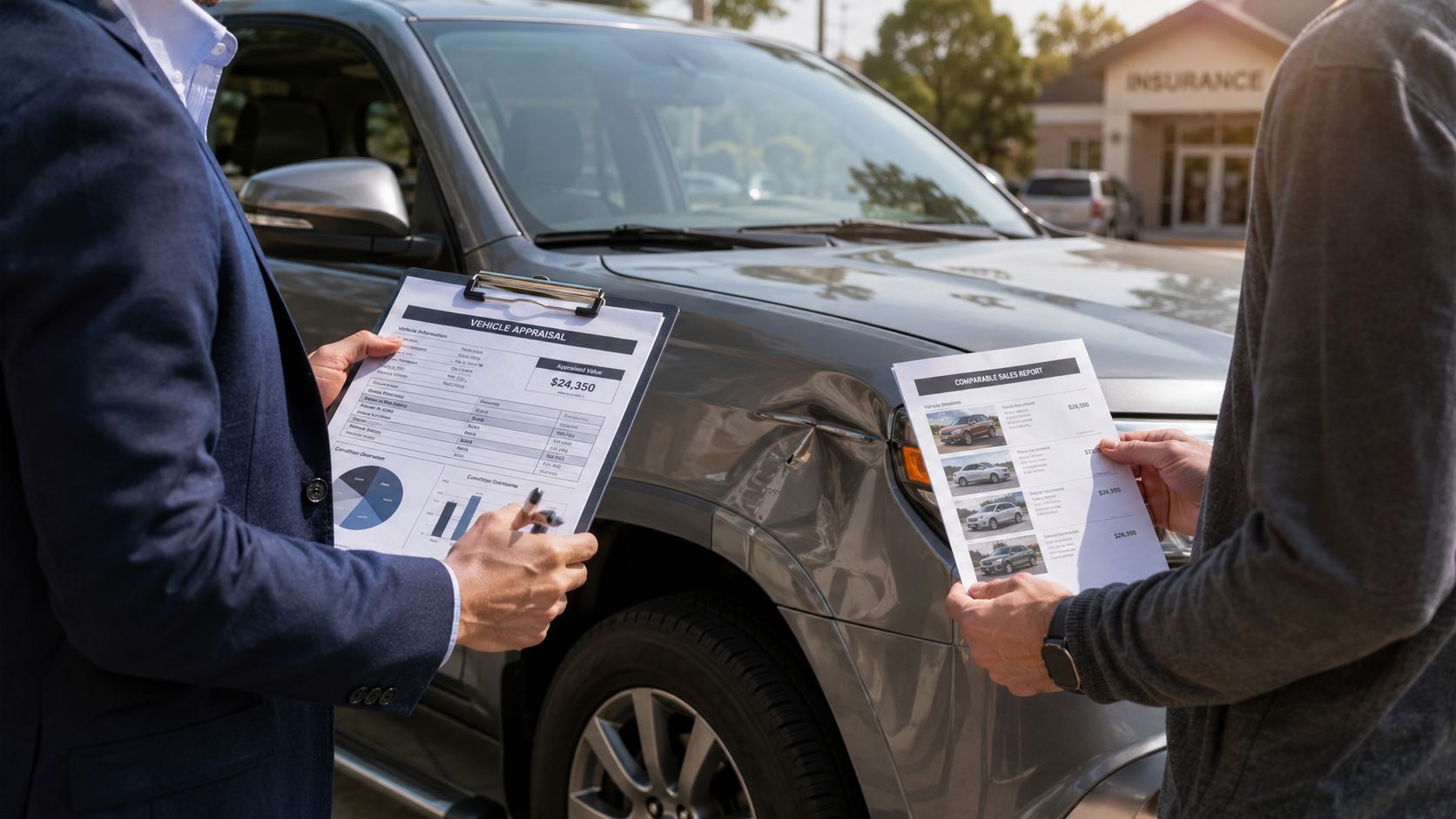
Your insurer can call a car total loss when repair costs hit about 70% to 75% of its ACV, but that doesn't mean their number is right. If their settlement offer is several thousand below its true market value, the fight is usually about actual cash value, not the damage itself.
You're probably looking at a number that feels too low, a title that's about to change, and a payoff gap you didn't expect. That's exactly where a total loss vehicle appraisal matters, because the appraisal is the valuation that decides whether the file stays a repair claim or becomes a payout dispute.
What a Total Loss Vehicle Appraisal Actually Is
A driver usually calls me after the insurer says the car is totaled and the number on the offer sheet feels wrong. The damage may be real, but the settlement still misses the mark because the car was worth more the day before the crash than the carrier is admitting.
The trigger is not the whole story
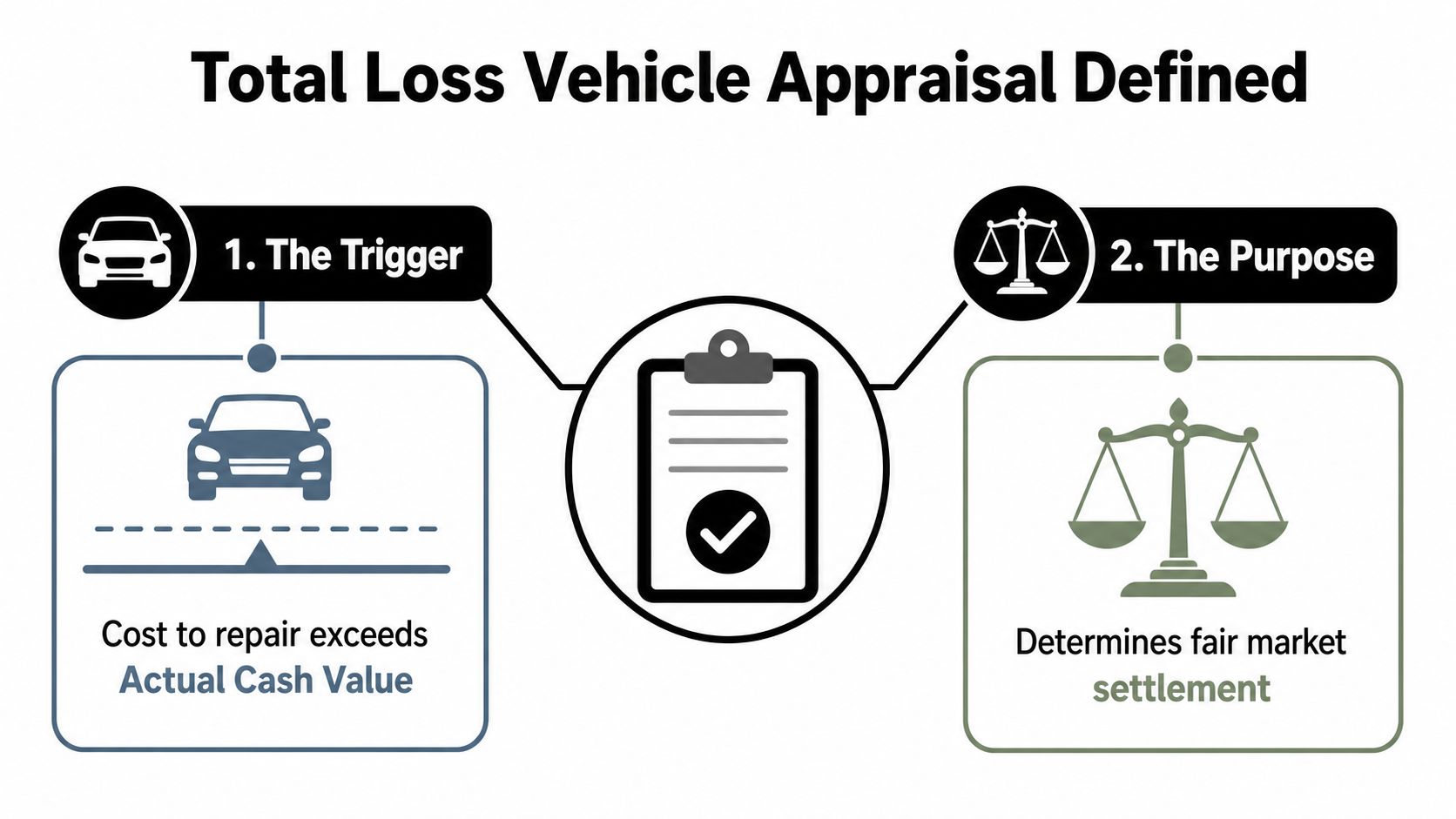
A vehicle is commonly declared a total loss when repair costs reach about 70% to 75% of its ACV, though the exact threshold depends on state rules and insurer methods. Some carriers also use the total loss formula, which compares ACV against repair costs plus salvage value, as summarized in WalletHub's summary of state thresholds. The decision is math-driven, not emotional.
A total loss vehicle appraisal is not a guess at what the car “feels” worth. It is an independent reconstruction of the vehicle's ACV immediately before the crash, built from condition, mileage, options, and local market evidence.
Practical rule: If the insurer's valuation ignores a clean-option package, recent maintenance, or strong local comps, the number is stale, narrow, or both.
Treat this as a data-freshness problem first. A valuation built on old listings, thin comparables, or the wrong trim level will understate the car before anyone argues about damage.
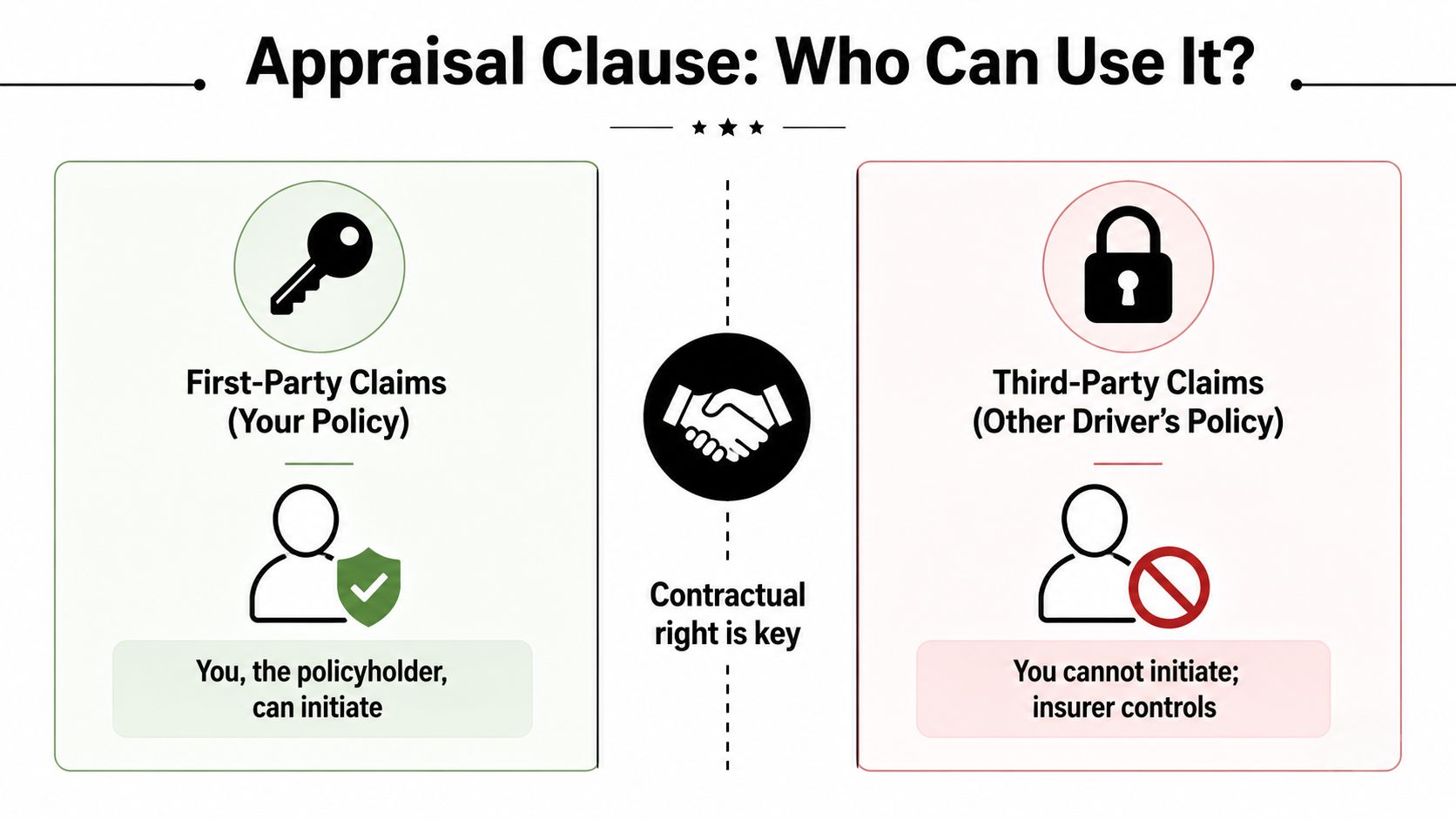
First-party claims and third-party claims do not behave the same way. In a first-party claim, you are dealing with your own carrier and its valuation file. In a third-party claim, the other driver's insurer controls the first offer, and that file often starts with even less attention to your car's actual market position.
The appraisal is the document that controls the downstream outcome. Once the pre-loss value is wrong, the settlement check is wrong, and any later dispute over money starts from that bad baseline.
Settlement decision and appraisal report are not the same thing
A settlement is the payout decision. The appraisal is the valuation work that supports or challenges that decision. Kelley Blue Book's guidance on totaled cars makes the same core point, the payout is based on ACV just before the loss, and ACV reflects depreciation, wear and tear, mileage, and prior accidents, not what you originally paid for the vehicle.
That is why certified independent appraisers matter. They do not read one software output and accept it. They build a pre-loss value from the ground up so the claim file reflects the car that existed, not the reduced version inside an insurer's worksheet. If you need a deeper look at how that value is reconstructed, this explanation of total loss value lays out the concept in plain terms.
How Insurers Calculate Total Loss Value
A totaled car claim starts with a simple question, what was the vehicle worth the moment before impact? Insurers answer that question with valuation software, a limited comparable set, and quick adjustments for condition, mileage, and market position. That workflow is where low offers usually begin, because stale comps and weak adjustments push the number down before anyone looks closely at the car itself.
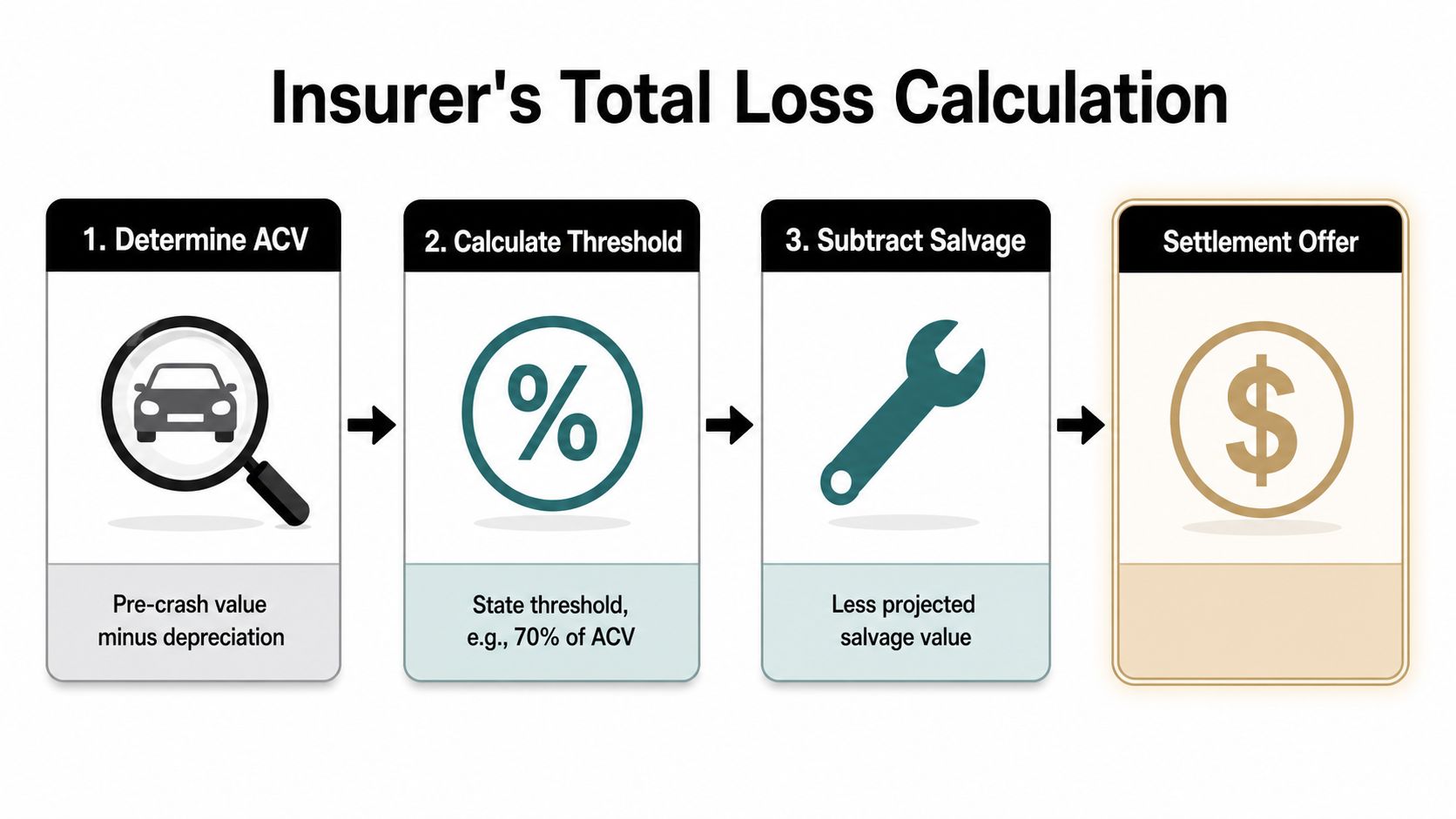
The ACV math behind the offer
A total loss settlement turns on ACV immediately before the crash, not what you paid for the car. Depreciation does most of the damage to the offer, and ACV also reflects wear, mileage, and prior damage.
The carrier's math is straightforward. If repair cost climbs high enough relative to the pre-loss value, the claim tips into total loss territory. In claims engineering terms, the carrier is usually checking whether repair cost plus salvage value exceeds ACV AutoAppraisal.com.
That is where drivers get trapped. If the insurer understates ACV by using weak comparables, the car reaches total loss status faster and the settlement shrinks with it.
A simple SUV example shows the problem. If the SUV's ACV is $22,000 and the damage is $16,000, the carrier may still total it if the threshold math says so. The actual dispute is not whether the crash caused damage. It is whether the insurer priced the SUV correctly before the crash.
Challenge the ACV first. If that number is low, every later number comes down with it.
Why the offer feels insulting
Low offers usually come from stale comparables, a narrow search radius, or software that ignores trim, options, and recent upkeep. That is a data-freshness problem, not a mystery. If the comp set is wrong, the appraisal is wrong.
First-party claims and third-party claims also behave differently. In a first-party claim, your own carrier controls the valuation file. In a third-party claim, the other driver's insurer controls the first offer, and that file often starts with even less attention to your car's actual market position. The appraisal clause only belongs in the first-party setting, as shown in this infographic explaining appraisal-clause use in first-party claims.
Use this total loss value guide to compare the insurer's worksheet against your own market scan. Pay close attention if your vehicle is newer, better equipped, or cleaner than the insurer's comps suggest.
Independent Appraisals and the ACV Reconstruction Method
Your insurer will hand you a number as if it were final. An independent appraisal starts by rebuilding that number from the ground up. That difference matters, because the appraisal should show every adjustment, while the insurer's worksheet often hides the weak spots.
What a real appraisal report actually contains
A proper total loss appraisal is an ACV reconstruction, not a book-value guess. The appraiser starts with the vehicle's VIN-specific condition, mileage, options, and local comparable sales, then adjusts for condition and regional market differences before reaching settlement value, as set out in Washington's appraisal rule and valuation framework Washington WAC 284-30-391.
The report usually runs about 8 to 10 pages of comp analysis and market reasoning, and that detail is the point. It shows why one comparable supports a higher value, why another should be discounted, and which sales are close enough to count.
If your vehicle had upgraded wheels, a higher trim package, clean ownership history, or maintenance records the insurer's software ignored, the independent report should correct that downward bias. That is what a real appraisal is for.
Why local comps beat generic averages
Carrier software often starts with broad market data. A competent appraiser narrows the search to vehicles that match yours. That matters most in a moving used-car market, where trim scarcity, timing, and regional supply can push real replacement cost away from a generic average.
Good appraisal work argues from comparability. If the insurer built its number on weak comps, the independent report should replace them with better ones, not just complain that the offer was low.
Good appraisals don't ask for sympathy. They correct the dataset.
A solid ACV reconstruction also gives you a stronger position in the dispute itself. The adjuster has to answer specific comp choices, mileage adjustments, and condition calls. That is a much stronger position than firing off a complaint and hoping someone takes another look.
For the mechanics of the process, see the insurance appraisal process overview.
Invoking the Appraisal Clause the Right Way
A low offer does not automatically mean you should argue harder. If your policy gives you an appraisal clause, you need to use it at the right time and for the right claim type, because that choice determines whether you are forcing a valuation review or just sending another complaint into the void.
First-party and third-party claims are not the same
The appraisal clause is usually a first-party tool, which means it applies to disputes under your own policy. If you and the carrier cannot agree on ACV, that clause may let you demand an appraisal instead of letting the adjuster keep the number where it started. One plain-English guide to the process explains that point clearly in Auto-Praise's guide to invoking the appraisal clause.
That distinction matters because the right to invoke appraisal does not follow the accident. It follows the contract. If you are dealing with your own carrier, the policy may give you a direct path to challenge the valuation. If you are dealing with the other driver's insurer, you usually do not have that contractual remedy, so the fight stays in negotiation territory.
Read your policy language, not the adjuster's summary. In Washington, the appraisal provision can be invoked when ACV cannot be agreed upon, and that is exactly why the wording in the contract deserves your attention Washington WAC 284-30-391. If the policy gives you that right, use it. If it does not, do not pretend it does.
What happens after you invoke it
The process is simple on paper. Each side selects an appraiser. If those appraisers still cannot agree, an umpire resolves the gap under the policy process described in the same Washington rule Washington WAC 284-30-391.
That is why I tell drivers to read the policy before they take a settlement. Once you sign and close out the claim, you usually lose your best route to challenge the number. If the file is still open, appraisal gives you a way to force the insurer to defend its valuation with actual comparable data instead of a closed worksheet.
Use this insurance appraisal process guide before you send a demand letter, so your request matches the way carriers handle the dispute.
Diminished Value and a Sample Settlement Calculation
A totaled car usually doesn't create a diminished value claim in the same way a repaired car does, but the money logic is the same, the valuation gap compounds fast when the insurer starts from the wrong pre-loss number. On repairable claims, diminished value becomes its own issue, especially for not-at-fault drivers with newer, higher-value, or specialty vehicles.
How a small valuation gap turns into real money
If the insurer undervalues the vehicle by $4,000, that does more than shrink the settlement. It also narrows the room available for taxes, replacement planning, and any related claim recovery that depends on the same ACV baseline. On a higher-value car, that same gap can separate a realistic replacement path from a shortfall you have to cover yourself.
For classic, custom, or high-end vehicles, the effect is even sharper because generic software tends to miss details that matter to real buyers. The report has to capture the actual market for that vehicle, not a bland average that treats every example as interchangeable.
Sample total loss settlement walkthrough
| Line Item | Insurer Number | Independent Number |
|---|---|---|
| Pre-loss ACV | Lower worksheet value | Higher supported market value |
| Repair cost | Same damage estimate | Same damage estimate |
| Salvage value | Same salvage assumption | Same salvage assumption |
| Settlement result | Lower payout | Higher payout |
A spreadsheet like this makes the dispute obvious. If the damage number is identical but the ACV is stronger in the independent file, the settlement outcome changes with it.
The point is not to chase every last dollar for sport. It's to make sure the insurer is using a value that could survive a real market test. On expensive vehicles, that difference can be the difference between being made whole and taking a loss you never should have absorbed.
Commissioning an Independent Appraisal Step by Step
If you're still open on the claim, move now. The process gets harder after you accept payment or sign release language, and that's when a lot of drivers lose their bargaining power.
Start with the claim file, not the argument
Request the insurer's ACV worksheet, the valuation report, and the comp set. Pull your policy, photos, service records, option lists, and any upgrade documentation together in one place. That package gives the appraiser what they need to challenge the number cleanly.
Then define the scope. You may need a total loss ACV appraisal, a diminished value report, or both depending on how the claim is set up. For guidance on what a competent appraiser should review, use what to look for in a total loss appraiser.
What to expect from the timeline and fee
Most independent appraisals take one to three weeks from vehicle inspection to delivered report. That window can move faster or slower depending on whether the car is a daily driver, a classic, or a custom build that needs more documentation.
The fee should be a flat professional fee, not a percentage of your settlement. That structure keeps the appraiser focused on the valuation, not on inflating the payout just to increase their own cut. If the appraiser is worth hiring, they'll tell you what data they need and what the report will cover before they begin.
Rule of thumb: If the company can't explain the comps, the adjustments, and the logic behind the number, don't pay them to “review” your claim. Hire someone who will document the case.
One option is Total Loss Northwest, which provides total loss appraisals and diminished value appraisals for drivers disputing insurer valuations. Use the report to correct the ACV, then press the carrier to respond on the facts.
Using the Appraisal Report in Negotiations and Appeals
An appraisal report is only effective if you use it strategically. Send it as a document dump, and the adjuster will skim it. Use it as a pointed market challenge, and you've got a real dispute.
Make the adjuster answer the comps
Your first move is a documented negotiation. Point to the specific comps, the condition notes, and the adjustments that support a higher ACV. Don't just say the offer is low. Show where the insurer's comp set is stale, geographically weak, or missing key options.
If the policy appraisal clause applies, the next move is to push into the umpire process. That takes the argument out of a generic back-and-forth and into a contract-based valuation dispute. The report should be written to survive that kind of scrutiny, because casual complaints won't.
Escalate when the carrier stonewalls
If the insurer still won't engage, a formal complaint to the state insurance commissioner can force a review of how the claim was handled. That doesn't guarantee a higher payout, but it does create pressure when the carrier is hiding behind boilerplate.
An attorney or public adjuster makes sense when the file includes policy-law questions, a release dispute, or a carrier that's refusing to honor its own process. If the argument is only about weak comps, start with the appraisal. If the argument turns into contract games, bring in backup.
Oregon and Washington State Notes for Total Loss Claims

A disputed total loss in Washington usually comes down to procedure and timing. If you and the insurer cannot agree on ACV, the policy appraisal provision can be used, and Washington's rules spell out that path Washington WAC 284-30-391. That matters because a stale comp set or a sloppy adjustment sheet is not just a bad offer, it is a valuation problem with a formal remedy.
Oregon drivers should press on the same pressure points even if the policy language is less explicit. Demand the valuation worksheet, the full comp set, and the explanation for each adjustment. The issue is not the zip code or the state line. It is whether the insurer used current, local market evidence or leaned on old data that flatters its payout.
The mistake I see in both states is simple, accepting the first number without checking whether the comparables match your car. In Oregon, that usually means not challenging weak local sales data hard enough. In Washington, it often means waiting too long to invoke the appraisal clause when the policy gives you that option.
If you are in the middle of a claim right now, do three things in order. Get the valuation report. Compare it against local market evidence and the actual condition of your vehicle. Then decide whether you are negotiating, invoking appraisal, or doing both at the same time.
If you are dealing with a disputed total loss in Oregon or Washington, Total Loss Northwest can review the valuation, prepare an independent appraisal, and help you challenge a low settlement with market evidence. Visit Total Loss Northwest if you want a second opinion before you sign anything.