You just got the call no driver wants. The insurer says your car is a total loss, then sends an offer that barely looks related to the vehicle you owned. If your first reaction was, “That can't be right,” trust that instinct, because low settlement offers are common enough that they deserve immediate pushback, not blind acceptance.
The problem is rarely the damage alone. It's the way the insurer values the car, and that's where owners lose money fast.
That Sinking Feeling The Lowball Total Loss Offer
The first number they give you often lands like a punch to the gut. You knew the car was in good shape. You kept records, maybe added options, maybe even maintained it better than most vehicles on the road. Then the adjuster's offer comes in and it feels detached from reality.
That feeling is justified. In major insurance markets, a vehicle is typically declared a total loss when repair costs hit about 70% to 80% of ACV, and the payout is based on the car's pre-crash market value, not what you paid or what you still owe, according to GEICO's total loss explanation. In one large Texas dataset covering more than 700 total-loss appraisal-clause proceedings, insurer estimates were, on average, about $3,500 too low Repairer Driven News on appraisal-clause proceedings.
Practical rule: The first offer is a starting position, not a verdict.

If your settlement looks too low, don't argue feelings. Argue value. That means the car's condition, mileage, options, comparable vehicles, and market timing. The insurer's number is only as good as the data behind it, and lowball offers usually come from weak data, not from a fair reading of the market.
How Insurers Decide Your Car Is a Total Loss
The insurance company starts with Actual Cash Value, or ACV. That's the vehicle's market value right before the loss, not the sticker price, not your loan balance, and not the amount you hoped to get back. If the repair estimate crosses the company's total-loss threshold, the insurer declares it totaled and moves to settlement.
A simple example makes the logic obvious. If a car is worth $20,000, and the repair estimate reaches $14,000 to $16,000, a common threshold rule can push it into total-loss territory under the 70% to 80% range described by GEICO. That threshold is why two owners with similar damage can get very different outcomes if their cars had different market values before the crash.
What the insurer is actually deciding
The company is not just asking, “Can this car be fixed?” It's asking whether the repair bill makes financial sense compared with the ACV. That distinction matters because a car can be perfectly repairable in a mechanical sense and still be treated as a total loss on paper.
The insurer's first offer usually reflects its own valuation method, and that method is where disputes start. If the pre-crash value is too low, the total-loss payout will be too low too. That's why independent valuation becomes decisive when the offer doesn't match the market.
A strong owner response starts with one question: what was this car worth in my local market the day before the crash? Answer that correctly, and the whole claim changes.
Why Your Insurer's Valuation Is Often Wrong
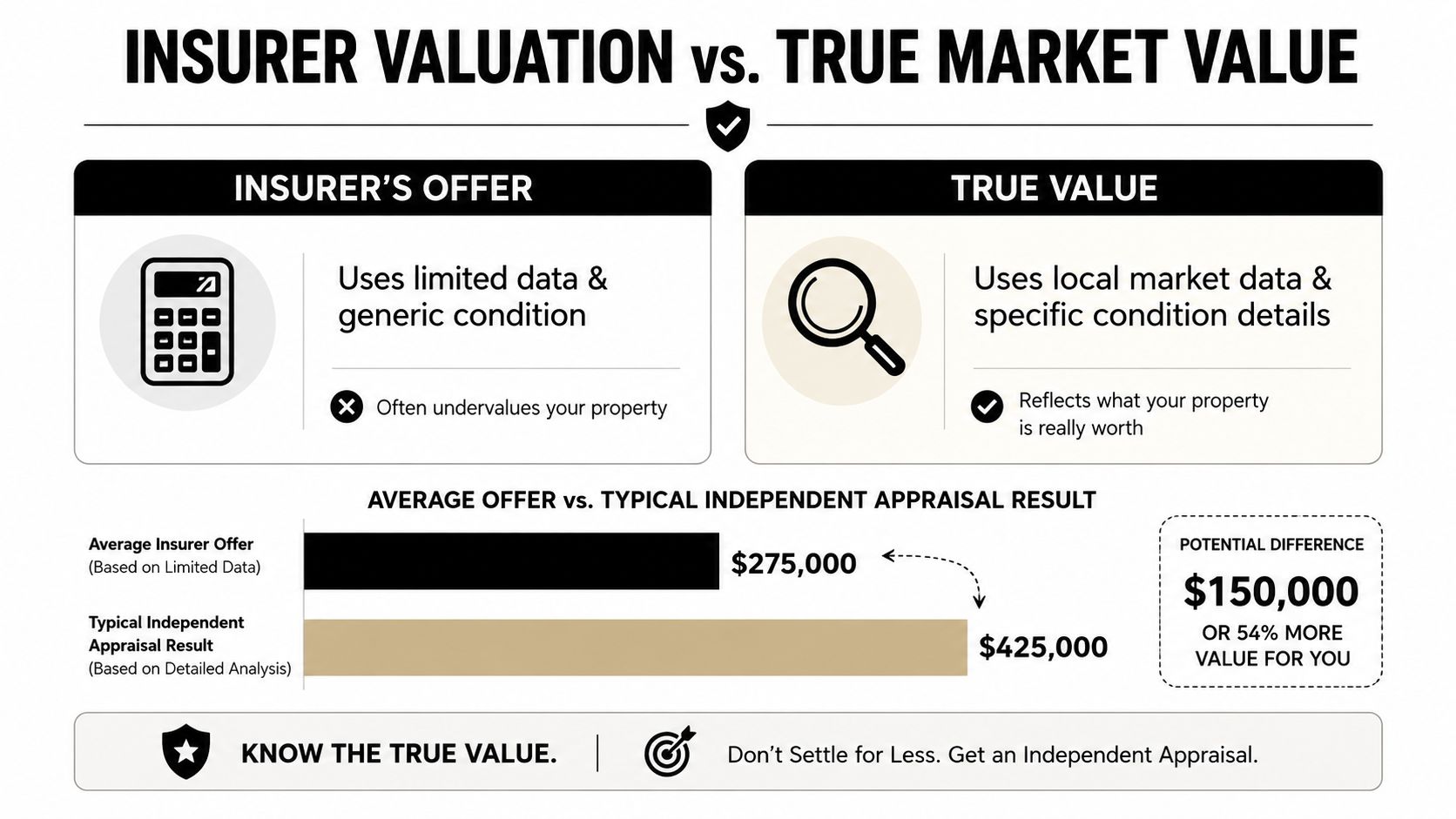
The weak point is usually the valuation method. Insurers rely on software, database pulls, and fast claim handling. Those tools help with speed, but speed does not equal accuracy. If the inputs are stale, generic, or poorly matched, the result will be too low.
Comparable selection causes a lot of the damage. A valuation built from the wrong trim, higher mileage, different options, or another region can drag the number down. Independent appraisal guidance calls for local comparable-market analysis that matches the subject vehicle by year, make, model, trim, mileage, options, and condition, then adjusts the file with records, receipts, and photos Total Loss Northwest's appraisal guidance. If the claim file does not explain why each comparable fits, the valuation is easy to attack.
Stale data and bad comps
Insurers often rely on comparables from the prior 90 days Total Loss Northwest's appraisal guidance. That timing can work against you. A sale from too long ago can miss current market movement, and a vehicle pulled from the wrong area can misstate local value. When market conditions shift, stale comparables are not neutral, they are misleading.
A valuation is only strong when the comparable vehicles are truly comparable.
The deeper problem is that many total-loss disputes come down to methodology. One industry report says final estimates can exceed carriers' original estimates by an average of 77% to 102%, depending on the insurer Greco Publishing cover story. That does not mean every case will swing that far. It does mean the first offer is often built on a narrow view of the market, and narrow views underpay owners.
Use how fair market value is calculated in a total loss claim to spot the weak points before you accept the number.
Your Right to a Fair Settlement The Appraisal Clause
The appraisal clause is the part of the policy people often overlook until they need it. That is a mistake. It is a contractual dispute tool, not a lawsuit, and it exists for exactly this kind of fight over value. If the insurer's number is off, the clause gives you a formal way to force a market-based review.
The basic structure is simple. You hire your appraiser. The insurer hires theirs. If those two appraisers cannot agree, they bring in an umpire to resolve the gap. That process takes the argument out of the insurer's software and puts it into an evidence-driven valuation process.
Use the contract, not emotion
Invoke the clause in writing and keep the policy language in front of you. Be calm and firm. State that you dispute the ACV, that you want the claim handled under the appraisal clause, and that you want the carrier to name its appraiser.
That is not being difficult. It is using the contract you already paid for. The clause is a pressure release valve for valuation disputes, and once it is invoked correctly, the carrier has to answer with evidence instead of hoping you will accept the first offer.
If you want a plain-English overview of the process, see this appraisal process guide. The point is not to threaten the insurer. The point is to make them defend their number.
For a closer look at how the process works from start to finish, read Total Loss Northwest's appraisal process guide.
If the offer is low, the policy language is your leverage.
What a Professional Independent Appraisal Delivers
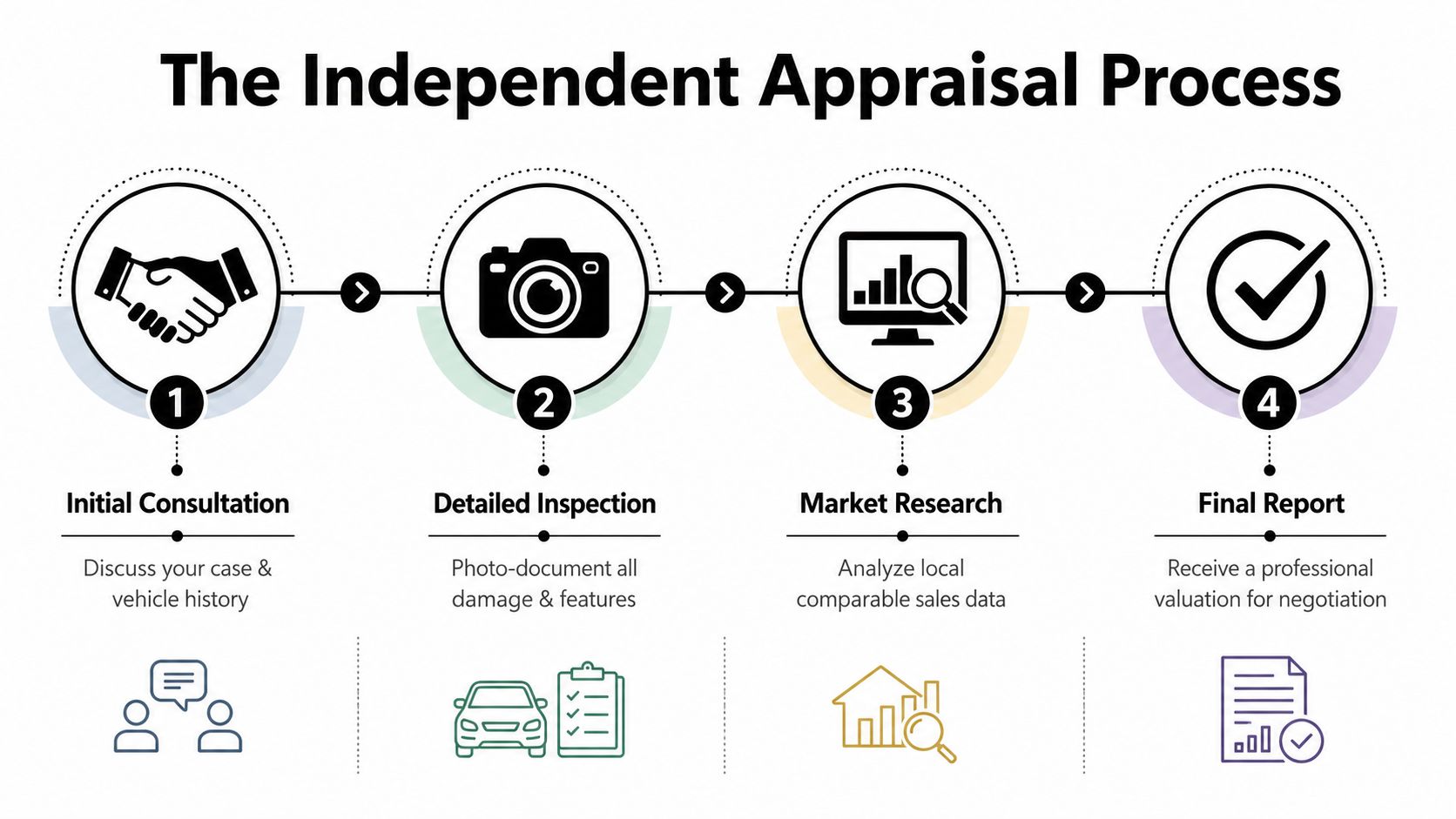
A real independent appraisal is not a quick opinion. It is a file built to hold up when the insurer pushes back. The process starts with the vehicle's history, condition, equipment, and any proof that supports a higher value. That can include service records, upgrade receipts, photos, and notes on features the insurer may have ignored.
A credible report matches the vehicle on year, make, model, trim, mileage, options, and condition, then explains every adjustment with actual evidence. It does not hide behind generic book values. It shows why the comps belong in the file and why they justify the valuation. For a closer look at what separates a qualified appraiser from a weak one, review what to look for in a total loss appraiser.
What the report should contain
A strong report usually includes local comparable vehicles, a reasoned adjustment process, and a clear market conclusion. The best ones explain why a comp is close enough to count, then identify the exact differences that affect value. That matters because a base-trim car with more miles is not a fair stand-in for a well-optioned vehicle with documented upkeep.
For specialty vehicles, the standard insurer file often falls short. Collector cars, customs, and rare trims depend on provenance, condition, and replacement scarcity more than software can capture. In those cases, a detailed field inspection can matter more than a database pull, because the report has to reflect the actual market for that specific vehicle.
A good appraiser does not just say the insurer is wrong. They show why. That is the report that changes settlements.
Negotiating Your Total Loss Settlement Like a Pro
Once you have an independent report, stop talking in generalities. Send the report with a short cover note that says you dispute the ACV, you want the claim reviewed against the attached market evidence, and you expect a revised offer. Keep every message professional. No venting, no storytelling, no long emotional explanations.
What to say and what to avoid
Use language like this:
- “I dispute the total-loss value because the comparables in your file do not reflect my vehicle's actual market.”
- “Please review the attached independent appraisal and respond with the basis for any disagreement.”
- “I'm asking you to reassess the settlement under the appraisal clause.”
Do not say, “This feels low,” and stop there. That leaves the adjuster room to dismiss you. Tie every point to the vehicle's trim, mileage, options, condition, and local market evidence. If the adjuster says the report is “just another opinion,” remind them that the policy gives both sides a formal valuation process.
Keep the conversation about data, not frustration.
If the insurer pushes back, ask which comp they believe is most accurate and why. Ask what adjustments they made for mileage, options, and condition. A vague refusal is a weak response. A detailed explanation is one you can challenge. That is the whole point of using the appraisal process instead of accepting the first offer on faith.
Answering Your Top Total Loss Appraisal Questions
Specialty vehicles do not fit neatly into a generic ACV file. A classic, custom, or heavily modified car depends on condition, originality, provenance, and replacement scarcity, so a field inspection and a detailed appraisal file are often the right way to value it. Standard valuation software usually misses the details that create value in the first place.
Timing matters too. Consumer guidance says appraisal rights can be affected by what you do after the offer arrives, and the clause is a formal dispute mechanism with policy and jurisdiction-specific rules Total Loss Northwest's appraisal clause guidance. If the number is wrong, do not rush to accept payment. Get the claim reviewed before you sign anything that could narrow your options.
What if I already cashed the check
Owners panic at this point, and they should. Cashing a check can create real problems, especially if the policy or release language says acceptance closes the claim. If you are already there, stop guessing and have the policy reviewed immediately. The correct answer depends on the exact documents and the state involved.
State rules also matter. Some consumer-facing guidance explains that the appraisal clause is policy-based and that state procedures can affect fees and process, including situations in Oregon where the insurer may be required to pay the appraisal fee. That kind of rule lowers the cost of challenging a bad offer, which is exactly why owners should not assume every state works the same way.
If the insurer's offer rests on stale comps, the wrong trim, or generic condition assumptions, the problem is not your car. It is their valuation file. Fix the file, and you change the settlement.
Take Control and Get the Settlement You Deserve

The insurer's first offer is not the final word. It's the opening number, and if it's built on stale comps or generic assumptions, you have every right to challenge it. The path is straightforward, understand the ACV method, invoke the appraisal clause, and force the file to be judged on actual market evidence.
You do not need to accept a lowball settlement just because the carrier moved fast. You need a valuation that reflects the car you lost, not the easiest number for the insurer to defend.
If your total loss offer is too low, Total Loss Northwest prepares independent appraisals and appraisal-clause support for vehicle owners who need a real market valuation. If you're in Washington, Oregon, or anywhere else in the U.S. and you want a fair review of your claim, visit Total Loss Northwest and get your settlement evaluated by a professional.