You're standing there with a totaled car, a cleanup quote in one hand and an insurance offer in the other, and the numbers don't line up. The check won't buy the same vehicle, and the adjuster's explanation usually sounds neat until you compare it with the actual market. That's where a total loss car appraisal matters. It's not a magic phrase, it's the formal way to challenge the value the insurer put on your car and force the claim into a real evidence fight.
When the Settlement Check Arrives Short
A driver gets the call, the car is totaled, and the first instinct is relief that the paperwork is moving. Then the offer lands, and the relief disappears. The number is clean, but it doesn't replace the car the owner lost.
That's the moment insurers count on people to get tired. The offer looks official, the worksheet looks technical, and the driver assumes the carrier must know something they don't. Often, the issue is simpler. The insurer's valuation missed equipment, used weak comparables, or leaned too hard on a database that didn't reflect the local market.
A total loss car appraisal changes that dynamic. It turns a one-sided settlement into a structured dispute with evidence on both sides. Instead of arguing in circles with an adjuster, the policyholder can force the valuation question into a process built to test the number.
Practical rule: don't argue feelings, argue value. If the offer is short, the fight is over the market data behind it, not your frustration level.
High-value, collector, modified, and heavily optioned vehicles are where this gets expensive fast. Software misses nuance. A human appraiser working from the right records can catch what the database skipped, and that's often where the settlement moves.
What Counts as a Total Loss and What ACV Really Means
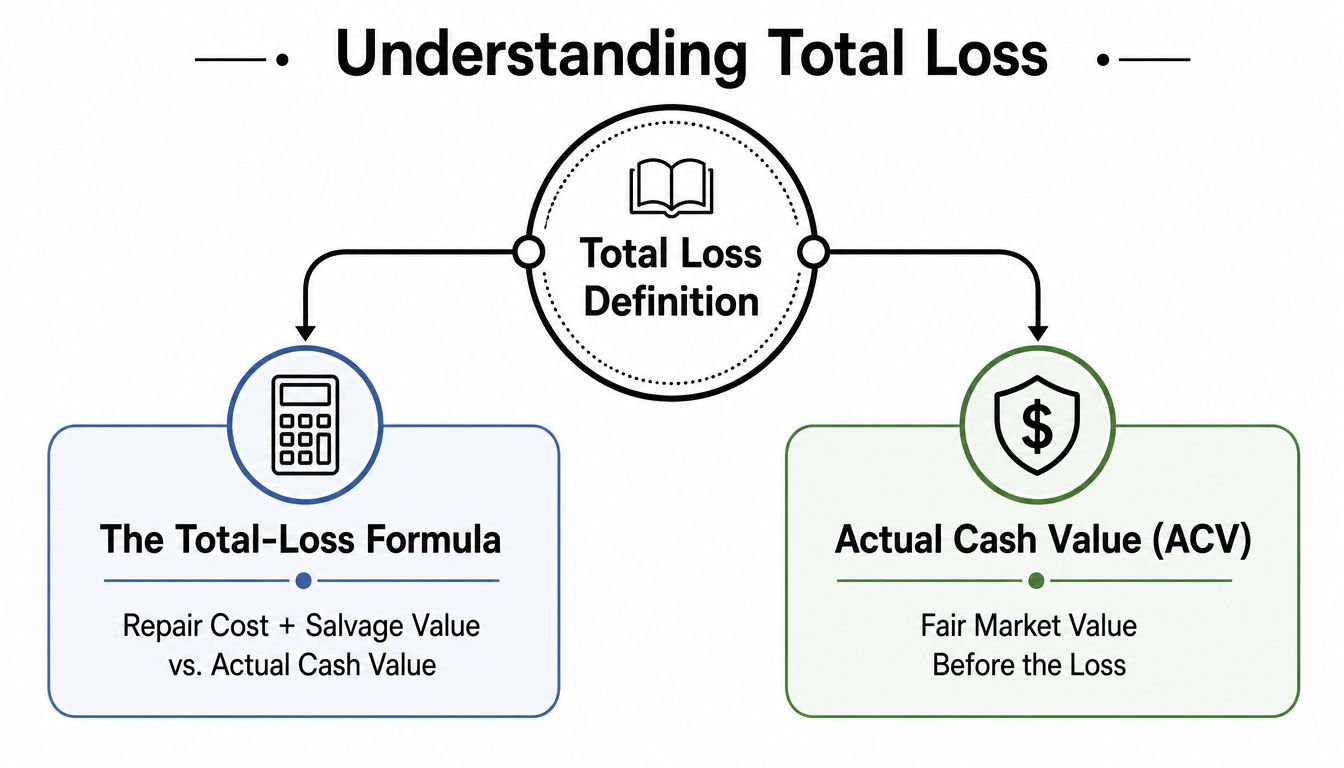
A car is usually declared a total loss when the repair cost crosses the car's actual cash value, or ACV, before the crash. Some states use a different test, a percentage threshold or a formula that compares repair cost plus salvage value against fair market value. The point is the same. Once the economics tilt far enough, the carrier has a basis to stop talking about repair and start talking about payout. That framework is laid out clearly in industry guidance on total losses and ACV (Kelley Blue Book).
ACV is where most owners get misled. It is not the price you paid, and it is not the balance on your loan. It's the vehicle's pre-loss market value after depreciation, mileage, wear, and prior damage are considered. A car can be fairly new and still total if repair costs run high enough.
Read the formula the way an adjuster does
The simplest way to sanity-check a total-loss decision is to look at the inputs, not the conclusion. If the insurer's worksheet understates ACV or inflates repair economics, the decision can flip.
- Repair estimate: if body labor, sensors, or trim-specific parts are wrong, the carrier's math changes.
- Salvage value: a higher salvage bid can make a borderline car total sooner.
- ACV estimate: if market value is too low, the payout shrinks immediately.
A rough example helps. If the repair estimate is close to the car's pre-loss value, a small shift in ACV can move the file from repairable to totaled. That's why the dispute often starts with the worksheet, not the wreck.
Why state rules matter
Some states use a formula, some use a threshold, and the result can differ even when the damage is identical. That's not a side issue. It's the reason two drivers with similar crashes can end up in very different claim paths depending on where the policy applies.
The advantage lies in the ACV side of the equation. If you can prove the car was worth more because of trim, options, condition, or documented upgrades, you challenge the number the carrier uses to justify the total-loss call. That's where a clean file beats a loud complaint.
Insurer Valuations Versus Independent Appraisals
Insurer valuations usually start with software, a claims database, and a standard adjustment sheet. Independent appraisals start with the actual car. That difference sounds small until you see how often it changes the outcome.
The insurer's model tends to lean on broad data, internal condition assumptions, and generic comparables. A serious independent report starts with verified VIN decoding, exact trim and package identification, mileage, condition grading, and market comparables. That approach matters because missing equipment or using weak comps can materially understate ACV and therefore the settlement amount (Washington administrative rule on appraisal and ACV disputes).
The gap is usually not philosophical. It's factual. If one side treats your car like a base model and the other proves it was a higher trim with real options, the number changes.
| Inputs Compared: Insurer Valuation vs Independent Total Loss Appraisal | ||
|---|---|---|
| Input | Insurer Valuation | Independent Appraisal |
| VIN and trim | Often pulled from software fields | Verified against the actual vehicle |
| Options and packages | Can be generalized or missed | Matched line by line to equipment |
| Mileage | Usually entered from claim data | Checked against records and inspection |
| Condition | Often based on broad grading | Tied to photos, wear, and prior history |
| Comparables | Wider database, broader match standards | Tighter local comps and stronger similarity |
A good independent appraisal is not a rant in report form. It's an evidence package. That matters because the insurer has to defend the number once the file is built correctly.
A weak comp is the quiet killer in total-loss claims. The carrier rarely says, “we lowballed you.” It says, “these are the best matches we found.”
If you're dealing with a high-option vehicle, a collector car, or anything with regional scarcity, the independent side usually has more room to move the value upward because it can prove why the insurer's sample is too broad.
How to Invoke the Appraisal Clause Step by Step
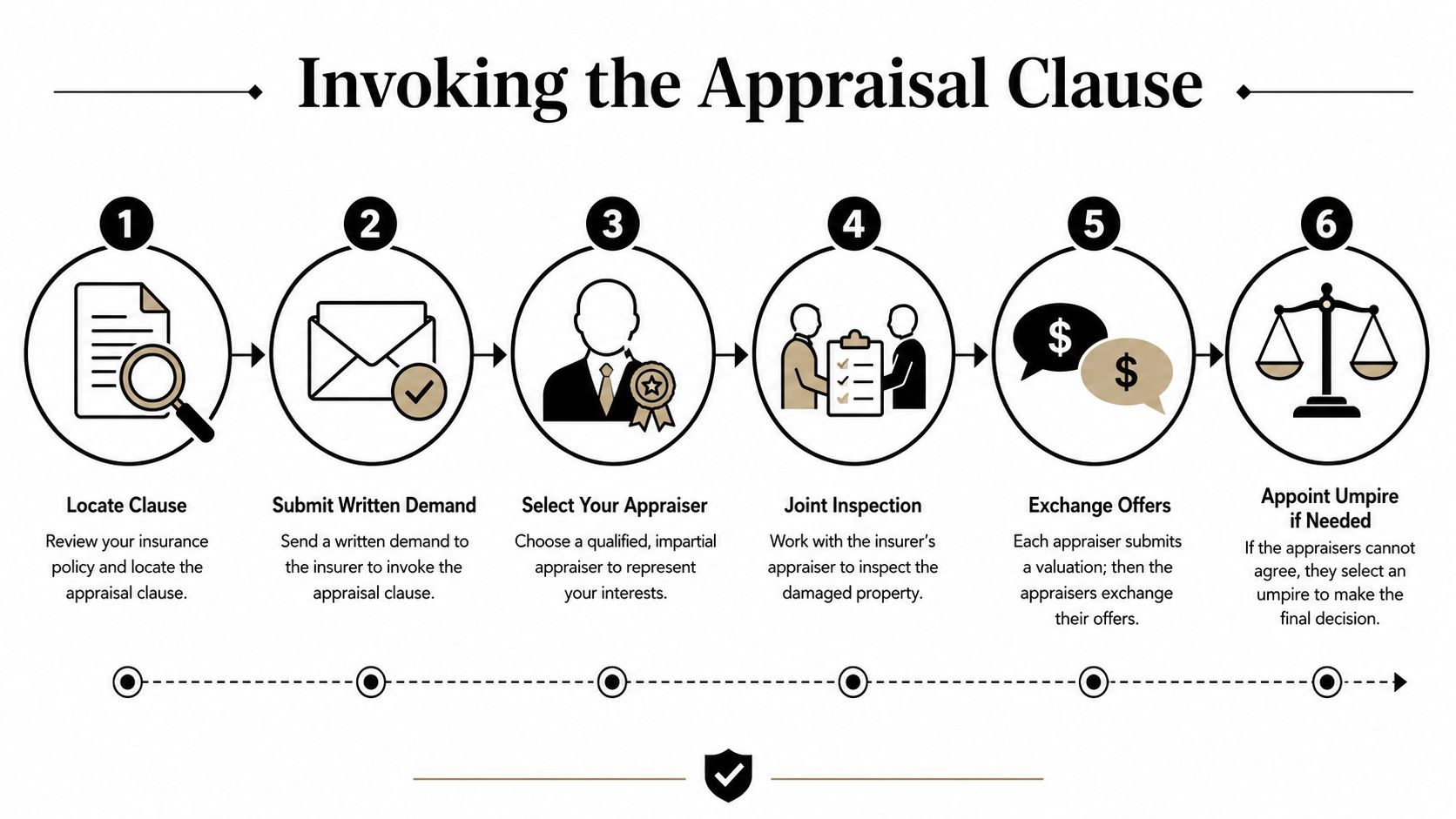
The Appraisal Clause is the formal pressure valve in a disputed total-loss claim. It lets you hire your own appraiser and require the insurer to do the same, so the file becomes a valuation dispute instead of a take-it-or-leave-it offer (Appraisal clause overview). In Washington practice, the policy language specifically allows either side to invoke appraisal when ACV can't be agreed on, and the process is for valuation, not coverage disputes.
The sequence that actually works
- Find the clause in the policy. Don't rely on the adjuster's memory. Read the contract.
- Send a written demand. State that you're invoking appraisal because you dispute ACV.
- Hire an independent appraiser. Independence matters. A buddy with opinions doesn't.
- Let the insurer appoint theirs. That keeps the process valid.
- Let the two appraisers compare evidence. Most cases move here.
- Use an umpire if they disagree. That's the backstop.
What slows claims down
The biggest mistake is firing off a demand before your file is ready. Send the offer, the insurer worksheet, title or payoff documents if relevant, repair history, photos, and any records showing trim or upgrades. A sloppy demand just gives the carrier a reason to stall.
The other mistake is treating appraisal like a fight instead of a proof exercise. The best appraisers win by documenting the car, not by performing outrage.
The internal paperwork side matters too, and the workflow is easier to follow if you understand the appraisal process at a practical level, not just as policy language. This appraisal process guide is useful for that part.
Challenging the Comparables That Drive Your Offer
Most total-loss disputes don't turn on whether the car was totaled. They turn on whether the insurer's comparables actually match your vehicle. That's the lever.
Start with the comp sheet and audit every row. Match the make, model, year, trim, package, mileage, region, and condition against the destroyed car. If the insurer used a base trim against your loaded version, or matched your car to something from a different market, the offer may be built on a false comparison.
Weak comparables are easy to spot once you stop looking only at the final number.
- Wrong trim: a lower-grade version can drag ACV down fast.
- Missing options: premium audio, driver-assist, tow packages, and similar equipment matter.
- Mileage mismatch: a cleaner, lower-mile comp is not the same as a high-mile one.
- Region mismatch: pricing in one market doesn't always reflect another.
- Condition mismatch: cosmetic wear, prior damage, and service history should not be hand-waved.
If you want stronger proof, use current dealer inventory, recent auction data, certified pre-owned listings, and private-party sales that resemble the car you lost. Keep the search tight. The point isn't to flood the file with random examples. It's to prove the insurer's sample is off.
Practical rule: if the comp would never replace your car in the real market, it shouldn't be used to price your claim.
Market volatility and automated valuation software become a real problem. A stale database can lag the live market, and a broad search radius can blur local scarcity. A fair total-loss appraisal now depends on data quality as much as valuation judgment.
For a deeper look at how the sample itself gets challenged, see comparables for appraisal.
Oregon and Washington Specifics You Should Know
Washington is unusually clear about appraisal disputes. The rule explicitly lets either the first-party claimant or the insurer invoke the policy's appraisal provision when they can't agree on ACV, and the process is meant to resolve valuation, not coverage. That matters because it gives the policyholder a real procedural tool instead of a favor request.
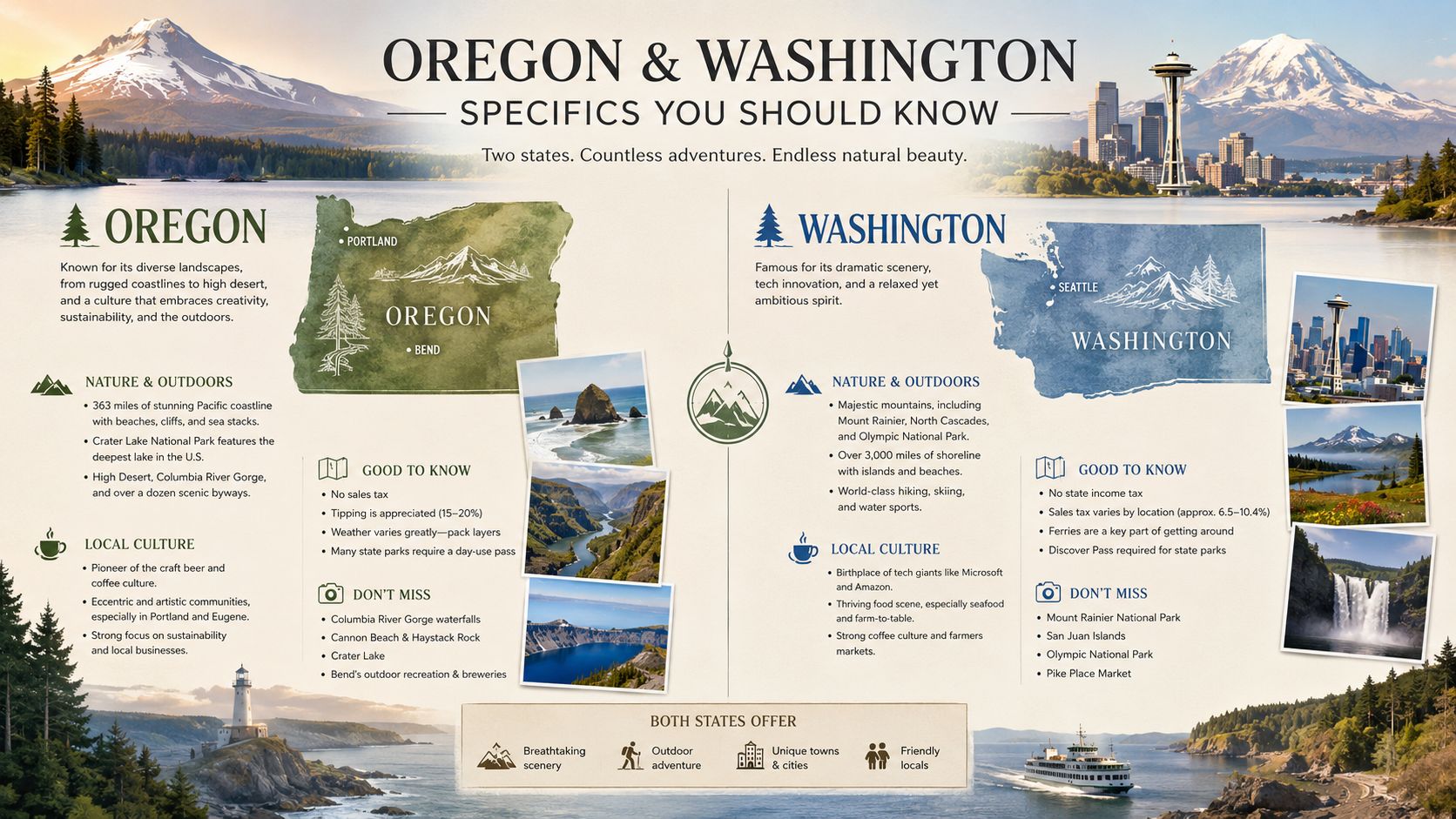
Oregon drivers should still think in the same evidentiary way. The useful question is never “will the insurer listen,” it's “what proof changes the ACV number.” That's the mindset that moves claims in both states.
Washington carriers tend to fight hard when the file shifts into first-party valuation territory, especially if the disagreement is really about comparables and condition, not liability. In Oregon, the practical advantage comes from the same place: a clean paper trail, better market matches, and a valuation report that can survive scrutiny.
What to keep straight in either state
- Appraisal is for value. It won't decide fault or unrelated coverage fights.
- Documentation wins. Records, photos, and equipment proof matter.
- State rules don't replace evidence. They just define the process.
If you're in either state, don't wait for the carrier to volunteer a fair number. Push the claim onto a record-based path early, and keep every adjustment tied to something observable.
Diminished Value and How It Connects to Your Total Loss
A totaled car and a diminished-value claim are not the same thing. In many claims, especially first-party claims, once the vehicle is a total loss, diminished value doesn't carry the same practical force. But in third-party situations, it's still a separate loss theory, and the total-loss file can help prove it.
That's why a strong appraisal matters even if the car is already gone. A report built on verified comparables, condition grading, and option documentation gives you a better foundation for any later diminished-value demand tied to the crash history. The same evidence that lifts ACV can also show how the damage changed the vehicle's value before the total loss was settled.
If you think there's a DV angle, don't leave it vague. Document it, press it in writing, and make the insurer answer the number rather than the concept. Diminished value claim guidance is useful if you're deciding whether that separate demand is worth pursuing.
For high-value, collector, and custom vehicles, this matters even more. Those cars lose value in ways generic claims software barely understands, which is exactly why they need a real appraisal trail.
Negotiation Tactics and Common Questions
Respond to the first offer in writing. Ask for the full worksheet, the comparable list, and the condition adjustments. Then attack the weakest comp first, because that's usually where the number starts to wobble.
Don't lead with the appraisal clause unless the file is already deadlocked. Use it as the backstop. A clean counteroffer tied to specific comps often gets movement faster than a legal threat.
Common questions come up every time:
- How long does appraisal take? It depends on how fast both sides select appraisers and exchange evidence.
- What does it cost? You usually pay your own appraiser up front.
- Can the insurer refuse? If the policy has a valid appraisal clause and the dispute is about value, refusal is not something you should just accept.
- Can the award matter later? Yes, it can become important leverage in later disputes.
- What if the at-fault driver has the same insurer? That changes the tone, not the math. The valuation still has to be proved.
Keep one checklist handy. Get the offer, get the worksheet, verify the comp sheet, pull your records, document the trim and options, and decide whether the insurer's sample matches the car you lost.
If you need a certified independent appraisal, Total Loss Northwest handles total-loss valuation disputes and appraisal-clause support for Oregon and Washington drivers. Visit Total Loss Northwest if you want a formal review of the insurer's number and a report built to challenge it.