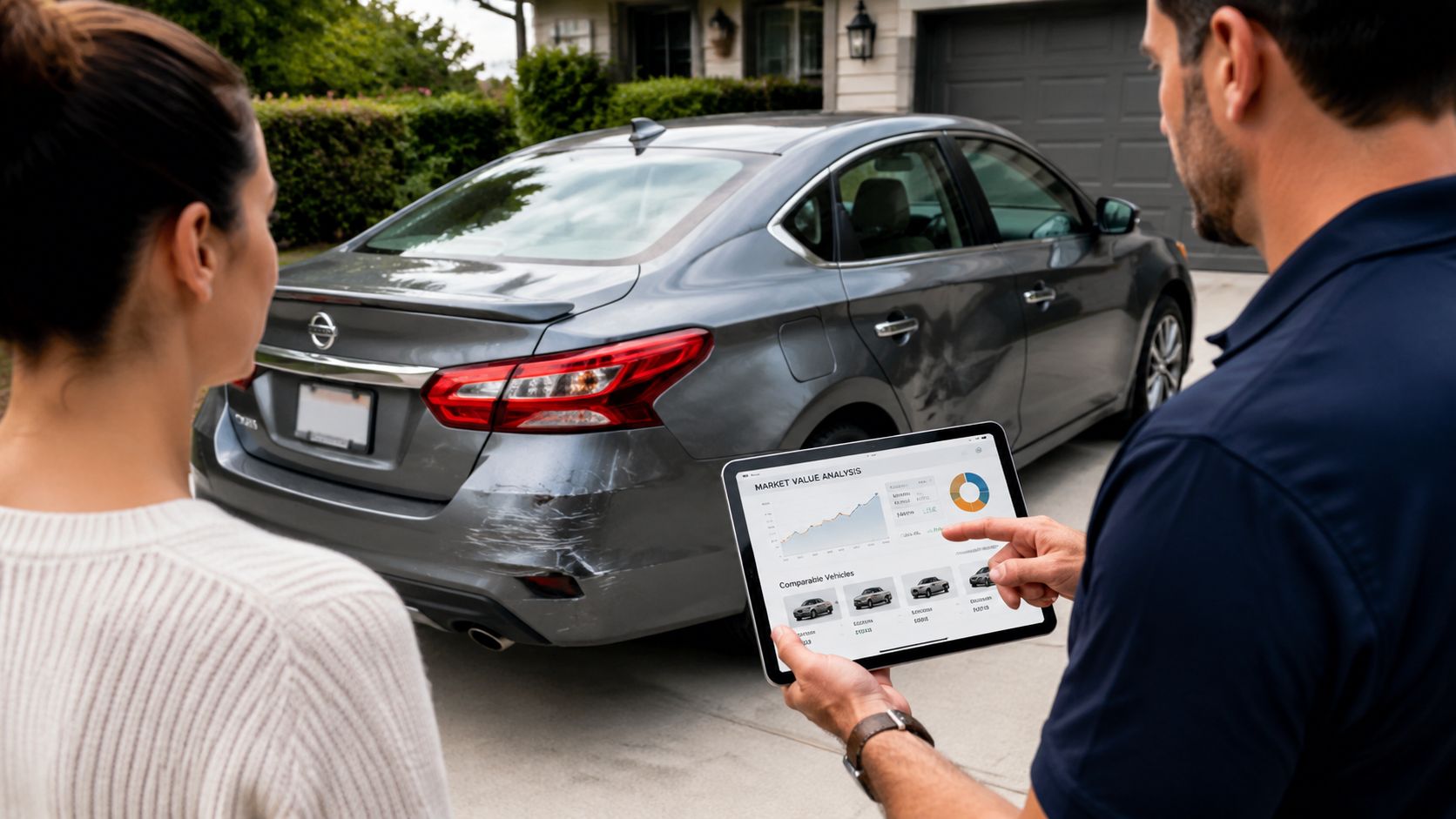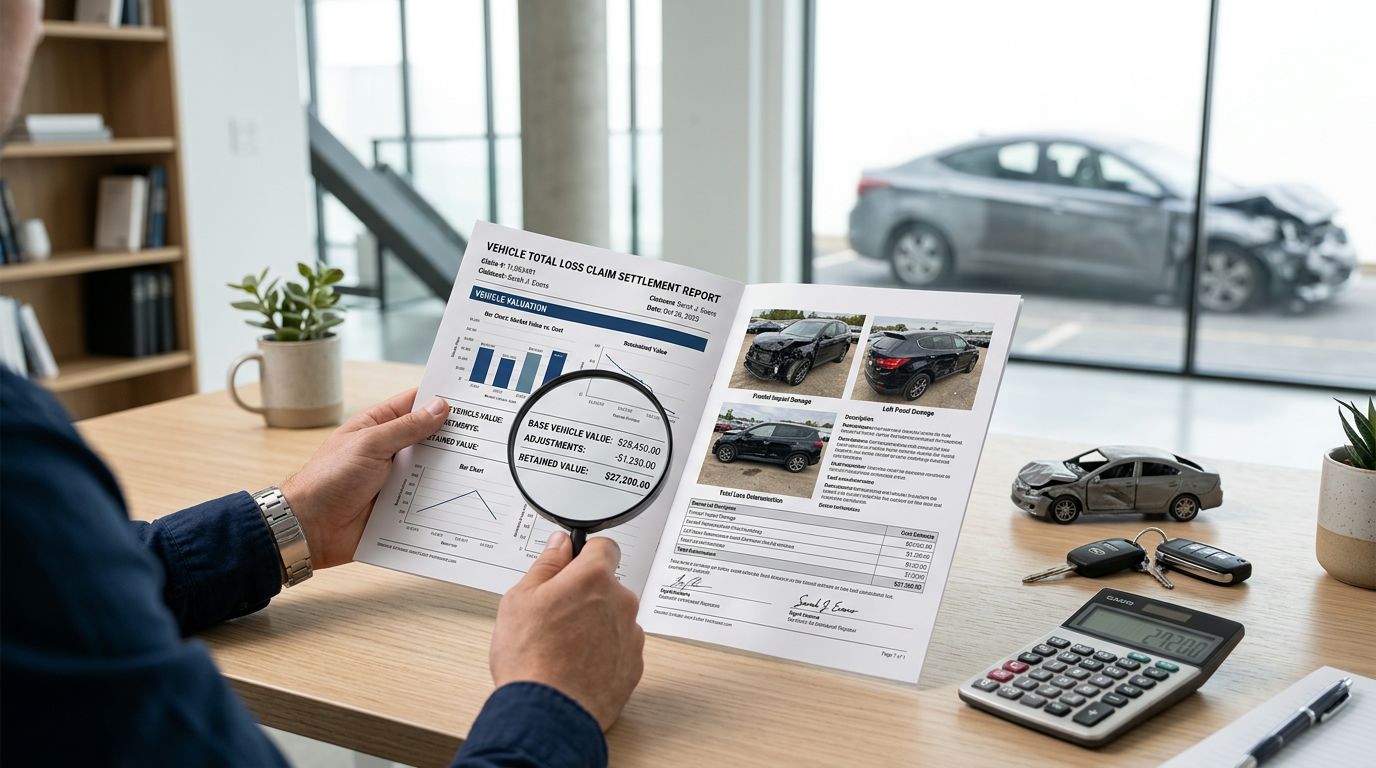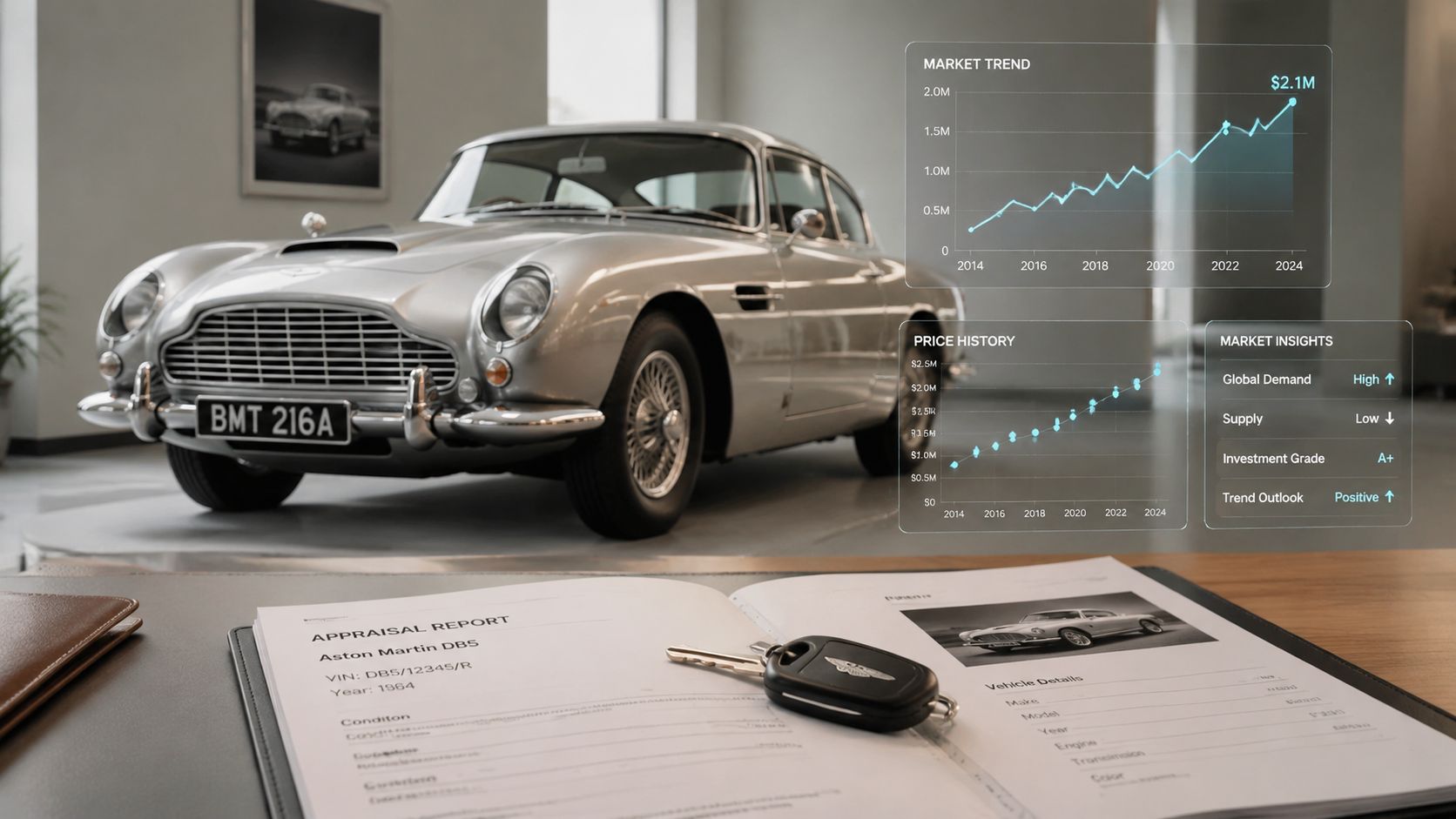
You're standing in the worst part of a claim, the insurer has handed you a number, and it doesn't match the car in your garage, the buyers who wanted it, or the quotes you already heard. That gap is where collector car market review value matters, because a real market review doesn't ask what a software model thinks your car should be worth. It asks what similar cars are changing hands for, in the market that would have bought yours.
That distinction is everything in a total loss or diminished value dispute. A collector car isn't a commodity, and it's not a generic sedan with a trim level. It's a specific car with condition, provenance, and buyer appeal that can swing hard in either direction, which is why lowball offers feel wrong before you've even checked the math.
Why the Lowball Offer Feels Wrong
The pattern is painfully familiar. A long-tenured owner gets a settlement offer back on a freshly totaled 1990s collector coupe, and the number is miles below what two private buyers and a regional broker already said they'd pay. The insurer points to a valuation screen, the owner points to the actual car, and the two sides are suddenly arguing over which version of reality counts.
That reaction isn't emotion talking, it's pattern recognition. When a car has real enthusiast demand, the number on a claims sheet can miss the market by a wide margin if the file ignores provenance, condition, or regional buyer depth. The owner knows the car had a story and a following. The insurer's software often treats it like inventory.
A market review earns its value right there. It gives you a documented way to show that the offer is detached from how collector cars are sold, not just how a claims platform wants to price them.
Practical rule: If the offer doesn't explain the comps, the condition adjustments, and the source mix, it's not a defensible settlement. It's a starting point.
That's why owners who think they “just need a higher number” usually lose the first round. They need a cleaner file, not louder complaints. A properly built review gives the insurer something concrete to answer, and that changes the negotiation fast.
What a Collector Car Market Review Actually Is
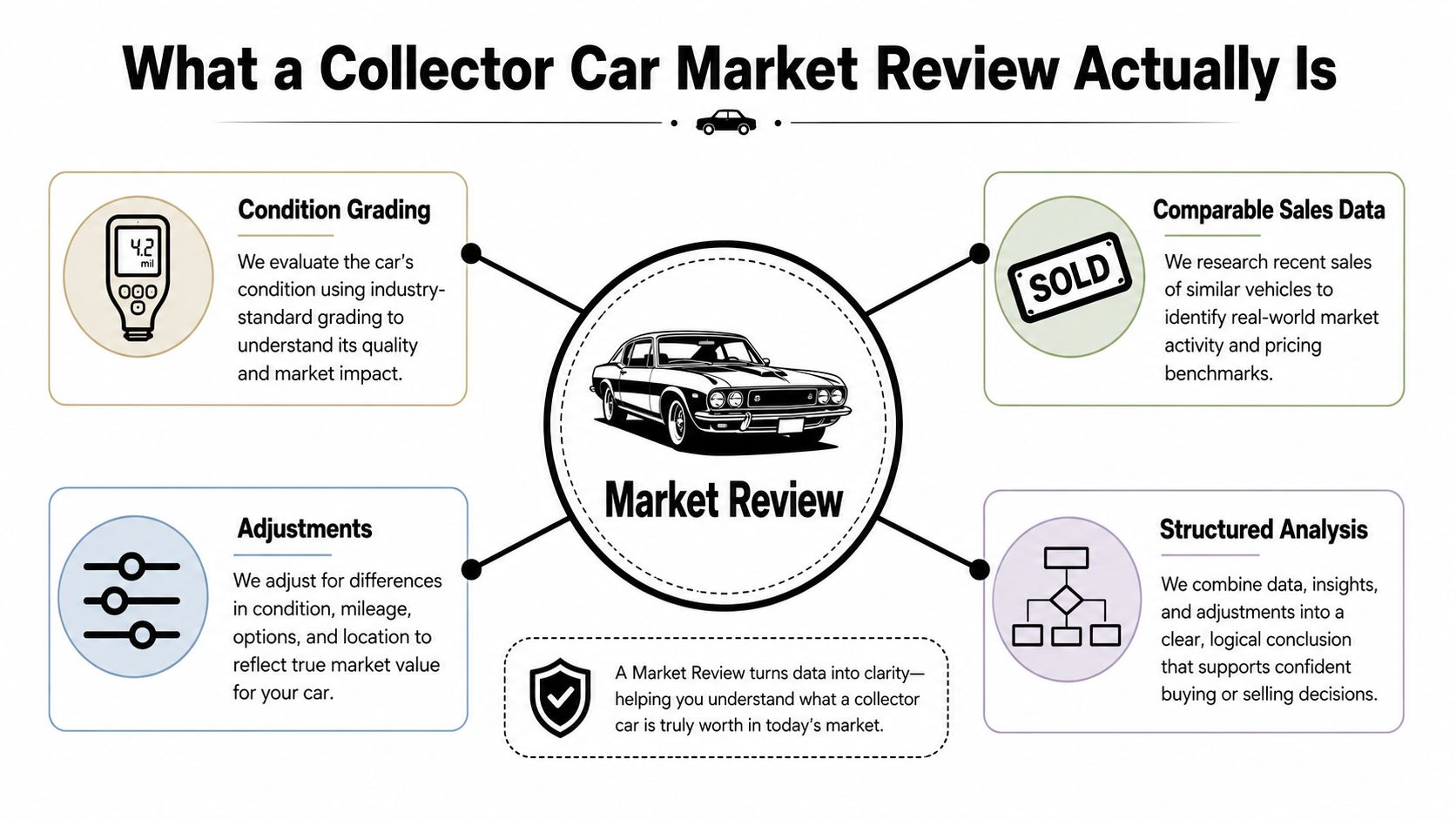
A collector car market review is a structured valuation, not a single lookup. It compares your car to real market evidence, then adjusts for condition, originality, mileage, options, documentation, and timing. It is similar to a real estate comp package, not a Blue Book quote.
A credible review usually starts with comparable selection. That means similar year, model, drivetrain, trim, and condition, with a serious effort to match the specific car, not just the badge. If your car is a preserved driver with full records, a rough survivor or freshly restored showpiece is not a true comp.
What the review should measure
- Condition grading, because cosmetic and mechanical condition can change value more than casual owners expect.
- Comparable sales data, because asking price and sold price are not the same thing.
- Adjustments, because air conditioning, originality, mileage, and documentation all matter.
- Structured analysis, because the report has to show how the conclusion was reached.
A one-line algorithm output can't do that. It can only point to a number. A market review explains the number.
That difference matters in a claim file because the insurer can challenge a conclusion only if it can see the chain of reasoning. If the report shows how the comps were chosen and why adjustments were made, you've got something that can be defended. If it doesn't, you've got a printout.
The most useful mental model is simple. A market review isn't asking, “What is a classic car worth in the abstract?” It's asking, “What would this exact car bring from an informed buyer who understood its condition and history?”
Reading the 2025 Collector Car Market Like a Pro
The collector-car market did not stay on the same footing in 2025. One independent review said global values fell 10.0% versus 2024, while supply rose 9.7%. That same review said 71% of vehicles lost value in 2025, and classics, defined there as cars 30 years old or older, fell 7.7% globally. A separate analysis put the global drop at about 11%, with classics down roughly 8.7% and U.S. prices down about 9%. For claims, that kind of swing is not background noise, it changes the number that lands in the settlement letter. 2025 collector car market review
2025 Collector Car Market by the Numbers
| Region / Segment | YoY Change | Supply Change |
|---|---|---|
| Global market | -10.0% | +9.7% |
| United States | -8.6% | Not stated |
| United Kingdom | -9.6% | Not stated |
| Europe | -13.3% | Not stated |
| Classics, 30 years old or older | -7.7% | Not stated |
The regional split matters as much as the headline drop. The U.S. declined 8.6%, the U.K. 9.6%, and Europe 13.3%. That tells you the market didn't just cool evenly. It moved in different directions depending on buyer base, supply, and segment depth.
The practical implication is brutal for stale comps. A valuation built off last year's peak can be flat wrong, and one built from the wrong region can be wrong in a different way. If you're trying to defend a collector car value in a claim, you need numbers that reflect the current market, not the last strong month.
For context on enthusiast-specific parts and memorabilia, even niche resources like vintage Volkswagen memorabilia can help show how model-specific buyer interest can run. That kind of specificity is exactly what broad insurer software tends to miss.
A market review that doesn't acknowledge the 2025 pullback is already outdated.
If you want a longer discussion of claim-side valuation pressure, the regional claim context in classic car value trends lines up with what owners are seeing in settlement files right now.
The Four Drivers Behind Every Collector Car Value
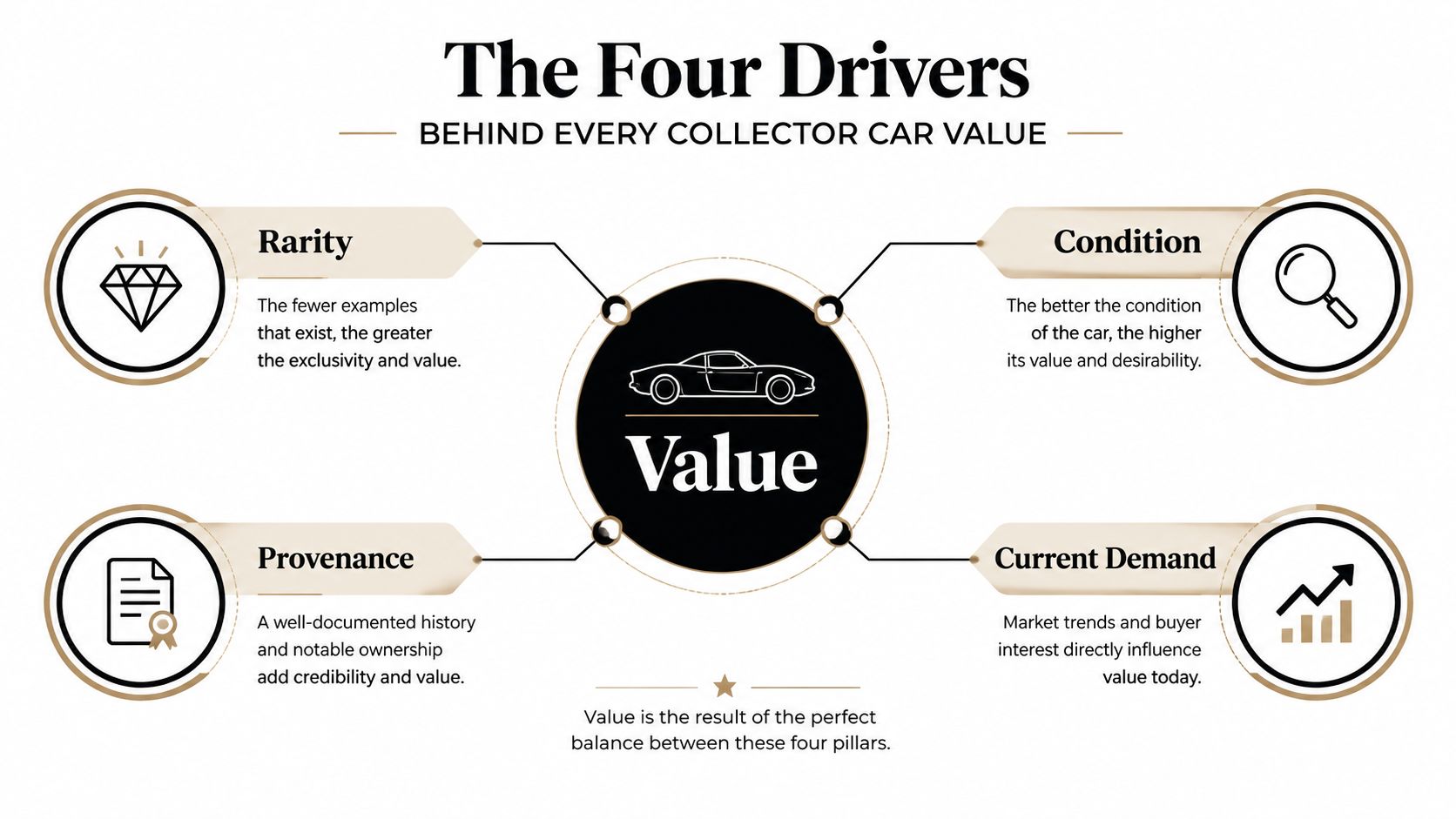
Every serious valuation comes back to four pillars. If a report ignores one of them, it's thin. If it ignores two, it's not a real appraisal, it's a range with lipstick on it.
Rarity and condition are not the same thing
Rarity is about how many cars survive, how many were built, and whether the model has special equipment or a meaningful variant. Condition is separate. A rare car in tired shape can still bring less than a common car that's been cared for properly. Owners confuse those two all the time, and insurers benefit when they do.
Provenance and demand finish the picture
Provenance is the paper trail, the ownership history, the documentation, the matching-numbers story if it exists, and the evidence that the car is what it claims to be. Current demand is what buyers want today, not what a record result suggested years ago. If the buyer pool has shifted, the number shifts with it.
Simple rule: two cars can look identical in photos and still settle very differently because the market rewards the car with better documentation, better originality, and a more desirable story.
That's why a market review has to read like an argument, not a spreadsheet. You're not just proving a price. You're proving why this exact vehicle belongs at that price. If the insurer's file doesn't address those four drivers, it's incomplete.
For a deeper valuation framework, the appraisal approach described in how to value a classic car is the right kind of methodical, because it forces the discussion away from generic price guesses and toward car-specific evidence.
Why Auction Prices Alone Can Mislead a Valuation
Auctions get the headlines because they're loud, dramatic, and easy to screenshot. They're also a trap if you use them alone. Collector Car Market Review says auction results represent less than 10% of the vintage and collector-car market, which is exactly why auction-only pricing can miss the retail picture. Collector Car Market Review about its guide
Auction comps skew toward the exceptional
The cars that reach public auction are often the most photogenic, the best documented, or the most saleable examples in a given niche. That means they can sit in the upper tail of the market, not the center. If you build a claim value only from those sales, you risk overstating what a normal private buyer would pay.
The opposite mistake happens too. An insurer can cherry-pick weak auction sales and push the number down if the file doesn't include broader market evidence. That's why source mix matters. A good valuation combines auction results, classifieds, sales reports, proprietary data, and wider market observation, because collector-car pricing doesn't live in one channel.
A multi-source review is stronger because it mirrors how buyers behave. Some cars sell publicly. Some sell through private sales. Some move through brokers. Some sit on dealer lots. The market doesn't care which channel you prefer, it cares what a buyer will pay for the condition and story in front of them.
Thin reports fail because they pick the most convenient comp and stop there. A real appraisal keeps going until the conclusion can survive a challenge from somebody who knows the market.
How Regional Pricing Shapes a Settlement Offer
Regional pricing is the part of valuation most owners underestimate. The same collector car can bring a different number depending on where it would realistically sell, who shops that market, and how deep the buyer pool is in that area. If you're in Oregon or Washington, you need to think like a local seller, not a national auction spectator.
What counts as a usable regional comp
A usable comp is close in model, trim, condition, and sale channel, and it comes from a market a real buyer would consider. National comps can help, but they shouldn't overpower regional evidence if the local market is active. Cars that sold far outside your realistic buyer radius can distort the result, especially when transport, climate, and enthusiast density all affect demand.
What to discount fast
- Brokered sales with poor disclosure, because uncertainty hides real condition differences.
- Generic national asking prices, because asking is not selling.
- Over-restored outliers, because they can inflate expectations for an otherwise honest driver.
- Remote auction results, if they don't match the car's actual market lane.
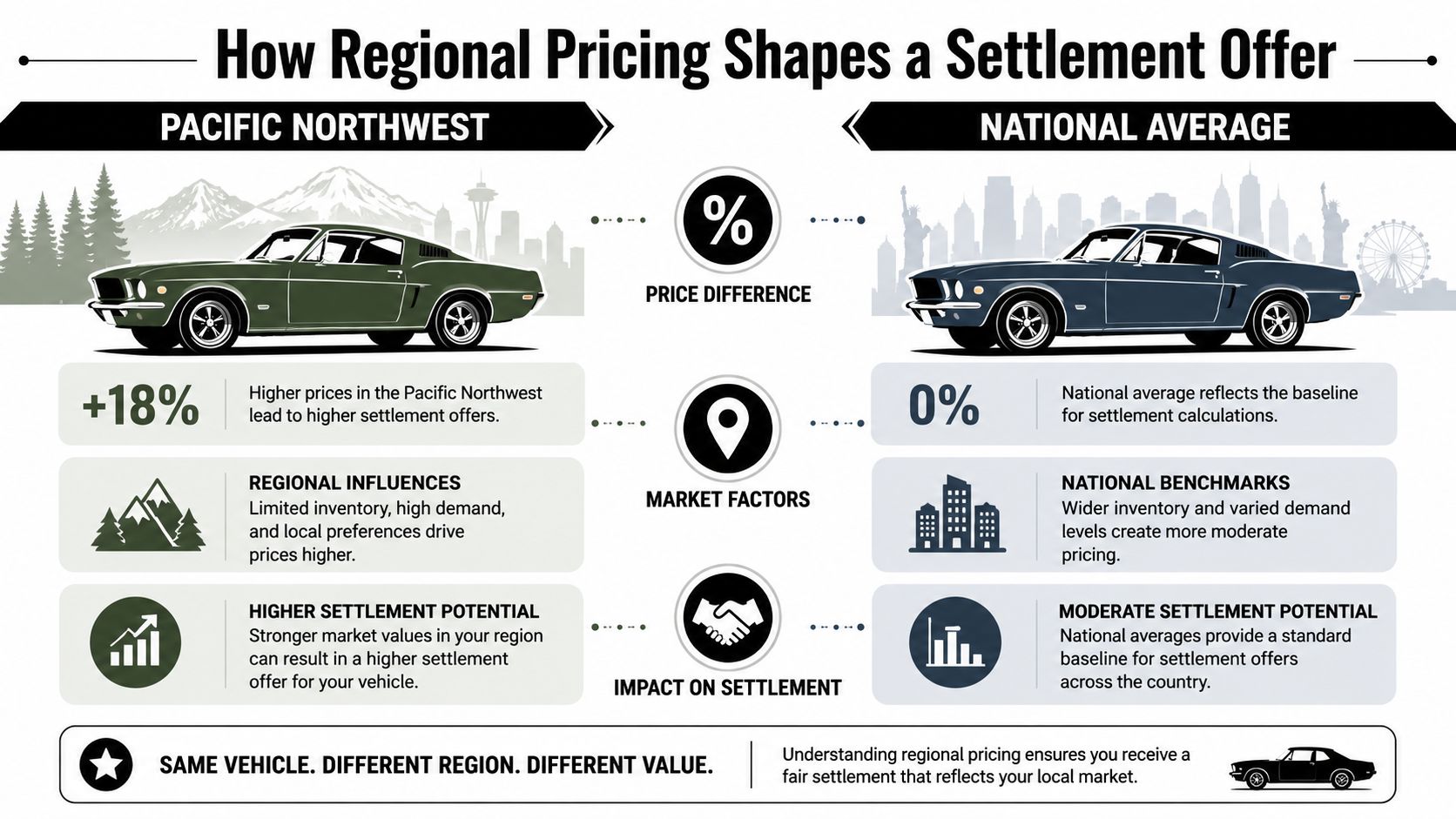
The Pacific Northwest can be a strong market for certain classics because local enthusiast networks are deep and well organized, but you still have to prove it with comps. If the insurer's file leans on a national average while ignoring nearby sales, challenge it. If the regional evidence is thin, say that too, because weak data cuts both ways and should be acknowledged.
A regional market review works best when it answers one question cleanly. What would this exact car have sold for to the kind of buyer who shops this region?
Diminished Value Versus Total Loss on a Collector Car
These two claims use the same market logic, but they point in opposite directions. A total loss claim uses market review data to prove the pre-accident value. A diminished value claim uses the same kind of evidence to show how much market value dropped after repairs.
Same evidence, different outcome
For a total loss, you're showing what the car was worth immediately before the loss. For diminished value, you're showing that the repaired car is still not equal to an undamaged equivalent in the eyes of the market. That matters a lot for collector cars, because buyers care about originality, history, and repair quality in ways that ordinary valuation software can't capture well.
The insurer will often try to flatten both claims into a generic “repair fixed it” argument. That's wrong for collector vehicles with real market identity. A repaired car can run and drive perfectly and still have a lower market value because the buyer pool discounts it.
If you've got a collector car with a repair history, don't let anyone tell you the claim ended when the body shop closed the ticket. If the market sees a difference, the value difference is real.
A proper appraisal for either claim needs documentation, comparable sales, and a method the insurer can test. If you're dealing with a complex file, the classic-car appraisal approach described at classic car appraisal is the right toolset, because it treats the vehicle as a market asset, not a generic repair case.
What to Do When an Insurer Lowballs Your Settlement
Start by reading the policy, not the denial letter. If your policy includes an Appraisal Clause, that's the mechanism that lets you push the disagreement into a structured valuation process instead of a phone-call loop. Don't sign a release until you know exactly what you're giving up.
Then demand the insurer's full valuation file in writing. You want the comps, the source list, the adjustments, and any internal notes that explain how they got to their number. If they won't show their work, that's not a reason to accept the offer. It's a reason to press harder.
Your response should be organized, not emotional
- Review the policy. Find the appraisal language and the settlement terms.
- Document the car. Save photos, service records, receipts, prior listings, and any documentation that proves condition or provenance.
- Challenge the comps. Separate real sold data from asking prices and weak matches.
- Hire an independent appraiser. Get a report that explains the market, the adjustments, and the conclusion.
- Negotiate from evidence. Put the insurer in a position where it has to answer specific facts.
Keep the fight about data, not attitude. The cleaner the report, the less room the insurer has to hide behind software.
You can also compare that path with the broader claim strategy at Total Loss Northwest's classic car appraisal guidance, especially if the car is rare, modified, or heavily documented. That kind of file needs a human valuation, not a generic estimate.
The goal is not to win an argument on tone. It's to put a defensible market review on the table that the insurer can't casually dismiss. That's how you move a claim from lowball territory to a real settlement conversation.
If you're facing a collector-car claim and the offer doesn't match the market, get the file reviewed before you sign anything. Total Loss Northwest builds independent appraisals and settlement support around real market evidence, which is exactly what this kind of dispute needs. Visit Total Loss Northwest and get a documented valuation that puts the car, not the software, at the center of the claim.