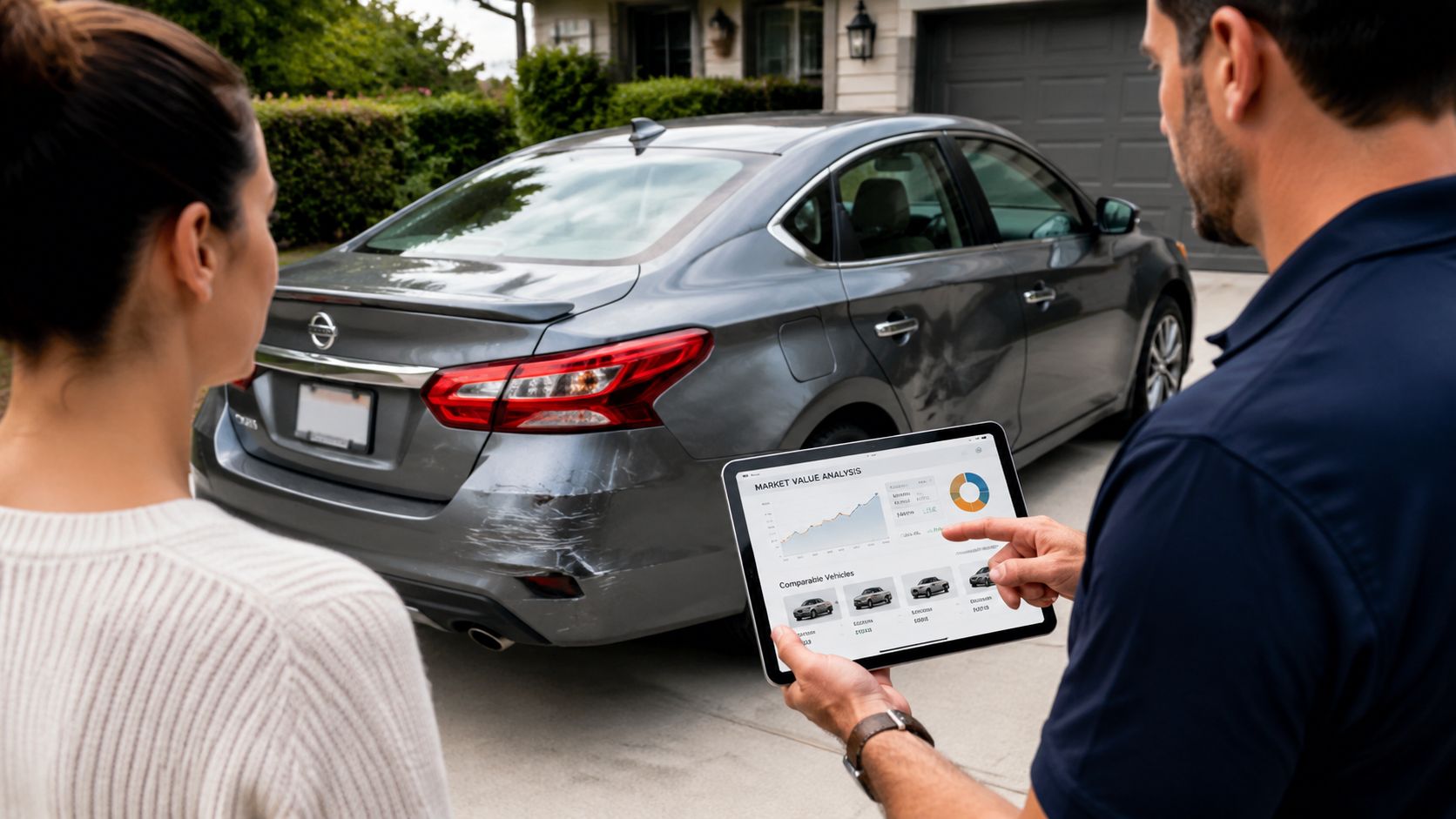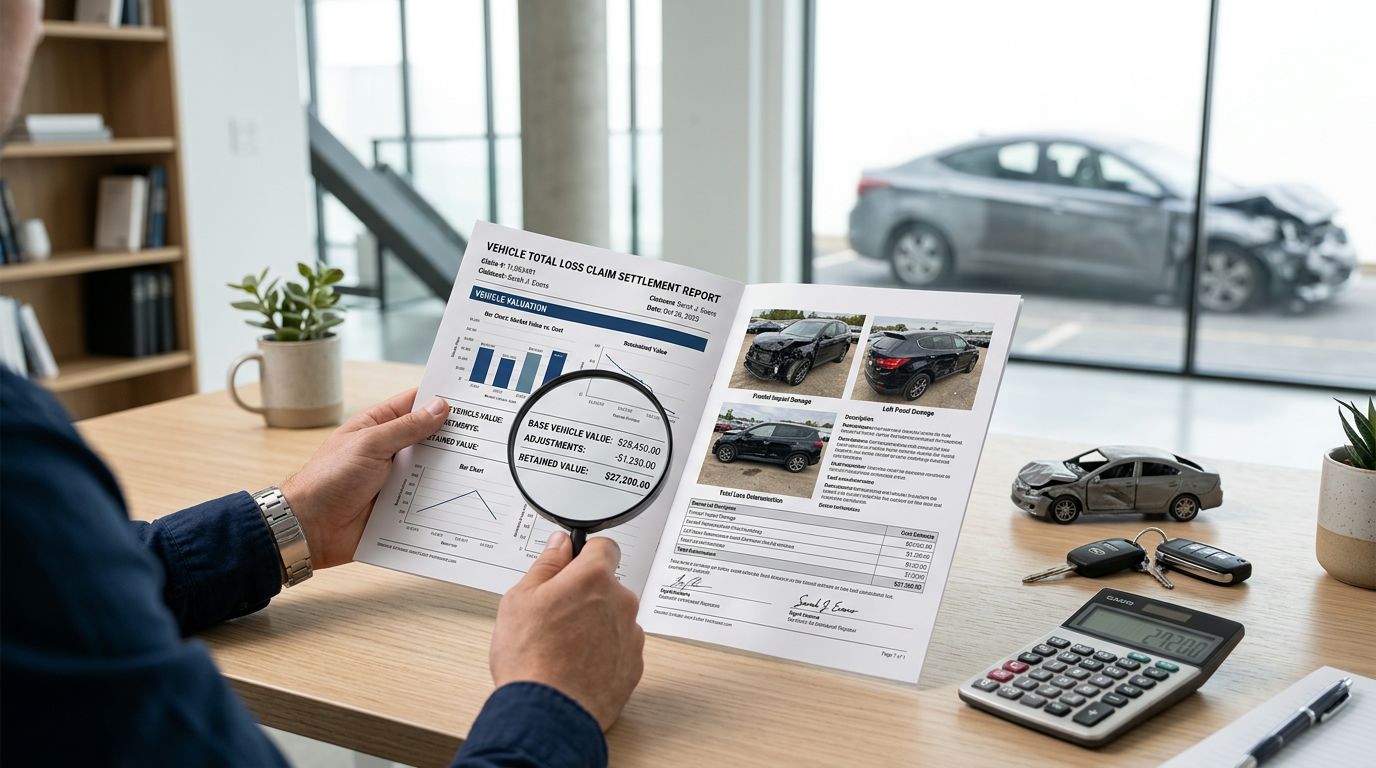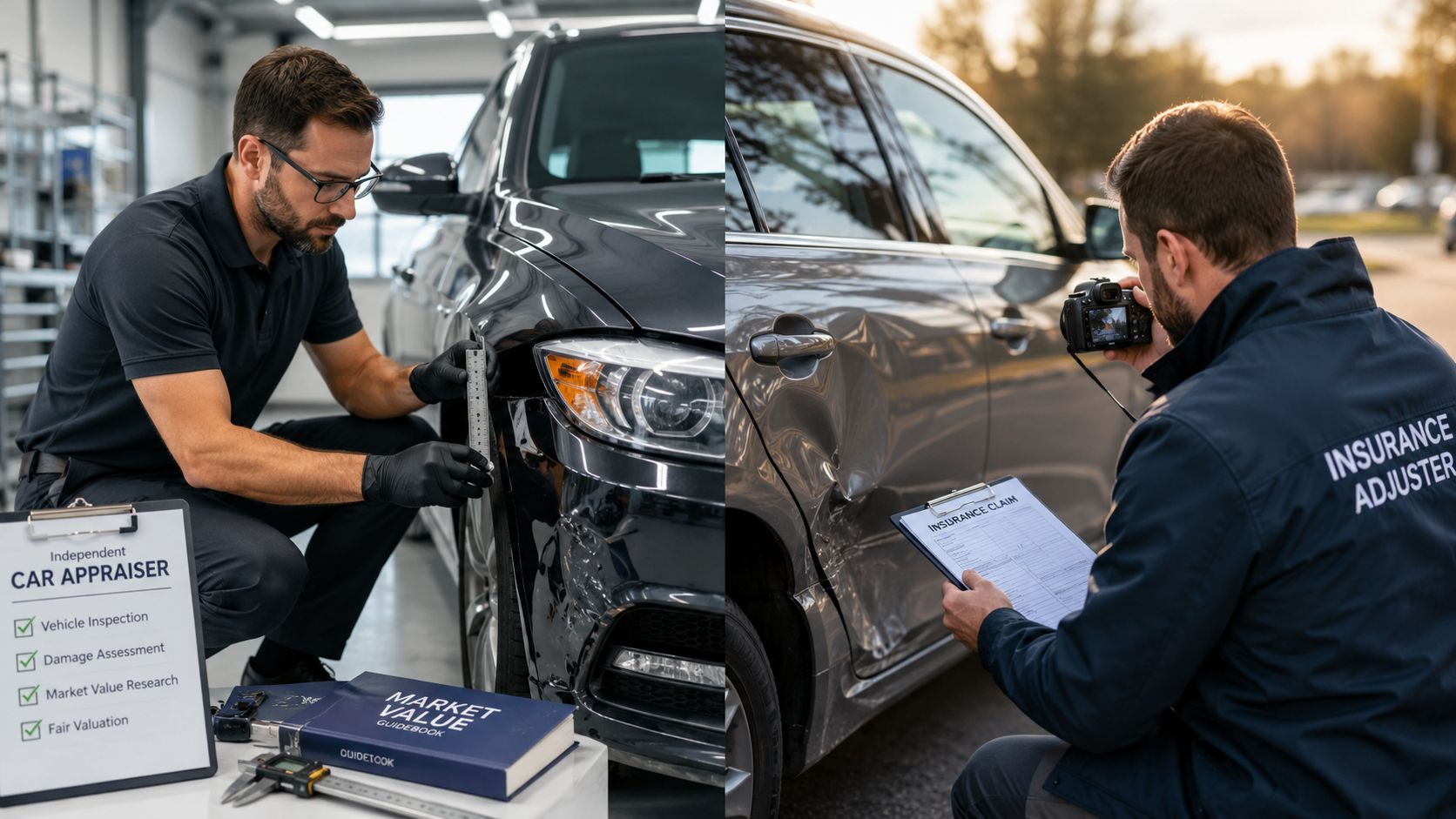
You've just been rear-ended or told your car is a total loss, and the insurer's first number shows up before the shock wears off. They send someone to look at the car, take photos, maybe jot down notes, and then a settlement lands in your inbox that feels too low by a mile. Most drivers assume that walkaround was the valuation. It wasn't.
That confusion costs people money every day. An inspection tells the insurer what happened to the vehicle and what shape it's in. An appraisal tells you what the vehicle was worth, on the open market, before the loss. Those are different questions, and the insurer knows it.
If you're trying to fight a low settlement, the whole game turns on that distinction. The inspection helps the insurer build its file. The appraisal clause is the tool that can challenge the number.
| Criterion | Independent Appraisal | Insurer Inspection |
|---|---|---|
| Central question | What was the vehicle worth? | What is the vehicle's condition and damage? |
| Who orders it | You, or your representative | The insurer |
| Who performs it | A certified independent appraiser | An insurer adjuster, field inspector, or insurer-hired vendor |
| Timing | After a dispute starts or a low offer arrives | Right after the claim opens or the car is inspected |
| Method | Market-based valuation, comparable vehicles, options, history | Damage photos, walkaround notes, condition review |
| Cost | Paid by the claimant who invokes it | Paid and controlled by the insurer |
| Legal weight | Can trigger the policy's appraisal clause process | Supports the insurer's settlement file |
| Typical output | An independent value opinion | A claim note or valuation file |
The blunt truth is simple. The insurer's inspection is built to support the insurer's number. Your appraisal is built to support your number.
What Most Drivers Get Wrong After an Accident
A driver gets hit from behind, the body shop says the car is repairable, and the insurer's adjuster shows up with a clipboard and a camera. The adjuster circles the damage, asks a few questions, and leaves. Two days later, the insurer emails a settlement figure that feels too low, and the driver assumes, “They already inspected it, so that must be the appraisal.”
That assumption is how low offers survive. The inspection is not a value opinion. It's a condition review, and in claim handling that distinction matters because the insurer can use the inspection to justify a repair estimate, a total-loss figure, or a reduced settlement narrative. A driver who treats it like a value determination gives up negotiating power before the main fight starts.
Why the confusion is so expensive
People hear the word “inspection” and think “official.” In a claim file, official doesn't mean fair. It means documented.
The insurer's photo set, field notes, and valuation worksheet can all look technical, but none of that automatically proves the payout is correct. The question that matters is whether the car's pre-loss market value was captured, including trim, options, condition, history, and local comparables.
Practical rule: if the document you received talks mostly about damage, it's an inspection. If it argues about market value, it's an appraisal.
That's the line drivers need to hold. If you let an inspection stand in for an appraisal, you'll often accept the insurer's first number without ever forcing a real market valuation. That's exactly where the money gets lost.
Defining Appraisal and Inspection in Plain English
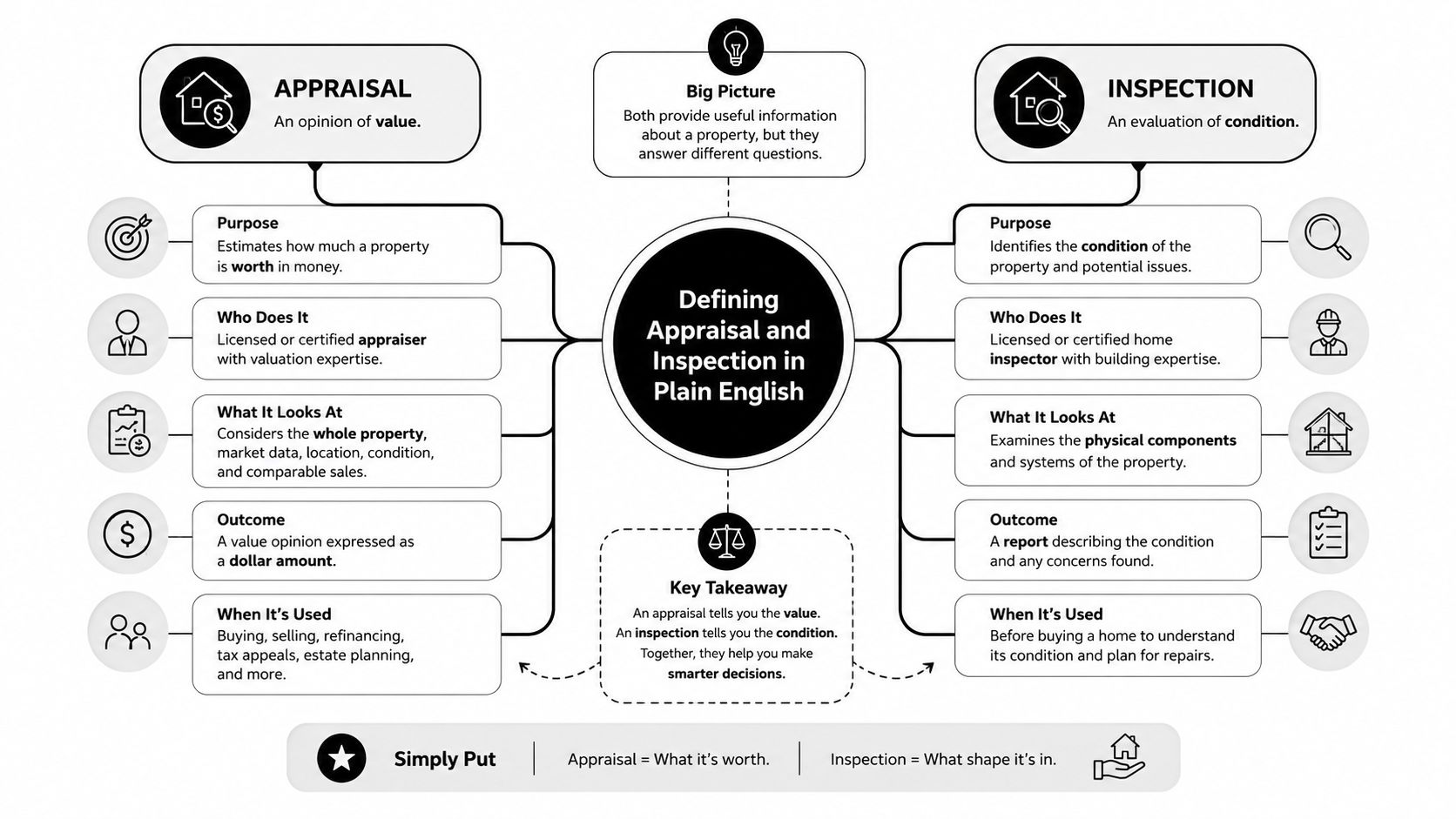
The fastest way to sort out appraisal vs inspection is to ask what each document is built to prove. An inspection tells you what the car looks like after the loss, and a value report tells you what the car commanded before it broke. A damage report describes what happened. A value report explains what the car was worth.
In auto-claim language
An inspection asks, “What shape is this vehicle in right now?” It records impact damage, visible wear, missing parts, safety issues, and repair needs. An insurer usually controls that process because the company wants a documented basis for the claim file.
An appraisal asks, “What was this vehicle worth before the loss?” That answer comes from market data, comparable vehicles, trim level, options, mileage, prior condition, and anything else that moves real-world price. It does not tell the insurer how broken the car is. It tells you what the car was worth before the damage happened.
Who does what
A claim inspection is usually performed by an adjuster, a field inspector, or another insurer-selected vendor. The point is to confirm the loss and support the company's settlement file. If you want a plain-English breakdown of a typical vehicle inspection report details, that is the document category you are dealing with.
A true independent appraisal is done by a certified appraiser hired to give a market opinion, not to defend the insurer's draft estimate. That distinction matters because one document describes condition, and the other sets value. The insurer's inspection helps build the claim position. The appraisal challenges it.
A good claim file has both documents in the right place. The inspection shows damage. The appraisal shows value. If you only have the first one, you are missing the document that protects your money.
By the time you understand that split, you should be able to open your claim folder and say, “I have the insurer's inspection, but I still need an independent valuation.” That is the difference that decides whether a settlement stays soft or gets challenged properly.
Side by Side Comparison of the Two Documents
| Criterion | Independent Appraisal | Insurer Inspection |
|---|---|---|
| Purpose | Establishes actual market value | Documents condition and damage |
| Main question | What was the vehicle worth before the loss? | What damage or condition issues are visible now? |
| Ordered by | The claimant, through the appraisal process | The insurer handling the claim |
| Performed by | An independent appraiser | An adjuster, field inspector, or insurer vendor |
| Claim stage | After a dispute or low offer appears | Early in the claim, before or during valuation |
| Method | Comparable vehicles, options, condition, market research | Photos, notes, damage review, repair observations |
| Cost | Paid by the person invoking the appraisal process | Paid by the insurer |
| Policy impact | Can force a separate value determination under the policy | Supports the insurer's internal estimate |
| Output | Value opinion and supporting documentation | Inspection notes, photos, damage assessment |
The row that matters most to a driver is who controls the document. The insurer controls the inspection, so the inspection usually feeds the company's own number. That is not a theory. It is how the claim file gets built.
An appraisal works differently. It gives you an outside value opinion that stands on its own market support. On an auto claim, the inspection records damage, the appraisal records worth. Those are not interchangeable jobs, and a settlement gets weaker when the file only contains the insurer's version of the facts.
The practical difference is simple. If the insurer's inspection shows missing options, weak condition grading, or incomplete damage notes, the offer can come in low before you have a real chance to push back. If you add an independent appraisal, you create a second valuation path that can challenge that number with market evidence instead of guesswork. That is the document that helps you argue over value, not just over repairs.
as OpenDoor explains in its consumer guide
If your claim folder only has the insurer inspection, you have the company's file, not your counterweight. A driver who wants a fair settlement needs both documents, but for different reasons. One shows what happened to the vehicle. The other shows what the vehicle was worth when the loss hit.
How Insurer Inspections Drive Your Settlement Number
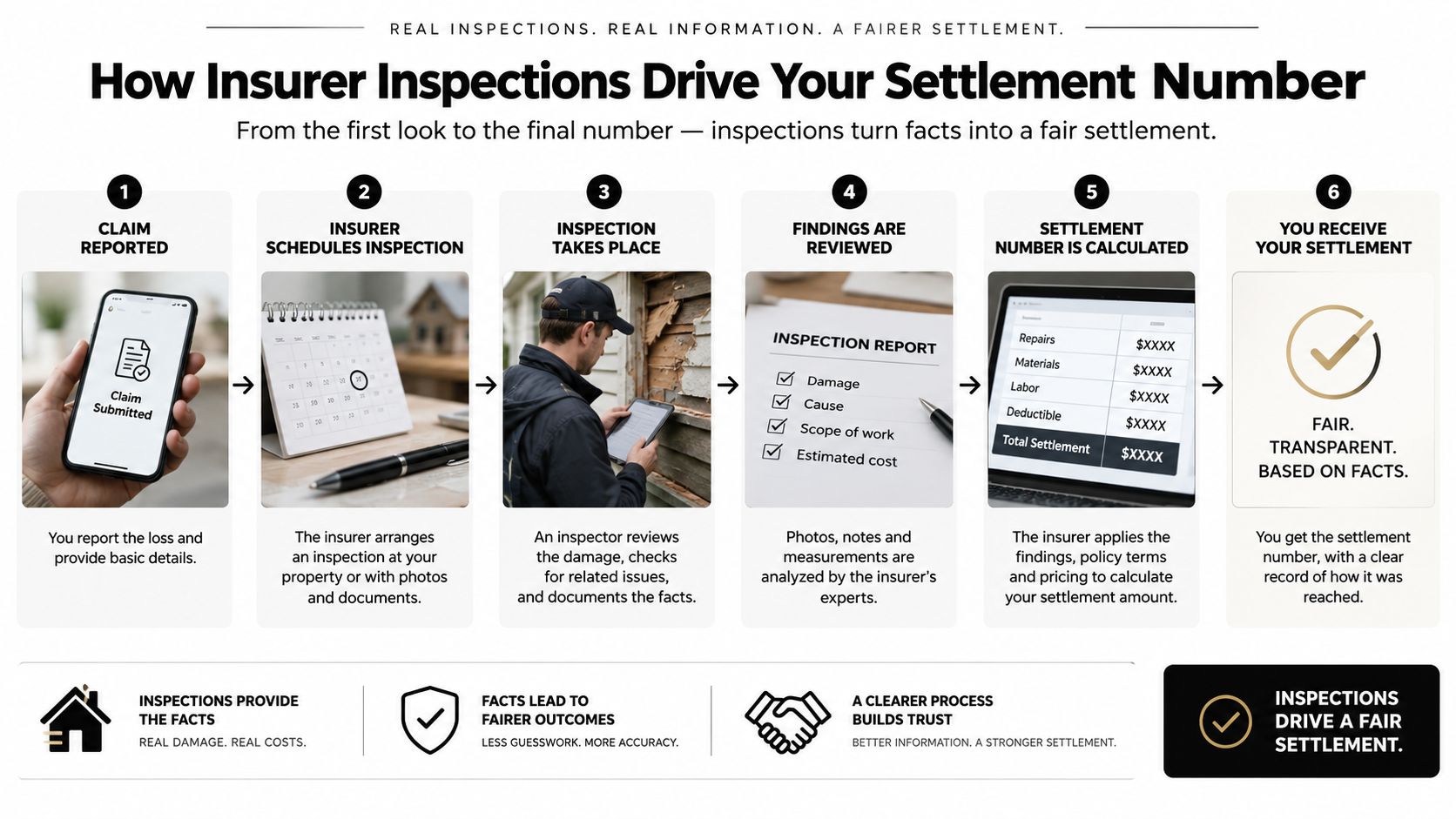
The insurer inspection starts with a walkaround, but it doesn't end there. The photos and notes usually feed into a valuation platform, then someone at the company selects comparables, assigns condition, and produces the number you're asked to accept. That chain is why the inspection shapes the final offer long before you ever see the settlement email.
Where the bias sneaks in
A claim file can look objective and still be tilted. If the adjuster or valuation vendor marks the vehicle as average condition by default, omits an option package, or chooses weak comparable vehicles, the settlement drops without the paperwork ever screaming “lowball.” The language stays clinical while the number moves against you.
That's especially painful on lower-mileage vehicles, well-kept daily drivers, and anything with factory options that affect market price. If those details don't show up cleanly in the valuation, the insurer's inspection has already done part of the work of lowering your payout.
For a closer look at how condition findings get packaged inside a claim, see the insurer-side workflow in this guide on vehicle condition inspection.
Blunt rule: an insurer inspection is not neutral just because it has photos attached. It's a claim-building document, and claim-building documents usually favor the party paying the bill.
Why total-loss drivers get hit hardest
Total-loss settlements are where this gets ugly fast. The car is gone, the settlement number is supposed to reflect market value, and the insurer's inspection often becomes the anchor for the whole valuation. If the company misses trim, packages, or local market demand, the offer can land below what a buyer would have to pay for a similar vehicle.
That's why the appraisal clause matters. It forces a second value opinion, which can disrupt an offer that was built on a one-sided inspection file. If you're dealing with a valuation dispute, the process overview at insurance appraisal process is the right place to start.
Invoking the Appraisal Clause Step by Step
The appraisal clause is the contract language that lets you challenge the insurer's number without turning the dispute into a full-blown lawsuit. It does not fix every claim problem, but for valuation fights it's the cleanest legal path when the issue is money, not liability. If you're staring at a bad total-loss offer or a diminished-value dispute, this is the tool that can move the file.
The sequence matters
First, pull your policy and find the appraisal clause. Read the wording carefully, because that clause tells you how each side appoints an appraiser and what happens if they disagree. Next, send a written demand invoking the clause and name your certified independent appraiser.
The insurer then names its own appraiser. Those two appraisers compare valuations, review the evidence, and try to reach agreement. If they still land far apart, an umpire enters the process and resolves the difference under the policy terms.
What to gather before you send the demand
- Policy language: the exact appraisal clause from your coverage documents.
- Claim file materials: the insurer's settlement letter, valuation report, photos, and repair estimate.
- Market evidence: comparable vehicles, option sheets, and any proof that your car's trim or condition was missed.
- Loss-specific records: service history, receipts, and documentation of modifications or special equipment.
The stronger your paperwork, the harder it is for the insurer's number to survive unchanged. A good demand letter doesn't rant, it points to the valuation gap and asks for the contractual appraisal process to begin.
Practical rule: if the insurer missed comparables, stripped out options, or valued a total loss below realistic market replacement, you have a strong reason to invoke the clause.
A certified independent appraiser can give you a market-based report that stands opposite the insurer's file. That's the pressure point. The insurer doesn't get to be the only one who defines value.
Three Real Scenarios That Show Which Document You Need
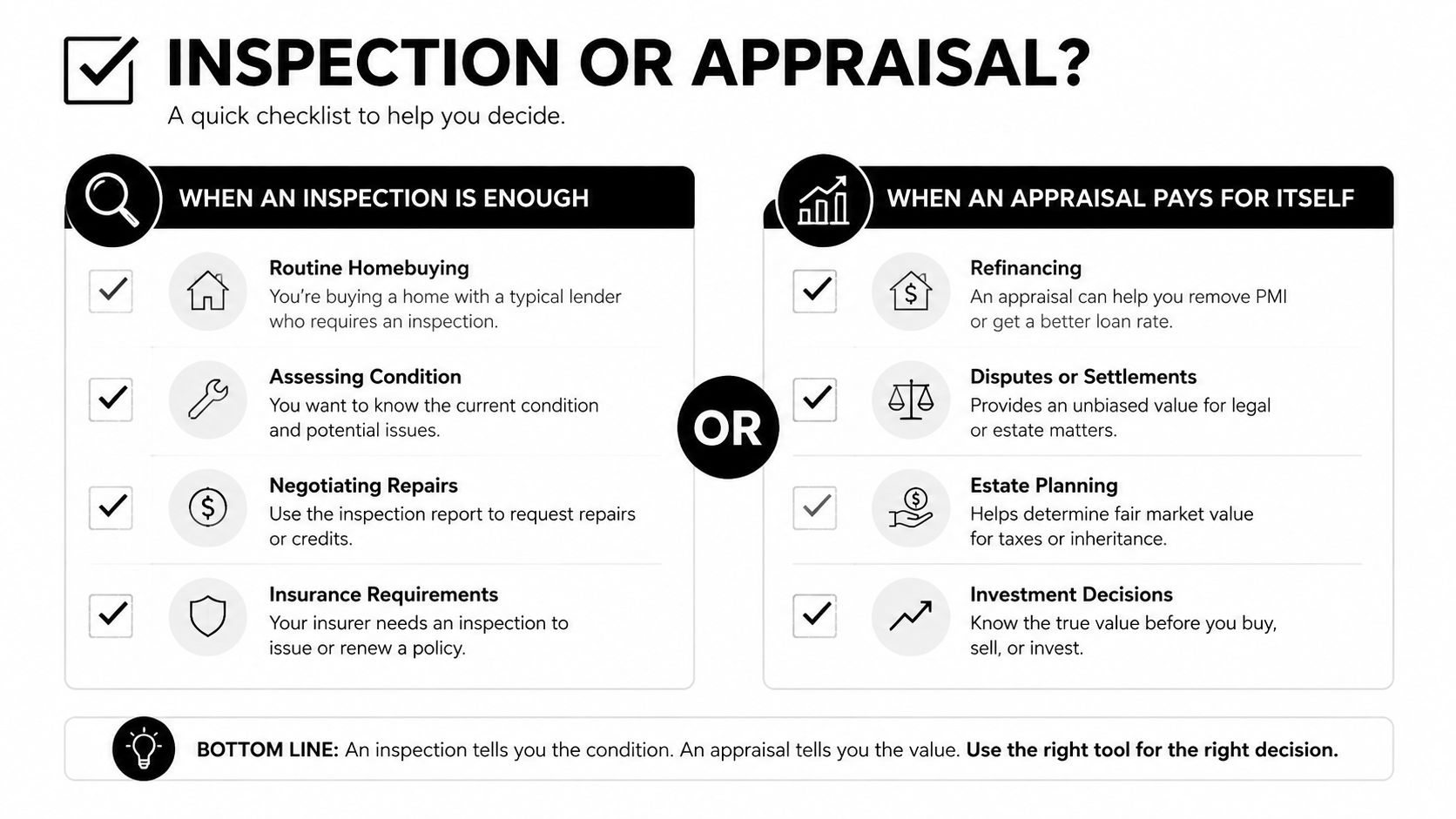
The easiest way to choose is to look at the claim type, not the paperwork language. If the issue is damage description, an inspection may be enough. If the issue is value, you need an appraisal.
Scenario one, repairable car, diminished value ignored
A not-at-fault driver gets rear-ended, the car gets repaired, and the insurer treats the claim like it ended at the body shop. The problem is that the vehicle may still have lost market value after the accident, even if the repairs were clean. In that situation, the right move is an independent appraisal that addresses diminished value and market impact.
Scenario two, total loss with a weak offer
A driver with a clean, well-kept car gets a total-loss offer that ignores local pricing and comes in well below what similar vehicles are selling for. That's not a repair dispute, it's a value dispute. The appraisal clause is the key point because the insurer's inspection cannot answer the market question by itself.
Scenario three, high-value, modified, or collector vehicle
A custom build, enthusiast car, or option-loaded luxury vehicle gets evaluated like a generic sedan. That's a mistake that costs real money. A certified appraisal with documented comparables and equipment detail is the document that forces the file to reflect what the vehicle was.
If the insurer's description of your car sounds generic, the valuation probably is too.
What should you do this week? Pull the settlement letter, compare it to your car's real equipment and condition, and decide whether the problem is damage, value, or both. Then choose the document that matches the problem instead of accepting the one the insurer already produced.
When an Inspection Is Enough and When an Appraisal Pays for Itself
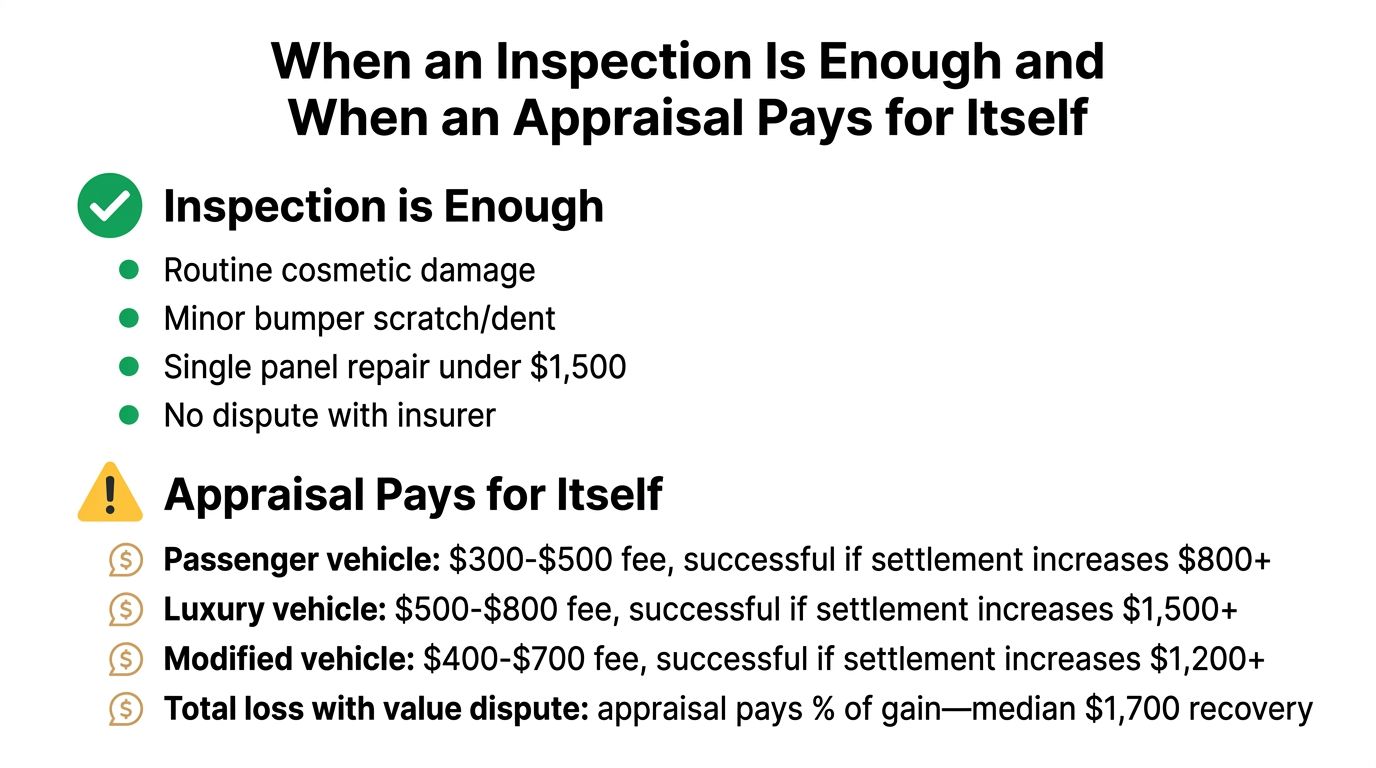
An inspection is enough when the claim is simple and nobody is fighting the number. Minor cosmetic damage, a clear repair path, and no valuation dispute usually don't justify the extra work. If the insurer agrees on fault, the shop estimate is solid, and the payout matches reality, don't manufacture a fight.
An appraisal pays off when the claim is about value. That includes total-loss offers that miss equipment, lowball diminished-value claims, and any file where the insurer's comparables don't resemble your vehicle. The fee only makes sense if the likely correction is bigger than the cost of the dispute process, and in real-world claim handling that often comes down to whether the insurer undercounted your car before it ever got a proper look.
Red flags that the number is soft
- No real comparable vehicles listed: the offer looks like a guess dressed up as data.
- Missing options or trim details: your vehicle is being valued as if the extras never existed.
- Automatic average condition: the file ignores how the car was kept before the loss.
- No mention of diminished value: the claim ended at repair costs when the market impact didn't.
- Generic valuation language: the report reads like a template instead of a vehicle-specific analysis.
Here's the direct advice. If the only issue is a scuff, an inspection is enough. If the issue is what your car was worth, stop pretending the insurer's inspection settled that question.
Your Next 30 Days After Deciding to Invoke the Appraisal Clause
Start by pulling the policy, the settlement letter, the insurer's valuation, and every photo or estimate tied to the claim. Then send a written appraisal demand and name your own certified independent appraiser. Keep the message short and firm, because the goal is to trigger the policy process, not debate on the phone.
Choose an appraiser who works with valuation disputes, not a generalist who only glances at a market summary. After both sides appoint appraisers, expect the insurer to stand by its number unless the file has obvious gaps. If the two appraisers don't agree, the umpire step can resolve the difference under the policy's appraisal clause.
If diminished value is part of your loss, raise it in the same dispute track instead of letting it disappear in the repair paperwork. That issue often travels alongside the appraisal process, especially when the vehicle was not at fault and the market penalty is real.
Never accept the first number until the appraisal report exists.
If you're fighting a low total-loss offer or a diminished-value dispute, Total Loss Northwest builds independent valuation reports and handles appraisal-clause representation for drivers who need the insurer's number challenged on paper. Visit Total Loss Northwest to compare your claim file against a real market-based appraisal and decide whether your settlement is fair.