You've finally found it. The collector car you've been chasing for months is sitting in a polished showroom, photographed well, described with confidence, and attached to a dealer name you recognize. That's the moment a lot of buyers relax too early.
A known dealer helps, but it doesn't remove risk. The global collectible cars market represents an annual revenue opportunity of €76 billion to €90 billion, with about €40 billion to €45 billion generated annually by dealers, brokers, auction houses, and platforms, according to McKinsey's collectible cars market analysis. Serious money attracts serious operators, but it also attracts slick listings, selective disclosures, and pricing that assumes you won't push back.
That's why I don't treat collector car dealers as just inventory sources. I treat them as transaction partners who need vetting. You're not only choosing where to buy or consign. You're choosing how hard your life will be when you ask for paint meter readings, accident documentation, insurance details, and support on value disputes later.
If your broader goal is protecting margin in a vehicle business, this guide pairs well with practical ways to boost auto shop revenue.
1. Park Place LTD
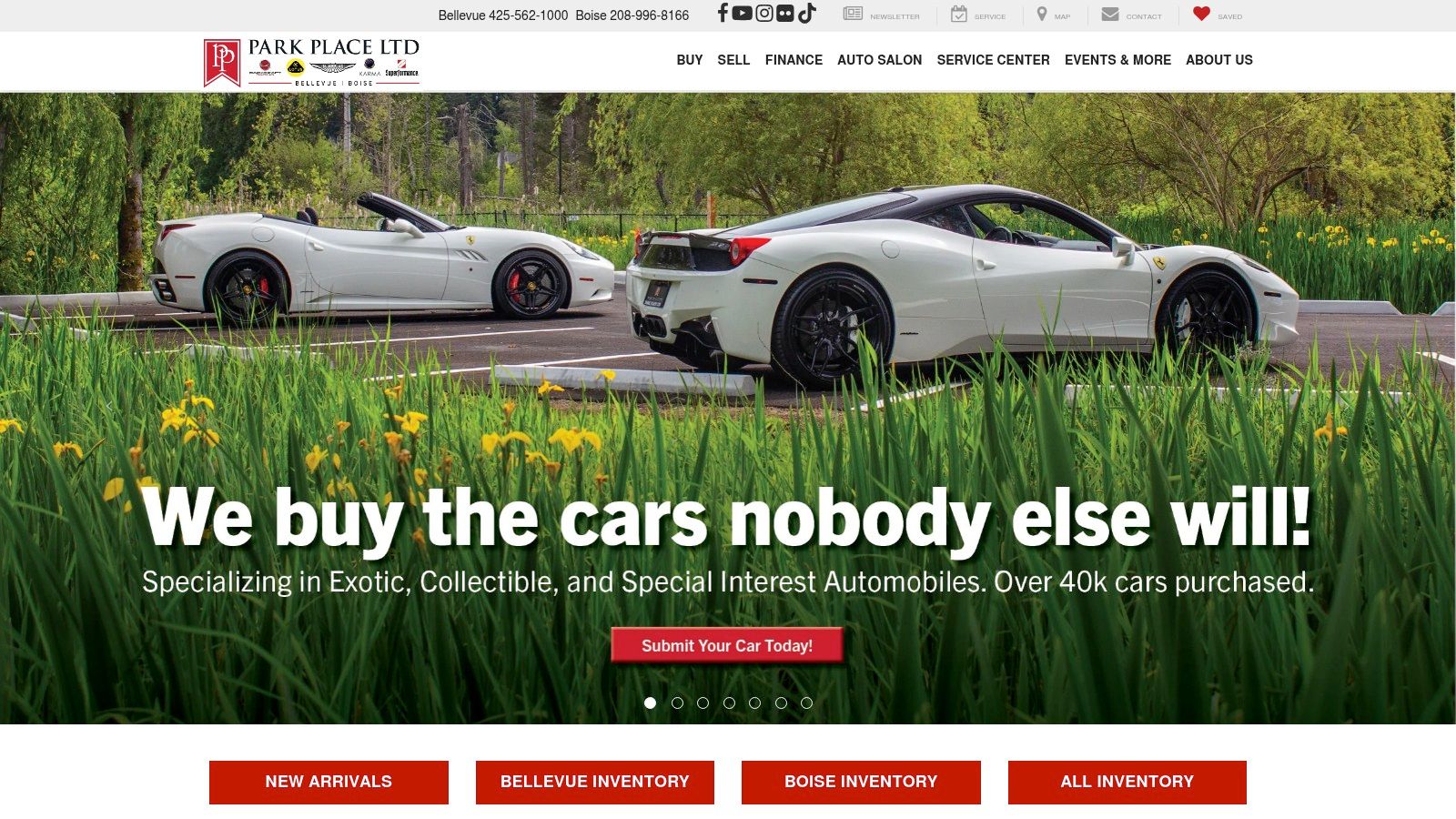
Park Place LTD makes sense for buyers who want the whole ecosystem under one roof. It's a strong fit when you need more than a car. You need transport coordination, service support, detailing, and a dealer that's used to handling remote transactions without making the process feel improvised.
The appeal here is convenience with legitimate specialty depth. Park Place also carries regional Aston Martin and Lotus franchise relevance, which matters if you're buying something that benefits from marque-specific service familiarity. For Pacific Northwest buyers, that can remove a lot of ownership friction after the sale.
Where Park Place works best
A full-service dealer can save time, but only if you use that structure wisely.
- Best for remote buyers: Their setup is well suited to buyers who won't see the car in person before shipping.
- Best for ongoing ownership: Sales, service, and detail support in one place can make post-purchase issues easier to address.
- Best for higher-end inventory: If you're shopping curated classics and exotics instead of rough projects, this environment usually fits.
The trade-off is price. Curated inventory usually carries curated pricing. I also treat consignment-heavy inventory with extra discipline because the dealer may be relying on seller-provided representations more than buyers assume.
Practical rule: Ask who owns the car right now, who prepared the description, and whether the dealer has independent service records or only consignor documents.
If you're negotiating on a car with prior cosmetic or structural history, an independent collector car valuation becomes useful. It gives you something firmer than showroom confidence when you're challenging an asking price, a trade offer, or a later insurance position.
Visit Park Place LTD.
2. Canepa
Canepa sits at the top end of the market and doesn't pretend otherwise. If you want museum-grade presentation, serious restoration capability, race prep knowledge, and cars with provenance that matters, few names carry more weight.
This is the place for buyers who care about documentation quality as much as paint quality. Canepa's Porsche reputation is especially strong, and that matters because the best cars in this segment often sell on the details buried in service records, restoration choices, component correctness, and ownership history.
What you're paying for
At Canepa, you're usually paying for process and standards, not just metal.
- In-house capability: Restoration, service, and motorsports work under one roof can tighten quality control.
- Premium sourcing: Significant road and race cars tend to find their way here because serious consignors want serious presentation.
- Documentation culture: Cars at this level usually come with more structured background material than average dealer stock.
That said, prestige can blur judgment. Buyers sometimes assume a top-tier dealer has already answered every question worth asking. Don't make that mistake. Ask whether paintwork is cosmetic, restorative, or corrective. Ask what was replaced, what was preserved, and what still needs sorting if the car is exercised as intended.
Buy the paperwork with the car. If the paperwork feels thin, the car isn't as strong as the photos suggest.
For negotiation, I'd want an outside classic car appraisal if the car has any event in its history that could affect diminished value or future insurability. At this level, the gap between presentation value and real market value can be expensive.
Visit Canepa.
3. Hyman Ltd. Classic Cars
You spot a prewar Packard or a coachbuilt European car online, the photos look right, and the asking price feels close enough to market. That is the point where buyers get into trouble. Older, rarer cars can hide value swings in body history, restoration age, replacement components, and paperwork gaps that a generalist dealer or insurer may price badly.
Hyman Ltd. earns attention because it operates in that narrower end of the hobby. The inventory often reaches into brass-era, prewar, and unusual postwar cars that require more than a basic year-make-model comparison. A buyer looking at these cars needs era-specific judgment. Originality standards are different, restoration choices age differently, and authenticity questions can sit in trim details, instruments, castings, and coachwork rather than obvious headline specs.
That matters in negotiation.
A dealer can present a car well and still price it as if every restoration decision supports top value. An insurer can do the same after a loss, especially if the adjuster lacks context for niche collector segments. Before agreeing on a number, get independent support if the car has prior damage, an older restoration, or any history that could affect desirability after purchase. An outside diminished value or total loss appraisal gives you something stronger than opinion if you need to challenge a dealer's ask or push back on an insurance settlement later.
I like Hyman best for buyers who already know their lane, or who are disciplined enough to ask hard questions before emotion takes over.
- Best fit for uncommon cars: Useful when you are shopping outside the usual muscle car and modern exotic pipeline.
- Good match for remote buyers: Detailed listings can help you identify what to verify before you spend money on travel, inspection, or transport.
- Less suited to trend-driven shopping: If your target is a late-model supercar, restomod, or high-volume collector staple, other dealers are better aligned.
One practical step gets skipped too often. Confirm insurability before money changes hands. Agreed value terms, storage requirements, usage limits, and documentation standards can affect what the car is really worth to you on day one. Review these classic car insurance requirements early, especially if the car is rare enough that a claim could turn into an argument over value.
Visit Hyman Ltd. Classic Cars.
4. Beverly Hills Car Club
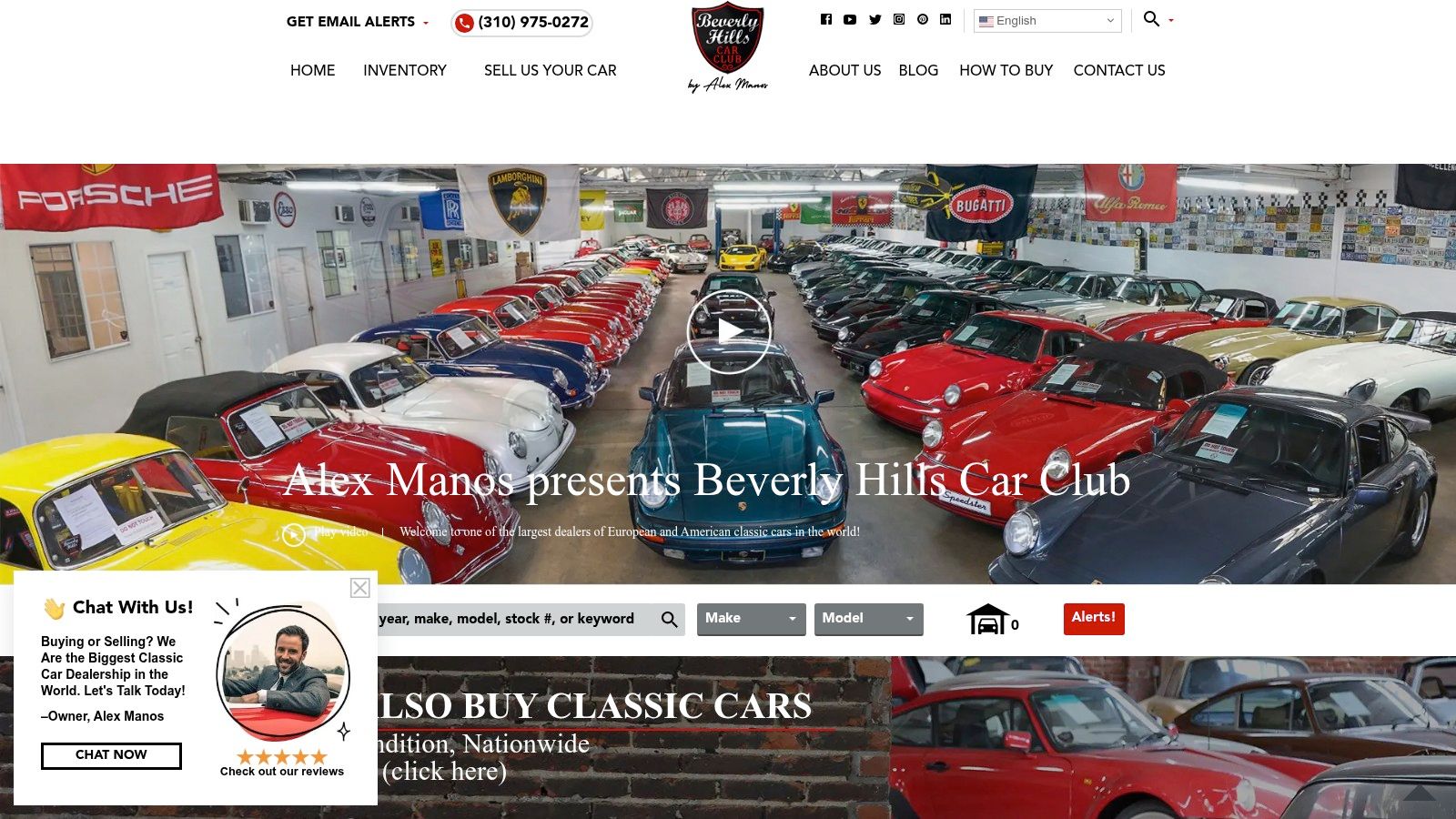
Beverly Hills Car Club is a different animal from the polished, highly curated end of the market. It's useful because it gives buyers access to constant turnover, broad European and American classic coverage, and plenty of cars that still need work.
That's exactly why some buyers love it and others shouldn't be there at all. If you're hunting projects, driver-level cars, or something that needs recommissioning rather than admiring concours-level inventory, this can be a productive place to look. If you want a car that's sorted, tested, and ready for a high-level event, keep your expectations in check.
The negotiation angle that matters here
Accident history and diminished value questions become concrete in dealer transactions. A critical underserved issue is that 90% of buyers ask about accident history, yet many dealers still provide vague or no documentation, leaving buyers exposed to undisclosed repairs and hidden value loss, as noted in this discussion of questions buyers ask at a used car dealership.
On project-level and as-is inventory, that risk grows because buyers can mistake incomplete information for acceptable uncertainty.
- Ask for repair records: Not just verbal reassurance.
- Ask what damage is known versus disclosed by prior owners: Those aren't the same thing.
- Ask whether the asking price reflects prior accident history: If the answer is vague, assume you need outside valuation support.
Negotiation move: If the dealer can't produce solid accident documentation, base your offer on the car as an uncertain-history example, not as a clean-story example.
Visit Beverly Hills Car Club.
5. Gullwing Motor Cars
Gullwing Motor Cars is often most useful to sellers who value speed and to buyers who enjoy scanning incoming oddities, estate cars, and barn-find style inventory. It has the feel of a place where unusual stock appears regularly, sometimes before the rest of the market catches up.
That creates opportunity, but it also demands discipline. Cars sourced quickly and moved quickly don't always arrive with the kind of organized paper trail a cautious collector wants. If you're buying from this kind of pipeline, the first job isn't falling in love with the find. It's determining how much uncertainty you're being asked to absorb.
When Gullwing is the right choice
I like dealers like this for two specific situations. One is when a seller wants a straightforward exit without staging a private-party campaign. The other is when a buyer knows how to underwrite risk and can spot value in cars that haven't yet been fully sorted or fully marketed.
The mistake is treating every unusual car as a hidden gem. Some are. Some are unfinished stories.
- For sellers: Fast intake and broad buying interest can simplify a difficult sale.
- For buyers: Inventory variety can surface cars you won't see at more curated dealers.
- Main caution: Condition descriptions can't replace an independent inspection.
A good approach here is simple. Request underside photos, cold-start video, title details, and service documents before discussing price seriously. If the answers come back thin, let your offer reflect the cleanup, unknowns, and appraisal risk you may inherit later.
Visit Gullwing Motor Cars.
6. RK Motors Charlotte
RK Motors Charlotte is strong where presentation matters. The listings are usually polished, the photography is professional, and the inventory tends to appeal to buyers who want American muscle, restomods, customs, and selected exotics that look ready to enjoy.
For many buyers, that professional presentation is helpful. It shortens the screening process and makes remote shopping easier. It also creates a subtle risk. Good media can make a car feel more documented than it really is.
What to press on before you commit
A dealer with national reach often works well for turnkey cars because the whole package is designed to move quickly. Financing support, consignment exposure, and detailed listings help. Popular models can also disappear fast, which pushes buyers into deposit decisions before they've completed enough diligence.
That's where discipline matters. I'd rather lose a car than skip the hard questions.
Ask for the shop invoices behind any restoration claims. Ask whether the drivetrain, bodywork, and trim finish were done for show, for driving, or for sale prep. On restomods, ask who built it and who will support it after delivery.
A sharp listing earns your attention. It doesn't earn your trust.
This kind of dealer is often a good fit if you want a clean buying experience and a broadly marketable car later. Just remember that turnkey inventory often comes with premium pricing, and premium pricing should come with premium documentation.
Visit RK Motors Charlotte.
7. Streetside Classics
Streetside Classics is useful for one reason above all. Selection. With multiple showroom locations and a consignment-heavy model, it gives buyers a broad cross-section of the market and gives sellers access to wide exposure without having to build their own marketing machine.
That scale helps comparison shoppers. If you're trying to understand how different regions present similar trucks, muscle cars, and restomods, Streetside can be a practical benchmark. It also highlights the biggest issue with large consignment operations. Condition and disclosure quality can vary from car to car.
Protect yourself on insurance and valuation
Insurance is where many collector deals go sideways after the handshakes. One overlooked issue is whether existing agreed-value coverage, policy assumptions, or valuation language protect the buyer after transfer. According to this review of insurance for collectible cars, 70% of dealers do not verify or disclose whether a vehicle's current policy transfers to the buyer, and average agreed-value shortages in total loss settlements have reached $18,000 when listed values lag the prevailing market.
That matters at a dealer like this because the variety is so wide. A buyer can move from one car to the next and assume the insurance conversation is standard. It isn't.
- Confirm transferable coverage terms: Don't assume the current setup follows the car.
- Ask how the listed value was established: A stale number can hurt you after a loss.
- Get an outside appraisal when needed: Especially on modified, rare, or rapidly moving segments.
If I were buying here, I'd treat insurance verification as part of the purchase negotiation, not a task for later.
Visit Streetside Classics.
Top 7 Collector Car Dealers Comparison
| Dealer | 🔄 Process / Complexity | ⚡ Resource Requirements | 📊 Expected Outcomes | 💡 Ideal Use Cases | ⭐ Key Advantages |
|---|---|---|---|---|---|
| Park Place LTD | Moderate–high: multi-building operations & consignment logistics | High: large indoor showrooms, factory franchises, transport capability | Full-service ownership experience; faster consignment turnover (~70% in ~60 days) | Regional collectors, remote buyers wanting turnkey service | Authorized Aston Martin support; comprehensive sales, service, storage |
| Canepa | High: concours restorations and race prep workflows | Very high: in-house restoration, motorsports shop, specialist tooling | Museum-grade restorations and race-ready cars with deep documentation | Buyers seeking concours-quality or race-prepared classics (esp. Porsche) | Vertical integration; strong Porsche/959 expertise; global reputation |
| Hyman Ltd. Classic Cars | Moderate: worldwide sourcing and specialized logistics | High: very large, eclectic inventory and global shipping capability | Access to rare prewar/coachbuilt cars with detailed remote listings | Collectors of prewar/coachbuilt vehicles and global acquisitions | Deep prewar expertise; extensive and rare inventory |
| Beverly Hills Car Club | Low–moderate: high-turnover, “as‑is” sales model | Moderate: massive selection across price points, nationwide shipping help | Wide variety of driver/project cars at lower entry prices; condition varies | Value-focused restorers, bargain hunters, estate purchasers | Broad selection; lower-cost project opportunities; frequent new arrivals |
| Gullwing Motor Cars | Low: fast offers and streamlined intake for sellers | Moderate: nationwide buying, east-coast hub, international shipping experience | Quick transactions and incoming finds; variable vehicle condition | Sellers needing speed; buyers scouting fresh/unusual inventory | Same-day offers; fast closings; estate and barn-find sourcing |
| RK Motors Charlotte | Moderate: curated consignment and professional sales process | High: showroom presentation, national marketing, financing resources | Turnkey, well-documented muscle, restomods and select exotics | Buyers wanting turnkey, well-presented classics; consignors seeking national reach | Professional listings/media; national marketing; financing options |
| Streetside Classics | Moderate–high: multi-location consignment management | High: six indoor showrooms, thousands of annual listings | Massive selection and strong market exposure; frequent new arrivals | Comparison shoppers, sellers seeking broad market reach, trend spotting | Multi-state footprint; high vehicle throughput; structured consignment process |
From Offer to Ownership Securing Your Car's True Value
You agree on a collector car, wire the deposit, and feel good about the number. Then the inspection turns up an old repair, the insurer lowballs a later claim, or the dealer's trade figure lands well below what comparable cars are bringing. That is the point where buyers and sellers either protect their position or give money away.
Choosing a dealer is only the first filter. The actual test comes when a price has to hold up under scrutiny. In a large, active collector market, valuation gaps are common. Dealers need margin. Insurers rely on their own methods and databases. A buyer or owner who shows up with no outside support usually ends up arguing from instinct.
Use documents first. Then use independent valuation.
A pre-purchase inspection still matters. So do service records, title history, prior auction results, paintwork disclosures, and recent comparable sales. But if a number is being pushed down because of prior damage, a total loss claim, or a soft trade-in offer, an independent diminished value or total loss appraisal gives you something far more useful than opinions. It gives you evidence you can negotiate from.
[INFO FOR WRITER: Insert an infographic here. Type: 'process_flow'. Title: 'The Independent Appraisal Advantage'. Steps: 1. Receive Dealer/Insurer Offer -> 2. Question Valuation Discrepancy -> 3. Engage Certified Appraiser -> 4. Appraiser Gathers Real Market Data -> 5. Receive Detailed Valuation Report -> 6. Renegotiate From a Position of Strength -> 7. Secure a Fair Market Value.]
Two situations come up again and again. First, an insurer declares the car a total loss and values it like an ordinary used vehicle instead of a documented collector example with real market demand. Second, the car is repaired after an accident, but the history still follows it. Discerning buyers discount prior damage, even on a well-fixed car, and that loss in resale value is real whether a dealer admits it up front or not.
This is also where many enthusiasts make a costly mistake. They spend weeks comparing dealers, then accept the first weak offer after a claim because they assume the paperwork is too technical to challenge. It is not. A qualified appraiser can document market comps, condition, provenance, options, and post-repair stigma in a format that carries weight in negotiations.
For owners in Washington and Oregon, Total Loss Northwest can invoke the Appraisal Clause on your behalf and challenge low insurer valuations with market-backed reports. They also handle diminished value support in all 50 states. That changes the conversation. You are no longer asking for a better number. You are presenting support for one.
The best collector car deal is the one that still makes sense after the inspection, after the title review, and after an independent appraiser tests the number against the actual market. Excitement gets a transaction started. Evidence protects the investment.