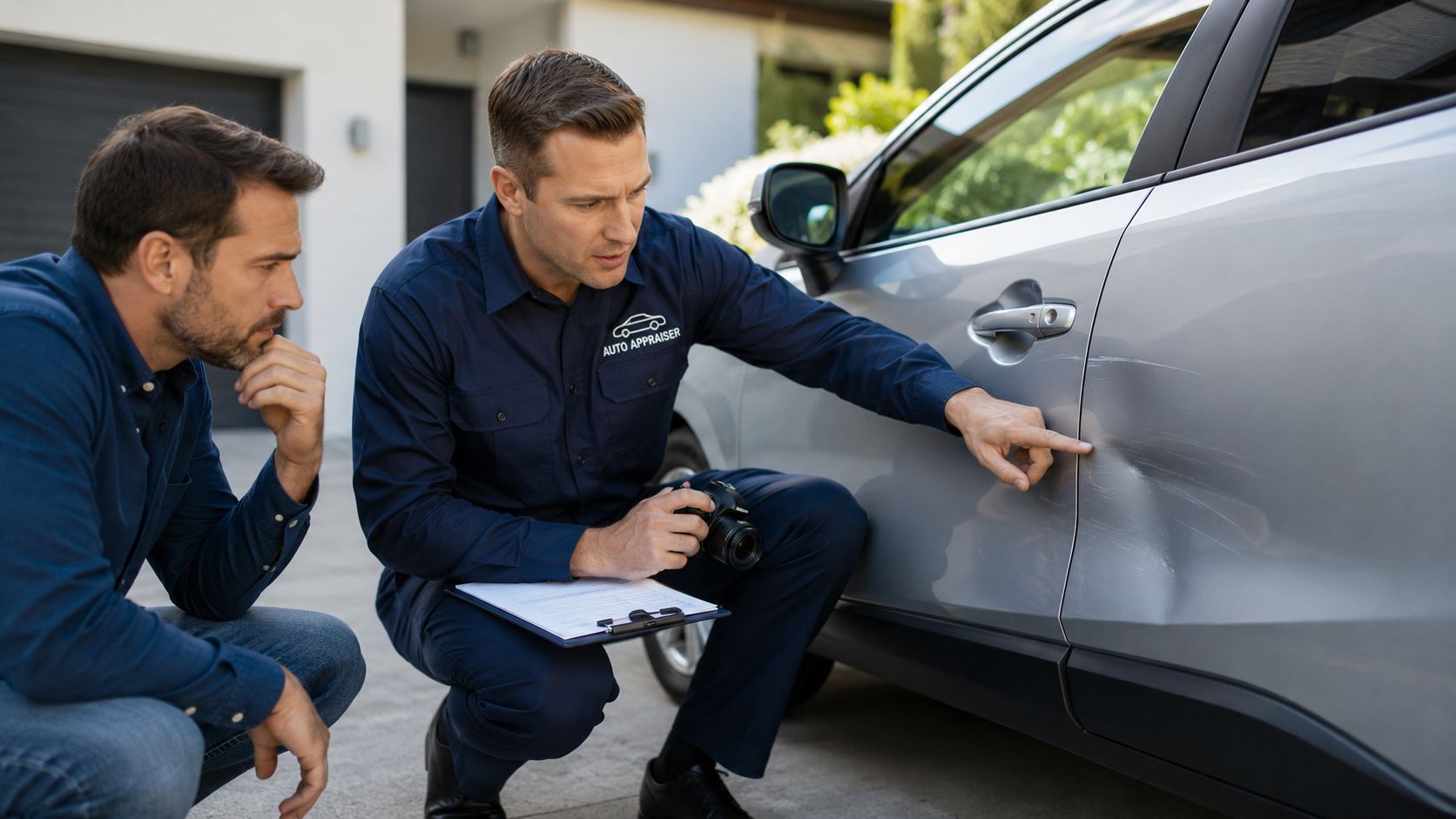
You open the claim, upload photos, answer a few questions in an app, and wait for the number. Then the offer comes in and it doesn't match what you know you lost. The repair estimate feels thin. The total loss value ignores options, condition, or your local market. The adjuster sounds confident, but confidence isn't the same as accuracy.
That's the moment an independent auto appraiser stops being a luxury and starts being a tool for negotiation. Not for reassurance. For evidence.
Insurance companies have systems, software, approved shops, and internal valuation processes built to move claims fast. You need your own qualified expert whose job is to document the vehicle, test the insurer's number, and put a defensible value on paper. If there's a dispute over value, that report becomes the foundation for invoking the Appraisal Clause and forcing the disagreement into a more balanced process.
When You Need an Independent Auto Appraiser
The usual call starts the same way. A driver has already sent in photos. The insurer has already generated a number. The claim feels decided before anyone looked closely at the car.

That isn't paranoia. It's how a growing share of claims are handled now. Over 25% of auto claims nationwide are now initiated through smartphone photos rather than physical inspections, up from 15% in recent years, according to this discussion of the profession's decline and insurer workflow changes on LinkedIn. The same source points to a broader shift toward DRPs, in-house appraiser staffing, AI-generated estimates, and photo-based estimating apps.
The low offer usually comes from process, not mystery
A photo estimate can miss hidden damage. A total loss valuation can lean too hard on broad software inputs. A repair-focused review can ignore market loss issues that matter after an accident. None of that means every insurer is acting in bad faith. It does mean the first number often reflects the insurer's process, not a full independent valuation.
An insurer's appraiser or vendor works inside the carrier's claim system. An independent auto appraiser works for the vehicle owner or claimant. That difference matters.
Practical rule: If the insurer's offer makes sense only if you ignore the vehicle's condition, options, market, or actual damage scope, you need your own appraisal before you argue about money.
Situations where hiring one makes sense
You usually need an independent auto appraiser when one or more of these problems show up:
- The total loss value feels wrong: Comparable vehicles in your area appear listed higher, or your trim, mileage, condition, and equipment weren't reflected accurately.
- The repair estimate looks incomplete: Photo-based estimates often capture obvious exterior damage but miss structural, suspension, sensor, or teardown-related costs.
- The vehicle is unusual: Collector cars, modified trucks, performance vehicles, and newer EVs are easier to misvalue when someone relies on generic database assumptions.
- You're dealing with diminished value: Even after proper repairs, the market may value an accident history vehicle differently.
- The adjuster keeps repeating the same number: Once a claim reaches that stage, discussion alone rarely changes the outcome. Documentation does.
What an independent appraiser actually does
A good appraiser doesn't just say the insurer is wrong. They build a valuation case. That can include inspection findings, condition analysis, option verification, market comparable research, damage review, and a written report that can survive scrutiny.
That's the fundamental shift clients need to understand. You're not hiring someone to “fight” in the abstract. You're hiring someone to replace opinion with proof.
How to Choose the Right Independent Appraiser
Most drivers make one of two mistakes. They either hire the cheapest person they can find, or they hire the loudest person with the biggest promises. Both can backfire.
What you want is someone who can produce a report that holds up when the insurer reads it line by line.
What to verify before you hire anyone
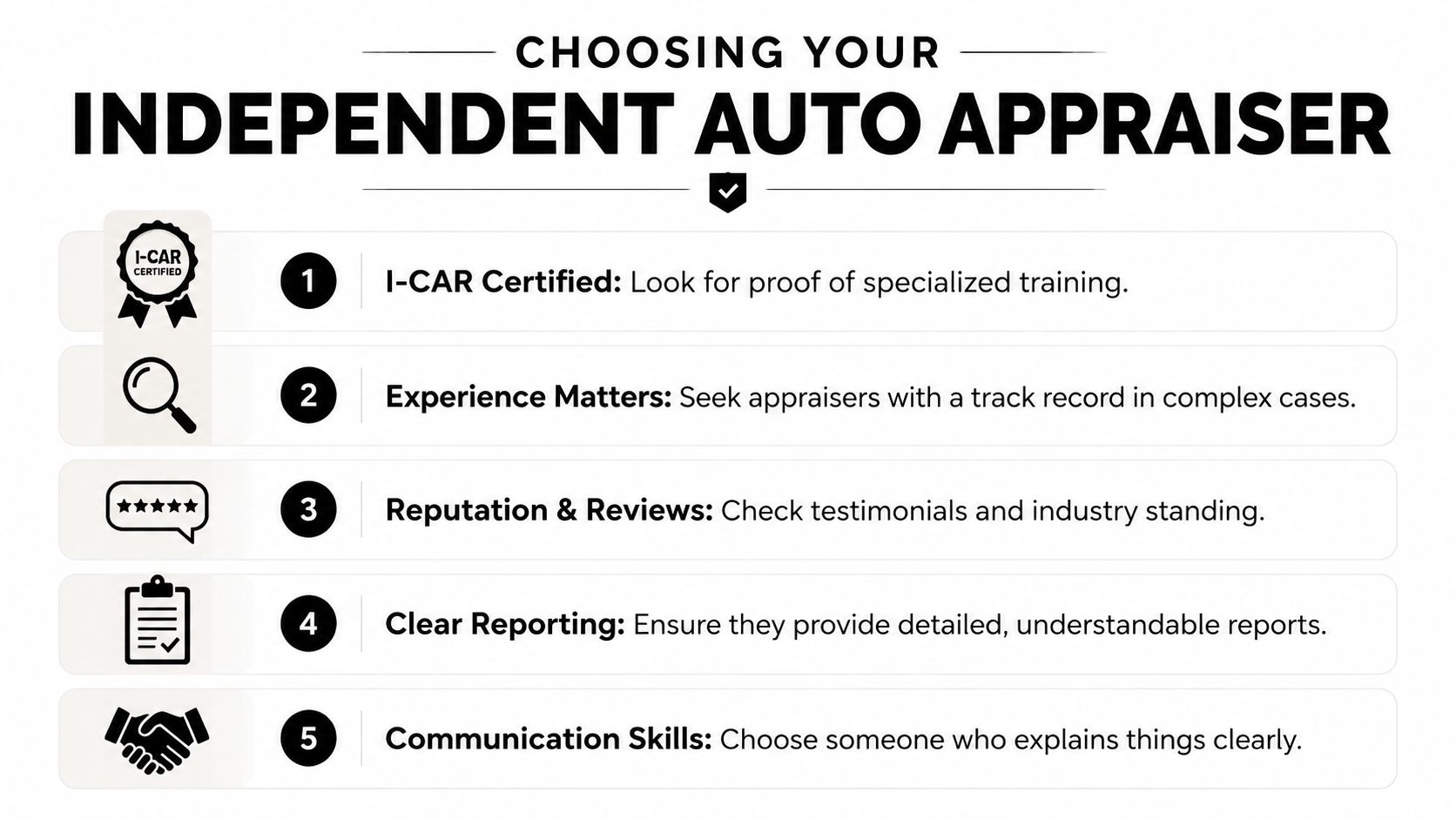
Start with fundamentals. Ask direct questions and listen for direct answers.
- Training and certifications: Ask whether the appraiser has recognized training relevant to collision damage, valuation, or estimating. Certifications matter less as marketing badges and more as proof the person has been taught a method.
- Vehicle-specific experience: A classic car, lifted truck, luxury SUV, and EV don't raise the same valuation issues. You want someone who understands the category your vehicle falls into.
- Report quality: Ask to see a sample redacted report. It should be organized, readable, and supported by actual comparable vehicle analysis.
- Local market familiarity: Regional pricing matters. Oregon and Washington claims often turn on market realities that broad valuation software can flatten or miss.
- Appraisal Clause experience: A solid report is important. Experience using that report in a dispute process is just as important.
A useful benchmark is outcome data tied to the clause itself. When policyholders invoked the Appraisal Clause by engaging an independent auto appraiser, settlements increased by an average of 33.87% above initial carrier offers, and 100% of analyzed cases exceeded the insurer's original proposal, according to this AppraiseItNow summary in The Ritz Herald.
Questions worth asking on the first call
Don't ask whether they can “get you more money.” Everyone will say yes. Ask how they work.
How do you determine market value or diminished value?
You want method, not slogans.Do you inspect in person, work from records, or both?
The right answer depends on the claim type and the vehicle.What documents do you need from me?
Strong appraisers ask for the carrier valuation, photos, repair estimate, VIN details, and prior condition information early.Have you handled disputes like mine before?
“Like mine” matters more than generic years in business.Will your report support negotiation or Appraisal Clause proceedings if needed?
Some reports are written only as informal opinions. That's not enough in a contested claim.
For readers comparing providers, a page like this certified auto appraiser overview gives a useful example of the kind of service description you should expect to see. It should explain the work, not just make promises.
Here's a quick video that helps frame the selection mindset.
Red flags that should end the conversation
| Concern | Why it matters |
|---|---|
| Guaranteed settlement language | No honest appraiser controls the carrier's final decision |
| Percentage-of-recovery pressure | It can distort incentives and distract from report quality |
| No sample report available | If they can't show structure, expect weak documentation |
| Vague talk about “industry formulas” | Good appraisers can explain their reasoning clearly |
| No experience with disputes | A report is only useful if it can withstand pushback |
A strong appraiser sounds methodical, not theatrical.
What to Expect During the Appraisal Process
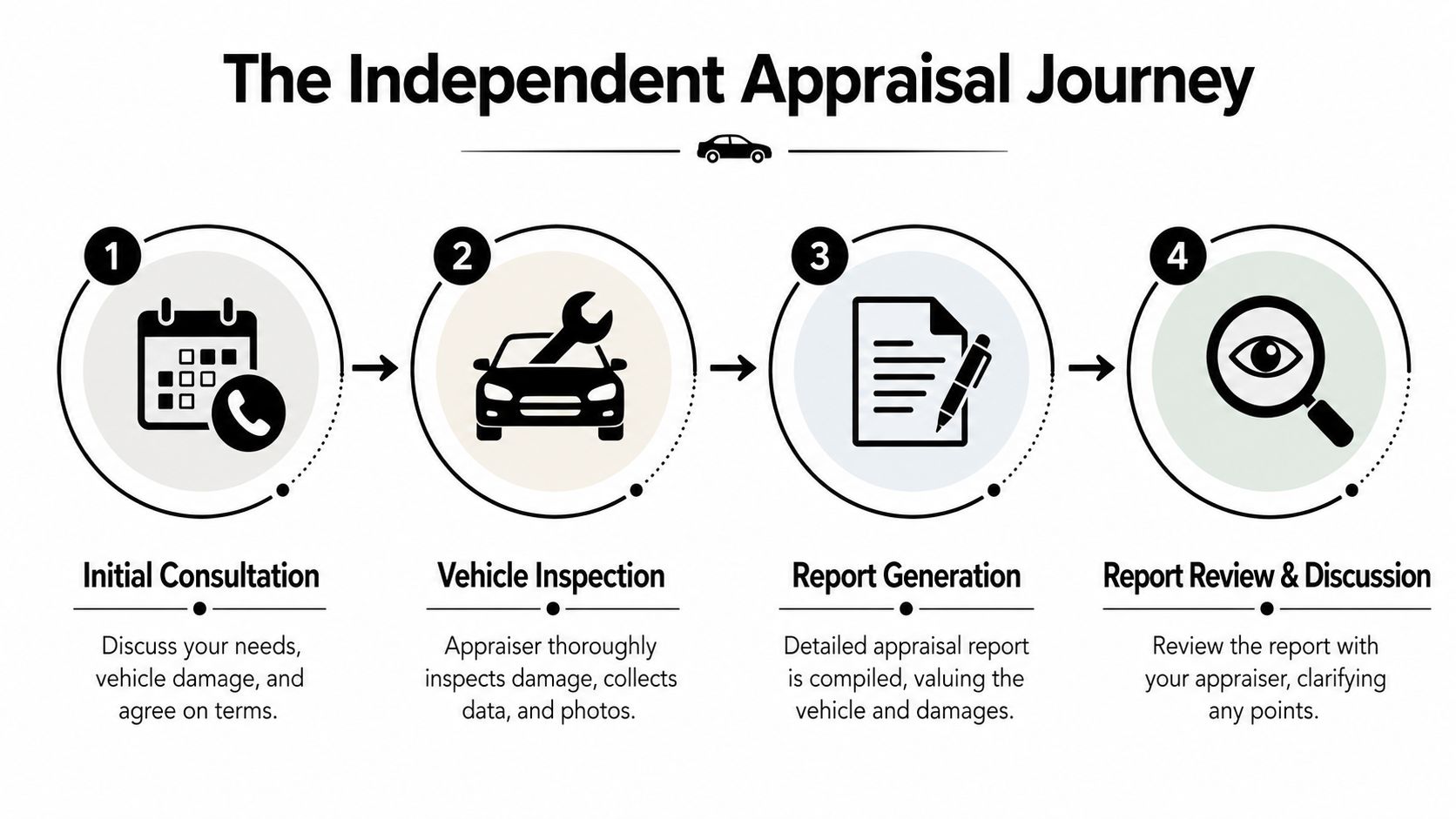
Clients are often surprised by how much of the work happens before the final number is written down. Good appraisal work is front-loaded. The report is the end product, not the whole job.
The first review
The process usually begins with documents. The appraiser will want the insurer's estimate or valuation report, photos, VIN, mileage, repair invoices if any work has started, and anything else that affects condition or options.
If it's a total loss file, the insurer's valuation report matters because it reveals where the disagreement may be hiding. Comparable vehicle choices, condition adjustments, option omissions, or market radius issues often show up there.
If it's a diminished value or repair dispute, the paper trail matters for a different reason. The appraiser needs to separate visible damage from the market impact of the accident itself.
Inspection and fact gathering
Some files can be handled from records and quality photos. Others need a physical inspection. That's especially true when the vehicle is customized, older, collectible, high-value, or damaged in ways that photos don't document well.
An inspection should focus on facts that change value:
- Vehicle identity details: trim, packages, options, mileage, prior condition
- Damage scope: visible damage, likely hidden damage, repair quality if work is completed
- Market-sensitive details: tires, interior condition, service history, aftermarket equipment, rarity
- Photographic support: enough clear images to show condition and support conclusions
The more a vehicle departs from “average,” the less you should trust an average-value process.
Market research and comparables
Weak appraisals often fall apart when finding comparables. Finding comparables isn't just pulling random listings that look close. The appraiser needs to identify vehicles that meaningfully match yours in age, trim, mileage, condition, equipment, and market.
That research has to make sense to someone reading it cold. If a report uses bad comps, the adjuster will attack the comp set before they ever address the final number.
For a repair-related dispute, comparable logic can also affect diminished value analysis. The appraiser needs to understand what buyers pay for similar vehicles before an accident and what the repaired accident history does to marketability.
The report itself
A good report should answer the question before the carrier asks it. At minimum, expect:
A clear statement of the assignment
Is this a total loss valuation, diminished value assessment, or repair-related appraisal dispute?Vehicle identification and condition notes
The report should show what vehicle was appraised and what condition factors were considered.Valuation method explained in plain English
You shouldn't need industry software access to understand the reasoning.Comparable market support
The conclusions should tie back to actual market evidence, not just unsupported opinion.Photos and supporting records
The report should be documented well enough to stand on its own.Signature or certification language
Formality matters when the report is being used in a real dispute.
If you want a practical example of the kind of claim support structure involved, this auto insurance appraisal page shows the general shape of a service built around claim disputes rather than generic vehicle pricing.
Your role in the process
Clients sometimes slow their own file without meaning to. The fastest way to help is to be complete and consistent.
- Send every insurer document you receive: especially estimates, valuation reports, and settlement letters.
- Fully disclose prior damage: hidden facts hurt credibility later.
- Provide better photos if asked: dark or partial images create avoidable uncertainty.
- Avoid accepting the offer too early: once the claim is settled, your bargaining position changes.
What works is cooperation plus patience. What doesn't work is sending fragments of information while expecting a precise result. A solid independent auto appraiser can only build from what's available.
Leveraging Your Report in Negotiations
A report sitting in your inbox has no power. Used correctly, it changes the claim from “the carrier has spoken” to “there is a documented dispute over value.”

How to submit the report
Send the report formally. Email is fine if that's how the claim is being handled, but keep it clean and direct. Attach the report, identify the claim number, and state that you dispute the insurer's valuation or settlement figure based on the enclosed independent appraisal.
Don't bury the adjuster in emotional argument. The report is the argument.
A simple structure works best:
- State the dispute clearly: total loss value, repair scope, or diminished value.
- Reference the enclosed independent appraisal: name the appraiser and date.
- Request written review and response: ask whether the carrier will revise its position.
- Preserve your rights under the policy: if necessary, state that you may invoke the Appraisal Clause.
Why the Appraisal Clause matters
The balance of power shifts. Before the clause is invoked, you're often just asking the insurer to reconsider its own number. After invocation, the disagreement becomes a structured valuation dispute.
In practical terms, the Appraisal Clause can require each side to name an appraiser and move the claim into a formal process aimed at settling the amount of loss. That doesn't solve every coverage issue, but it does remove the dispute from casual back-and-forth with an adjuster who has no reason to move off the original valuation unless forced to engage the evidence.
Key point: The Appraisal Clause is valuable because it changes the insurer's incentive. A vague complaint is easy to ignore. A formal valuation dispute is harder to sidestep.
What to say when the adjuster pushes back
Adjusters often respond in predictable ways. They may say their system is approved, their market report is sufficient, or your report uses different comparables. Don't get pulled into a loose phone debate.
Use responses like these:
- If they say their valuation is standard: reply that standardization doesn't resolve a documented dispute over this vehicle's value.
- If they criticize your comparables: ask for a written explanation identifying which comparables they dispute and why.
- If they ignore the report: follow up in writing and reference your policy rights.
- If they say the offer is final: review the policy and prepare to invoke the clause if applicable.
If you want a broader legal framing for how accident value affects a claim, Haddad & Associates accident valuation is a useful consumer-facing resource for understanding how damages can be evaluated beyond the insurer's first number.
What works in negotiation is calm repetition of documented facts. What doesn't work is trying to out-talk the carrier. Your report should do the heavy lifting.
Costs Timelines and What to Expect
The first practical question is cost. The second is time. Both are fair questions, and both depend on the claim type, the vehicle, and how much resistance the insurer gives.
How appraisers usually charge
Many independent auto appraisers use a flat-fee model for claim reports. That structure makes sense because the assignment is to produce an accurate valuation, not to stretch the number for a commission.
Some claims are simpler and can be handled as desk reviews using existing documents and photos. Others require more work because the vehicle is specialty, heavily optioned, modified, repaired already, or in a formal dispute posture. The more unusual the vehicle or the more contested the file, the more time the report takes.
If you're comparing pricing approaches, this auto appraisal cost guide is the kind of informational page worth reviewing. It helps you understand what services tend to be included and what questions to ask before authorizing the work.
What affects turnaround time
A quick file isn't always a simple file. Delays usually come from missing records, poor photos, shop supplements, policy language issues, or extended insurer review.
Common timing factors include:
- Document completeness: missing valuation reports or repair records slow everything down
- Vehicle complexity: specialty and custom vehicles require deeper market support
- Inspection logistics: in-person access can add scheduling time
- Carrier response pace: some insurers review quickly, others drag out written responses
- Appraisal Clause use: formal dispute processes usually take longer than simple negotiation
A realistic expectation
Some reports can be prepared quickly when the documentation is strong and the valuation issue is straightforward. Some claims take longer because the dispute isn't really about speed. It's about building a file solid enough that the insurer can't dismiss it casually.
Clients get frustrated when they compare a fast insurer estimate to a slower independent appraisal. That comparison misses the point. One number is built for claim throughput. The other is built to survive a dispute.
The right expectation is this: a careful appraisal takes as long as needed to support the number properly. If you're hiring an appraiser only to get an answer fast, you're solving the wrong problem.
Common Questions About Appraisals and State Laws
Is diminished value covered everywhere
No. Many drivers assume diminished value is automatic after an accident. It isn't. According to Auto Claim Authority's discussion of diminished value claim issues, diminished value is explicitly excluded in 23+ states, often denied in no-fault settings, and a 2024 industry survey found 68% of diminished value claims were initially denied because appraisers failed to isolate pre-accident market comparables from post-repair values.
That last point matters. A diminished value claim fails when the report doesn't prove what the vehicle was worth before the loss and how the repaired accident history changed market value after.
What's the biggest mistake in a diminished value claim
Treating repair cost as the same thing as diminished value.
They aren't the same. Repair cost addresses what it takes to fix the car. Diminished value addresses market loss after the repair. Insurers often focus on the first because it's easier to measure inside their system. Your appraiser has to separate those two issues cleanly.
Can I still pursue an appraisal if the car was repaired well
Yes, depending on the claim and policy context. A clean repair doesn't automatically erase market stigma. Buyers and dealers often treat accident-history vehicles differently, especially when damage was significant or the vehicle is newer, higher-end, or harder to match in the market.
The question isn't whether the car looks good in your driveway. The question is whether the market would pay the same for it now.
Do state differences matter in Oregon and Washington
Yes. They matter a lot, especially for diminished value disputes. Drivers in Oregon and Washington often assume the claim rules are simple because the accident facts feel simple. They usually aren't.
What changes by state is the legal backdrop, the burden of proof, and how insurers respond to documentation. That's why local market knowledge matters. The appraiser needs to understand not just vehicles, but how to support value in the markets where the claim is being contested.
What if the insurer ignores my appraisal report
Treat silence as a claim management tactic, not a final answer. Follow up in writing, ask for a written position, and review the policy language for appraisal rights. If the policy allows it and the dispute is over value, the next move is often to invoke the Appraisal Clause rather than keep repeating the same request.
A good independent auto appraiser helps level the playing field because the report gives you something the insurer has to address. Without that, you're just objecting. With it, you're documenting a dispute.
If you're dealing with a low total loss offer or a diminished value fight, Total Loss Northwest handles independent appraisals for Oregon and Washington vehicle owners and provides diminished value support nationwide. If the insurer's number doesn't hold up, get the claim reviewed before you accept the settlement.