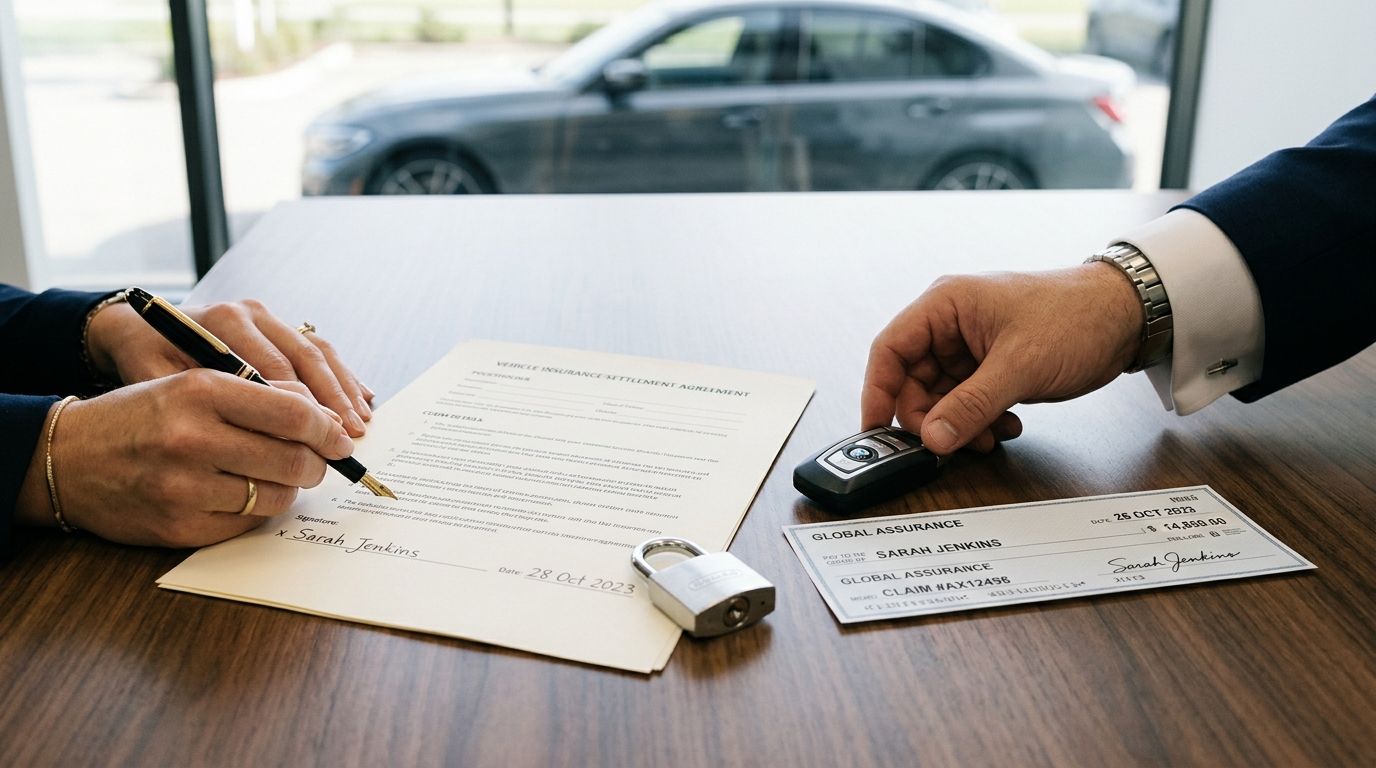
You're staring at a check that should make this whole mess go away, and the only thing standing between you and the money is a stack of paperwork the adjuster wants signed today. That's the trap. A settlement release agreement is not a receipt, it's the document that trades away rights for payment, and in Oregon and Washington the wording matters more than the number printed on the front of the check.
If you've got a total loss offer, a diminished-value dispute, or both tangled together in one packet, read the release like an appraiser, not like a relieved driver. If the carrier wants a broad signature, make them earn it. A fast claims process can be a legitimate benefit, and how Lemonade achieved fast claims shows why speed gets so much attention, but speed doesn't excuse sloppy release language. Before you sign anything, compare the draft with the settlement paperwork checklist and ask what, exactly, gets closed if you cash the check.
The Document That Releases Your Check and Closes the File
A driver gets the call, then the email. The adjuster says the company has “finalized” the offer, and the attachment is a release that looks like routine paperwork. It isn't routine. It is the switch that turns a disputed claim into a closed file, and once it is signed, the carrier will treat the matter as over.
That is why the wording matters more than the payout itself. A release exists to exchange consideration for liability waiver, and in employment and other settlement settings, legal guidance treats it as a structured agreement that should define the claims covered, the payment method, and any confidentiality or non-disparagement terms, not a casual formality (Dinsmore PDF). The same basic structure shows up in settlement practice across disputes, where the parties identify the claim, define the consideration, and extinguish the rights being released (Wallace Law).
What drivers face
In the collision world, the fight usually centers on total loss value or diminished value. One check covers the immediate loss, then the release tries to swallow everything tied to the crash, including issues the driver did not even know existed yet. That is where people get burned, because they think they are settling the check amount and the visible damage, while the form is drafted to end all related claims.
Practical rule: Never treat the release as an administrative step. Treat it as the last negotiation point.
The easiest way to see the stakes is to ask one blunt question, what claim does the carrier think this release ends? If the answer is broader than the dispute you had, stop and redline it. For a driver who is still sorting out salvage, title, or post-loss value questions, that distinction can make the difference between a fair closure and a one-way waiver.
If the packet also asks you to sign away anything beyond the loss you are settling, compare it against the settlement paperwork checklist before you send anything back. That is the point where a careful read beats a fast signature every time, and it is also where a driver who wants speed can compare the claim handling promise in how Lemonade achieved fast claims with the much tougher question of what the release erases.
Anatomy of a Settlement Release Agreement
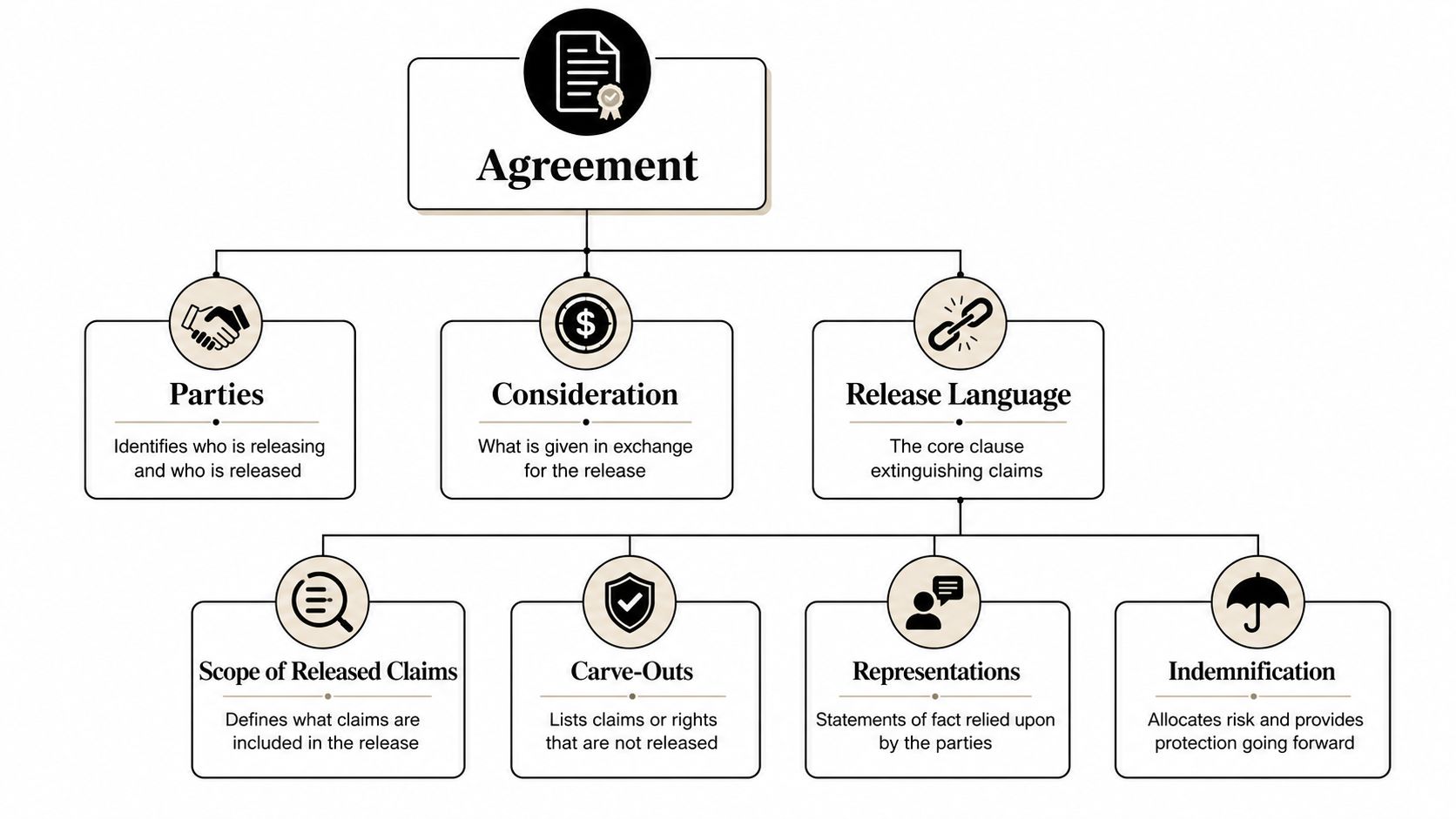
Start with the top of the page. The parties should identify who is releasing claims and who is being released. If the document uses vague terms like “claimant,” “insured,” or “affiliates” without naming the actual people or entities, that's where scope problems start.
Next comes consideration, the thing you get in exchange for the release. It might be a set payment amount, a property-damage payout, a mutual promise, or another concrete benefit. A release with no clear consideration is just a wish list.
The clauses that do the real work
Release language is the heart of the deal. It usually says the signer releases the other side from claims “arising out of” or “in any way connected with” the incident. Those phrases are where the breadth hides, because a broad release can reach beyond the injury or damage you had in mind.
Scope of released claims should tell you what is covered and what is not. Legal guidance emphasizes listing the released rights and the excluded rights separately, instead of relying on boilerplate that sweeps too wide (LexisNexis guidance). That matters because a precise scope clause is what keeps a total-loss payment from accidentally swallowing a separate diminished-value claim.
Carve-outs are the safety valves. If you want title issues, salvage questions, or unrelated bodily injury claims kept alive, they need to be named. Silence is not protection.
Representations usually say the signer understands the agreement and has had a chance to review it. That language helps the carrier defend the release later.
Indemnification and confidentiality are not freebies. If they're in the draft, they were bargained for, and they change the risk. Negotiation guidance makes clear that confidentiality and indemnity are not implied, they have to be expressly stated (RLA Attorney). If you need to learn how the carrier expects a signature to be handled, digital signature methods matter less than what the signature commits you to.
Governing law decides which state's rules control the interpretation. If the insurer drags the dispute into a different forum, you may be trading away bargaining power without realizing it.
What the Release Takes From You
The mistake drivers make is assuming the release matches the fight they just had with the adjuster. It usually does not. Broad wording can wipe out not only the claim you meant to settle, but later-discovered claims tied to the same crash, even if you had no idea they existed when you signed.
Unknown claims are the danger
That risk is not hypothetical. Recent UK appellate commentary described a broadly drafted release deed that blocked even future fraud claims because the wording plainly covered past and future claims, and the absence of an express fraud carve-out did not rescue the signer (Taylor Wessing commentary). That should make any driver slow down when a collision release uses sweeping “all claims known or unknown” language with no carve-out for mistake, omission, or valuation error.
The other side of the ledger matters too. Commentary on a 2024 settlement-deed decision explains that general release language was read narrowly and did not automatically wipe out separate property rights (Nodco analysis). That distinction matters in auto claims, because drivers often care about ownership, salvage, title transfer, and value-related remedies, not just the damage estimate.
Why the wording gap hurts accident victims
A driver thinks they are giving up a repair or total-loss dispute. The carrier may draft the release to cover any claim “arising from” the accident, including later-found valuation errors, related financial loss, or another theory tied to the same wreck. That is the trap. You can sign away far more than the conversation with the adjuster ever covered.
Bottom line: If the draft does not expressly preserve a separate issue, assume the insurer wants it included.
The same caution applies to settlement finality. A bad release can be very hard to unwind once signed, which is why reopening a lawsuit after settlement is the wrong problem to face after the check clears. Read the paper first, then decide whether the claim you are settling is the claim the release describes.
If the insurer is pushing a total-loss release while the value dispute is still open, stop there. Push back in writing, name the claim you are settling, and keep the rest out. If they will not narrow the language, that is your signal to walk and use the appraisal clause instead, including the Washington appraisal clause process if you need a clean path to challenge the number.
Oregon and Washington Rules That Shape Your Release
Oregon and Washington drivers should care about the release clause more than drivers in many other states because the settlement packet can intersect with state-level valuation rules. In a total-loss claim, the release should match the valuation dispute you settled, not a fictional all-purpose surrender. If the company's number is low, you should press on the value first, not sign first and argue later.
Oregon and Washington don't treat every closure the same
Oregon total-loss practice relies on comparable vehicles and puts pressure on the carrier to justify its valuation. Washington handles total-loss claims under a more consumer-protective framework, and that changes how much negotiating power a driver has before signing. A release that seems harmless on its face can end up cutting off procedural rights you would otherwise use to challenge the number.
The governing-law clause matters because it can steer interpretation away from the state rules that would have helped you. If the draft says another state governs, ask why. If the answer is “that's our form,” reject it and keep the clause local.
Oregon vs Washington release considerations
| Issue | Oregon | Washington |
|---|---|---|
| Total-loss valuation | Focus on comparable vehicles and insurer justification | Consumer-protective handling can give the driver more room to dispute the number |
| Diminished-value claims | Keep separate if they are not part of the payout | Keep separate if the carrier tries to bundle them into one release |
| Governing law | Push to keep Oregon law if the dispute is centered there | Push to keep Washington law if that is where the claim belongs |
| Release scope | Match the release to the actual payout | Don't let a broad form erase issues outside the settlement amount |
If the carrier is treating the release as a one-size-fits-all document, that's the wrong starting point. For Washington claimants especially, the appraisal clause process can be the cleaner path before any final signature goes out. A release should memorialize the corrected number, not replace the dispute process.
Red Flags That Signal an Overbroad Release
The fastest way to spot trouble is to read for the phrases adjusters hope you skim past. If any of these show up, slow down.
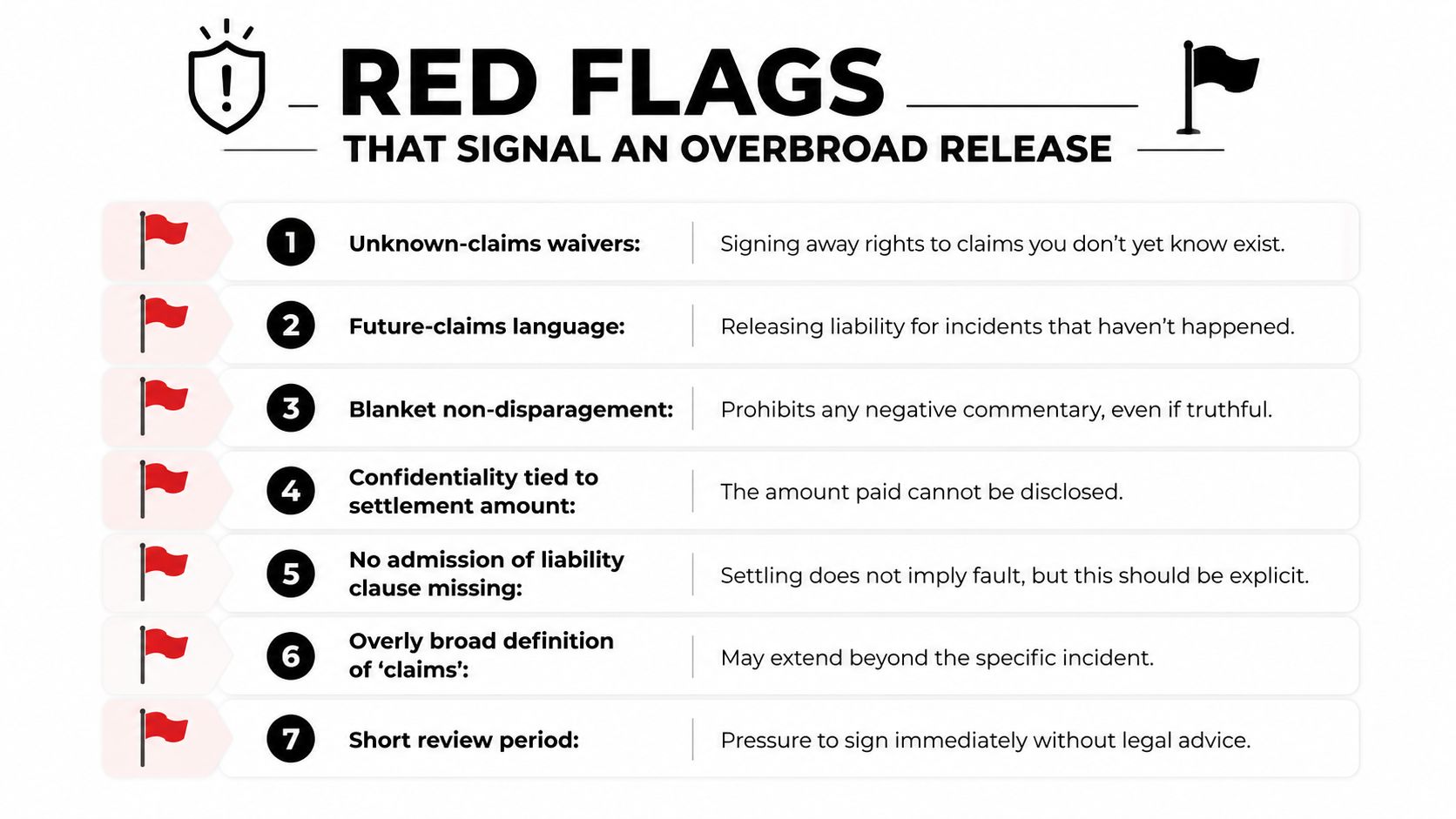
- Unknown-claims waiver. Look for “known or unknown” or “whether now known or later discovered,” because that can swallow valuation errors you haven't found yet.
- Future-claims language. If the form releases claims that “may arise,” it is trying to close off disputes that haven't even happened.
- Blanket non-disparagement. If it says you can't say anything negative, even truthful complaints become a problem.
- Confidentiality tied to the settlement amount. If the amount is sealed, you lose your ability to compare offers or document a lowball pattern.
- Indemnity for the insurer's own errors. If you're promising to cover the company's mistake, the paper is badly tilted.
- One-way release language. If only you are giving up claims while the carrier keeps all of its rights, that is not mutual.
- Choice-of-law clause that drags the dispute out of state. If they move interpretation elsewhere, they may be trying to dodge local protections.
What to do with each one
Some of these are negotiable with a simple edit. Unknown-claims and future-claims language should be narrowed. Confidentiality should be removed unless you're getting something real in return. Indemnity for the insurer's own screwups should be rejected outright.
A sloppy release often comes bundled with other pressure tactics. If the file already shows delay, missing documentation, or a pattern of pushing you to accept less than the documented value, read bad faith insurance practices before you sign anything. If you see three or more of the red flags above, stop calling it a form and start calling it a negotiation.
Invoking the Appraisal Clause Before You Sign
The cleanest release is the one that matches a fair number. That means you settle the valuation fight first, then sign the paper that reflects the corrected result. If the insurer's number came from in-house software and a quick photo review, you're not obligated to let that number become the baseline for your release.
Use the appraisal clause before the ink dries
Most auto policies in this region contain an appraisal clause that lets each side pick an appraiser, then use the appraisal process to resolve a valuation dispute. That takes the insurer's internal estimate out of the driver's hands and puts the number in front of an independent appraiser. For daily drivers, classics, and high-end vehicles, that step is often the difference between a weak offer and a defensible one.
Practical rule: Don't sign a release to fix a valuation problem you haven't solved yet.
A certified independent appraiser belongs here. The appraiser removes the insurer's biased valuation software from the equation and builds a market-based number you can negotiate against. If the carrier refuses to move and the dispute is still in the appraisal zone, that is the moment to slow the process down, not speed it up.
When to walk
Walk away when the release tries to bundle unrelated claims, when the governing-law clause is off, or when the insurer won't separate total-loss value from diminished value. Walk away when the company wants a same-day signature and won't send the draft in writing first. If the value gap is large enough that a consumer-protection attorney can make the numbers work, get counsel involved before you trade away bargaining power.
Total Loss Northwest is one option drivers use for independent appraisal work in Oregon and Washington, including diminished value and total-loss support. That service belongs before the release, not after it. A fair release follows a fair valuation.
Annotated Sample Release Language
A bad release often looks polished. The trick is to make it smaller, narrower, and less slippery.
Original: “I release and forever discharge the insurer from any and all claims, known or unknown, arising out of or relating to the loss.”
Better: “I release the insurer from claims for property damage arising from the April 2026 collision, except for diminished value, title issues, salvage disputes, and any claim not expressly listed here.”
Original: “This payment resolves all matters between the parties.”
Better: “This payment resolves the total-loss property-damage claim only.”
That edit matters because the first sentence tries to close every door in the file. The second one leaves the rest of the house intact. If your issue is a separate diminished-value loss, it should sit in a separate paragraph with separate consideration, not get buried under the total-loss number.
A cleaner split between claims
Total-loss release:
“I accept the settlement amount listed above in full satisfaction of the vehicle's total-loss valuation claim only.”
Diminished-value carve-out:
“Nothing in this agreement releases any claim for diminished value, loss of use, hidden damage, title correction, salvage handling, or other value-related rights not specifically paid here.”
If the carrier wants a mutual release, make it mutual. If they want confidentiality, make them say why and pay for it. If they want non-disparagement, narrow it to false statements only, because blanket silence clauses are a bad deal for a driver who may need to document what happened later.
Your Next 24 Hours and the Final Checklist
Start with the claim type. If it's property damage, ask whether the number is for total loss, repair, or both. Then request the release draft in advance, in writing, and don't let anyone rush you past the review.
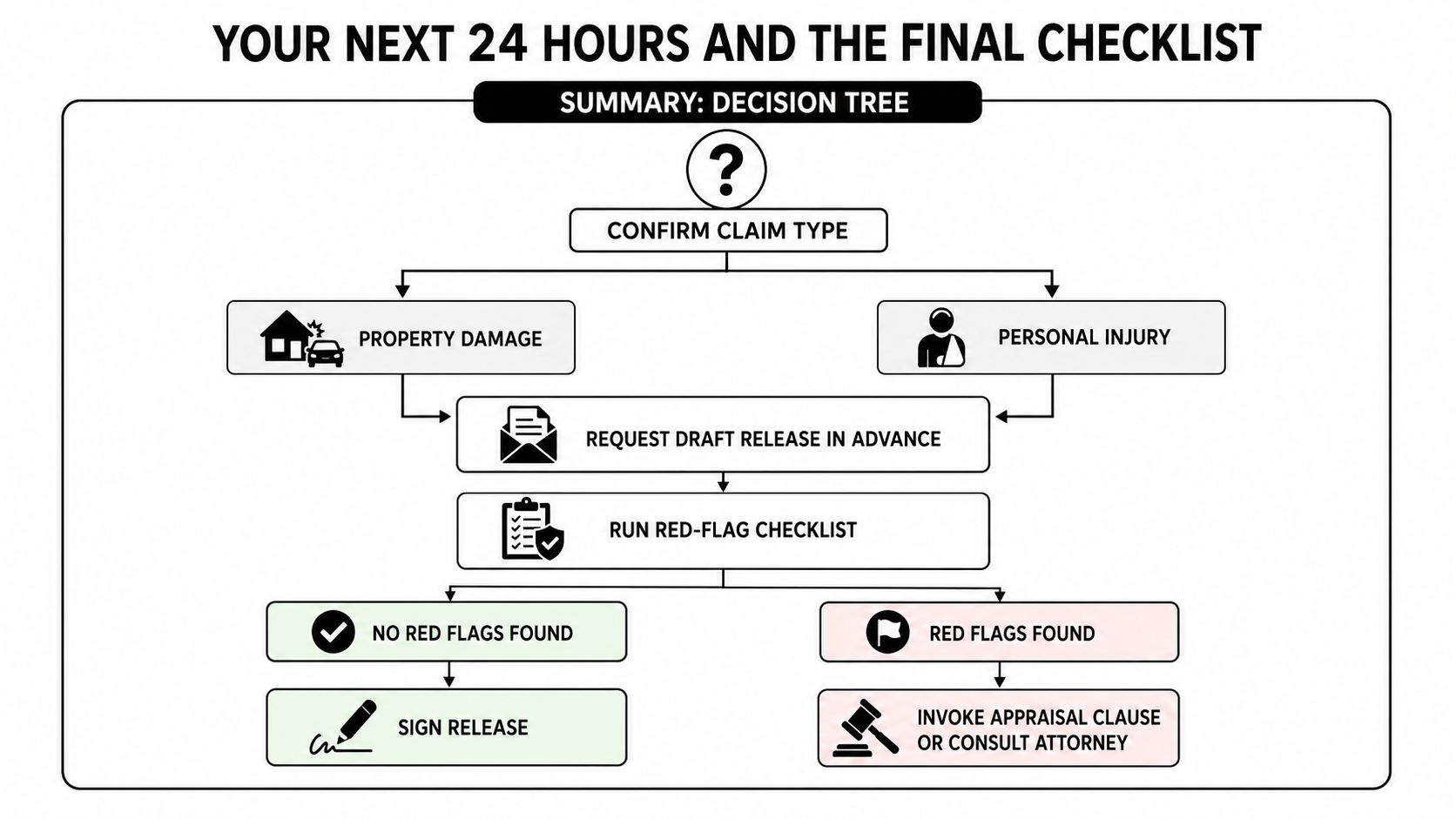
Print this checklist
- Confirm the claim type. Total loss, repair, or diminished value.
- Get the draft release first. No draft, no signature.
- Run the red-flag scan. Unknown claims, future claims, confidentiality, indemnity, and choice of law.
- Decide on appraisal. If the valuation is wrong, fix the valuation first.
- Decide on counsel. If the clause is broad or the pressure is high, get a consumer lawyer to look at it.
- Sign only after the language matches the deal.
If you're still asking whether signing kills a separate diminished-value claim, assume it might unless the draft says otherwise. Timing of payment, revocation rights, and release scope all live in the same document, and once you sign, your negotiating power drops fast.
If you're staring at a release and don't trust the wording, Total Loss Northwest reviews Oregon and Washington total-loss and diminished-value disputes with an appraisal-first mindset. Visit Total Loss Northwest if you want an independent read on the valuation before you sign away your rights.