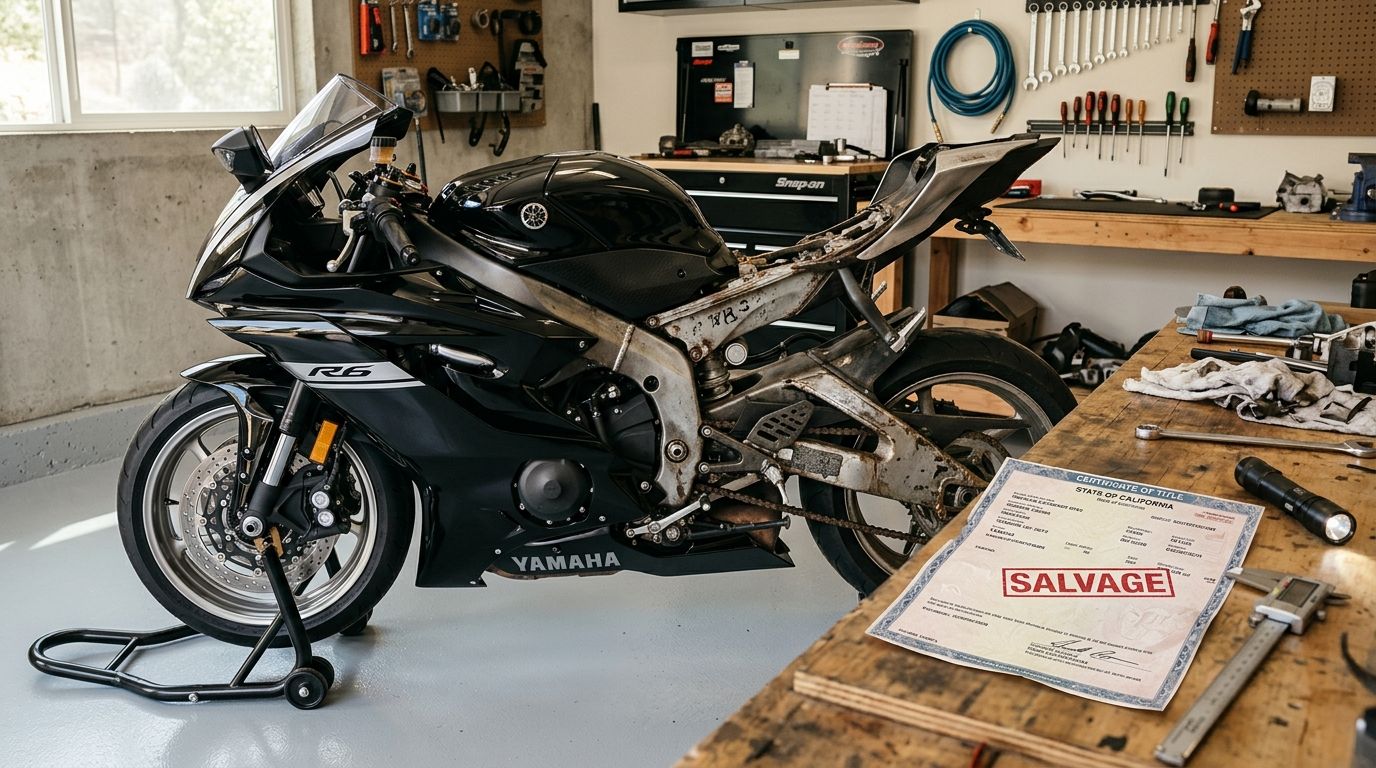
You're probably staring at a listing right now that makes no sense on paper. The bike looks clean in the photos, the seller says it “runs great,” and the price is low enough to make you think you found a loophole. Then you spot the catch: salvage title.
That one label changes the deal completely. It changes what the motorcycle is worth, how hard it will be to insure, how difficult it will be to register, and how much risk you're taking every time you ride it. It also matters if you already owned the bike before a crash and an insurer is trying to settle your claim for less than it should.
I appraise damaged vehicles for a living, and I'll give you the blunt version. Most buyers look at the discount first. Appraisers look at the permanent loss, the paper trail, and the hidden damage that doesn't show up in polished marketplace photos. That's the difference between buying a bargain and buying a problem.
If you're in Oregon or Washington, the details matter even more. Title branding, inspections, registration steps, and insurance limitations can turn a “cheap” motorcycle into a drawn-out, expensive mistake.
The Allure and Alarm of a Salvage Title Motorcycle
You find a sport bike or touring bike you've wanted for months. Same year, same trim, same color. The asking price is far below similar listings. The seller says the damage was repaired, the bike is ready to go, and the title issue is “just paperwork.”
That's how people talk themselves into motorcycles with salvage titles.
The appeal is obvious. A bike that looks roadworthy, sounds healthy, and costs much less than a clean-title version feels like a smart buy. Sometimes the machine is technically repairable, and the title brand happened because the repair estimate crossed an insurer's economic cutoff, not because the bike was mechanically finished. For example, a $5,000 motorcycle with $3,750 in damage will be tagged salvage even if technically repairable, permanently reducing its resale value by 20% to 40% compared to clean-title equivalents, according to Auto4Export's salvage title motorcycle guide.
What buyers usually miss
The low price is only the opening number. It isn't the final number.
A branded title follows the motorcycle. Buyers remember it. Insurers remember it. Dealers remember it. If you ever need to sell, trade, finance, or insure that bike beyond bare-minimum coverage, the title brand comes back into the conversation immediately.
Practical rule: If the discount is the only thing that looks good, walk away.
There's another problem. Sellers often describe prior damage as cosmetic because cosmetic sounds harmless. Fairings, tank dents, scratched covers, broken lights. Fine. But crashes that damage visible parts can also transfer force into the frame, steering head, forks, swingarm area, and electrical system. A pretty rebuild can still be a bad motorcycle.
When this issue hits owners, not buyers
Maybe you're not shopping at all. Maybe your own bike was just declared a total loss after an accident in Oregon or Washington. If that's your situation, salvage title rules aren't a buying issue. They're a settlement issue.
The insurer's decision can brand the title and crush market value even before you decide whether to keep, surrender, or rebuild the bike. That's why you need to think like an appraiser, not like an optimistic shopper.
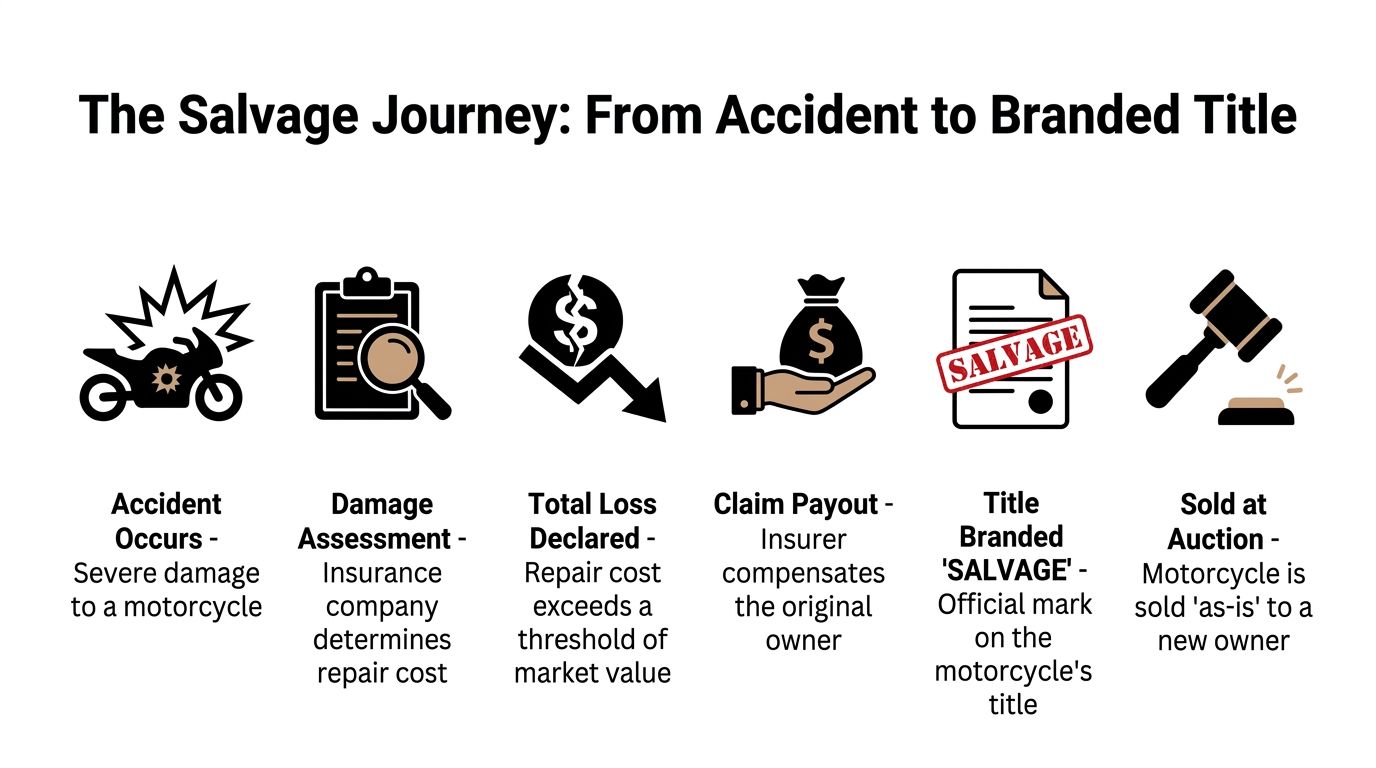
From Accident to Branded Title The Salvage Journey
A salvage title starts with math, not emotion. The motorcycle crosses a financial red line, and once it does, the title status changes.
A motorcycle receives a salvage title when an insurance company declares it a total loss, which happens when estimated repair costs exceed a percentage of the bike's fair market value. That threshold varies by state but typically ranges from 60% to 75% of the bike's value, according to Web Bike World's explanation of salvage vs rebuilt motorcycles.
How the process usually unfolds
After a crash, theft recovery, or other serious loss, the insurer orders an estimate. That estimate gets compared to the motorcycle's pre-loss value. If the repair cost crosses the state's threshold, the insurer treats the bike as a total loss.
Then the claim usually moves through a sequence like this:
- The bike is damaged in a collision, tip-over, flood event, or other loss.
- The insurer estimates repairs and compares that number to the motorcycle's market value before the loss.
- The insurer declares a total loss when the threshold is exceeded.
- The owner receives a payout offer based on the insurer's valuation.
- The title is branded salvage.
- The motorcycle is sold as-is, often through auction or to a rebuilder.
That brand doesn't mean the engine can't run or the bike can't be rebuilt. It means the insurer decided repairing it wasn't financially practical.
A salvage title is an economic judgment first. It is not proof that every salvage motorcycle is junk, and it is not proof that any particular rebuild is safe.
Salvage title versus rebuilt title
People mix these up constantly, and it leads to expensive mistakes.
A salvage title means the motorcycle has been declared a total loss and is not ready for normal road use. In practical terms, that status blocks ordinary registration and legal road operation until the bike is repaired and approved under the state's process.
A rebuilt title means someone repaired the motorcycle after the total loss event and then passed the state's required inspection process so the title could be reissued with rebuilt branding. If you want a cleaner breakdown of that distinction, review this rebuilt title vs salvage title guide.
Why Oregon and Washington owners should care early
If you've just been in a wreck, your first problem might be injuries and fault, not title law. That's fair. But the paperwork starts moving quickly once an insurer gets involved. If you're sorting out both medical and legal fallout, this resource on protecting rights after a motorcycle injury is worth reading before you sign anything or assume the insurance company is handling your interests fairly.
In Oregon and Washington, don't wait until after the payout to ask what the title brand means. By then, you're reacting. You want to know before you decide whether to retain the bike, challenge value, or try to rebuild it.
Insurance and Registration Realities for Salvage Bikes
Here's the plain answer. You can't treat a salvage-titled motorcycle like a normal used bike. The paperwork and insurance issues don't show up after purchase as a minor annoyance. They are part of the purchase.
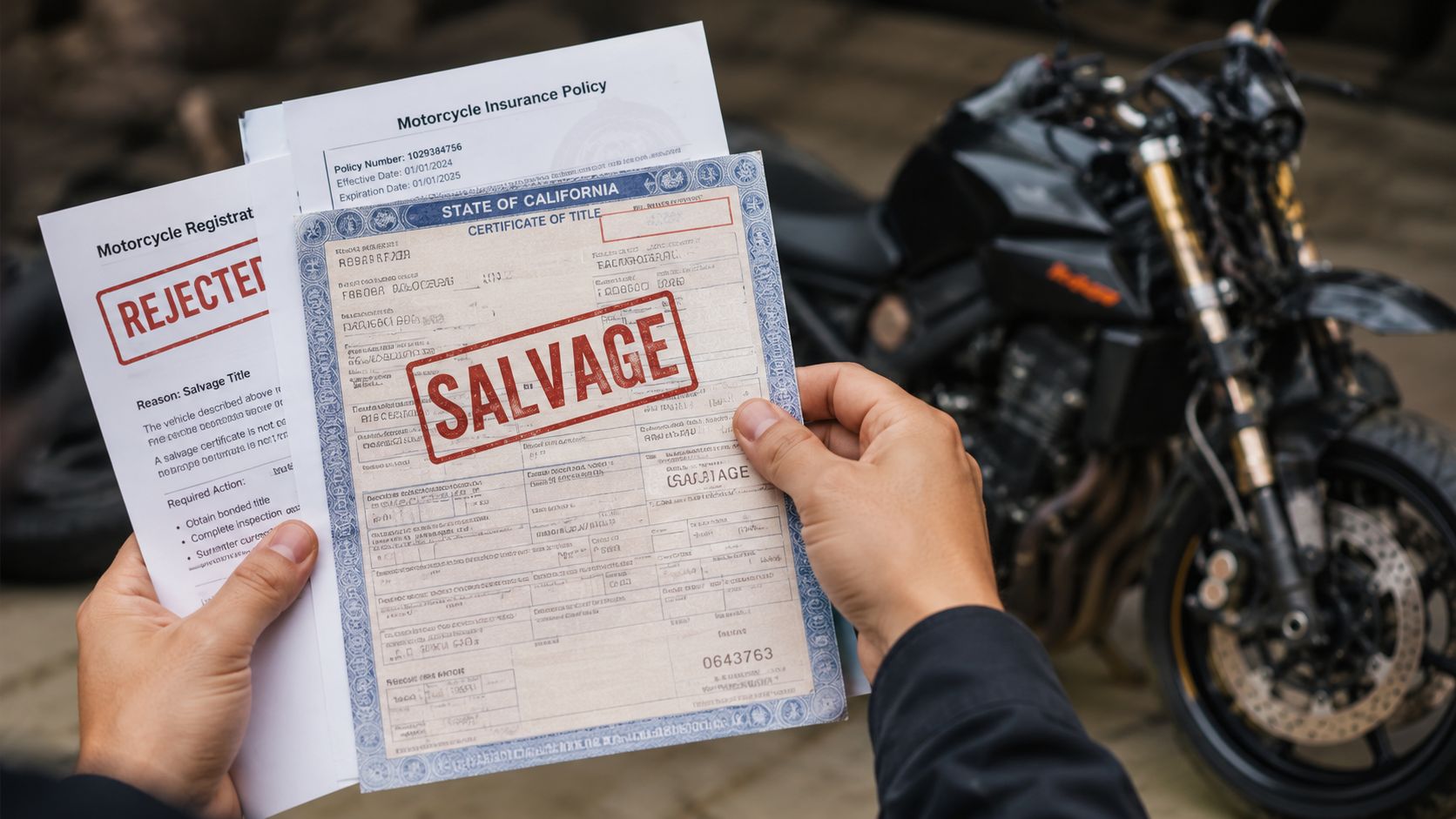
A salvage title blocks ordinary road use until the state process is satisfied. Once the title becomes rebuilt, the registration problem may be solvable. The insurance problem often remains.
What insurers actually do
Most buyers assume that if a state approves the repair, an insurer will write a normal policy. That assumption gets people in trouble.
A 2025 industry survey by the National Associations of Professional Appraisers found that 68% of motorcycle owners with rebuilt titles were denied expanded coverage despite passing state safety inspections, according to Progressive's salvage title motorcycle overview. That should tell you something important. State approval and insurer approval are not the same thing.
Insurers worry about unresolved structural issues, uncertain repair quality, future valuation disputes, and hidden prior damage. Even when they'll insure a rebuilt bike, many owners find that the carrier limits coverage to liability and resists coverage for physical damage to the motorcycle.
If you need full coverage to protect your investment, ask that question before you buy the bike, not after you wire the money.
Registration in Oregon and Washington
Oregon and Washington each have their own procedures for inspections, title branding, and registration eligibility. The exact forms and agency steps can differ, but the practical lesson is the same: you need a complete, documented rebuild and a title path that satisfies the state, not just a seller's verbal promise.
For Pacific Northwest buyers, this salvage vehicle registration guide for Oregon and Washington is useful because it focuses on the regional paperwork reality instead of generic national advice.
Questions to ask before you buy
Don't ask “Can I insure it?” Ask better questions.
- Ask about title status now: Is the bike still salvage, or has it already been retitled as rebuilt?
- Ask about inspection documents: What paperwork proves the state approved the repair?
- Ask about current insurance: Does the seller have active coverage beyond liability, or are they avoiding the question?
- Ask for VIN consistency: The frame VIN and title paperwork need to match exactly.
- Ask for repair records: If major parts were replaced, you want receipts and a clear parts trail.
The Oregon and Washington trap
A lot of buyers in Oregon and Washington focus on whether they can get the bike legal. They should focus equally on whether they can live with the ownership limits after it becomes legal.
A rebuilt title might get you on the road. It doesn't erase the brand. It doesn't guarantee broad coverage. It doesn't stop future buyers from discounting the bike the moment they run the history.
Calculating the Real Market Value of a Salvage Motorcycle
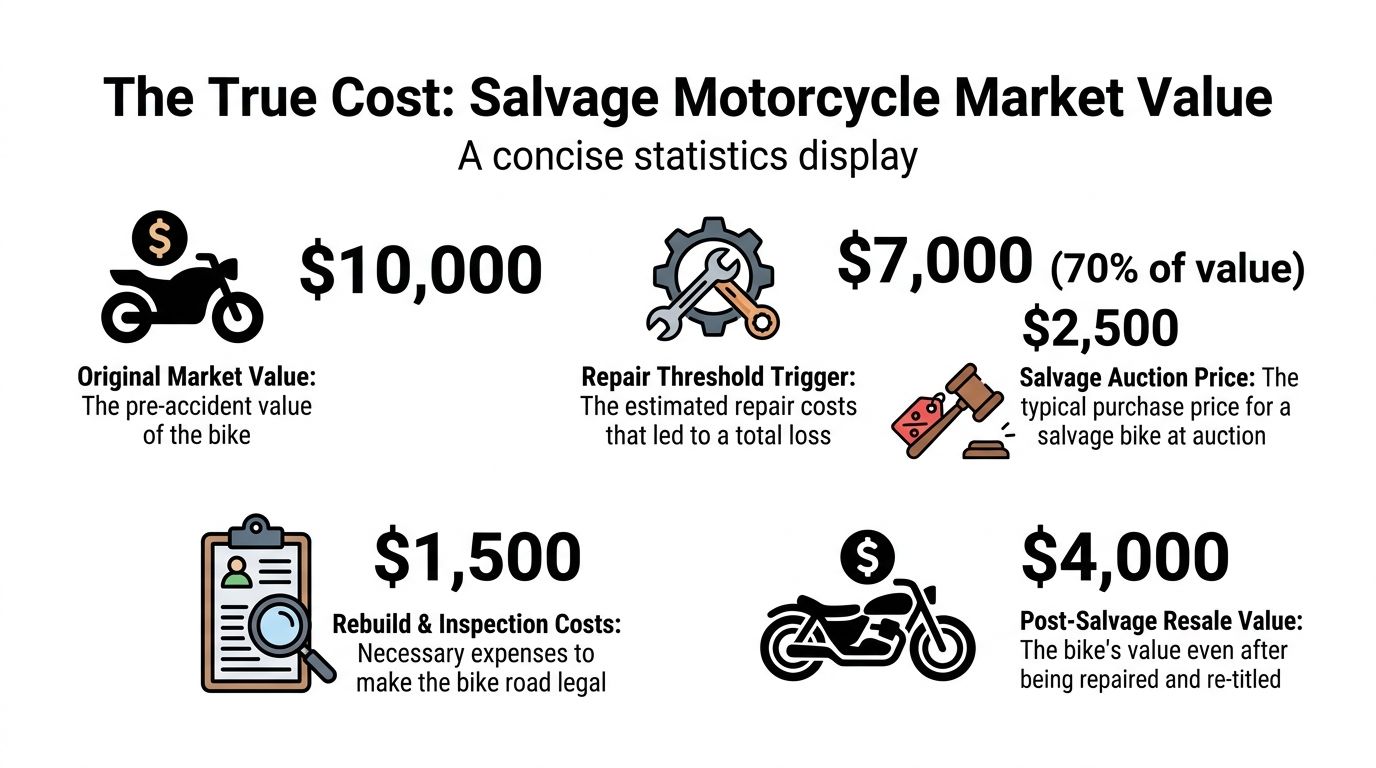
The price tag on a salvage bike is often the least useful number in the transaction. What matters is the bike's real market value after branding, not the story you tell yourself about the discount.
Buyers frequently get careless. They compare a salvage motorcycle to a clean-title listing, subtract some money in their head, and decide the gap is their savings. That's not how appraisal works.
The title brand creates permanent financial damage
Motorcycles with salvage titles typically lose between 20% and 75% of market value, and rebuilt title motorcycles retain approximately 20% to 40% less value than clean-title equivalents when sold later, according to Motorcycle.com's discussion of salvage motorcycle value.
That range is wide for a reason. Severity of prior damage, quality of repair, buyer confidence, and insurance limitations all affect where a given bike lands. But the main conclusion is simple. The loss in value is not temporary, and it is not solved by fresh paint.
Why pricing guides stop being helpful
With a normal used motorcycle, buyers lean on familiar pricing tools. With motorcycles with salvage titles, those tools often become blunt instruments.
Major appraisal guides commonly treat salvage vehicles as distressed assets. Some won't give the bike a standard value at all. That matters if you're trying to finance the bike, insure it, negotiate with a buyer, or challenge an insurer's total-loss offer. Once the title is branded, value stops being plug-and-play.
Here's the mindset shift I want you to make:
| Bad question | Better question |
|---|---|
| How much am I saving today? | How much value was permanently destroyed? |
| Can I make it look right? | Can I document what happened and what remains? |
| Will somebody buy it later? | What will informed buyers discount for risk? |
What an appraiser looks at
An appraiser doesn't stop at the rebuilt title label. The file matters.
- Damage history matters: Front-end impact, side impact, flood evidence, theft recovery damage, and structural repair quality all affect market response.
- Documentation matters more than seller confidence: Receipts, photos, inspection records, and VIN-matched parts records can support value. Missing records drag it down.
- Use case matters: A track bike, project bike, collector bike, and daily commuter all attract different buyers with different tolerance for risk.
The market doesn't pay you back for effort. It pays for confidence.
If you own a salvage or rebuilt motorcycle and you're in a dispute over value, you need a bike-specific market assessment rather than a generic automated number. That's the purpose of a salvage value assessment for disputed vehicle valuation. It forces the conversation onto real comparables, condition, and title impact instead of insurer software shortcuts.
Beyond Cosmetics Critical Safety Checks You Cannot Skip
“Just cosmetic” is one of the most dangerous phrases in the salvage market.
Fairings are cosmetic. A bent fork isn't. A cracked frame weld isn't. A damaged steering head isn't. Electrical corrosion from flood exposure isn't. Sellers blur those lines because cosmetic damage sounds cheap and harmless.
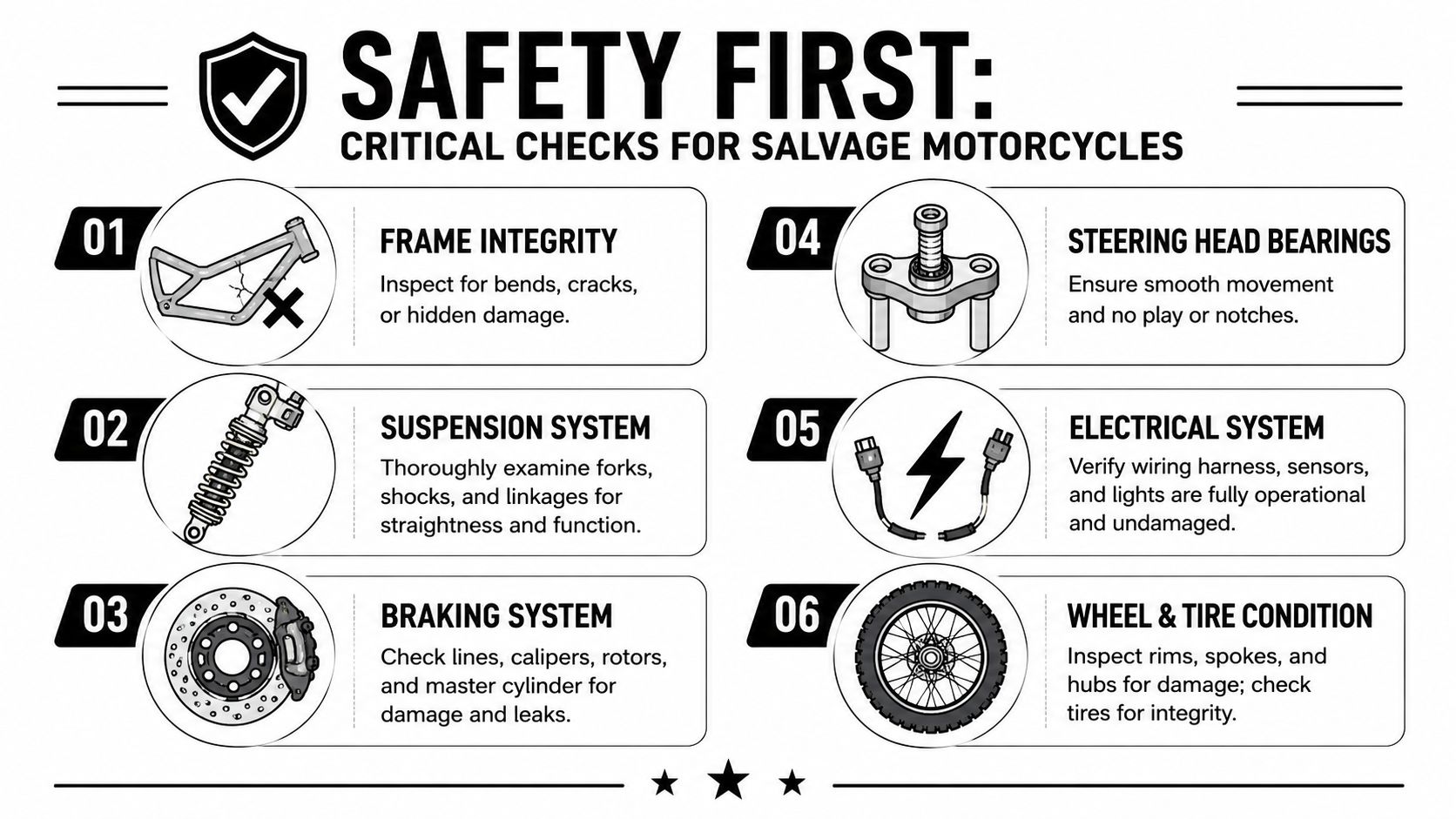
Critical structural failure points in salvage motorcycles include frame weld integrity near the steering head and swingarm pivot, and fork alignment within the triple tree. Hidden issues like compromised swingarms or misaligned forks represent the norm rather than the exception, according to Best Beginner Motorcycles' inspection guide for salvage bikes.
What to inspect before you even consider a test ride
Start with the parts that keep the motorcycle straight, stable, and predictable.
- Frame welds near the steering head: Look for hairline cracks, uneven paint, fresh coating over welds, or signs of grinding.
- Swingarm pivot area: Check for distortion, repairs, or anything that suggests the rear alignment took a hit.
- Fork alignment in the triple tree: If the front end is twisted or bent, the bike may pull, wobble, or feel vague in corners.
- VIN consistency: The frame VIN must match title documents exactly. No excuses.
- Flood clues: Water stains in the air box, corrosion under the seat, and electrical oddities are major warnings.
What the bike may tell you on a short ride
If the seller allows a test ride and the paperwork is already in order, pay attention to behavior, not just engine sound.
| Symptom | What it may indicate |
|---|---|
| Pulls left or right | Fork, frame, or wheel alignment problem |
| Wobble or instability | Bent front-end components or steering damage |
| Uneven braking feel | Front-end damage, brake hardware issues, or poor repair work |
| Flickering electronics | Water intrusion, harness damage, or poor rewiring |
A salvage bike can idle fine and still be unsafe. Engines distract buyers because they're easy to hear. Chassis damage hides in the feel of the bike.
Here's a useful visual reference before you inspect one in person:
My hard rule on inspection
If you aren't qualified to inspect frame alignment, suspension geometry, and repair quality yourself, pay a professional motorcycle technician to do it.
“Clean plastics can hide a crooked motorcycle.”
That inspection should happen before purchase, not after. If the seller resists a professional inspection, won't provide receipts, or gives fuzzy answers about where the damage was, treat that as your answer.
Your Action Plan for Buying Selling or Settling
Different people read this topic for different reasons. Some want to buy. Some need to sell. Some are stuck in a total-loss dispute after an insurer branded the bike or valued it too low.
The right move depends on which of those three groups you're in. What doesn't change is the standard: document everything, assume nothing, and get independent valuation help before you commit to a number.
If you're buying
Use a pre-purchase checklist that protects both your money and your body.
- Demand the paper trail first. Ask for the current title, the prior damage description, repair receipts, inspection approval documents, and VIN photos before you discuss price.
- Match the story to the evidence. If the seller says it was minor, the parts list and photos should support that.
- Verify road legality in your state. Oregon and Washington buyers need to confirm the motorcycle's current title status and registration path before purchase.
- Line up insurance before money changes hands. Get a direct answer from your insurer on what coverage they'll write for that exact VIN and title status.
- Pay for a professional inspection. A salvage bike without an inspection is gambling.
If you're selling
You can sell a branded-title motorcycle ethically, but only if you stop trying to pretend it's comparable to a clean-title bike.
Use this approach:
- Disclose the title brand early: Don't bury it in the last line of the ad.
- Show repair records up front: Buyers get less suspicious when the file is organized.
- Price it for what it is: A rebuilt motorcycle is a rebuilt motorcycle. Trying to chase clean-title money wastes everyone's time.
- Describe remaining flaws thoroughly: Cosmetic imperfections, warning lights, non-working accessories, and known handling quirks belong in the listing.
Sellers who are transparent get better buyers. Sellers who hide the history attract disputes.
If you're fighting a total-loss settlement
Owners often lose money because they accept the first number and assume the insurer's valuation software is objective. It isn't necessarily objective, and it isn't necessarily accurate for motorcycles with unusual condition, upgrades, regional demand, or title complications.
Use this settlement checklist:
- Get the valuation report: You need to see the insurer's comparables and condition adjustments.
- Check the comparables carefully: Wrong trim, wrong condition, wrong region, or bad market matches weaken the offer.
- Document your motorcycle's pre-loss condition: Maintenance records, upgrades, photos, and prior appraisals matter.
- Challenge unsupported deductions: If the insurer is discounting value aggressively, they need a defensible basis.
- Use an independent appraiser when the number is wrong: That's the cleanest way to move the dispute away from one-sided internal software and toward an evidence-based market value.
The red flags that should stop the deal
Don't negotiate around these. Walk.
- Missing repair receipts
- Vague damage history
- VIN mismatch
- No inspection records
- Seller pressure to buy quickly
- Insurance uncertainty
- Visible structural concerns near the steering head, forks, or swingarm area
The smartest move with motorcycles with salvage titles is often not buying one. If you still want the bike, buy documentation first, condition second, and price third. In that order.
If an insurer is undervaluing your totaled motorcycle or you need an independent opinion on diminished value in Oregon or Washington, Total Loss Northwest helps owners challenge lowball settlements with certified appraisal support and appraisal clause representation.