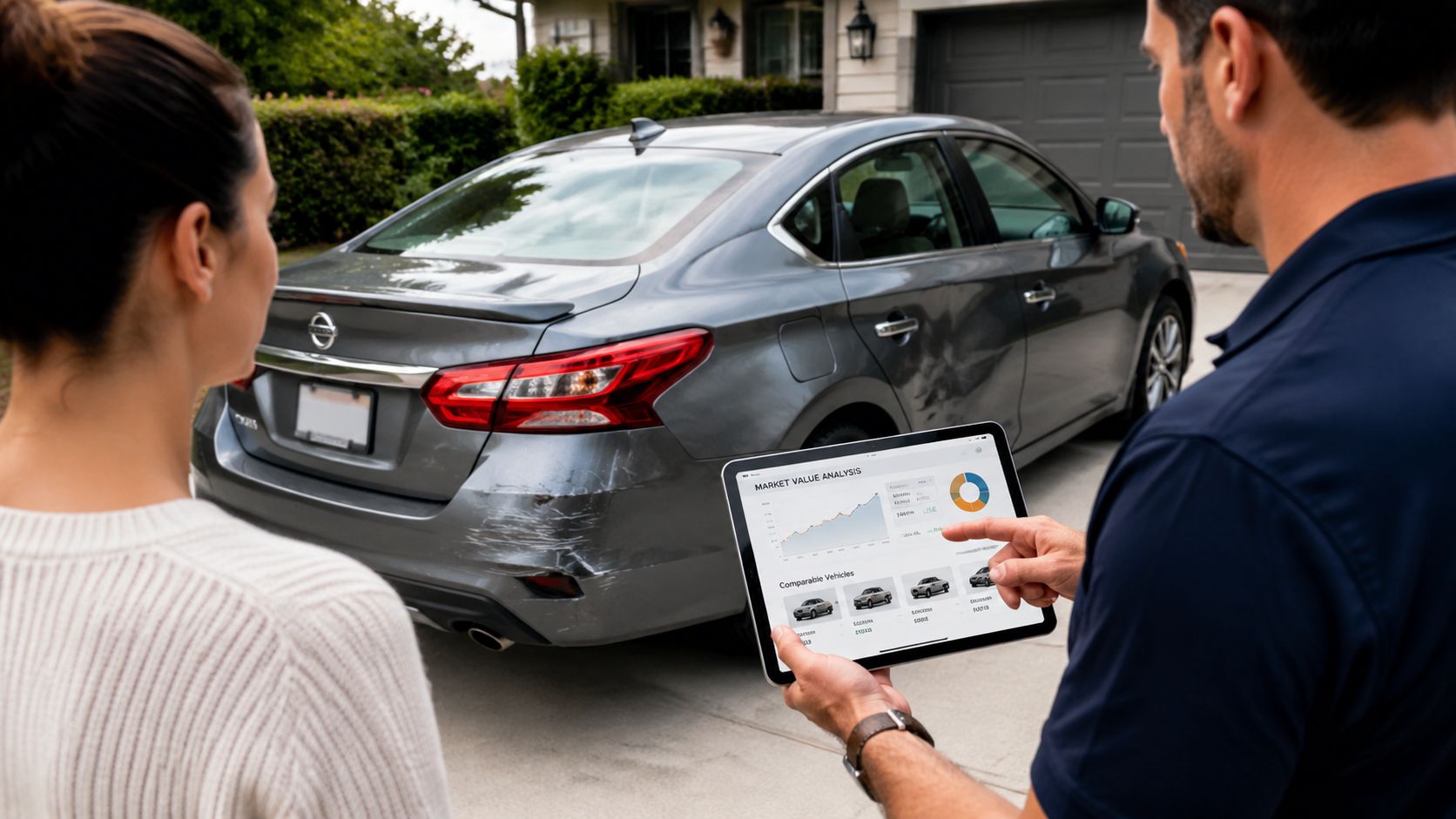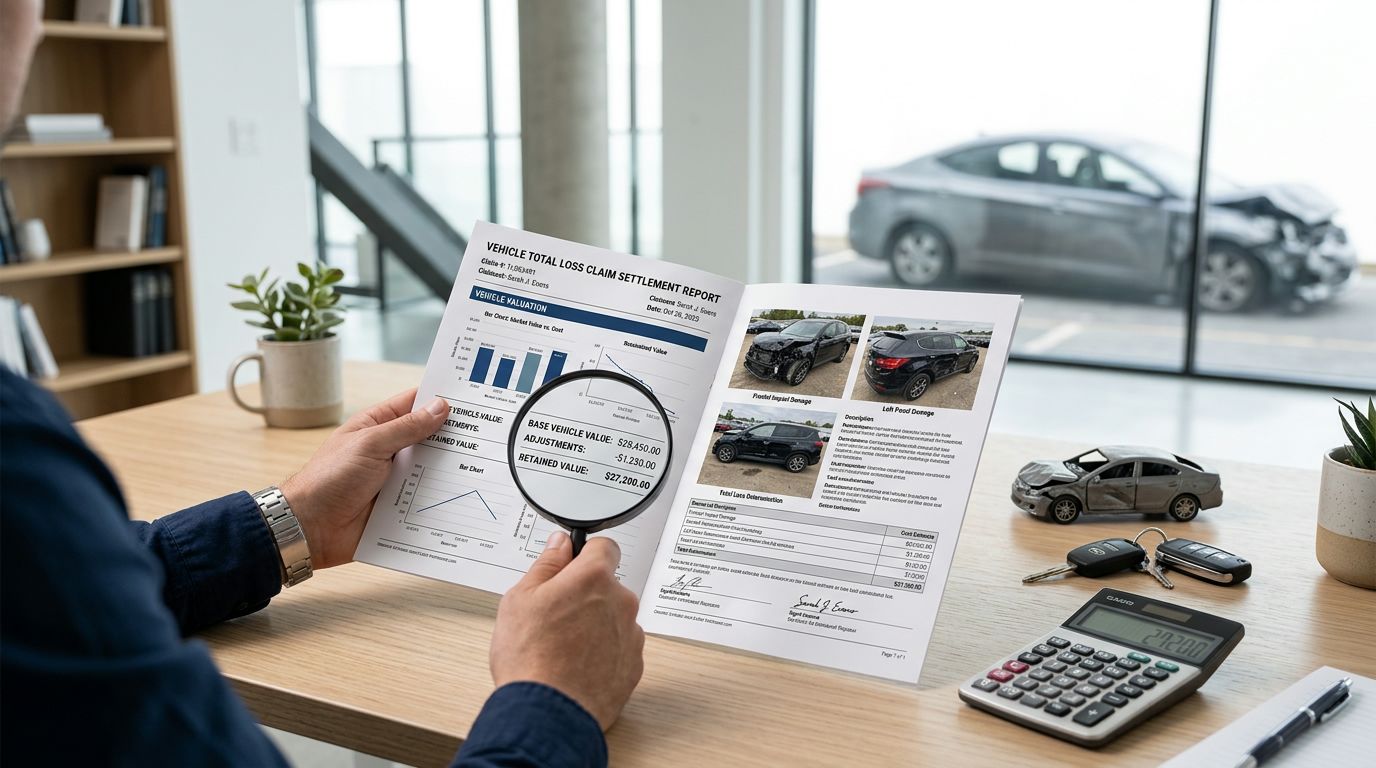
Your car gets hit, you did nothing wrong, and now the tow yard wants storage fees while the insurer sends a settlement number that barely buys a decent used replacement. That's the moment you realize the accident insurance claim amount on the screen is not some neutral truth, it's the opening bid.
I've seen the same pattern in Oregon and Washington over and over. The insurer's first figure usually reflects software, conservative assumptions, and a valuation process built to keep payout exposure tight, not to make you whole. If your claim involves repairs, a total loss, or diminished value, you need to know exactly where the number came from before you argue about it.
Why Your First Settlement Offer Is Probably Too Low
You usually don't get a fair number first. You get a fast number.
A driver gets rear-ended on the way to work, the car is towed, and a few days later the adjuster emails a settlement amount that looks neat on paper and useless in real life. It's enough to close the file from the insurer's side, not enough to replace the vehicle you lost. That gap is exactly where insurers rely on speed, fatigue, and confusion.
Low first offers are predictable because the industry works from standardized claim data and conservative valuation models. The benchmark numbers show how claim severity has climbed over time, with average auto liability property damage claims rising from $3,073 in 2012 to $6,770 in 2024, and bodily injury claims rising from $14,653 to $28,278 over the same period, according to Insurance Information Institute data summarized in the linked analysis. Collision claims also moved from $2,950 in 2012 to $5,489 in 2024, which tells you repair and loss values have been trending upward, not downward (III auto insurance facts and statistics, historical claim benchmark summary).
Practical rule: treat the first offer like a draft, not a decision.
The insurer's number is usually the output of a file review, not a full market review. If your repairs, medical care, or vehicle value don't fit the software's assumptions, the first figure is often low by design. The right response is not anger. It's to force the carrier to show its math.
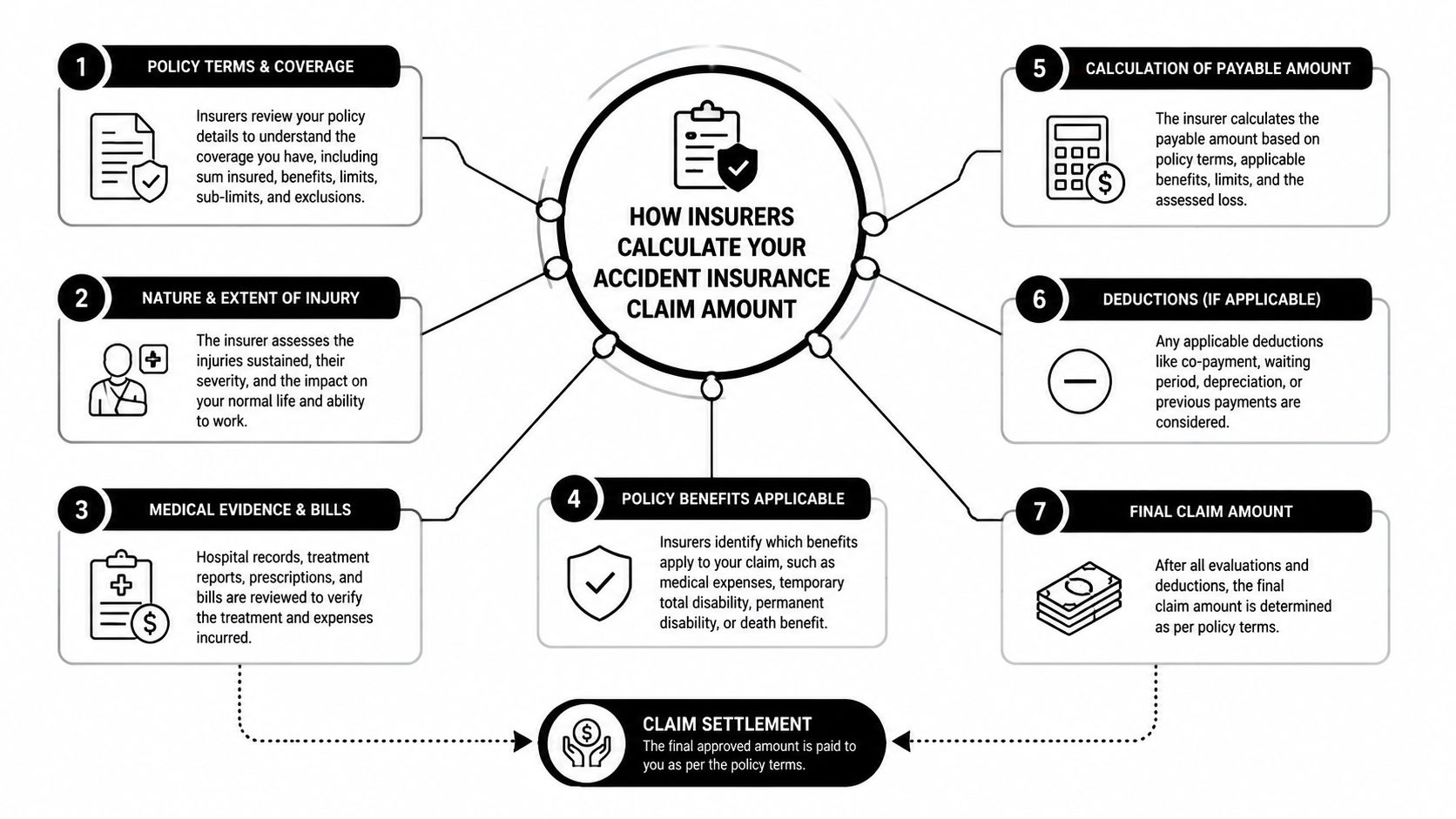
How Insurers Calculate Your Accident Insurance Claim Amount
An insurer does not start with your pain, your commute, or your frustration. It starts with asset value, loss severity, and a few internal rules that turn a damaged car into a settlement number.
The basic math behind the payout
A vehicle is treated like a depreciating asset on a sliding scale. Actual cash value, or ACV, is the amount the car was worth at the date of loss, not what you paid for it, not what you still owe, and not what it would cost to buy new. That's why a newer car with good options and clean history can still get shaved hard by valuation software if the system misses the right comparables.
The claim amount then gets adjusted by repair cost, deductible, and salvage if the vehicle is deemed a total loss. If the repair bill gets too close to ACV, the carrier decides the car isn't worth repairing and shifts into total loss handling. The exact threshold depends on state law and insurer practice, which is why the same wreck can be treated differently across state lines.
The key distinction is simple. First-party collision is your own policy paying for your car, while third-party property damage liability is the at-fault driver's insurer paying you. Those two paths do not always use the same pressure points, especially once salvage, retained value, and diminished value enter the file. If you want a clean explanation of how ACV is handled in a total loss file, the breakdown at auto insurance actual cash value is worth reading before you accept any valuation.
Why frequency and severity both matter
Insurers don't look at claim amount as a fixed number. Technical models separate claim frequency from average claim size, and a standardized motor-insurance dataset in the research brief shows that approach in plain terms with an empirical claim frequency of 1.05% and an average claim size of 24,641 SEK (technical severity model example). That matters because the company's settlement expectation is built from how often claims happen and how large they tend to be.
That's also why one line item can change everything. A clean repair estimate can keep a file in one severity band, while missing parts, hidden structural damage, or a weak comparable set can push the claim into another. If you want to understand the distinction between settlement structures and supplement handling, the resource on ACV vs RCV in insurance supplements explains the concept clearly.
Bottom line: the insurer's claim math is a chain of assumptions, and your job is to break the weak links.
Sample Claim Calculations You Can Replicate at Home
You can audit a claim with a simple spreadsheet. Don't wait for the carrier to “review” it and hope for the best.
Start with one repairable vehicle. Suppose the insurer says the pre-loss ACV is the starting point, then applies the repair estimate against that value. If the repair cost is below the total loss trigger, the claim should be handled as repairable, minus the deductible if your policy applies one. If the estimate includes obvious omissions, you challenge the valuation before you discuss final payment.
Now run the total-loss version. Take the ACV, subtract the deductible, and account for any salvage issue if the vehicle is retained. That's the general structure carriers use when they move from repair economics to total-loss economics. If you want a more formal approach to comparable vehicles and valuation support, the guide on how to calculate fair market value gives you a strong reference point.
Sample Total Loss Calculation Breakdown
| Line Item | Amount | Notes |
|---|---|---|
| Actual Cash Value | ACV | What the vehicle was worth on the date of loss |
| Deductible | Deductible | Taken from the settlement if your policy applies one |
| Salvage Retention | Salvage amount | Used if you keep the damaged vehicle |
| Net Settlement | Net amount | What remains after adjustments |
A useful way to test the file is to ask one question for every line item. Is this backed by a market source, a policy term, or just an assumption? If it's an assumption, it can be challenged.
If the carrier's math depends on a weak comparable, a stale repair estimate, or a missed option package, the claim amount is not locked. It's vulnerable.
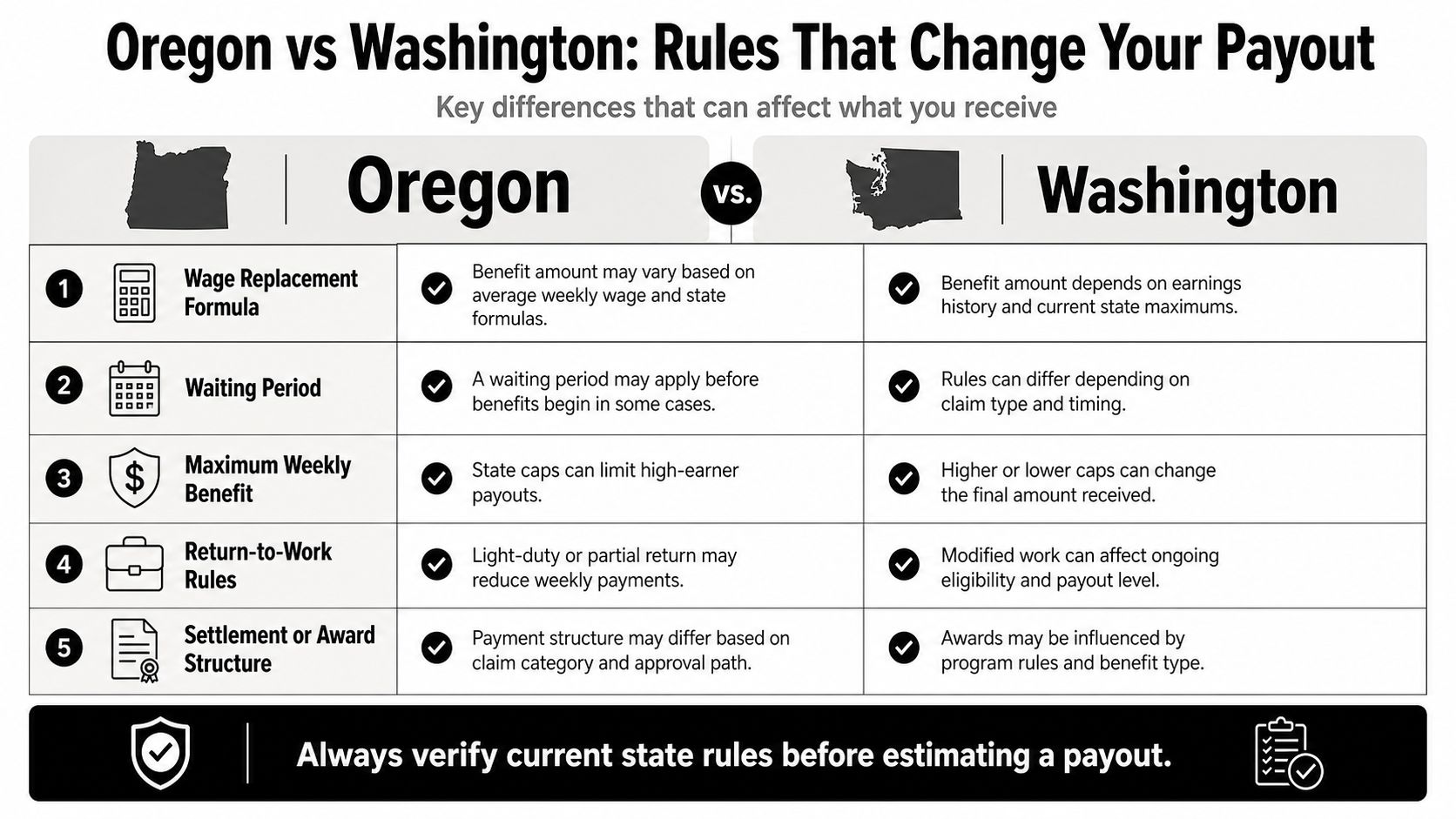
Oregon and Washington Rules That Change Your Payout
State law changes the power in your file. The same damage can produce a different settlement posture depending on whether the claim is handled under Oregon or Washington rules.
Total loss handling and salvage rights
In both states, total loss handling turns on valuation, not emotion. The insurer looks at what the vehicle was worth, then decides whether the repair bill makes repair uneconomical. Once the car tips into total loss territory, salvage treatment becomes part of the negotiation, and that can change the net amount you see.
Diminished value is where carriers get conservative
Many claimants get squeezed. Diminished value is the loss in market value that remains after repairs, and it matters most on newer, higher-value, collector, or carefully maintained vehicles. Oregon and Washington do not treat every diminished value path the same way, especially when the claim is first-party versus third-party, so the policy language and the at-fault posture matter.
Massachusetts-style guidance in the brief makes one principle crystal clear, even if your state labels the issue differently, a total loss settlement is based on actual cash value at the date of loss, not replacement cost, and diminished value is not covered under a claimant's own policy (Mass.gov auto insurance claims FAQ). That principle is useful because it shows exactly where insurers draw the line and where claimants need to stop assuming the carrier will volunteer extra value.
If you're in Oregon or Washington, don't argue in generalities. Argue the state rule, the policy wording, and the vehicle history. That's how you shift the discussion from “our number is final” to “show me why this comparable set reflects my actual car.”
Why Insurers Lowball and How to Spot the Gaps
Insurers don't need to say no. They only need to leave out enough of the file.
The most common lowball trigger is simple, incomplete evidence. Delayed treatment, missing repair documentation, disputed causation, and a premature offer before the full injury picture is known all create room for the carrier to discount the claim. The adjuster doesn't have to prove your loss is fake. They just need to argue the record is thin.
That pressure is stronger on bodily injury than property damage. The verified data shows 2024 averages of $28,278 for auto liability bodily injury and $6,770 for property damage, which helps explain why injury claims get more scrutiny and more pushback (III auto insurance facts and statistics). Higher exposure gives the insurer more incentive to pick apart timing, diagnosis, and documentation.
What to check in your own file
- Treatment timing: If care started late, the carrier will argue the injury was minor or unrelated.
- Records completeness: Missing imaging, PT notes, or follow-up visits makes the claim look thinner than it is.
- Causation language: If a provider wrote vague notes, the insurer will use that ambiguity against you.
- Early offer timing: If the settlement came before the full course of treatment, it probably ignored future exposure.
Neutral guidance in the brief says insurers commonly undervalue claims when treatment is delayed, documentation is incomplete, causation is disputed, or the first offer arrives before the full extent of injury is known (undervalued claim guidance). That's not a theory. It's the playbook.
The fix is to close every gap before you counter. If the carrier is leaning on missing evidence, make them deal with a complete record instead of a partial one.
When to Invoke the Appraisal Clause and Pursue Diminished Value
You don't need to keep arguing with an adjuster who is committed to a low file value. Sometimes the better move is to force an independent valuation process.
The appraisal clause exists for exactly that reason. It lets each side use an appraiser, then push the dispute toward a neutral resolution instead of one more round of canned valuations. In practice, that matters most when the gap between your evidence and the insurer's number is big enough that more email exchanges won't fix it. If the carrier's number is built on biased software inputs, an independent report can reset the conversation. A useful overview is the insurance appraisal clause resource.
When appraisal makes sense
- The valuation gap is obvious: The insurer ignored clean comparables, trim packages, or mileage adjustments.
- The vehicle has unusual value: Collector, custom, or high-option vehicles are routinely mishandled by generic software.
- The carrier won't budge: If the adjuster keeps repeating the same number, appraisal forces a new set of eyes.
Diminished value is the other tool that gets ignored too often. Even after quality repairs, a repaired car often isn't worth what an undamaged one would have brought. That hidden loss matters most when the vehicle had strong market appeal before the crash, and the insurer's repair payment says nothing about that post-repair stigma.
My view: if the carrier refuses to account for diminished value on a vehicle that had real market traction before the crash, you're leaving money on the table.
I'd also note that certified independent appraisers, including firms like Total Loss Northwest, can prepare valuation reports and appraisal-clause disputes focused on real market evidence. That doesn't guarantee the number changes, but it does strip away a lot of the insurer's software advantage.
Your Documentation Checklist and Negotiation Playbook
The file wins the claim, not the argument. Start documenting immediately and keep it boring, organized, and complete.
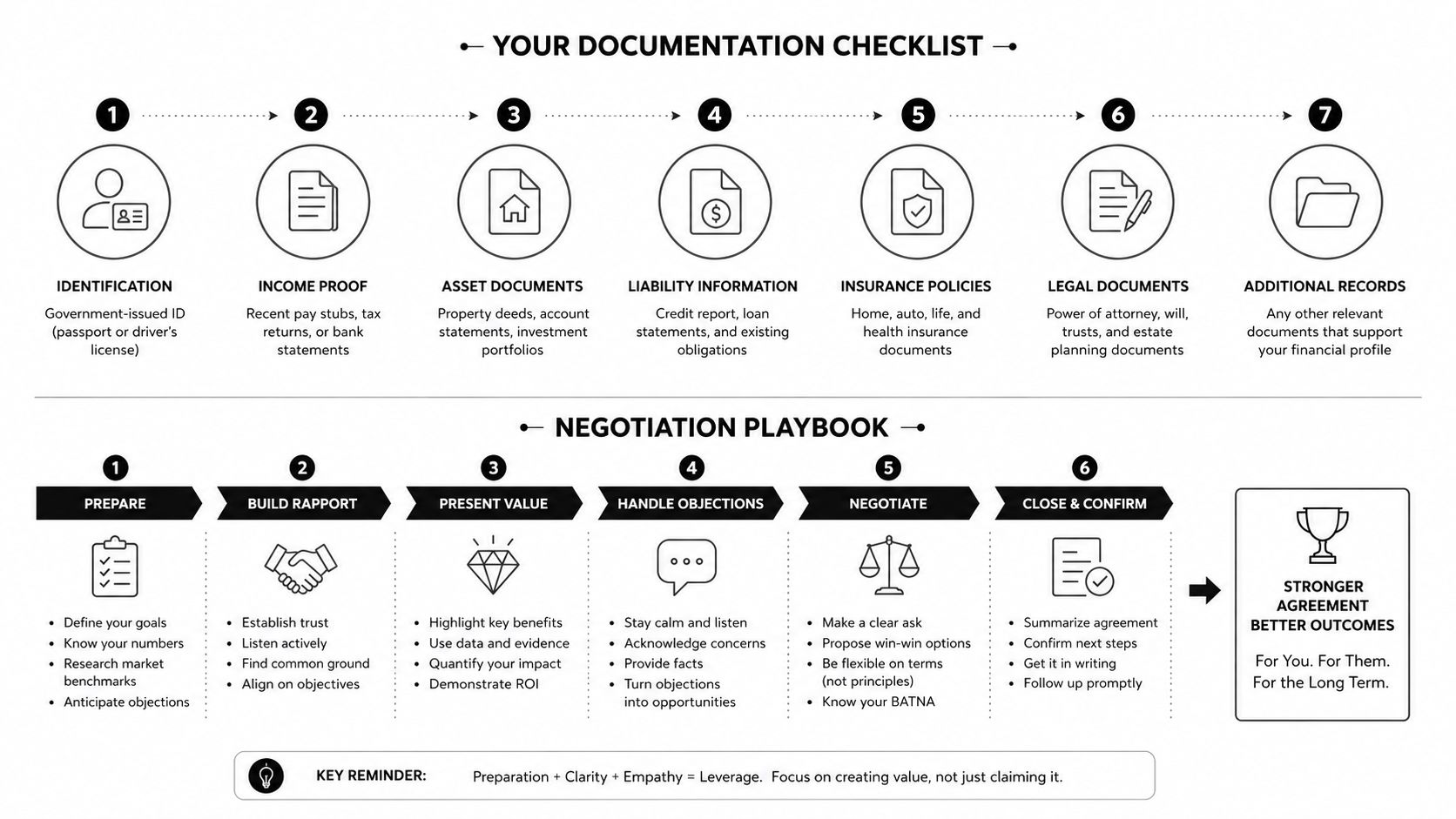
What to gather
- Scene photos: Capture the cars, plates, intersection, and visible damage from multiple angles.
- Police report: Get the official report number and preserve the report once it's available.
- Repair estimates: Keep every estimate, supplement, and parts note in one place.
- Comparable listings: Save real market ads for similar vehicles, not just a single weak example.
- Maintenance records: Show condition, service history, and any upgrades that support value.
- Medical documentation: For injury claims, keep every visit note, diagnosis, and treatment record.
How to counter in writing
Start with a short email and attach the evidence. Keep the tone firm, not emotional. Ask for an itemized explanation of each adjustment, each comparable, and each deduction.
A clean counter-demand can read like this, in substance. “I disagree with the current valuation because the comparables do not reflect my vehicle's trim, condition, and market area. Please provide the itemized basis for the current number and confirm whether you will reconsider the file in light of the enclosed evidence.” That language forces a response without sounding like you're bluffing.
Use written communication only when possible. If the adjuster changes the story on a call, follow up by email the same day. If the carrier still won't move, say you're prepared to invoke appraisal and continue the dispute with an independent valuation.
Your Next Three Moves After Reading This Guide
Check your offer against the market and the sample math above, not against your gut. Gather the photos, estimates, records, and comparables into one file. Then decide whether the gap is large enough to justify appraisal, diminished value, or both.
The accident insurance claim amount is negotiable when the carrier's assumptions are weak. That's why independent valuation exists in the first place.
If your insurer's number doesn't match the market, Total Loss Northwest prepares independent appraisals for total loss and diminished value disputes in Oregon and Washington. Visit Total Loss Northwest if you want a valuation that's built on actual evidence instead of the insurer's shortcuts.