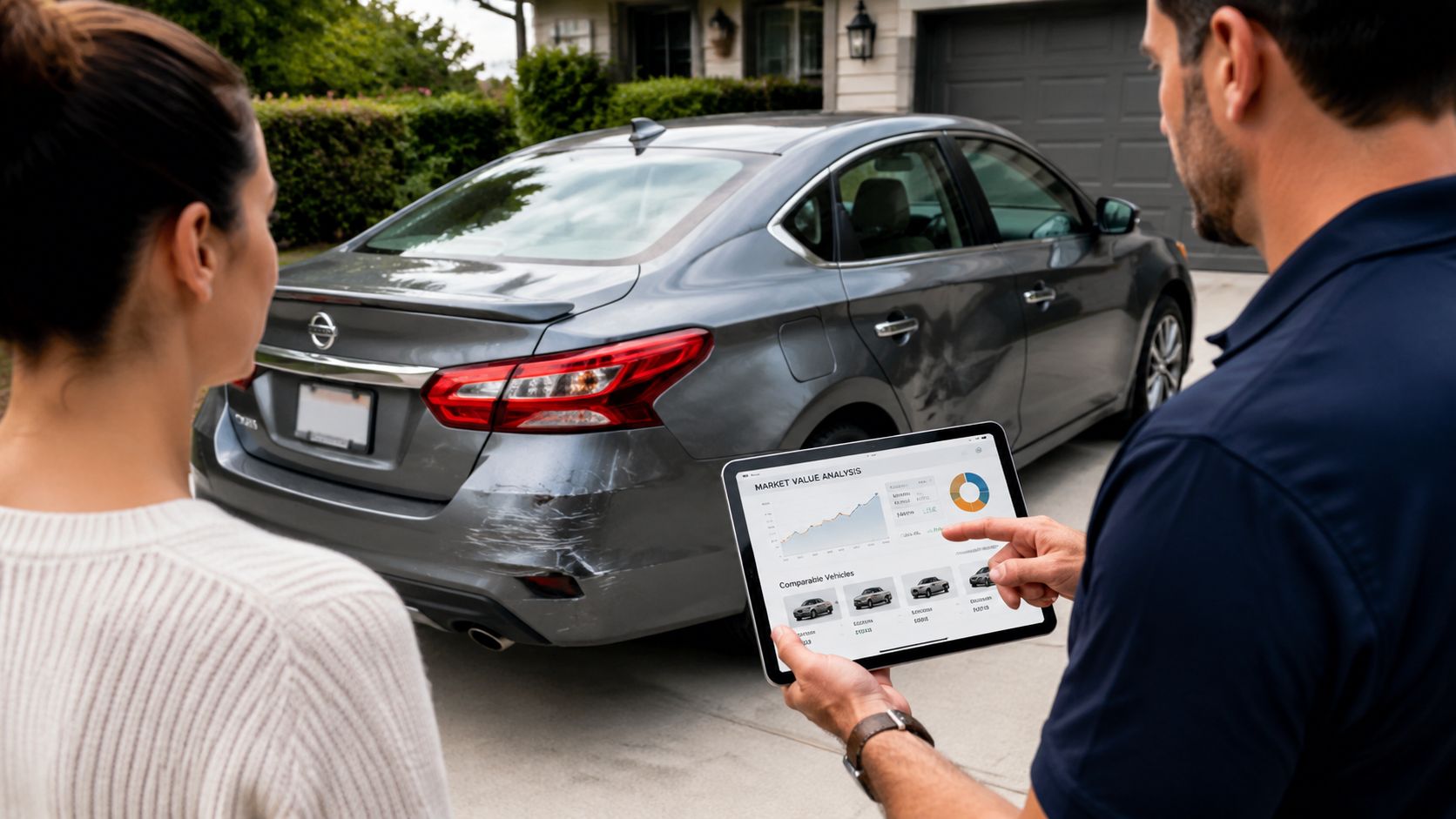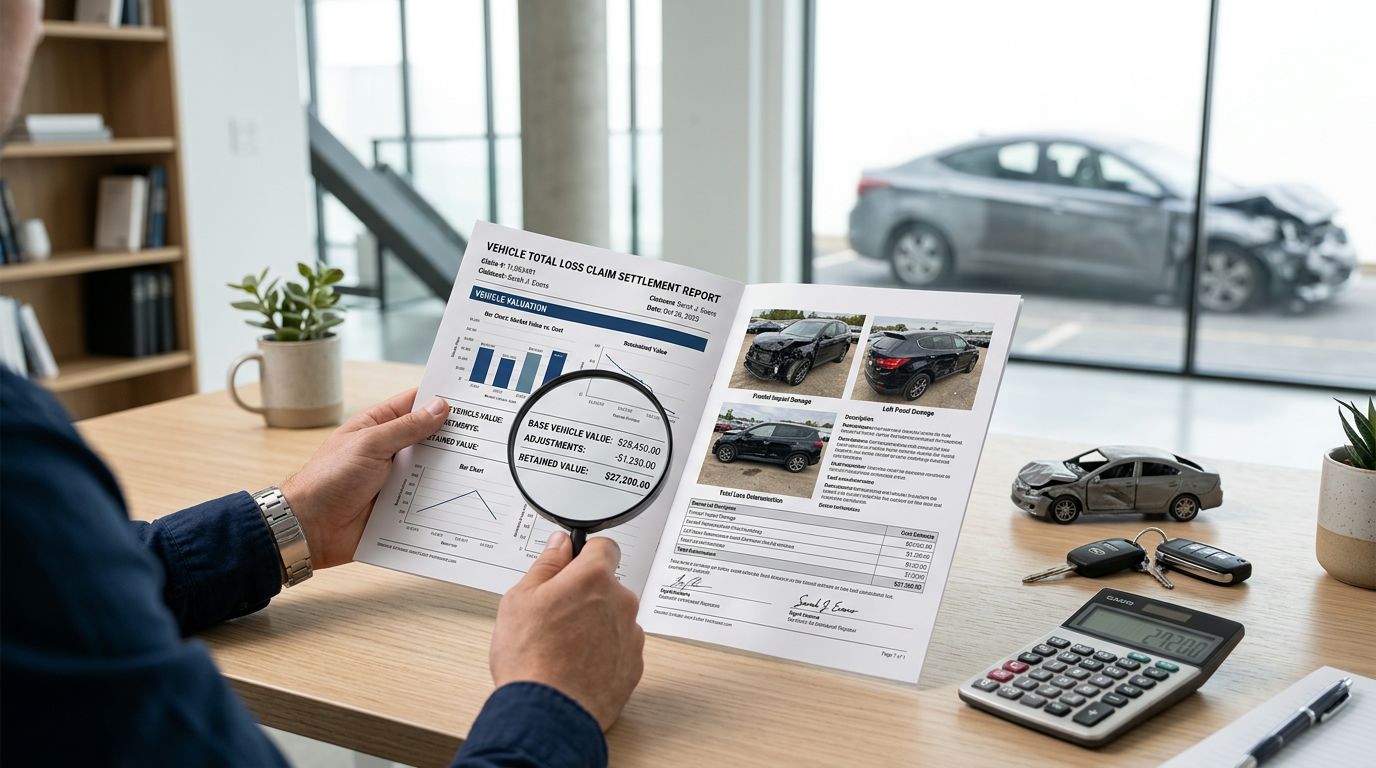
A few days after a crash, your phone rings. The adjuster says the vehicle is a total loss and offers an amount that sounds neat, fast, and final. You expected the settlement to replace the car you had. Instead, the number doesn't match comparable vehicles nearby, account for your trim and options, or reflect the condition you maintained before the collision.
That moment is where many drivers misunderstand insurance claim rights. Your rights aren't limited to reporting the accident, answering questions, and accepting the first estimate. They can include the ability to examine the insurer's valuation, challenge inaccurate data, submit better evidence, request review, and, when the policy permits it, demand an independent appraisal.
Core idea: An insurance claim is not only a request for payment. It's also a process for testing whether the insurer calculated the amount of loss correctly.
The practical path starts with the basics. You'll need to distinguish rights created by your policy from protections created by state law, understand how total-loss and diminished-value claims differ, and identify whether the disagreement concerns value, coverage, or fault. You'll also need to preserve evidence before a fast claims workflow turns an initial estimate into an assumed final answer.
This guide focuses on five outcomes:
- Recognize the right being used: Know whether you're disputing value, coverage, liability, or claim handling.
- Read a total-loss offer critically: Understand what actual cash value should represent and which vehicle details affect it.
- Separate diminished value from total loss: Choose the remedy that fits the vehicle's condition and the type of claim.
- Use appraisal intelligently: Replace a one-sided valuation with a structured independent process when the policy allows it.
- Build a persuasive record: Give the insurer specific, verifiable reasons to correct an offer or escalate the dispute.
Introduction What Your Insurance Claim Rights Really Mean After a Crash
A policyholder may feel powerless because the insurer controls the claim file, the estimate, and the payment process. In reality, the policy is a contract with procedures that can give you meaningful influence, especially when the disagreement concerns the amount of loss rather than whether the policy applies.
Speed makes early decisions more important. Claims teams increasingly use automated tools and straight-through workflows, and industry reporting describes AI-driven processing expanding in 2026, while insurers and adjusters balance faster decisions against accuracy and rising denials. The practical question for a driver is simple: what can you do when a quick system-generated answer is wrong? Insurance Journal's coverage of claims automation and industry pressures explains the environment behind that question.
The first safeguard is restraint. Don't sign a release, surrender a vehicle, or treat a verbal figure as settled until you understand the valuation and the consequences. Ask for the written offer, the valuation report, the comparable vehicles used, the condition adjustments, and the policy language governing dispute resolution.
Your situation may involve one or more of these rights:
- A right to information, including a clear explanation of how the insurer reached its decision.
- A right to fair claim handling, subject to the rules in your state and the language of your policy.
- A right to challenge valuation, particularly when the insurer's comparable vehicles or adjustments are inaccurate.
- A right to pursue a different remedy, such as diminished value after repair rather than a total-loss settlement.
- A right to invoke appraisal, when the policy provides that process for disagreements over the amount of loss.
The key is matching the tool to the problem. A complaint may address delay or communication. An appraisal may address the amount of damage or vehicle value. A coverage dispute may require policy analysis, and a liability dispute may involve evidence about who caused the collision. Confusing these categories can waste time.
Understanding Your Core Insurance Claim Rights as a Policyholder
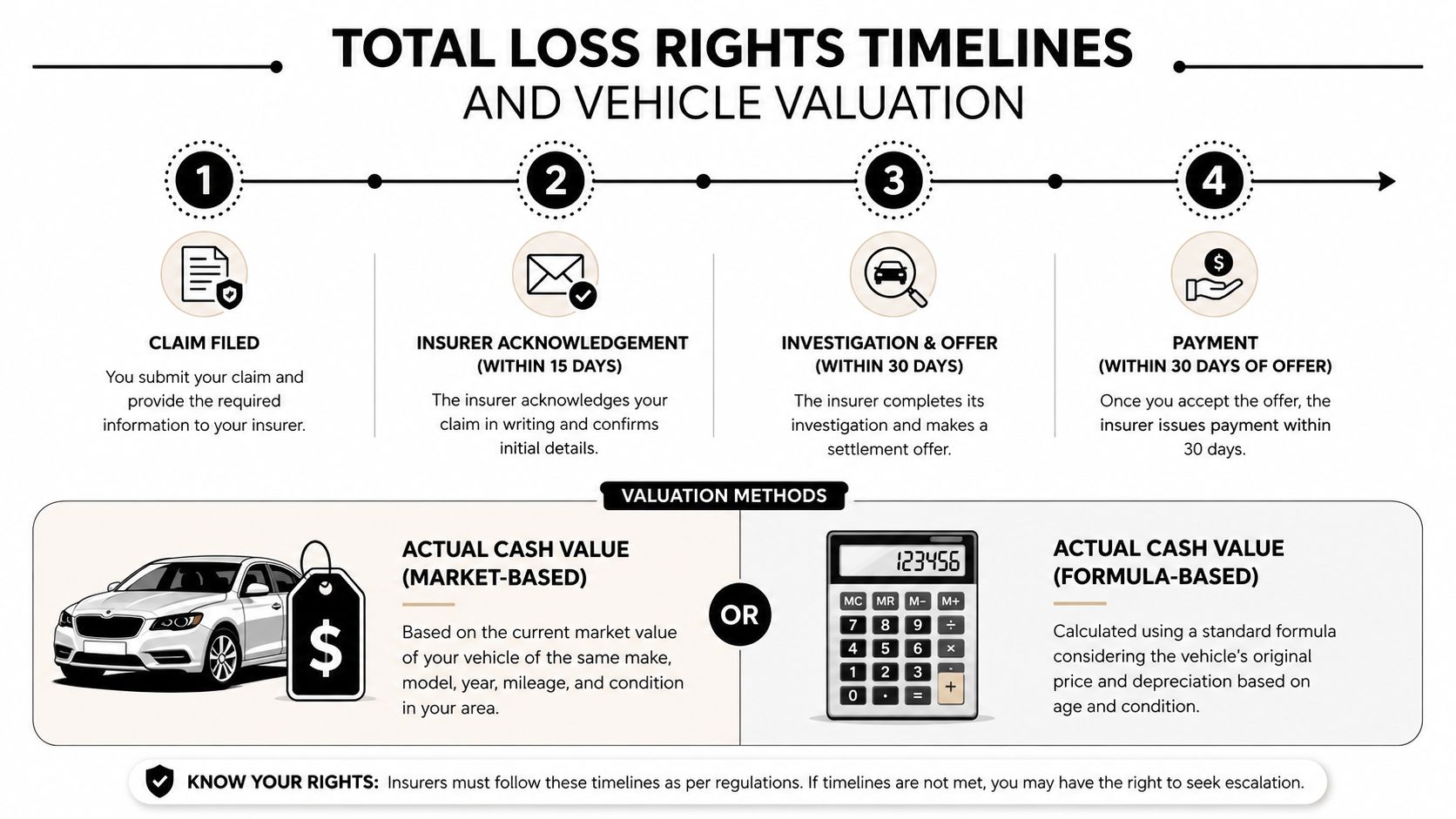
Think of your insurance policy as a lease agreement. The lease tells you and the landlord what each party promised, while housing laws add protections that the contract can't erase. Your auto policy works similarly. Contractual rights come from the policy's coverage terms, conditions, exclusions, deadlines, and appraisal language. State-regulated rights come from insurance statutes and rules that govern how insurers communicate, investigate, explain, and resolve claims.
The exact standards vary by jurisdiction, so don't assume a deadline or remedy from another state applies to you. Still, the underlying questions are widely useful. Did the insurer acknowledge the claim? Did it investigate relevant evidence? Did it explain a denial or reduction? Did it identify the information supporting its valuation? Did it give you a meaningful way to respond?
Contract rights and regulatory protections
Your policy is the first document to inspect. Look for provisions covering notice, cooperation, proof of loss, repair or replacement, actual cash value, salvage, rental benefits, and appraisal. A policy may give either side the ability to demand appraisal, but the clause generally addresses how much the loss is worth, not whether the insurer owes coverage or who caused the accident.
State protections operate beside the policy. They may address prompt communication, investigation practices, explanations for claim decisions, and complaint procedures. They don't automatically guarantee that the insurer must accept your preferred valuation, but they can require the insurer to handle the claim according to applicable standards.
What fair handling looks like
Fair handling doesn't mean the insurer must agree with every figure you submit. It means the decision should rest on relevant information, an understandable method, and a reasonable opportunity to correct mistakes. If the report lists the wrong trim, omits factory options, uses distant or dissimilar vehicles, or applies unexplained condition adjustments, you have a concrete valuation issue to raise.
Keep communication organized. Save letters, emails, valuation reports, photographs, repair records, maintenance documents, receipts for upgrades, and notes from calls. A chronological file helps you show what you provided, what the insurer considered, and what it ignored.
Practical rule: Treat every claim conversation as part of the record. Ask for important conclusions in writing and respond with specific corrections rather than a general statement that the offer feels low.
Total Loss Rights Timelines and How Insurers Must Value Your Vehicle
After a crash, an adjuster may call your vehicle a total loss before you agree with the valuation. That label changes the claim from repairing damage to replacing an asset, but it does not end your right to question the number. The insurer generally evaluates whether repairs make financial sense under the applicable state framework and policy terms. Thresholds and procedures vary by state, so ask which standard was used, how the pre-loss value was calculated, and what will happen to the salvage.
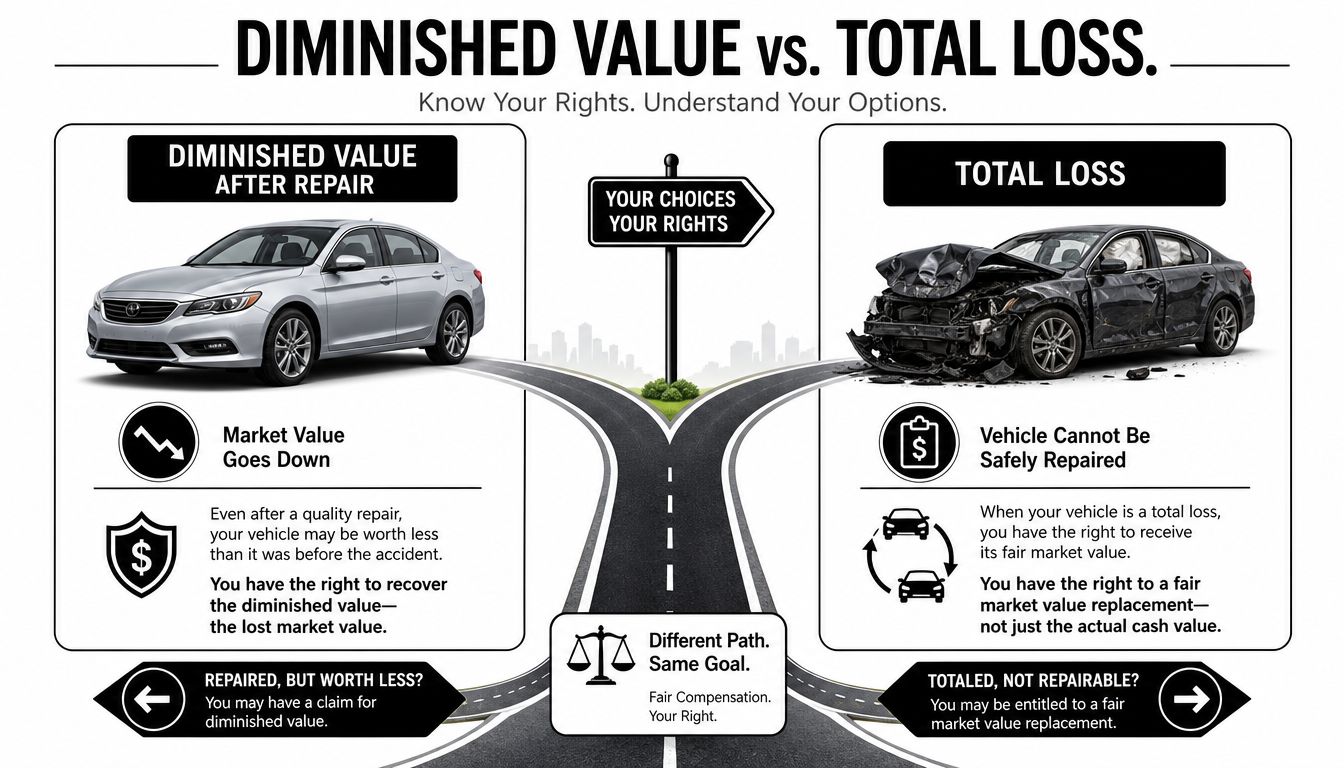
Actual cash value usually means the vehicle's market-based value immediately before the loss, subject to the policy and jurisdiction. An insurer may use software to produce an offer, yet the software still depends on human-selected data. You can challenge the year, trim, options, mileage, condition, comparable vehicles, and adjustments that shape the result. The issue is whether the calculation describes your actual vehicle, not whether it came from an algorithm.
The timeline is state aware
Claims timelines differ across the country. State rules may address acknowledgment, investigation, payment, or explanations for decisions, while policy provisions may impose additional requirements. Ask the insurer to identify the rule and policy provision it is applying rather than relying on a generic checklist.
Review the claim in stages:
- Claim acknowledgment: Confirm receipt of your notice and identify the assigned adjuster.
- Investigation: Ask what information remains outstanding and when the review is expected to finish.
- Valuation offer: Request the written report, comparable vehicles, condition ratings, mileage treatment, and every adjustment.
- Payment or dispute: Determine what must occur before payment, whether a release is required, and how to challenge the amount without giving up rights.
Save the letters, emails, valuation reports, photographs, repair records, maintenance documents, upgrade receipts, and call notes. A dated file shows what you supplied, what the insurer considered, and what it may have overlooked.
What to inspect in a total-loss valuation
Begin with the vehicle's identity. Check the year, make, model, trim, drivetrain, mileage, equipment, packages, accessories, prior condition, and geographic market. A vehicle with a different trim or missing options may not be a meaningful comparable, even when it appears similar in search results.
Then examine the comparable vehicles. Ask why each was selected, whether it was available or recently sold, how its condition compares, and whether the report adjusted for location. You can submit your own examples when they are similar. One unusually high listing proves little. A persuasive challenge explains the differences and uses several relevant examples.
Total-loss valuations deserve close review because these claims are common. Collision industry data reported that 27% of collision claims in 2023 were deemed total losses, according to LexisNexis Risk Solutions' auto trends report. The same report stated that through April 2025, total losses represented 22.6% of all losses and 23.5% of accident-related losses. Industry presentations have also warned that offers may fall $3,000 to $4,000 below true value. Those figures make the valuation report a document to test, not an answer you must accept automatically.
Diminished Value Rights After Repair and When Total Loss Applies Instead
A repaired vehicle can function properly and still be worth less in the marketplace because its accident history affects buyer confidence. Diminished value is the difference between the vehicle's pre-loss market value and its post-repair market value. It's not the repair bill, and it isn't compensation for inconvenience.
The remedy depends heavily on whether you're making a first-party or third-party claim. A first-party claim is made under your own policy. A third-party claim is made against the at-fault driver's liability coverage. Diminished-value arguments are generally stronger in third-party claims, while your own policy may limit or exclude payment after complete repairs.
The fork between repair and replacement
Consider a newer truck with clean pre-loss condition, strong equipment, and a repairable collision. After quality repairs, buyers may still discount it because databases and inspection records reveal the accident. That market gap is the focus of a diminished-value claim.
An older sedan may present a different question. If the repair cost and expected post-repair condition make the vehicle uneconomical to repair, the claim may move into total-loss valuation. You're then arguing for the vehicle's pre-loss market value, not a separate post-repair stigma amount.
The Texas Department of Insurance bulletin on diminished value states that an insurer isn't obligated to pay diminished value under the policy discussed when a vehicle has been completely repaired to its pre-damage condition. That Texas guidance shows why drivers must read the actual policy and identify the claim type instead of assuming every post-accident value loss is covered.
Evidence that supports a value-loss claim
Useful evidence can include pre-accident photographs, maintenance records, purchase documents, repair invoices, vehicle-history information, market comparables, and a qualified valuation report. Vehicle age, condition, rarity, equipment, repair quality, and local demand all matter. A classic, customized, or unusually equipped vehicle may need a more specialized analysis than a standard commuter car.
Repairs also create practical ownership concerns. After the claim, preserving the vehicle's condition through appropriate maintenance, including rust prevention for vehicles, can help protect long-term value, especially where exposed metal, undercarriage damage, or poor repair work creates additional deterioration risk. For a focused discussion of the valuation issue, review this guide to a car diminished value claim.
The appraisal process may help when the dispute concerns the amount of loss under a qualifying policy. It doesn't automatically create coverage for diminished value, so confirm the clause and the governing law before invoking it.
How the Appraisal Clause Protects Your Right to an Independent Valuation
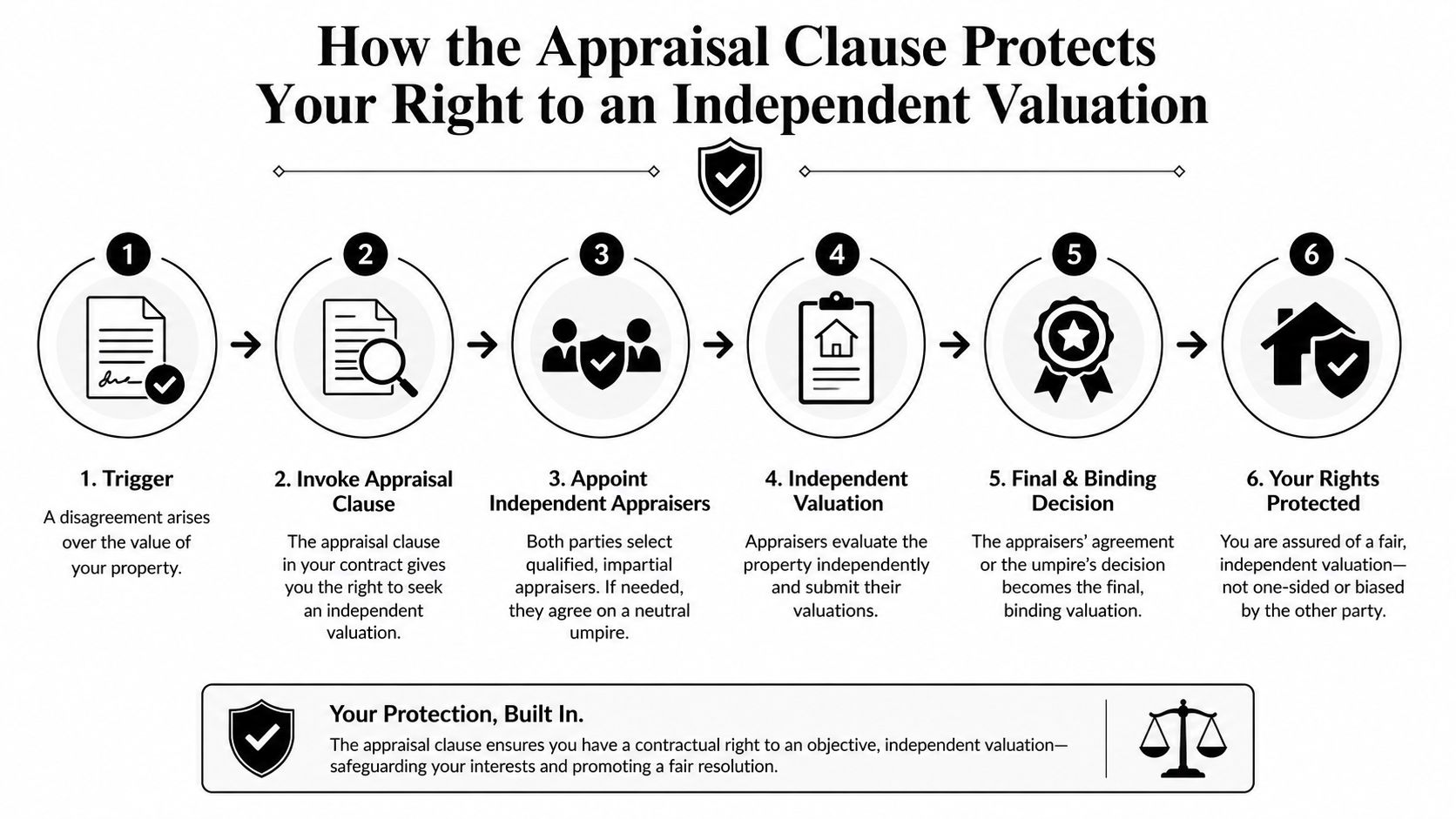
The appraisal clause is one of the clearest tools for challenging valuation itself. Its roots reach back to a 1793 insurance policy form, which provided for two “indifferent Persons,” one selected by each side, with a third person chosen if the first two disagreed. Any two agreeing would bind both parties, as described in the historical account of the 1793 appraisal clause.
Modern policies preserve the same basic architecture. Either party may demand appraisal, each side chooses a competent and impartial appraiser, and the appraisers select an umpire. The process replaces a single estimate with an independent valuation framework, although the exact wording and procedure depend on the policy and applicable law.
What appraisal can and can't decide
Most auto appraisal clauses focus on the amount of loss. That can include the value of a totaled vehicle or the amount of physical damage, depending on the policy. Appraisal usually isn't the proper mechanism for deciding liability, whether an exclusion applies, or whether the insurer must provide coverage.
That distinction matters. If the insurer says the accident isn't covered, appraisal may not resolve the disagreement. If the insurer accepts coverage but values your vehicle below a well-supported market figure, appraisal may be a more direct response than a general complaint.
Your central valuation right: When the policy allows appraisal, you can ask for an independent process instead of treating the insurer's first number as the market's final word.
How to invoke the clause carefully
Read the entire appraisal provision before sending a demand. Check whether it requires a written request, how each party selects an appraiser, how an umpire is chosen, and whether the decision is binding. Don't assume the insurer's preferred process is the only one. Keep the demand narrow and factual.
A simple starting formulation might be:
“I disagree with the amount of loss stated in the valuation and demand appraisal under the appraisal provision of my policy. Please identify the applicable procedure and confirm the insurer's selected appraiser.”
Avoid adding arguments about fault or bad faith to the appraisal demand unless a qualified professional advises you to do so. Those issues can distract from the valuation question and may belong in a different review or legal process. For a closer look at the contractual mechanism, see this explanation of the insurance appraisal clause.
The outcome may be binding, and the parties may share or separately bear costs according to the policy or governing rules. Before choosing an appraiser, ask about qualifications, impartiality, scope, fees, and the evidence the appraiser will review.
How to Dispute a Low Offer and Prove What Your Claim Is Worth
A low offer becomes easier to challenge when you turn disagreement into a documented error list. Start with the valuation report, not an emotional response. Mark every incorrect item, including trim, mileage, options, condition, prior damage, location, comparable selection, and adjustment.
Request the underlying information in writing. Ask for the complete valuation report, the comparable vehicles, the source and date of each comparison, the adjustment methodology, and an explanation for any deduction that you can't verify. If an automated system produced the number, ask for human review and a written response to each identified error.
Build the file before escalating
Your evidence should answer one question: what would a reasonable buyer have paid for this specific vehicle immediately before the loss, or what market value did the repaired vehicle lose afterward? Useful materials include:
- Vehicle records: Gather the title information, purchase documents, service history, maintenance receipts, photographs, and records showing factory or aftermarket equipment.
- Market evidence: Save comparable listings that match the vehicle's trim, mileage, condition, equipment, and geographic market. Explain every meaningful difference.
- Repair documentation: Preserve estimates, invoices, photographs, parts information, and records of any unresolved repair issue.
- Communication history: Keep the offer, valuation report, emails, letters, call notes, and dates of every request and response.
A report from the St. Mary's Law Journal discussion of appraisal and valuation disputes highlights the practical gap between knowing that appraisal exists and knowing how to challenge a valuation method with evidence. That gap is where careful documentation matters most.
Use a staged dispute letter
First, send a correction request. State the amount offered, identify the specific errors, attach supporting documents, and request a revised report. Don't bury the point under accusations. A concise paragraph might read:
“The valuation identifies my vehicle as the incorrect trim and omits its factory equipment. The attached records confirm the correct configuration, and the comparable vehicles listed below better match the vehicle's mileage and condition. Please issue a corrected valuation and explain any remaining adjustments.”
If the insurer rejects the correction, ask for supervisory review and identify the policy's appraisal provision. Keep coverage and liability arguments separate from the value dispute. If communication breaks down, a regulator complaint may address handling concerns, but it won't necessarily replace the valuation process available under your policy. A focused guide to an actual cash value dispute can help organize that next step.
Getting a Fair Outcome and When to Hire an Independent Appraiser
You don't need professional help for every disagreement. If the insurer made a simple data error and corrects it after you provide the title, trim, options, or mileage records, a direct request may solve the problem. Escalation becomes more sensible when the insurer keeps using poor comparables, refuses to explain adjustments, ignores specialty equipment, or treats a complex vehicle like a generic model.
Independent help can also be valuable when the vehicle has unusual characteristics. Collector vehicles, custom builds, high-value cars, low-production trims, and carefully maintained daily drivers may not fit a basic automated comparison. The stronger the vehicle's individual features, the more important it becomes to document condition and market relevance rather than argue from a broad average.
A practical decision test
Ask yourself:
- Does the report identify the correct vehicle and equipment?
- Are the comparable vehicles similar?
- Can you explain the missing value with documents or market evidence?
- Has the insurer answered your written objections?
- Does the policy provide appraisal for this type of amount-of-loss dispute?
- Are deadlines, releases, storage, rental, or salvage decisions approaching?
Most auto policies include an appraisal clause that allows either the insured or insurer to demand a binding independent valuation when the parties disagree about the amount of loss. The clause is typically limited to value disputes, not coverage or liability disputes, and is often used for total-loss claims, as explained in this overview of appraisal for auto insurance disputes.
An independent appraiser reviews the policy, insurer report, vehicle records, comparable market evidence, condition, equipment, and repair history. The appraiser can then prepare a valuation position, communicate corrections, or participate in the appraisal process when the clause applies. Total Loss Northwest focuses on total-loss and diminished-value appraisals in Oregon and Washington and provides diminished-value support nationwide.
Act before you sign away rights or let a deadline pass. The right outcome starts with identifying the exact dispute, preserving the evidence, and choosing a response that addresses valuation rather than merely repeating that the offer is unfair.
If your insurer's offer doesn't match your vehicle's real market value, Total Loss Northwest can help evaluate the report, document the vehicle's value, and support a total-loss or diminished-value dispute. Visit the site to request guidance on an independent appraisal and take the next step before accepting a settlement that doesn't reflect your loss.