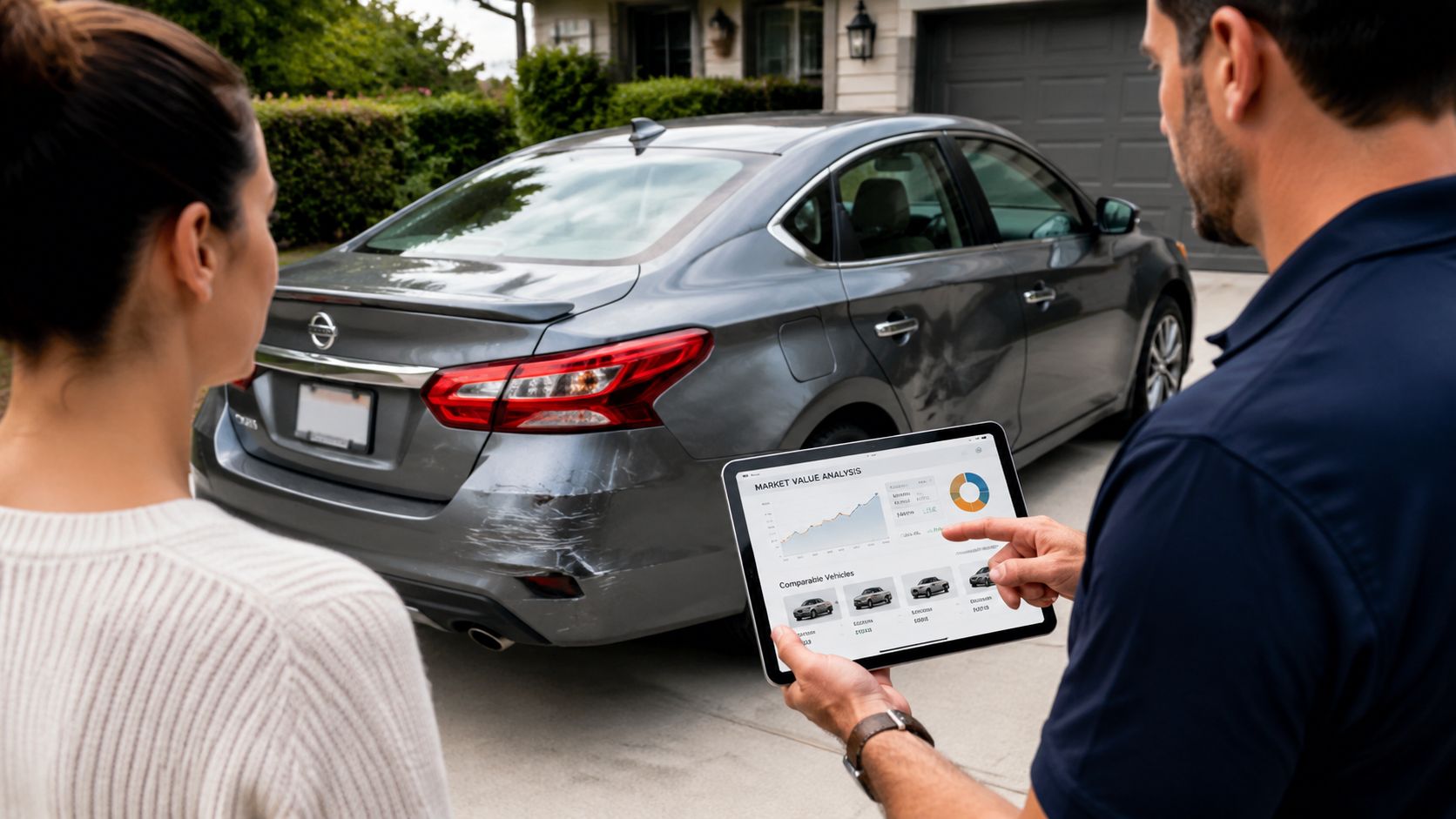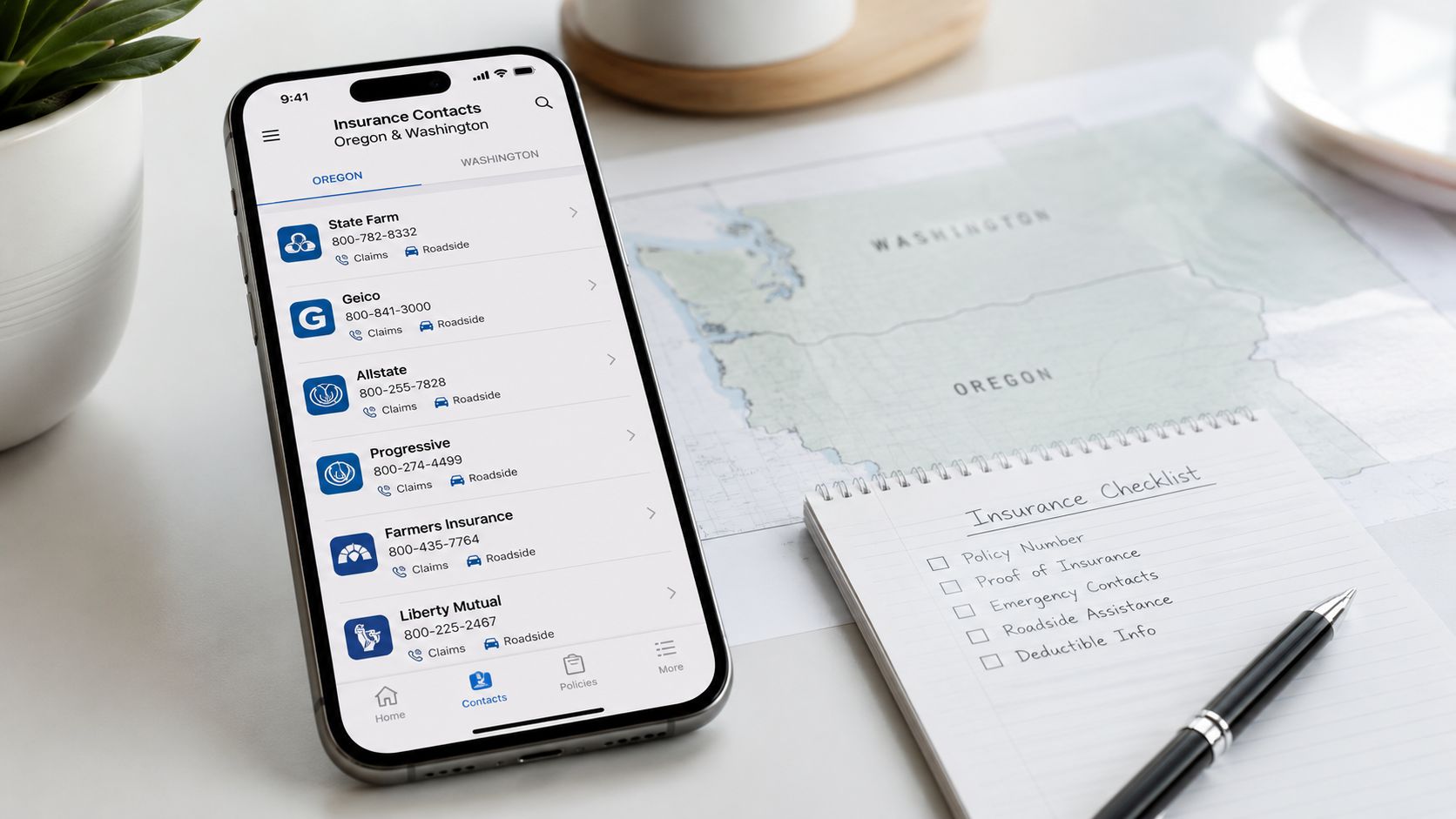
After an accident, the last thing you need is to search through old emails while your car is sitting on the shoulder and your hands are shaking. Start with the right phone numbers for insurance companies, and you cut straight past the noise, the wrong department, and the hold times that waste your energy. If you're in Oregon or Washington, the goal is simple, get the claim opened, get the adjuster's name, and keep control of the file from the first call.
The fastest move is to call the dedicated claims line, not general customer service. Regulators in major states keep public insurer phone directories for exactly this reason, and those directories show that direct phone access is still part of how insurers do business across the country, not an outdated extra. California's published consumer lists include carriers like AAA, Amica, Travelers, Lemonade, Kemper, and CSAA, along with standardized toll-free numbers for shopping and servicing, which is a strong signal that phone routing still matters in real claims handling (California insurer consumer phone list).
Before you dial, gather your policy number, the other driver's details, and the police report number if you have one. If the accident wasn't your fault, stay calm and give only the facts, where it happened, when it happened, who was involved, and whether anyone was injured. If you want a quick way to compare call-center support patterns across insurers, this guide is also useful alongside CallZent for insurers.
1. State Farm
State Farm is the safest first call when you want a clear path into claims. Use it when you need a carrier that still routes people through direct phone channels and when you want to keep control of the file from the start. For Oregon and Washington drivers, that matters because the first conversation sets the tone for the whole claim.
What to say on the call
Keep it short and specific. Tell them you need to report a new claim, get the claim number, and find out whether the file is with a desk adjuster or being sent elsewhere. If the crash may turn into a total loss or a diminished value dispute, say that immediately so it is documented from the first call.
Practical rule: Ask for the claim number before you hang up. If you leave the call without it, follow-up gets slower and the carrier has more room to send you in circles.
State Farm also works well if you have a local agent you can reach. That helps with paperwork and pressure, but do not let anyone push you away from claims intake. Open the claim first, then use the agent to press for the next step.
If your car is later declared a total loss and the offer comes in too low, you need to know how diminished value and appraisal rights work. A State Farm-specific starting point is this diminished value claim guide for State Farm policyholders, which is useful when you want to protect your position after the first estimate.
2. GEICO
GEICO is the carrier for drivers who want digital speed with phone backup. Its contact structure pushes you toward the app and website first, which helps when you need to upload photos quickly or check claim status without sitting on hold. The tradeoff is straightforward, there is no single public auto-claims queue that handles every issue at once, so expect routing prompts and product-specific paths through service or claims support (GEICO contact options).
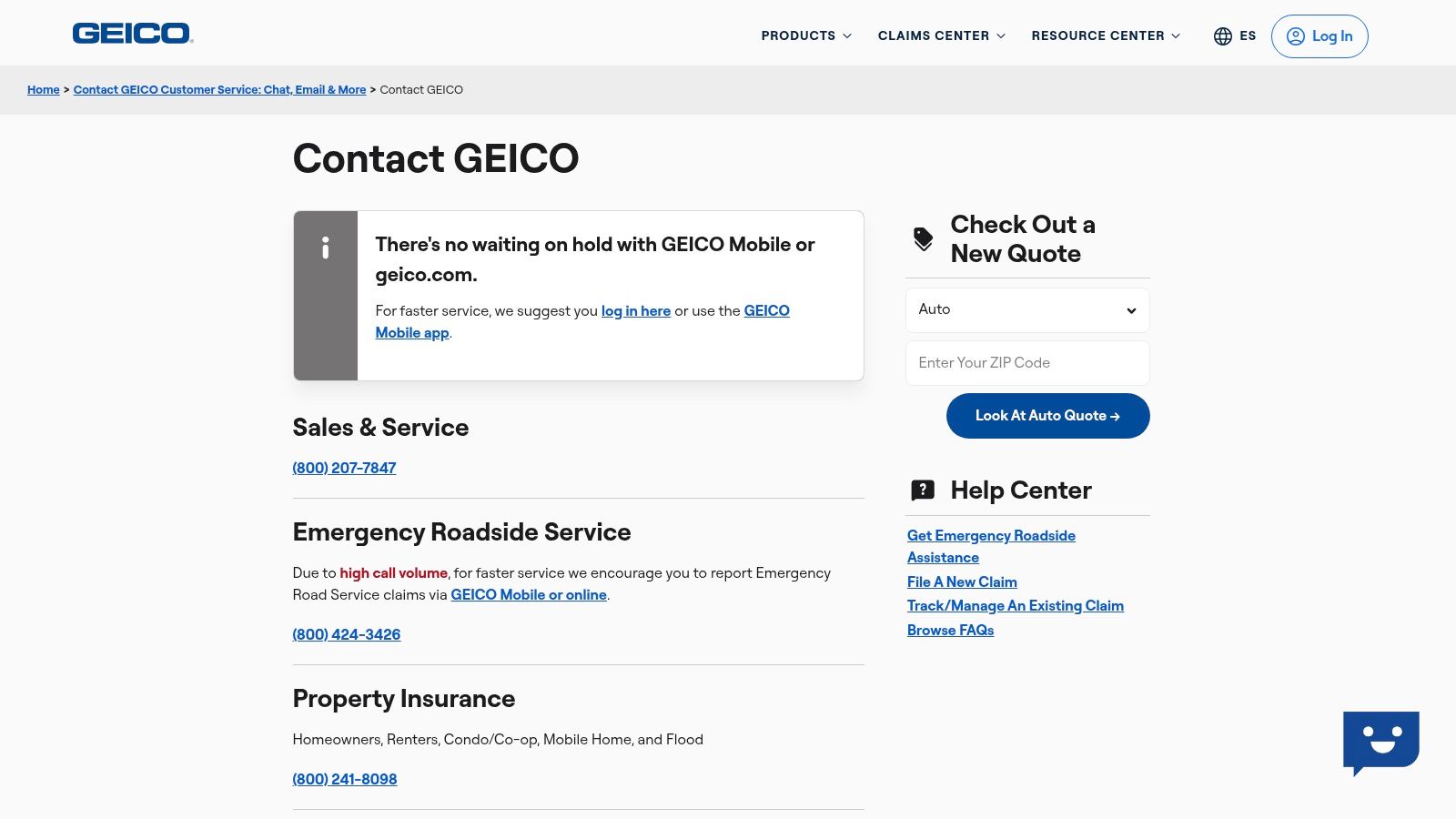
GEICO works best when you already know what you need. Open the claim through the fastest available route, then use the app for photos, documents, and status checks. If you are a third-party claimant, the path can feel less direct than a single claims desk, so stay patient and keep the call centered on getting the file created.
Best way to use GEICO after a crash
Do not start with a vague story. Lead with the claim type, auto, property, roadside, or existing claim status, then ask to be routed to the right department. If you are the not-at-fault driver, say that immediately so the representative knows you are trying to open a third-party claim, not service an existing policy.
Keep your goal narrow. Get the claim open, get the reference number, and save the app messages. That's the core benefit in GEICO's setup.
If your total loss offer comes in low, GEICO's digital process does not change your right to challenge the number. It just means you need to keep excellent records from the first upload. Start with the claim file, then review your valuation and, if the offer misses the mark, use the GEICO diminished value claim guide to push back with a clear record.
3. Progressive
A crash call to Progressive should be simple: report the loss, get the file opened, and move straight to the next step. Progressive makes that easier than many carriers because its claims setup is built for direct accident reporting, and it supports guest claims for people who are not even policyholders. For Oregon and Washington drivers, that makes it a useful model for how a claims line should work when time matters and you need answers fast (Progressive claims page, New York insurer directory).
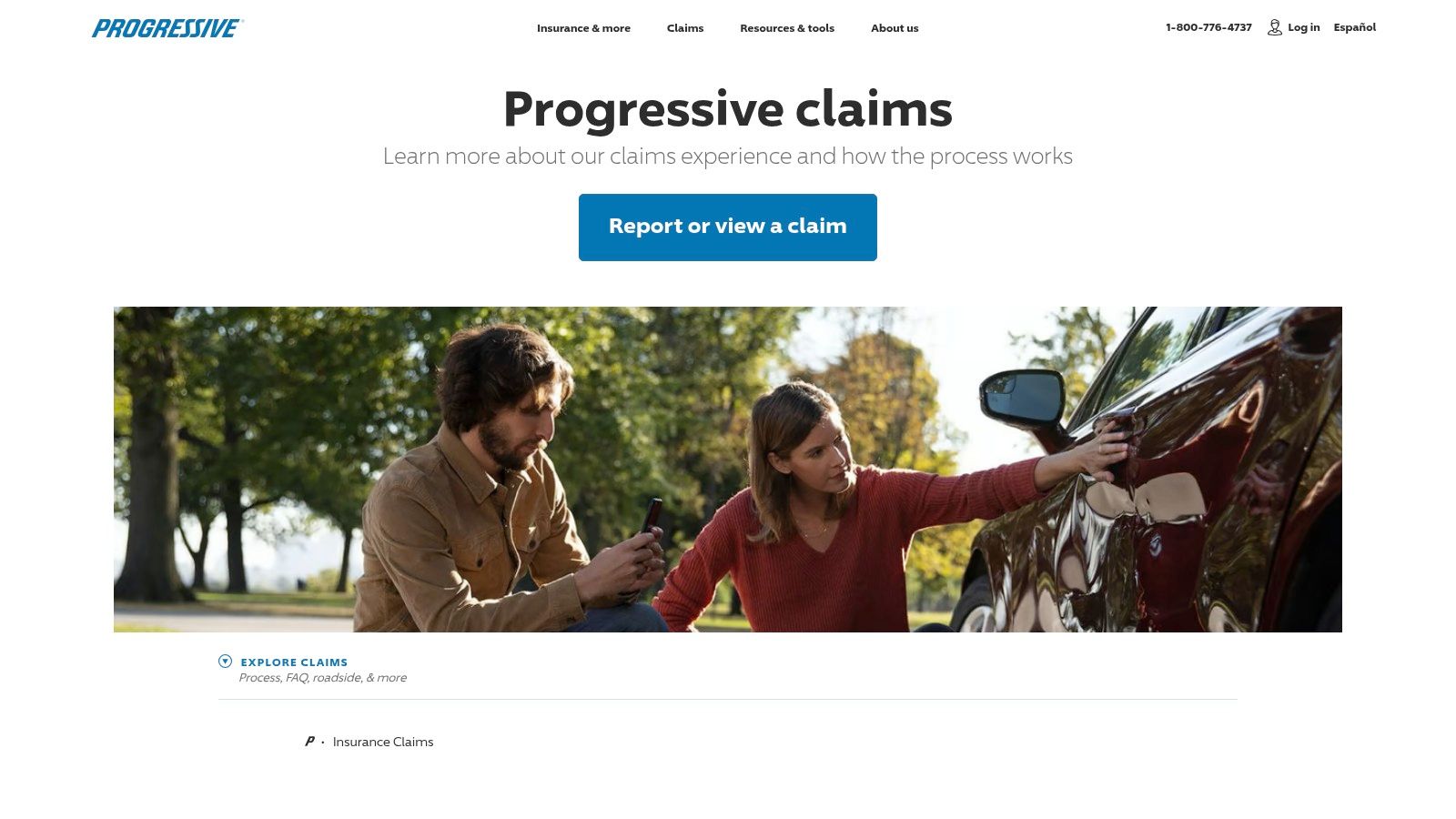
If you are comparing phone numbers for insurance companies, Progressive stands out because the path is clear. You call, report the loss, and then the claim starts moving. That matters when you are sore, stressed, or standing beside a damaged car and need the insurer to take control of the file without wasting your time.
What to push for on the first call
Lead with the claim type and the outcome you want. Ask for the claim number, the adjuster's contact method, and whether they want photos through the app or through another process. If the vehicle may be a total loss, say that early and say it plainly. Waiting until later can slow the file down while it gets reassigned or re-checked.
- State the event clearly: Say you are reporting an auto accident and want the claim opened now.
- Give the basics only: Time, place, other driver, police report, injuries if any.
- Ask about the next step: Total loss review, repair estimate, rental, or third-party processing.
Progressive can move quickly if your file is clean. Be organized, stick to facts, and write down everything the representative tells you, especially if you expect a low total loss offer and plan to challenge it later.
4. Allstate
Allstate gives you a well-known claims path that holds up when you are under pressure. Its claims support pages make it clear that phone-based help is available, and that matters because your first call should go to the claims file, not a maze of general contact options (Allstate claims support, California insurer phone list). If you're in Oregon or Washington and an Allstate driver hit you, start with claims and keep the call focused.
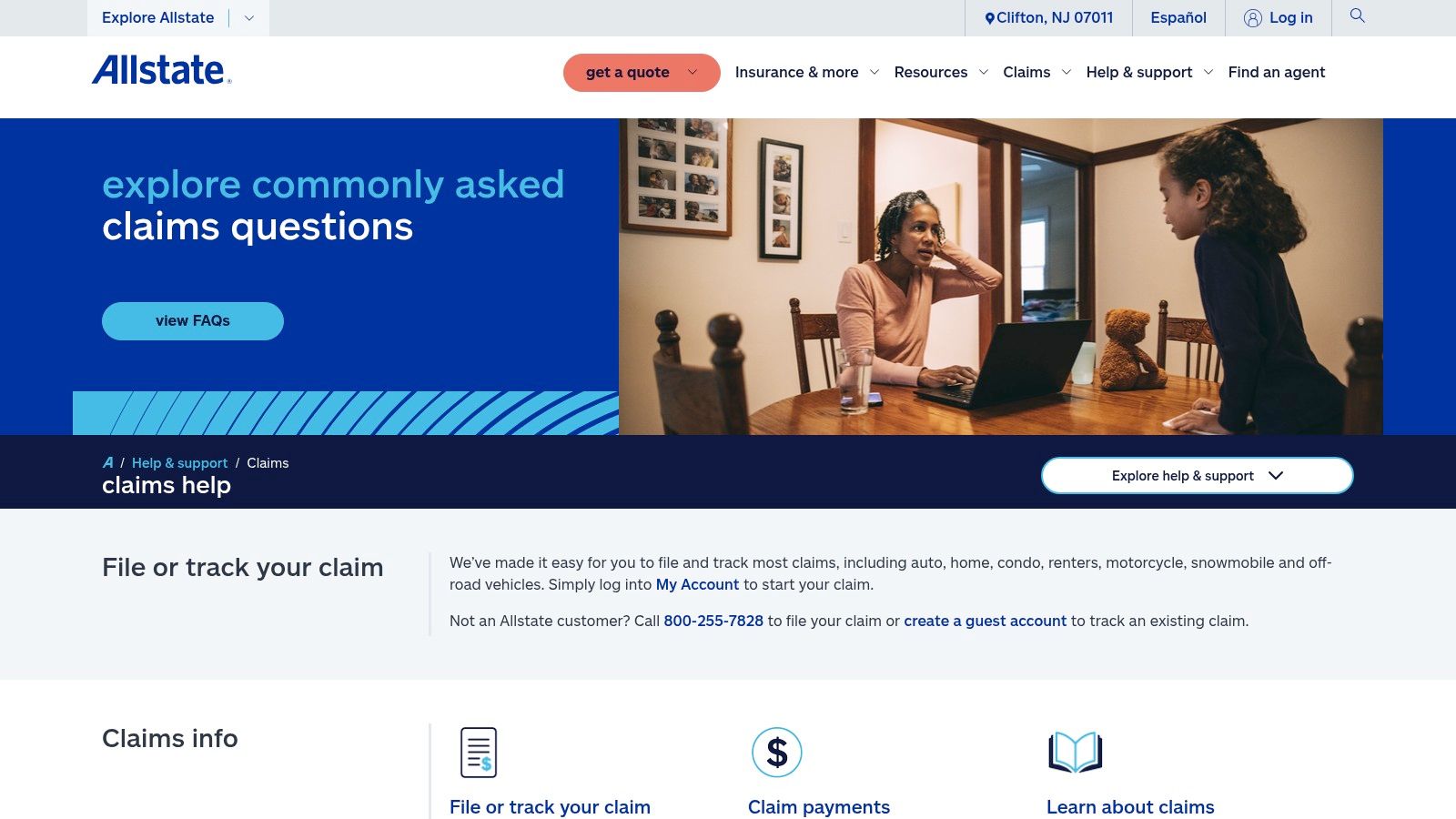
Allstate works well for policyholders and third-party claimants who want a straightforward intake process. Keep the conversation tight. Get the claim opened first, then give the facts that affect liability, repair routing, or total loss value.
Use the call to set expectations
Ask whether the claim is being handled by a general intake representative or a dedicated adjuster. Ask how they want documents, photos, and repair information sent. If the vehicle may be a total loss, ask what they need before valuation starts, because delays often begin when that part is left vague.
The first adjuster who hears you usually shapes the file. Don't rush, but don't drift into side conversations either.
If a low settlement offer comes later, your phone notes become part of the fight for fair value. Write down who said what, then follow up in writing the same day.
5. USAA
USAA works best for eligible drivers who want one main entry point and a clean claims path. Its claims support pages show a central contact model with digital tracking tools built around it (USAA claims support). If you want a single place to start, use that route and keep the call focused on the loss itself.
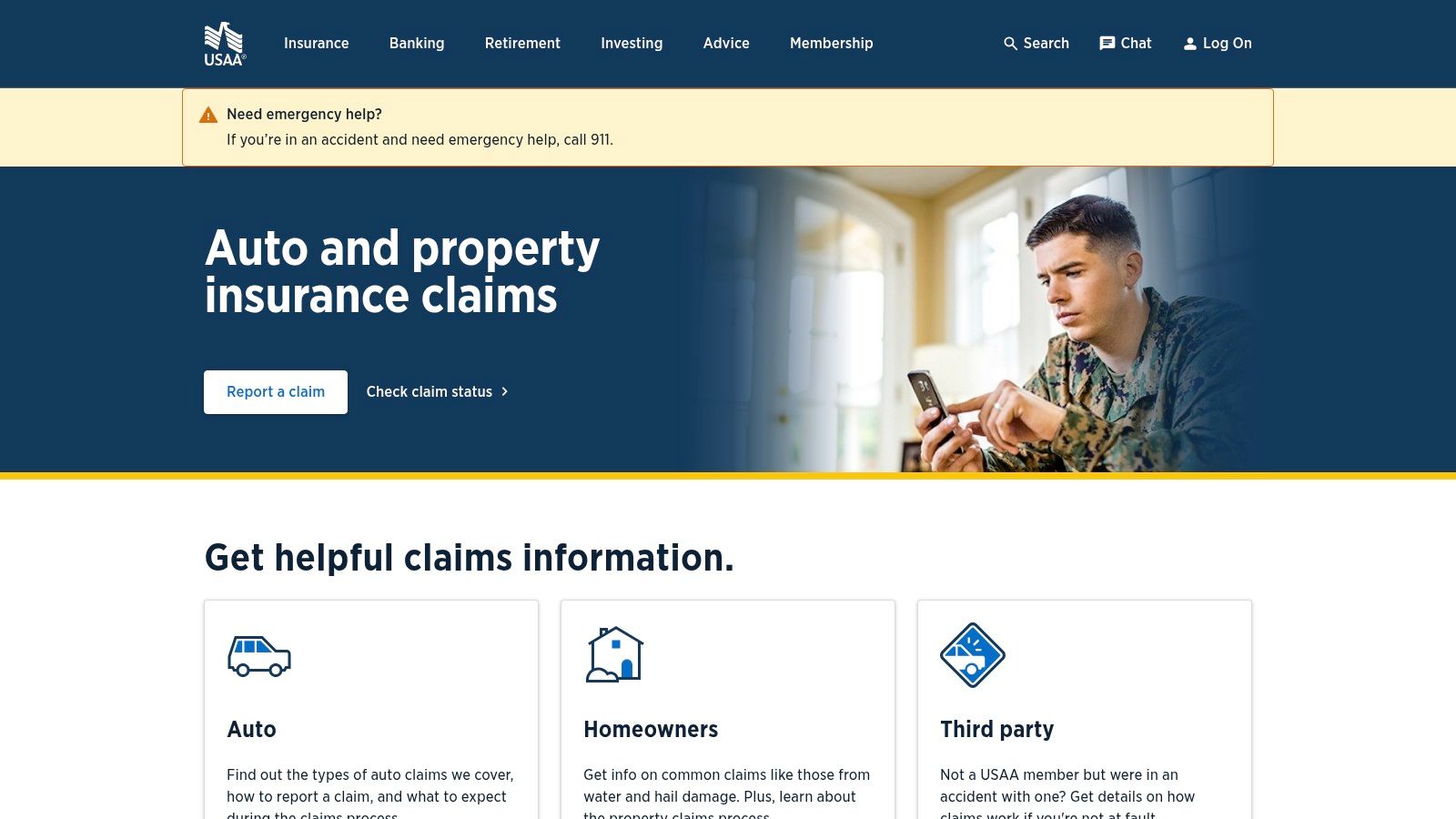
Third-party claimants can still report a claim even if they are not members. That matters if the at-fault driver carries USAA coverage and you need the file opened without delay. Membership rules affect who can buy a policy, but they do not block you from reporting the accident and starting the claim.
Keep the call efficient
Have the policyholder's information, your contact details, and the police report number ready before you dial. Then ask how they want photos, repair estimates, and adjuster messages sent after the file is open. If there are injuries or the vehicle may be a total loss, say that immediately.
USAA's strength is consistency, and you should use it. Keep one clean communication thread, write down every name and date, and save every message. If a total loss offer comes in too low, those notes help you push back with a clear record of what the insurer said and when.
6. Farmers Insurance
Farmers works well if you want phone and agent support working together, but you need to use it with a plan. After a crash, the worst move is calling the wrong line and getting stuck in service or billing when you need claims. Start with the claims route, state the loss clearly, and keep the conversation tied to the accident file. Farmers' contact structure gives policyholders and third-party claimants several ways to reach the right team, which helps when one queue is backed up and you need another path into the file. The Farmers contact page is the right starting point.
Farmers can feel more layered than some other insurers because it gives you more than one phone route. Use that to your advantage. If you know the purpose of the call before you dial, you can cut through the extra routing and keep the rep on track.
Say the right thing first
Open with the loss, not the policy. Tell the rep you are reporting an auto accident and want the claims department. If you are the injured or not-at-fault driver, say that plainly and ask how they want the third-party report submitted.
The point is to get the file open without drift. Once the call starts, keep it on claims only. Do not let it drift into billing, renewal, or policy changes unless the rep specifically needs that information to identify the file.
- Use the claims path first: General service slows you down when the goal is a claim file.
- Ask which number owns the file: If the rep transfers you, write down the team name and the time.
- Keep your documents ready: Policy number, police report, and vehicle details should be in front of you.
If the claim may become a total loss, say that early. That one detail changes how the file gets handled, and it gives you a better record if the insurer later comes in low on value. If the estimate or settlement offer does not make sense, use a Farmers claims phone number guide to keep pressure on the file and document every step.
Farmers is fine for drivers who stay organized and direct. If you are scattered, the extra routing can waste time and make the process feel heavier than it should. Stay on the claims track, keep the rep focused on the incident, and write down every name, transfer, and promise.
7. Liberty Mutual
Liberty Mutual works well when you need alternate phone routes because the first contact path stalls out or sends you in circles. Its public claims filing system and multiple numbers give you more than one way to reach the right team, including a claims path for updates through Liberty Mutual file a claim. If you want the Liberty Mutual claims phone number details in one place, use this Liberty Mutual claims phone number guide before you call. In the Northwest, that matters because some regional brands route through Liberty Mutual systems, so the file may not feel like a single-brand experience.
If you're calling after a crash, stay focused on the claim. Ask for the department tied to your policy or the accident file, and do it right away. If they push you between general service and product-specific queues, keep the claim number and write down the names of everyone you speak with.
The right way to handle a slow Liberty Mutual transfer
Start with the loss, then force clarity. Tell the rep you are reporting a loss, ask for the claim number, and ask where the file is being assigned. If the vehicle may be a total loss, say that before the transfer ends.
Use every transfer as a checkpoint. If a rep sends you somewhere else, get the name of the new queue and the time of the transfer.
That record matters if Liberty Mutual later comes in low on a total loss offer. Your transfer notes help show you stayed on top of the claim, and they help you prove when the file became active. Keep the pressure on the claim file, not on general service, and make the insurer keep the conversation tied to the loss.
8. Nationwide
A Nationwide claim should start with the phone call, not with guesswork. If you're dealing with a crash in Oregon or Washington, get the file opened, confirm the adjuster's name, and ask how Nationwide wants updates handled from that point on. Their claims page gives you a direct path to auto claims support, and the text-to-track feature helps once the claim is active (Nationwide claims page).
That setup matters because the first conversation sets the tone for the whole file. Keep the call focused on the loss, not on small talk, and make sure you leave with the claim number, the next contact method, and the name of the person handling the file. If the vehicle may be a total loss, say that during the call so the file is treated correctly from the start.
Use the phone call to set the record
Text tools help after the claim is already open. Use them to check status, but do not depend on text alone to report a major loss, request rental help, or start a total loss discussion. The call gives you the clean record, and the written updates help you keep the insurer honest about what happens next.
- Open the file by phone: That creates the claim record and gets the case moving.
- Confirm the details before you hang up: Ask what documents they want and how they want them sent.
- Use text for follow-up: Written updates are easier to track than memory when the file slows down.
If reimbursement turns messy, stay strict about the instructions Nationwide gives you. That applies to roadside costs, document submission, and any other part of the claim. Delays usually start when a driver assumes the next step instead of asking for it plainly.
9. American Family Insurance
American Family Insurance is a dependable option if you want clear claims support and local agent backup. Its claims page makes it straightforward to start a claim online or by phone, and that matters when you're trying to move fast after an accident (American Family claims page). Regulators' public phone directories also show how insurers like American Family remain part of a phone-based service system across state lines, which is still the case for most drivers.
American Family works well when you know your file needs human review, not just a generic upload. If the vehicle damage is serious or the claim could become a total loss, call the claims line directly and ask what they need before the adjustment starts.
What to ask before ending the call
Ask whether they want documents uploaded or emailed, and whether an adjuster will follow up by phone or message. If they ask for records later, keep those requests in one place so you don't send the same paper twice. That small habit saves time and avoids confusion.
If the insurer asks for more documents, send them the same day. Slow document delivery is one of the easiest ways to stall a claim.
For third-party claimants, American Family can still be workable because the claims side is designed to accept reports from people who aren't policyholders. Stay factual, calm, and persistent.
10. Travelers
A Travelers claim goes smoother if you use the right line from the start. Its public contact page separates personal claims, roadside help, and business claims, which is exactly what you want after a crash, a tow, or a total loss decision that needs the right desk the first time (Travelers contact page). Keep your policy number handy, because the company routes by product and the wrong entry point only slows you down.
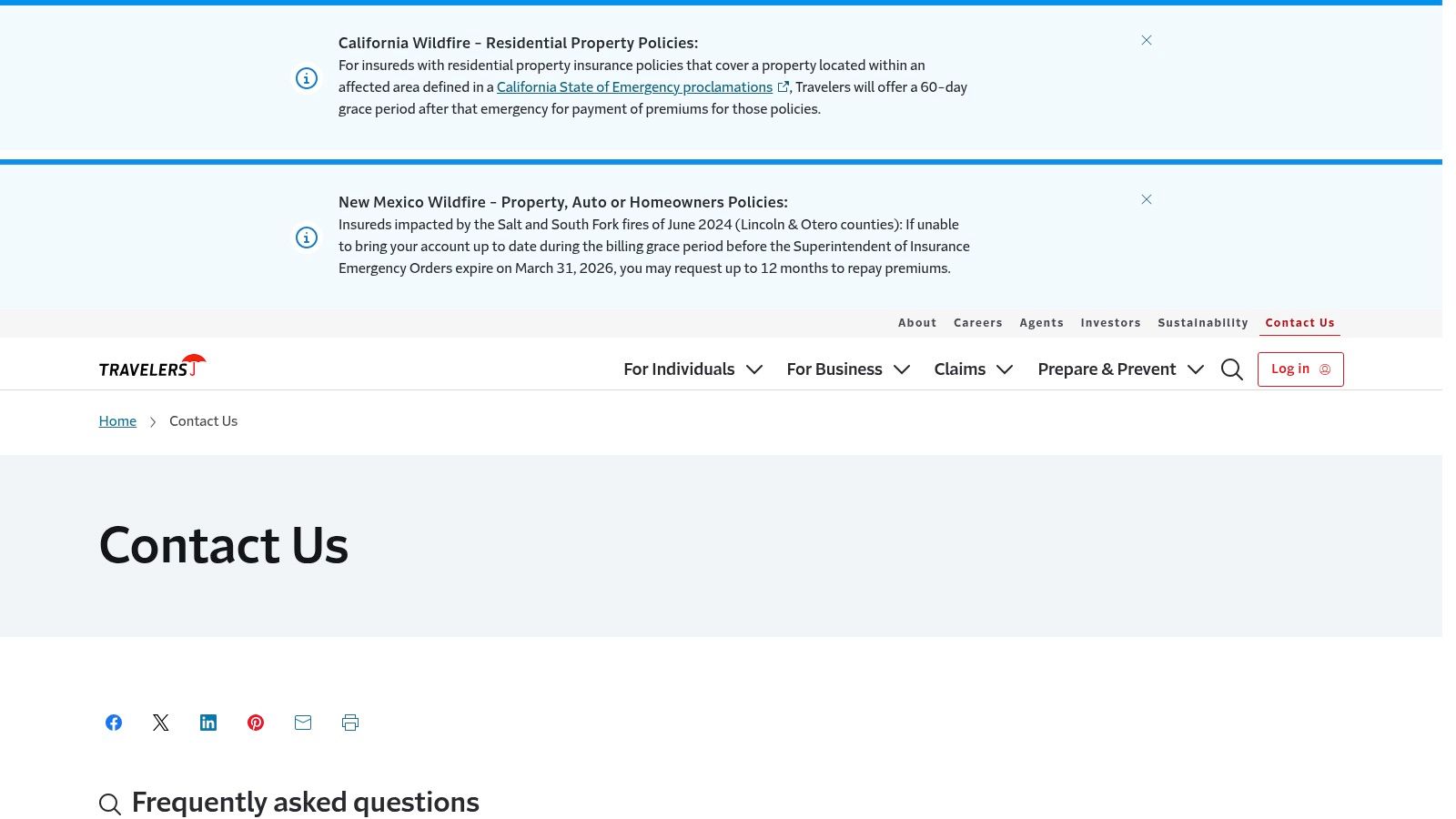
This is a clean phone system for drivers who want clear instructions, not guesswork. Travelers publishes the menu flow and hours, so you can prepare before you dial and avoid wasting time on the wrong department. That structure helps in Oregon and Washington, where a missed transfer can drag out repair decisions, rental coordination, or a total loss review.
Get routed faster
Start with the policy number and say you are calling about an auto claim. That gets the rep into the right file faster and keeps you out of the business queue. If the loss involved towing or roadside help, say that in the first sentence so the rep can send you to the correct option without forcing you to restart the call.
- Use the personal line for auto claims: Keep business claims out of the conversation unless the policy is commercial.
- Have the policy number ready: It cuts down on back-and-forth and helps the rep place the claim correctly.
- Mention roadside help right away: If you need it, ask for the proper menu option before the call drifts into a different department.
For a straightforward claim, Travelers rewards preparation. For a disputed total loss offer, it also gives you a clearer path to ask the next question, get the name of the adjuster, and press for the valuation details you need before you accept anything.
Top 10 Insurers, Phone Numbers
| Company | Core Claims Features | User Experience (★) | Value / Claim Ease (💰) | Target Audience (👥) | Unique Selling Points (✨🏆) |
|---|---|---|---|---|---|
| State Farm | 24/7 claims line, app/online filing, agent network, 800‑SF‑CLAIM routing | ★★★★☆ | 💰 Moderate, strong local agent support | 👥 General drivers, OR/WA customers | ✨ Agent access, 🏆 CAT response capacity |
| GEICO | App-first filing, Claims Express, specialist lines for property/roadside | ★★★★☆ | 💰 Good, fastest via app/online | 👥 Digital-first customers, third‑party callers | ✨ Robust mobile flow, fast online response |
| Progressive | Single 24/7 national claims line, guest filing, photo estimates | ★★★★☆ | 💰 Good, easy phone reach for accidents | 👥 Drivers needing quick phone access | ✨ Widely published number, photo estimate flow |
| Allstate | 24/7 claims phone, guest accounts, Good Hands Repair Network | ★★★★☆ | 💰 Moderate, clear doc guidance | 👥 Policyholders & third‑party claimants | ✨ Repair network access, clear next‑step guidance |
| USAA | One main claims line, app filing, adjuster messaging, digital tracking | ★★★★★ | 💰 Excellent, consistent digital tracking | 👥 Military members, veterans & families | 🏆 Member-focused service, strong messaging tools |
| Farmers Insurance | 24/7 Claims Center, online filing, agent + centralized support, text updates | ★★★☆☆ | 💰 Moderate, multiple routing options | 👥 Policyholders and third‑party claimants | ✨ Agent + central support options |
| Liberty Mutual | Phone & online filing, corporate 2CLAIMS line, multiple published numbers | ★★★☆☆ | 💰 Moderate, alternate routing available | 👥 National consumers, regional brand customers | ✨ Multiple published routes for alternatives |
| Nationwide | 24/7 phone/online, text‑to‑track (CLAIMS→252467), dedicated auto FAQs | ★★★★☆ | 💰 Good, helpful text tracking | 👥 Drivers who want text updates | ✨ Text‑to‑track feature, clear auto FAQs |
| American Family Insurance | 24/7 claims line, online filing, email docs, agent support | ★★★★☆ | 💰 Good, clear single number | 👥 Insureds & third‑party claimants | ✨ Direct email for documents, agent help |
| Travelers | Personal & business claims lines, roadside via menu, transparent hours/menus | ★★★★☆ | 💰 Good, clear routing for personal vs business | 👥 Personal & commercial policyholders | ✨ Transparent hours/menu, separate business line |
Your Post-Call Checklist, Document, Follow Up, and Fight for Fair Value
After you report the claim, don't mentally check out. Write down the agent's name, the date, the time, and the claim number right away. Then send a short follow-up email that restates what you discussed, because a written summary creates a paper trail the insurer can't pretend never happened.
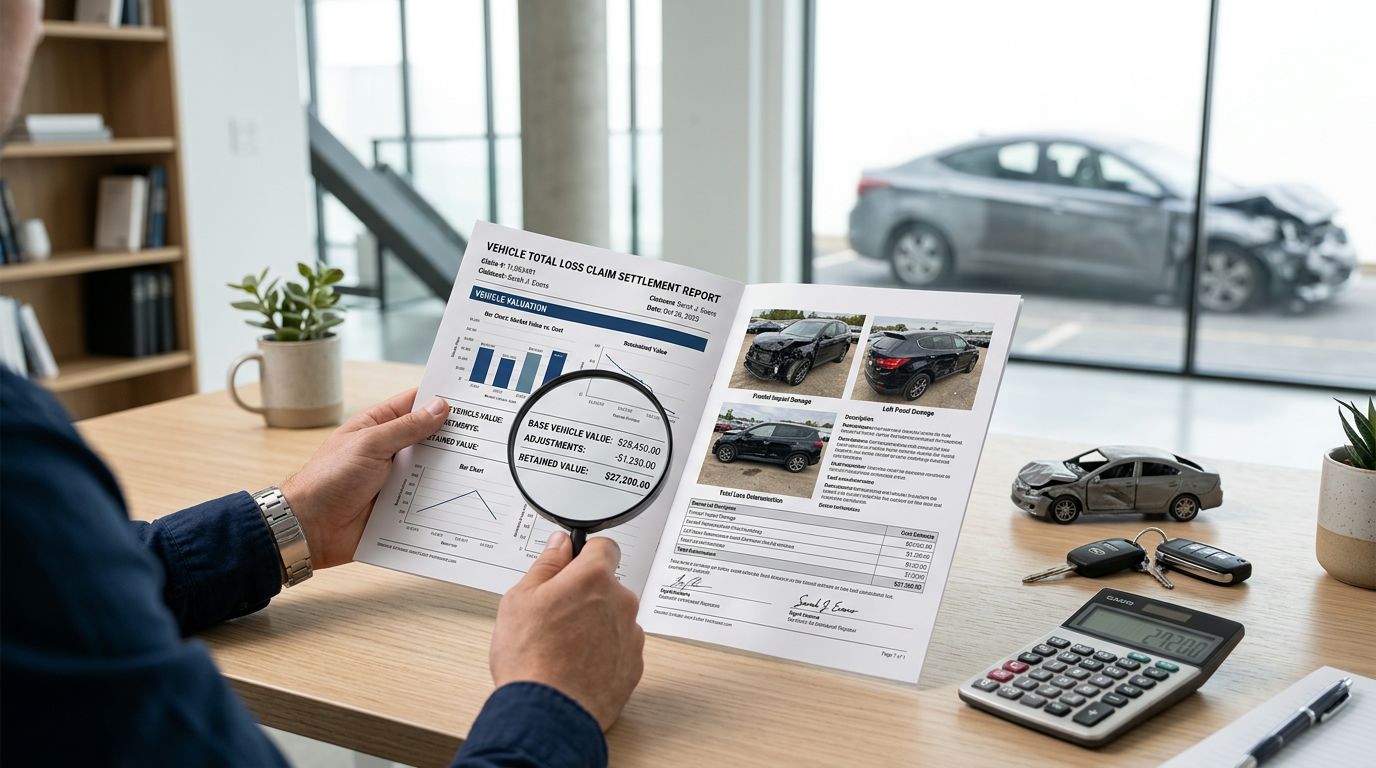
That paper trail matters even more if your vehicle is declared a total loss and the first offer is too low. For Oregon and Washington drivers, the next move is to challenge the valuation with real documentation, not emotion. If your policy gives you appraisal rights, use them. If the insurer keeps anchoring to a number that doesn't reflect the car's true market value, an independent appraiser can help force a better review.
Regulators already formalize phone access in public insurer directories, but once the claim is open, the burden shifts to you to protect your position. Keep copies of repair estimates, photos, texts, and every email thread. If the insurer delays, changes its story, or lowballs the settlement, call it out in writing and push the file toward an independent valuation review.
When you're dealing with a total loss dispute in Oregon or Washington, Total Loss Northwest works on diminished value and total loss appraisals. They can step in as an independent appraiser and help you challenge a low settlement with a real market-based valuation.