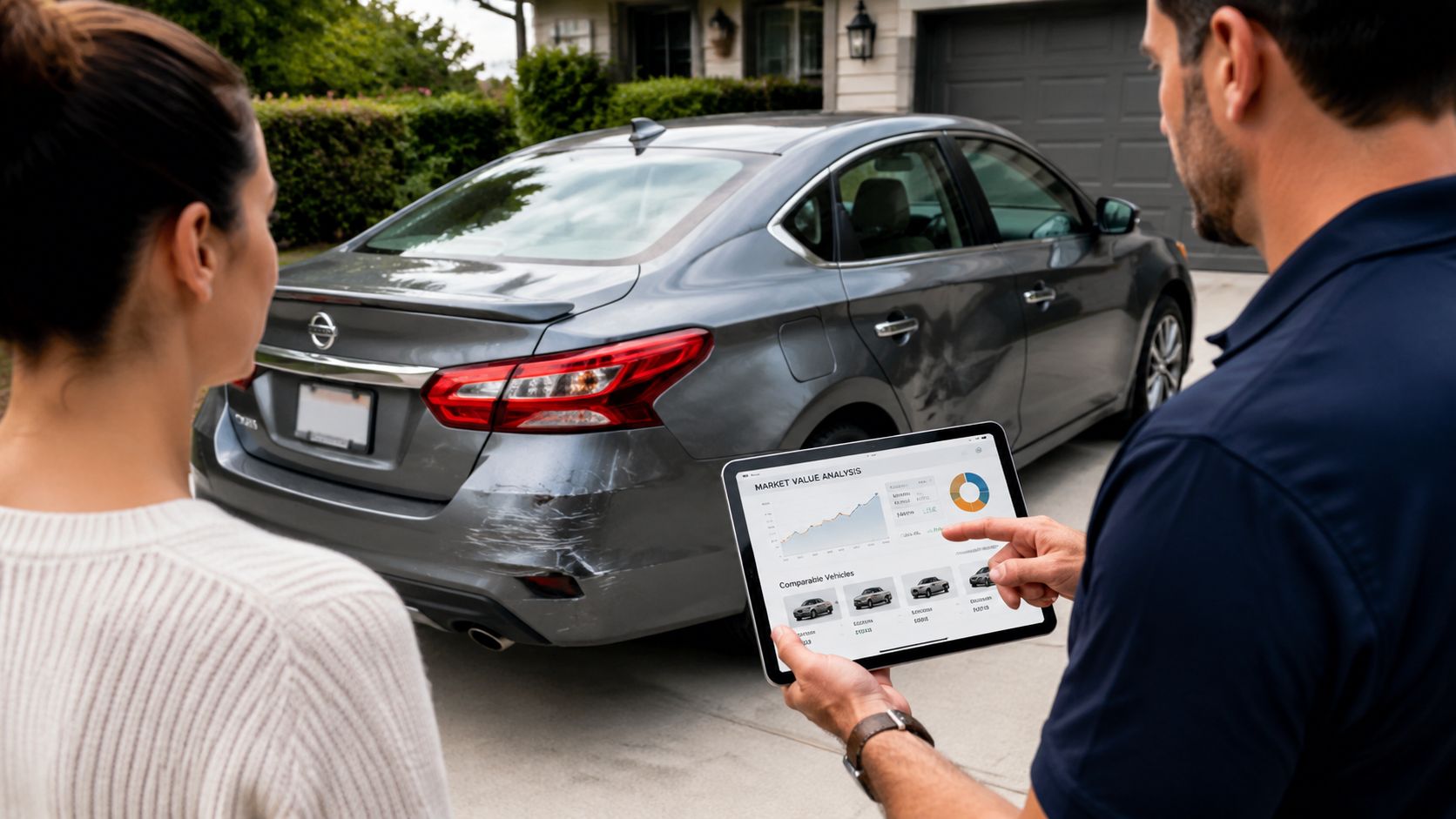
You pick up the phone expecting the insurance company to tell you how they'll help. Instead, the adjuster reads off a number that doesn't match the car you owned, the condition you kept it in, or the money you put into it.
That's the moment most drivers realize something important. The insurer isn't valuing your vehicle the way you would. They're valuing a data entry. If your car was customized, restored, unusually clean for its age, or better equipped than the software recognized, the first offer can miss the mark badly.
A Total Loss Claim Expert exists for exactly this problem. Not to argue emotionally. Not to complain louder. To force the valuation onto real market evidence and away from a one-sided software result.
That Sinking Feeling The Lowball Settlement Offer
The call usually sounds routine. The adjuster is calm. They tell you the vehicle is a total loss and give you a settlement figure as if it's objective and final.
But you know your car.
You know it had the upgraded trim package the report didn't mention. You know the wheels, suspension, audio, bed cover, restoration work, or documented maintenance history matter. You know a generic base-model number doesn't reflect a clean, carefully kept vehicle.

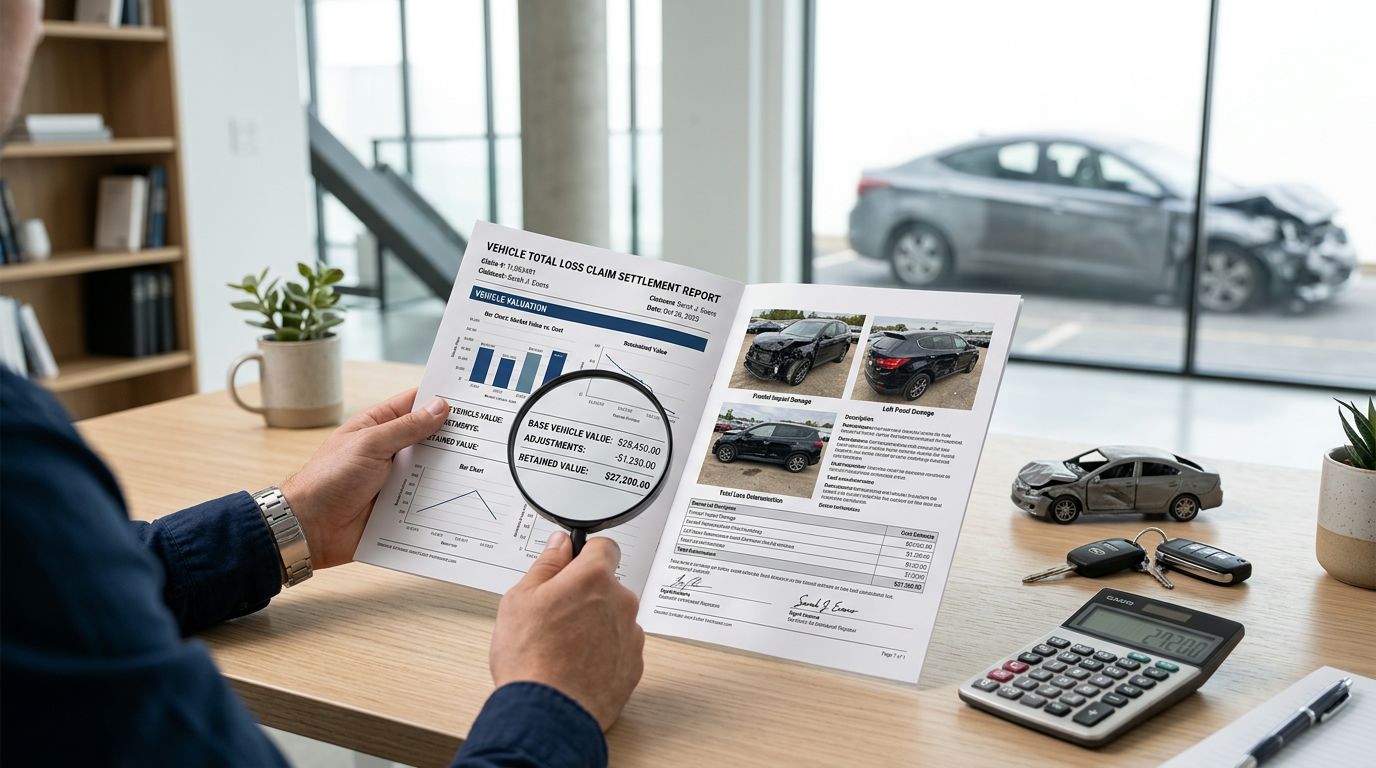
What makes this worse is that the paperwork often looks polished enough to seem untouchable. It has line items, condition adjustments, and comparable vehicles. But polished doesn't mean correct. It often means the insurer's system produced a fast estimate that you're expected to accept before you ask hard questions.
Why the number feels wrong
A lot of drivers run into this after they've done everything right. They bought the right coverage, kept records, fixed issues promptly, and still got an offer that feels disconnected from reality.
That gap gets even wider when the policy itself is misunderstood. If you're sorting through whether your coverage pays actual cash value or something more protective, PTL's insights on insurance types are worth reading because the policy language drives the starting point for the insurer's number.
You're not being unreasonable if the offer doesn't match the vehicle you owned. You're reacting to a process that often treats a unique car like a generic one.
What to do before you say yes
Do not rush to accept the first figure just because the adjuster sounds confident.
Start here:
- Pause the conversation: Tell the adjuster you're reviewing the valuation.
- Collect your records: Photos, service history, receipts, upgrade documentation, window sticker, and anything showing trim and options.
- Look at negotiation strategy: This guide on how to negotiate with an insurance adjuster gives a practical framework for pushing back without making the claim harder on yourself.
The wrong move is accepting a low number because you feel outmatched. The right move is getting help from someone who knows how these values are built and where they break.
What a Total Loss Claim Expert Really Does
A Total Loss Claim Expert rebuilds your vehicle's value from scratch. That matters because the insurer's software is built for speed and consistency, not for custom parts, rare trims, classic vehicles, or cars that were maintained far better than average.
That is the core problem. Automated valuation systems flatten unique vehicles into generic data points. If your truck has documented upgrades, your collector car has unusual market demand, or your daily driver has low miles and a thick service file, the first insurance number can miss thousands of dollars in actual value.
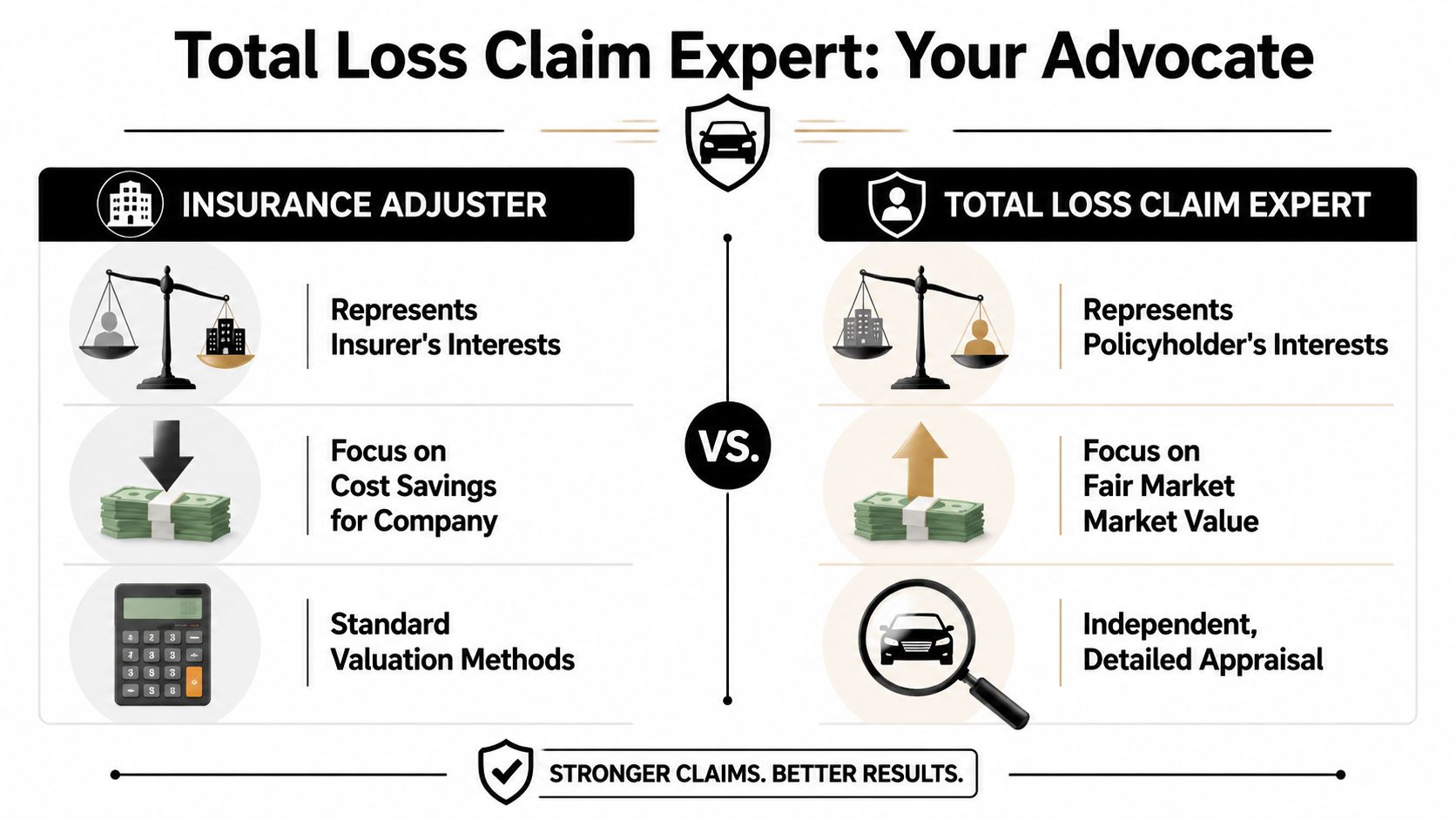
The expert's real job
A good expert does more than argue that the offer feels low. They prove why it is low.
That usually means four specific jobs:
- Confirm the exact vehicle configuration: VIN, trim, factory packages, installed options, and equipment that affect value.
- Document pre-loss condition: Clean paint, strong interior condition, service history, recent repairs, and mechanical condition all matter.
- Research real market comparables: The right comparison is not any vehicle with the same badge. It is a vehicle with similar mileage, condition, options, and market relevance.
- Prepare a report the insurer has to answer: A useful appraisal is detailed, supported, and written clearly enough to stand up in a formal dispute.
According to Auto Praise's explanation of invoking the total loss appraisal clause, a certified expert performs a VIN-specific configuration review to identify trim levels, packages, and options that insurer algorithms often miss. If you end up forcing the issue through your policy's auto insurance appraisal clause process, that level of detail becomes even more important.
Why manual valuation beats insurer software
Insurance valuation tools have a pattern. They work reasonably well on ordinary vehicles with average condition and easy-to-find comps. They break down on the vehicles owners care most about.
Custom trucks get priced like stock trucks. Classic cars get matched to weak or irrelevant comps. Exceptionally clean vehicles get treated like average examples. Cars with major recent maintenance get valued as if that work never happened. The software did its job. It just did the insurer's job, not yours.
An independent expert corrects that by doing the manual work the system skipped. They verify condition, screen out bad comparables, account for real equipment, and use current market evidence instead of letting a database guess.
What you should expect from one
You should expect specifics.
A real expert should be able to tell you what documents they need, what market sources they check, how they handle condition adjustments, and how they will defend the number if the insurer pushes back. If the answer is vague, keep looking.
| Focus area | What they should review | Why it matters |
|---|---|---|
| Vehicle identity | VIN, trim, packages, options | Wrong configuration leads to the wrong value |
| Condition evidence | Photos, maintenance, upgrades | Average-condition assumptions drag the price down |
| Market support | Local and relevant comparable vehicles | The insurer needs proof tied to your vehicle |
| Formal report | Clear written appraisal | A usable report gives you leverage in the dispute |
Here's a quick visual if you want to hear the process explained in plain language:
Hire the expert who can explain the method, defend the comps, and account for what the software ignored. That is how owners of custom, classic, and unusually well-kept vehicles get the claim back into the market.
The Appraisal Clause Your Policy's Hidden Power
Most drivers don't know they already paid for a tool that can force this dispute into a fairer process. It's called the Appraisal Clause, and if your policy includes it, you may have the right to challenge the insurer's valuation formally instead of begging the adjuster to reconsider.
That matters because adjusters control the conversation until you activate a process that limits their control.
What the clause actually does
The clause lets you hire your own independent appraiser. The insurer picks theirs. If those two appraisers don't agree, a neutral umpire steps in. That changes the dispute from one company talking at you into a structured valuation process.
Use it before you finalize the settlement. That is not optional.
Practical rule: If you accept or cash the settlement payment first, you can lose the right to invoke the Appraisal Clause.
The binding structure is simple:
- You choose an independent appraiser
- The insurer chooses its appraiser
- If they disagree, a neutral umpire is selected
- Any two of the three can set the binding amount
That framework is laid out in this guide to the auto insurance appraisal clause process, and it's why the clause has real influence.
Why it matters more than arguing with the adjuster
Arguing with the adjuster usually keeps you inside the insurer's system. Invoking the clause moves the dispute into a contract-based process the insurer has to respect.
That's a major difference.
When drivers stay in informal negotiation too long, they often hear the same recycled responses. “That's the market.” “Those are the comps.” “That's what the system returned.” None of that means the valuation is accurate. It just means the insurer prefers its own method.
The Appraisal Clause is how you stop debating opinions and start demanding an actual valuation mechanism. If your vehicle was misidentified, under-equipped on paper, or treated like a base trim example, this clause is often your strongest move.
My recommendation
If the settlement offer ignores meaningful details and the insurer won't fix them promptly, don't keep having the same unproductive phone call. Escalate the matter through the clause while your rights are still intact.
This is especially important for vehicles that are customized, collector-grade, unusually clean, or hard to match with generic comparables. Those are the exact situations where automated systems fall apart and contract rights matter most.
When You Absolutely Need an Independent Appraiser
Not every total loss dispute requires outside help. Some do, and the pattern is easy to spot once you know what insurers miss.
The biggest trigger is this. Your vehicle is not a plain, average, base-model example, but the insurer valued it as if it were.
Vehicles the software handles poorly
If your car fits any of these categories, don't assume the insurer's first number is reliable.
- Custom or modified vehicles: Lift kits, wheels, performance parts, audio systems, work-truck add-ons, overland gear, and other upgrades often get ignored or minimized.
- Classic and collector vehicles: Older vehicles with restoration work, rarity, or enthusiast demand are a bad fit for generic databases.
- Low-mileage, unusually clean daily drivers: Condition matters. Software often drags these vehicles back toward average.
- Specialty models and option-heavy trims: If the valuation misses the exact trim or package, the whole report can be off.
According to Doug Maynard's discussion of total loss valuation software, insurer systems such as Audatex and CCC often default to base-model valuations for modified vehicles and fail to capture the market premium of custom parts and upgrades. The same source states that 80% of total loss declarations rely on these databases and that they lack the granularity to value unique aftermarket equipment compared with 90-day local comparable sales data.
The practical trigger list
Here's when I'd stop debating and hire an appraiser.
Your paperwork leaves things out
The insurer's valuation doesn't list major options, packages, or modifications. That's not a small clerical error. It's a valuation problem.
The comparable vehicles are weak
The insurer used mismatched comps. Different trim. Worse condition. Wrong equipment. Different market. Once the comparison set is bad, the number that comes out of it is bad too.
Your vehicle had a niche market
A restored truck, collector coupe, custom Jeep, or heavily optioned performance car doesn't sell like a generic commuter sedan. It needs a manual review. If you want to understand what that kind of review involves, look at what an independent car appraiser checks.
If your car needed a human buyer to appreciate it before the loss, it probably needs a human appraiser after the loss.
Don't wait for the insurer to “fix it later”
They usually won't fix it unless someone forces the issue with evidence.
That's why independent appraisal matters most for the vehicles owners care about most. The more individual your vehicle is, the less faith you should place in an automated value spit out by a claims platform.
Vetting Your Expert A Checklist for Vehicle Owners
Hiring the wrong appraiser wastes time. Hiring the right one gives you a usable report, clear communication, and a serious shot at correcting the value.
Treat this like hiring any specialized service provider. The same common-sense screening people use when evaluating factors for biohazard remediation companies applies here too. Credentials, process, responsiveness, and scope matter more than marketing language.
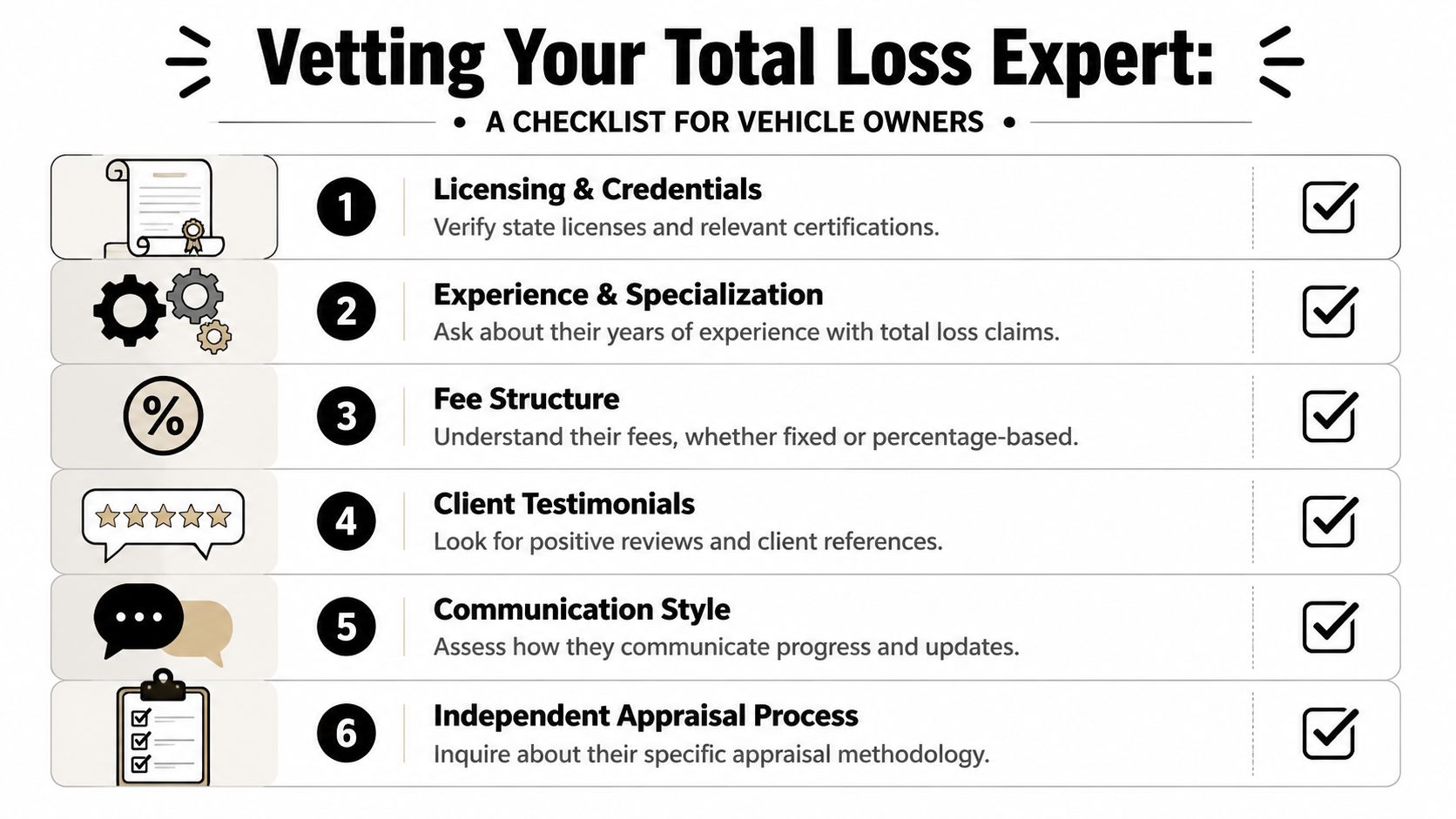
The shortlist questions that matter
Ask direct questions and listen for direct answers.
- Credentials: Are you licensed where required, and do you work to USPAP-compliant standards?
- Vehicle experience: Have you handled claims involving classics, modified vehicles, trucks, EVs, or specialty vehicles like mine?
- Comparable research: How do you find and screen comparables?
- Report quality: Will I receive a written report detailed enough for negotiation or formal dispute use?
- Process role: Do you only write the report, or do you also help during the appraisal clause process?
- Fees: Is your pricing flat-rate, percentage-based, or something else?
- Communication: How often will you update me, and who do I talk to if the insurer pushes back?
Questions to Ask Your Potential Total Loss Appraiser
| Question Category | What to Ask | Why It Matters |
|---|---|---|
| Licensing and standards | What licenses or professional standards do you work under? | You need a report that carries weight |
| Specialization | Have you appraised vehicles like mine before? | Experience with your type of vehicle affects accuracy |
| Method | How do you verify trim, options, and condition? | Missing features can sink the value |
| Market research | What makes a comparable acceptable in your process? | Weak comps produce weak appraisals |
| Deliverable | What will the final report include? | You want a document the insurer must address |
| Fee structure | What do I pay, and when? | Surprises here create new problems |
| Support | Will you help if the claim moves into formal appraisal? | Some appraisers stop at the report |
The red flags
Walk away if you hear any of these:
- “We always get more.” No honest appraiser can promise an outcome.
- “Don't worry about the details.” Details are the whole case.
- “Send me the offer and I'll beat it.” The method matters more than the boast.
You want someone methodical, not theatrical.
The Independent Appraisal Process and Timeline
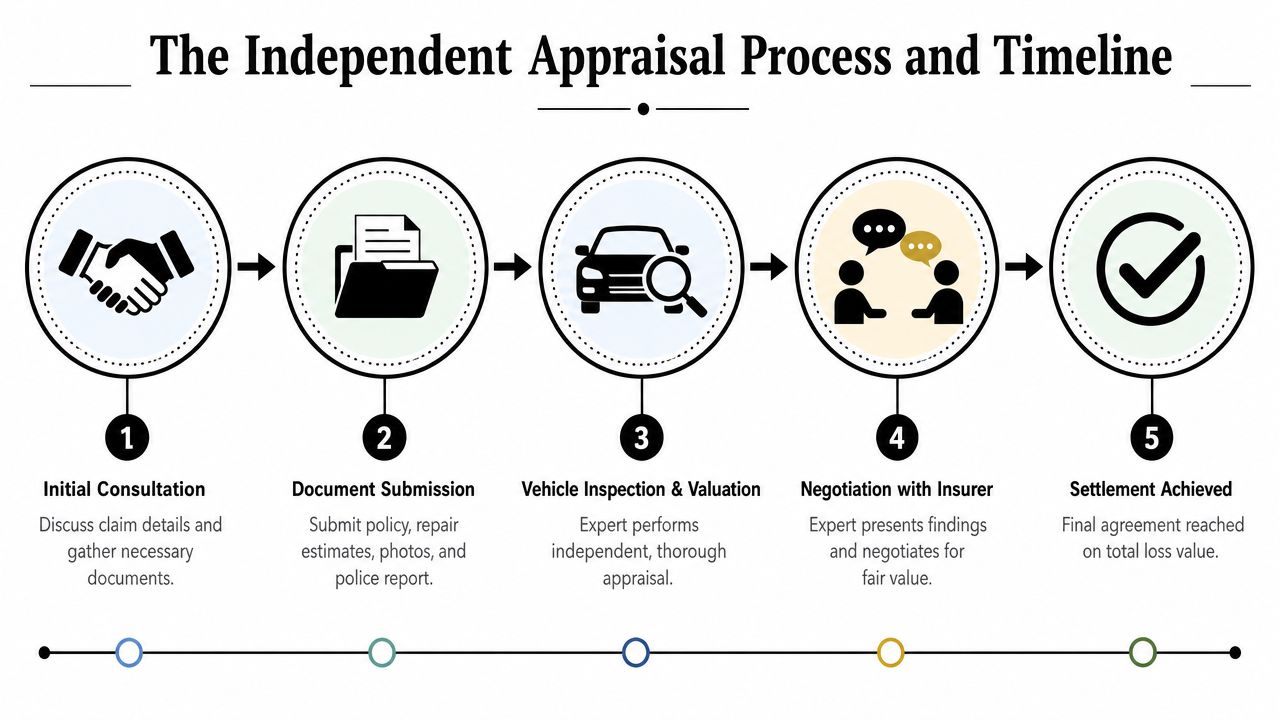
The insurer sends a settlement that makes no sense for your car. Their software treats your well-kept truck like an average fleet unit, or your classic coupe like a tired base model with none of the documented work you put into it. That is usually what you are fighting. A machine-built valuation that strips out condition, upgrades, rarity, and local market reality.
An independent appraisal fixes that by slowing the process down and forcing a manual review built on real comparables.
What happens first
Your appraiser starts by gathering the papers the insurer should have reviewed carefully in the first place. That usually includes the valuation report, total loss letter, policy information, photos, service records, receipts, and proof of options, upgrades, or restoration work.
Then comes verification. The appraiser confirms the exact trim, drivetrain, mileage, factory equipment, aftermarket additions, and pre-loss condition. That step matters most for custom, classic, and unusually clean vehicles, because automated valuation systems routinely flatten those differences and price them like ordinary used cars.
In Oregon and Washington, owners can usually expect a relatively fast turnaround, and FD Auto's FAQ for Oregon and Washington notes both a typical 48 to 72 hour timeline and an important Oregon fee rule tied to successful appraisal clause results: FD Auto appraisal clause FAQ for Oregon and Washington.
How the value is actually built
A credible report is not a dressed-up objection letter. It is a market valuation.
The appraiser should inspect the insurer's comparables for obvious problems. Wrong trim. Wrong condition. Wrong geography. Dealer listings presented like closed sales. Low-grade auction data used against a vehicle that was clearly above average before the loss. Those mistakes are common, and they hit hardest when the car is older, modified, collectible, or meticulously maintained.
A proper valuation should account for:
- Exact configuration and trim
- Mileage and documented condition before the loss
- Service history and major recent work
- Custom parts, restoration, or rare equipment that buyers pay for
- Real local or regional comparables, not just whatever an automated system pulled first
- Errors or mismatches in the insurer's report
One factual option in this space is Total Loss Northwest, which provides certified independent auto appraisals for total loss claims and appraisal clause disputes in Oregon and Washington.
How long it usually takes
Simple cases move quickly. Specialty vehicles take longer.
If your car is a common late-model daily driver with clean records, an appraiser can usually assemble the file, verify the vehicle, and produce a report without much delay. If the vehicle is a classic, heavily optioned, restored, lifted, modified, or unusually well documented, expect more research. That is a good sign, not a problem. Fair value for those vehicles cannot be produced accurately by clicking through canned database results.
If the dispute continues after the report is delivered, the timeline extends again. The insurer may revise the offer, argue over comparables, or move into the appraisal clause process. Owners dealing with airbag-related total losses should also review state-specific standards such as these California totaled car rules for airbag deployment, because total loss thresholds and insurer decision-making vary by state.
What you should expect at the end
You should receive a written report the insurer has to answer with substance. Not vague opinions. Not a bigger number pulled from the air.
A good appraisal gives you a documented value case built from the actual vehicle you owned and the market that existed on the date of loss. That is the only reliable way to push back when an insurer's software undervalues a custom, classic, or carefully maintained vehicle.
Frequently Asked Questions About Total Loss Claims
Is a total loss claim the same as diminished value
No. A total loss claim deals with the value of a vehicle the insurer says is not worth repairing. Diminished value applies when the vehicle is repaired but worth less because of the accident history.
They're related because both involve valuation. They're different because one values a complete payout and the other values a loss in resale worth after repairs.
What if the independent expert does not get a higher value
That can happen. An honest appraiser is there to determine fair market value, not manufacture a bigger number.
If the insurer's offer is already well supported, the expert should say so. That's still useful because it tells you whether you're fighting the wrong battle or whether the issue is policy limits, lien payoff, or coverage terms.
Can I claim loss of use during a total loss value dispute
Possibly, and this issue gets overlooked far too often.
A frequently missed aspect of these cases is loss of use during the dispute itself. Recent court rulings in 2025 are extending loss-of-use recovery to the “reasonable time required to resolve the dispute,” not only the repair period, according to MWL's discussion of loss-of-use vehicle claims. If the insurer delays settlement while arguing value, ask whether the days you were without a replacement vehicle belong in your claim.
Do airbag deployment automatically make a car a total loss
No. Airbag deployment can contribute to a total loss decision, but it doesn't automatically decide the case by itself. State rules, repair economics, and vehicle value all matter.
If you're comparing how different states handle these issues, this overview of California totaled car rules for airbag deployment is a useful reference.
Should I accept the first offer if I need the money fast
Only if you've reviewed it carefully and you're satisfied it reflects the vehicle accurately. Fast money and fair money are not always the same thing.
If the valuation misses obvious equipment, uses bad comparables, or undervalues a custom or collector vehicle, accepting quickly can close off better options you still had.
If your settlement offer doesn't match the vehicle you lost, get a professional review before you compromise your position. Total Loss Northwest provides independent total loss appraisals and appraisal clause support for Oregon and Washington drivers who need a market-based valuation instead of a software shortcut.