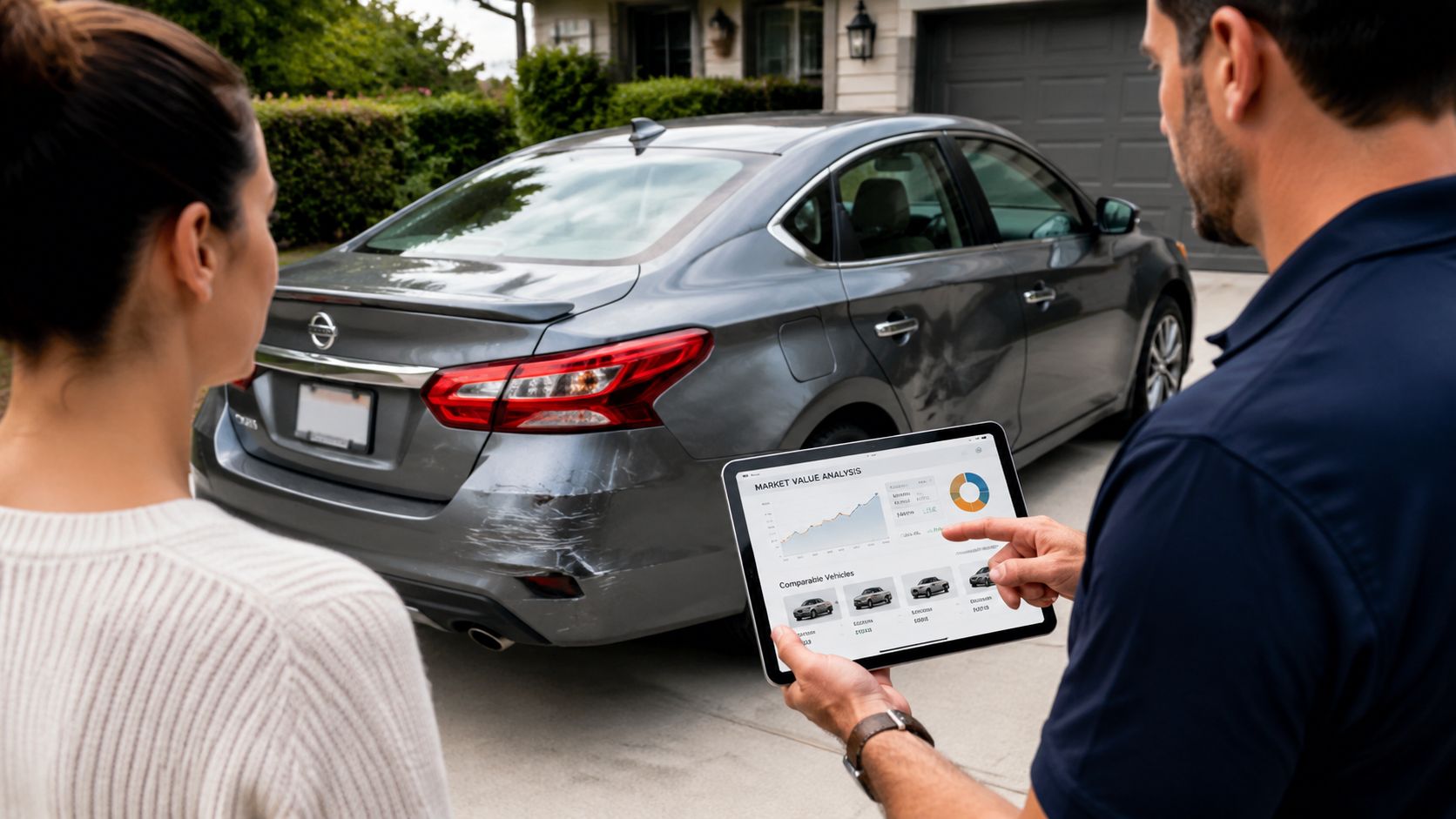
You opened the claim, answered a few adjuster questions, and then the number arrived. It’s lower than what your car would cost to replace in Seattle. You’re staring at a settlement offer that feels detached from reality, especially if your vehicle was clean, well-kept, loaded with options, or hard to match locally.
Your gut is probably right. A lot of total loss offers come out of valuation software first, then get defended afterward. If that software missed trim, packages, mileage context, condition, aftermarket parts, or Seattle-area pricing, the offer can land thousands below fair market value. That’s where a Seattle total loss appraiser comes in. Not to argue emotionally, but to pin your vehicle’s pre-loss value to actual market evidence and force the claim onto solid ground.
What a Seattle Total Loss Appraiser Actually Does for You
A Seattle total loss appraiser works for one purpose: establishing your vehicle’s fair market value as of the loss date using defensible market data.
That’s very different from what the insurance company’s side is doing. The carrier’s adjuster manages the claim. Their process often leans on vendor tools like CCC or Mitchell. An independent appraiser checks whether that number holds up when someone verifies the VIN, confirms the exact trim and packages, reviews mileage, and compares your vehicle against real local market vehicles instead of a broad formula.
Your appraiser’s job is valuation, not claim handling
If your insurer says your car was worth less than you believe, the question isn’t who sounds more confident on the phone. The question is who has the better valuation file.
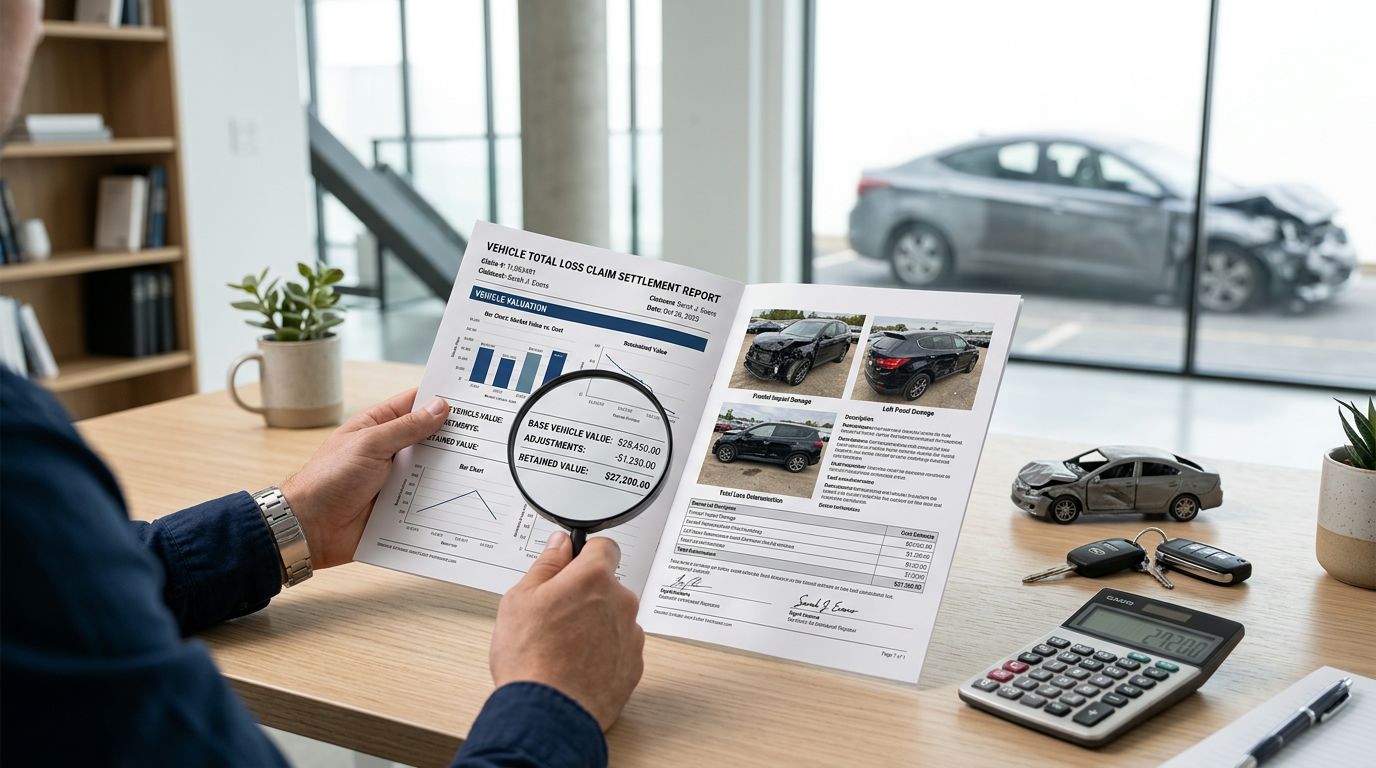
A proper appraisal follows a structured method. It should review the policy language, identify the vehicle correctly, gather comparable market data, explain adjustments clearly, and support a final opinion of value with evidence that can stand up in negotiation and, if needed, before an umpire. That’s the difference between “I think my car was worth more” and “Here’s why your number is wrong.”
Practical rule: If the insurer’s report has mistakes in trim, options, mileage matching, or comparable selection, treat the offer as suspect immediately.
What they examine that software often gets wrong
A good appraiser doesn’t just pull listings and average them. They dig into the details that move value in the Seattle market.
- VIN accuracy: They verify the exact vehicle identity so the valuation starts with the right trim and equipment.
- Factory packages and aftermarket additions: If your car had upgraded packages, premium wheels, tech packages, or documented modifications, those details need to be recognized.
- Mileage and condition matching: Comparable vehicles should reflect real differences, not lazy substitutions.
- Local market context: Seattle-area inventory and neighborhood pricing matter when replacement cost is the issue.
That approach is similar to how people should think about property valuation for homeowners. The principle is the same. Value should come from the actual market, not a shortcut.
Why this matters right now
If you accept the insurer’s number too quickly, you surrender your advantage. The appraisal clause exists for this exact situation. It lets you dispute the insurer’s actual cash value for a totaled or stolen vehicle through independent appraisers and, if needed, a neutral umpire. If you want a plain-language overview of that process, this explanation of what an appraisal for a car means is useful.
Your appraiser is the person who turns a frustrating lowball offer into a documented valuation dispute. That’s not a small distinction. It’s often the moment a claim stops being one-sided.
When to Hire an Appraiser The Financial Tipping Point
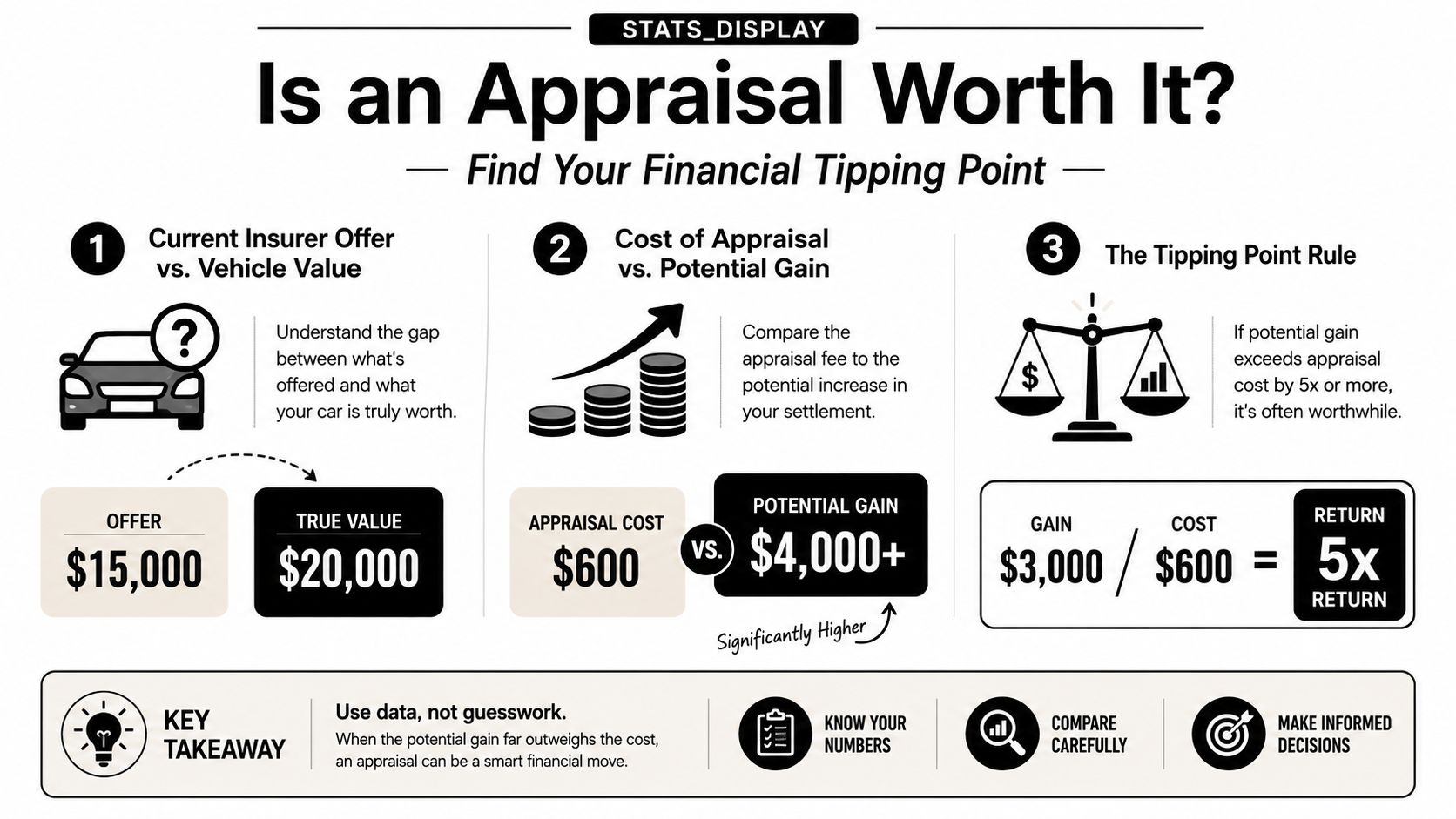
Don’t hire an appraiser just because you’re irritated. Hire one when the math says the claim is worth fighting.
The biggest mistake I see is drivers treating every low offer the same. They don’t. Some are mildly off. Some are thousands short. Those are two different situations, and they deserve two different responses.
The threshold that actually matters
Research indicates that 90% of private appraisers report initial undervaluations in the $4k to $7k range, and that the appraisal clause should be invoked when the insurer’s offer differs by thousands of dollars from the pre-loss value, according to Auto Appraisal’s guidance on total loss next steps.
That’s the tipping point most guides miss.
If you’re arguing over a small gap, an appraisal may not be the smartest move. If you’re looking at a difference in the $4k to $7k range, you need to stop thinking of an appraisal as an expense and start treating it as financial protection.
A simple way to judge your own claim
Use this framework before you do anything else:
| Situation | What it likely means | Best move |
|---|---|---|
| Offer is close to what similar Seattle vehicles seem to sell for | The dispute may be too small to justify a formal fight | Scrutinize the valuation first, then decide |
| Offer is clearly short by thousands | The carrier’s valuation may be materially wrong | Get an independent appraisal quickly |
| Offer ignored options, upgrades, rare trim, or collector value | Software likely flattened your vehicle into a generic version | Hire a qualified appraiser |
You don’t need a perfect number before making the decision. You need a credible sense that the gap is large enough to matter.
If replacing your vehicle in Seattle would obviously cost far more than the insurer’s offer, don’t let the first number anchor your thinking.
Cost matters, but not the way most people think
A lot of drivers freeze because they don’t want to spend more money during a claim. That’s understandable. It’s also how people end up accepting weak settlements.
Here’s the right question: is the likely recovery meaningfully larger than the cost of proving value? If yes, the appraisal is a rational move. If no, it may not be. Keep it that simple.
One more point. This decision is easier when your vehicle has one or more of these traits:
- Higher trim or rare configuration
- Recent major maintenance with receipts
- Aftermarket parts that add market appeal
- Low mileage for its year
- Strong Seattle-area demand
Those vehicles get flattened by broad software models all the time. When that happens, the “tipping point” isn’t theoretical. It’s sitting in the gap between your offer and your replacement reality.
How to Formally Invoke the Appraisal Clause
This part sounds intimidating. It isn’t, if you stay organized and do it in writing.
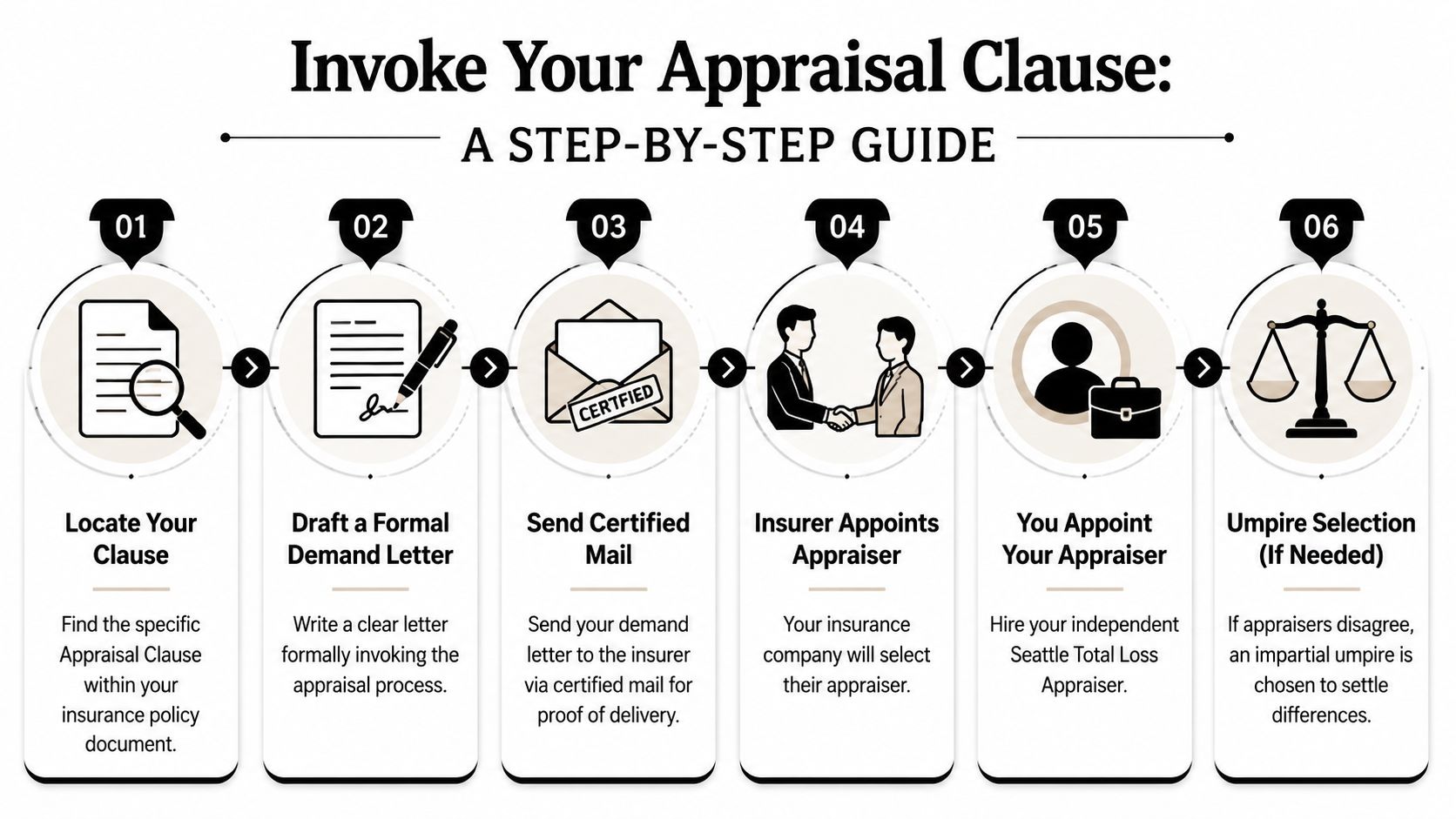
A proper appraisal process follows a USPAP-compliant method: review the policy clause, hire a certified appraiser, submit formal written notice, allow the insurer to appoint their appraiser, use an umpire if needed, and do it all before cashing the settlement check, as outlined by Auto Praise’s appraisal clause process.
Start with your policy, not the adjuster’s opinion
Find the section labeled Appraisal, Appraisal Clause, or Dispute Resolution in your auto policy. Read the exact wording. Some policies outline how each side picks an appraiser and how an umpire is chosen if the two appraisers disagree.
Do not rely on a phone call summary from the insurer. Read the contract yourself.
If you want a practical breakdown of the clause language and how carriers use it, this page on the auto insurance appraisal clause is a useful reference.
Send a formal written notice
Don’t keep this verbal. Email is fine if your carrier accepts claim communications that way, but certified mail creates a stronger paper trail.
Use plain language. You’re not trying to sound like a lawyer. You’re creating a clear record that you dispute the actual cash value and are invoking your policy rights.
Here’s a straightforward template you can adapt:
Subject: Formal Invocation of Appraisal Clause for Total Loss Claim
Claim Number: [insert claim number]
Policy Number: [insert policy number]
Vehicle: [year, make, model, VIN]I dispute the insurer’s valuation of my total loss vehicle and formally invoke the appraisal clause under my policy. Please confirm receipt of this demand and provide the name and contact information of the appraiser appointed on behalf of the insurer.
I am retaining my independent appraiser and request that all further communication regarding valuation be documented in writing.
Sincerely,
[Your full name]
What happens after you invoke
Once you invoke the clause, the process usually follows this sequence:
- You retain your appraiser.
- The insurer appoints theirs.
- Each appraiser evaluates the vehicle independently.
- They try to agree on value.
- If they don’t agree, a neutral umpire steps in.
- Any two agreeing parties can set the binding valuation.
That sequence matters because it forces both sides to put their valuation methods on the table.
The mistake that kills leverage
Do not accept or cash the settlement check before invoking the clause. If you do, you may lose the right to dispute the amount after the fact.
That’s the mistake I’d avoid above all others. A weak offer is fixable. A waived right usually isn’t.
Your Documentation Checklist and Expected Timeline
If you want a stronger appraisal, give your appraiser better ammunition. The quality of your documentation affects the quality of the valuation.
An expert appraisal should meet USPAP standards and include verified VIN decoding, identification of factory packages and aftermarket options, and comparable analysis based on mileage and local Seattle market conditions. A defensible report often runs 5+ pages, according to Auto Appraiser Network Seattle.
The documents that actually help value
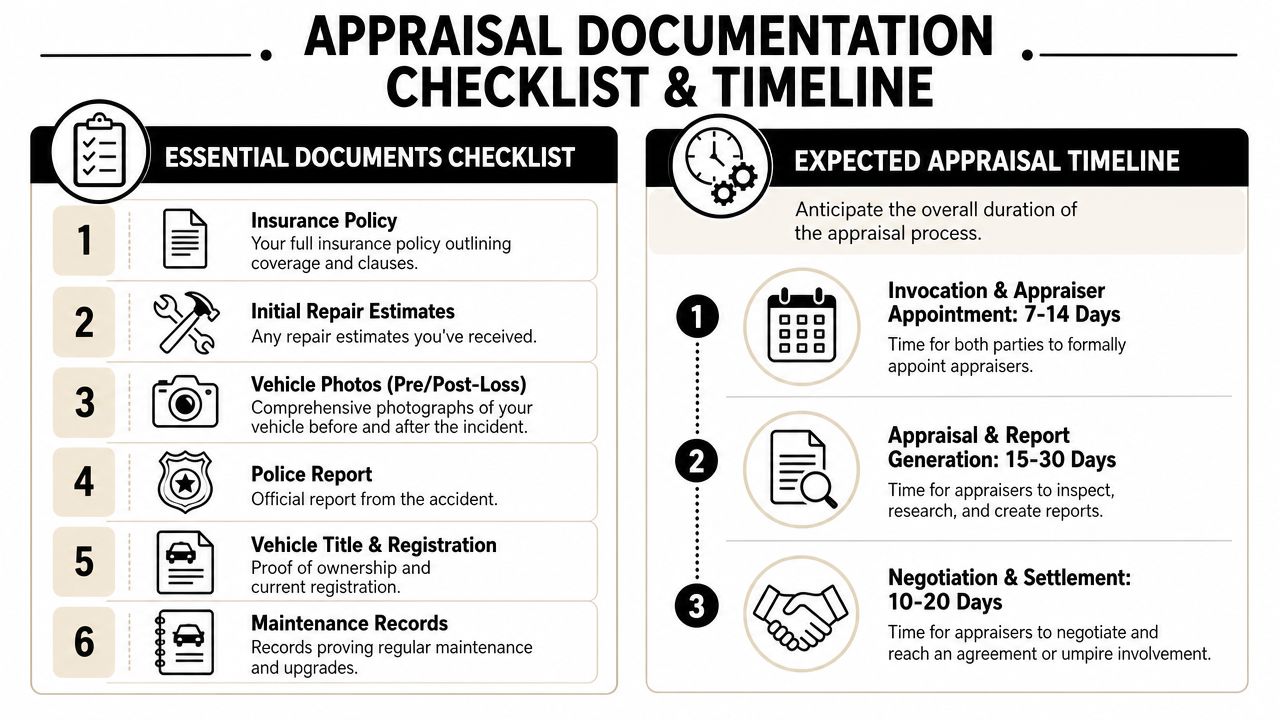
Bring substance, not a stack of random papers. These are the documents that usually matter most:
- Your insurance policy: This confirms the appraisal clause language and procedure.
- The insurer’s valuation report: Your appraiser needs to see the comparables and assumptions being challenged.
- Title and registration: Basic ownership and vehicle identity records.
- Photos before and after the loss: Pre-loss photos help show condition, care, and upgrades.
- Maintenance and repair records: Recent service can support condition and marketability.
- Receipts for upgrades or options: Wheels, tires, suspension work, premium audio, factory add-ons, and similar items should be documented.
- Purchase paperwork if you have it: Useful for confirming trim, installed features, and package details.
- Police report or accident paperwork: Helpful for timeline and loss context.
What your appraiser needs from you first
Don’t wait to be asked. Send the strongest file you can up front.
A Seattle total loss appraiser can do more with:
- Clear VIN photos or a full VIN record
- Mileage documentation close to the loss date
- A written list of options the insurer missed
- Any evidence that your vehicle was cleaner or better-equipped than the insurer assumed
The fastest way to weaken your case is to let the insurer define your vehicle for you.
Timeline expectations in the real world
The process rarely feels fast when you’re without your car, but it becomes easier when you know what to expect. One Seattle-area appraisal source says the appraisal process must be completed within 48 to 72 hours by licensed Washington appraisers formatted to insurer and legal standards. That refers to the appraisal work itself, not the entire claim cycle, and appears in the same Seattle appraisal reference cited above.
For the full claim path, expect several stages rather than one instant result:
| Phase | What happens |
|---|---|
| Early file setup | You gather records, confirm policy language, and retain the appraiser |
| Valuation development | The appraiser verifies vehicle details and builds the report |
| Carrier-side response | The insurer names its appraiser and reviews the dispute |
| Resolution stage | Appraisers agree on value or move to an umpire |
If you want a broader sense of how claim phases tend to unfold, this overview of an auto accident settlement timeline helps set expectations.
Using Your Appraisal Report to Win a Fair Settlement
Getting the report is not the finish line. It’s your advantage.
Too many drivers receive a strong appraisal, forward it to the adjuster, and then wait passively. Don’t do that. The report is an evidence package. Use it like one.

Industry discussion cited in the verified material says invoking the appraisal clause has a high success rate, that automated tools like CCC often undervalue vehicles, and that the average cost of an appraiser is around $500, making the challenge worthwhile in the right case, as discussed in this insurance community thread on total loss appraisal disputes.
Treat the report as a rebuttal, not an attachment
Your appraiser’s report should do more than state a higher number. It should show why the insurer’s number is wrong.
That usually means pointing to issues like:
- mismatched comparable vehicles
- wrong trim or package assumptions
- poor mileage matching
- missing options
- generic adjustments that don’t reflect the Seattle market
When you send the report in, frame it directly. Keep your message short and controlled.
I dispute your valuation because it does not reflect the documented pre-loss market value of my vehicle. The attached appraisal identifies the vehicle configuration correctly, uses market-supported comparables, and explains the valuation adjustments in detail. Please revise the settlement based on this appraisal or confirm the next step in the appraisal process.
What to say when the adjuster pushes back
Adjusters often respond with some version of “our valuation vendor is standard” or “we’ve already reviewed local comparables.” Neither statement answers the actual problem.
Your answer should stay focused on evidence:
- Ask them to address the specific discrepancies.
- Direct them to the report’s comparable analysis.
- Request a written explanation if they reject the appraiser’s conclusions.
- Keep every exchange documented.
Don’t get dragged into a circular phone argument. If they disagree, make them explain where the report is wrong.
Use the process, not just the paper
If the insurer won’t voluntarily adjust the number, continue through the appraisal clause procedure. A service such as Total Loss Northwest becomes relevant. The company states that it provides certified independent total loss appraisals, invokes the appraisal clause on behalf of clients, serves drivers nationwide, and charges a flat fee of $550 according to its about page.
That matters because the report alone doesn’t resolve every dispute. Sometimes the core value is in pushing the file through the contractual process until the insurer has to confront a defensible market valuation.
A short walkthrough can help if you want to see how people approach these disputes in practice.
The mindset that gets results
Be calm. Be specific. Be repetitive if needed.
You are not asking for a favor. You are challenging a valuation with evidence. That shift in posture changes the entire conversation.
FAQ Your Top Seattle Total Loss Questions Answered
How much does a total loss appraiser in Seattle usually cost
Costs vary by provider and case complexity. Verified material says the average cost is around $500 in industry discussion, and one Pacific Northwest source notes $295+ as a starting point for appraisal clause services in the region, while another company lists a $550 flat fee on its website. The right question isn’t “What’s the cheapest?” It’s “Is the undervaluation large enough to justify the fee?”
Can I use an appraiser if my car is leased or financed
Yes, in many cases you still need the vehicle valued correctly because the settlement amount affects the payoff and any remaining equity position. The lender or leasing company may be paid first, but that doesn’t mean the insurer gets to undervalue the vehicle.
Can I get my appraisal fee reimbursed in Washington
Don’t assume it. Washington doesn’t offer the same rule described in the verified material for Oregon.
In Oregon, policyholders who invoke the appraisal clause for total loss disputes are legally entitled to 100% reimbursement of appraisal costs if the independent appraiser increases the vehicle’s value by even one cent above the insurer’s last offer, as explained by Total Loss Appraisal’s Oregon overview. That’s a major consumer protection. Washington drivers shouldn’t assume the same reimbursement structure applies automatically.
What if the two appraisers can’t agree
Then the dispute can move to a neutral umpire. The policy language controls the procedure, but the verified material makes the key point clear: if the appraisers can’t agree, the umpire helps decide the credible valuation, and any two agreeing parties can render the binding decision.
What makes an appraisal report persuasive
A persuasive report identifies the vehicle correctly, supports comparable selection, explains adjustments transparently, and ties the final number to the loss date and local market. If a report is vague, light on documentation, or sloppy on trim and options, it won’t carry much weight.
Should I keep negotiating myself first
If the gap looks small, maybe. If the gap is clearly in the range discussed earlier, stop improvising and get help. Drivers lose money when they keep debating with an insurer after the valuation dispute has already become technical.
If you believe your offer is too low, learn more about our Total Loss Appraisal Services in Seattle and request a free claim review. We assist vehicle owners throughout Seattle and Washington with total loss disputes, appraisal clause claims, and insurance valuation reviews.
If your total loss offer doesn’t line up with the actual Seattle market, don’t accept the insurer’s number as final. Total Loss Northwest handles total loss and diminished value appraisals, works through the appraisal clause process, and provides market-based valuation reports for Washington and Oregon drivers who need a fair settlement.