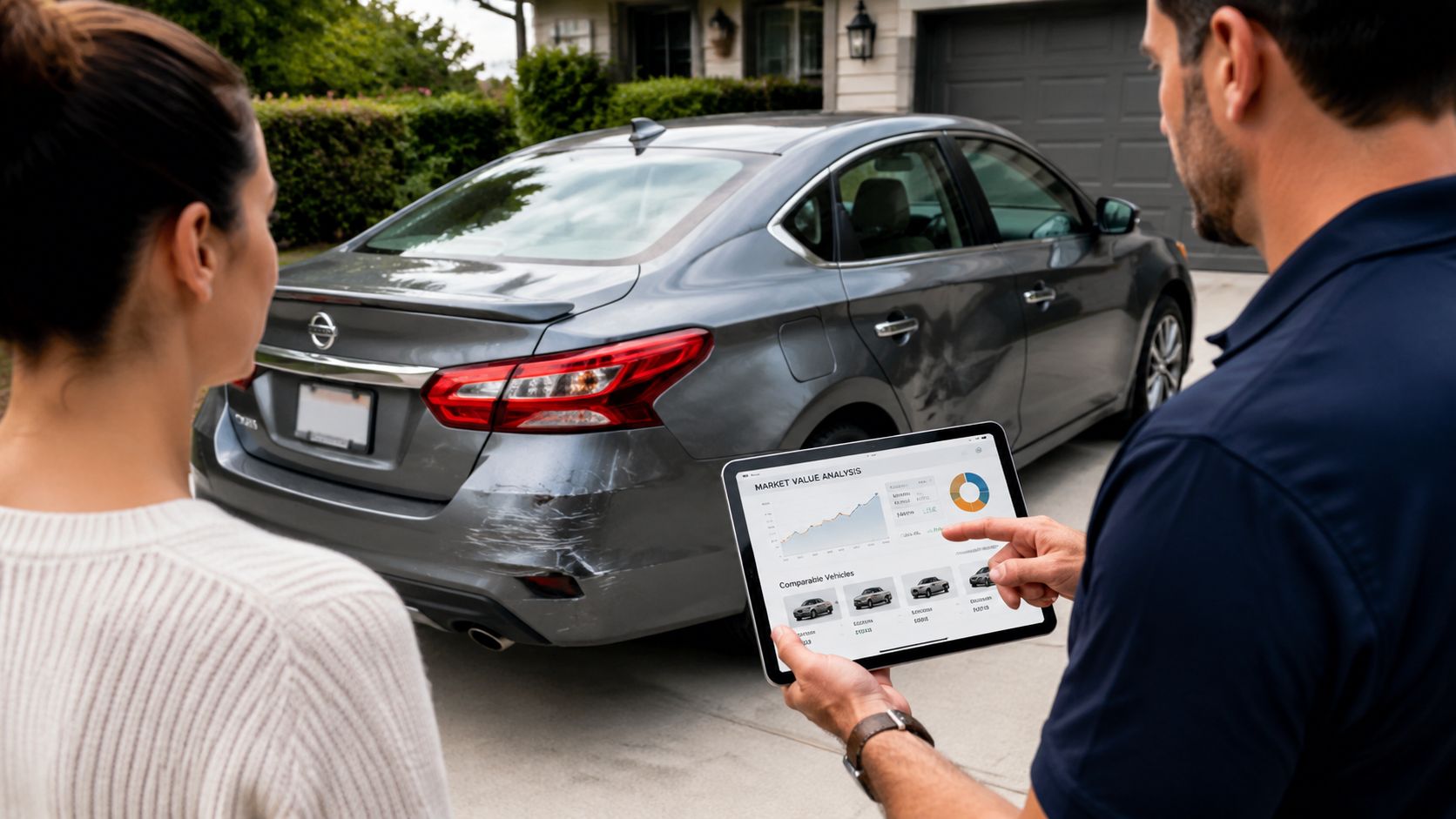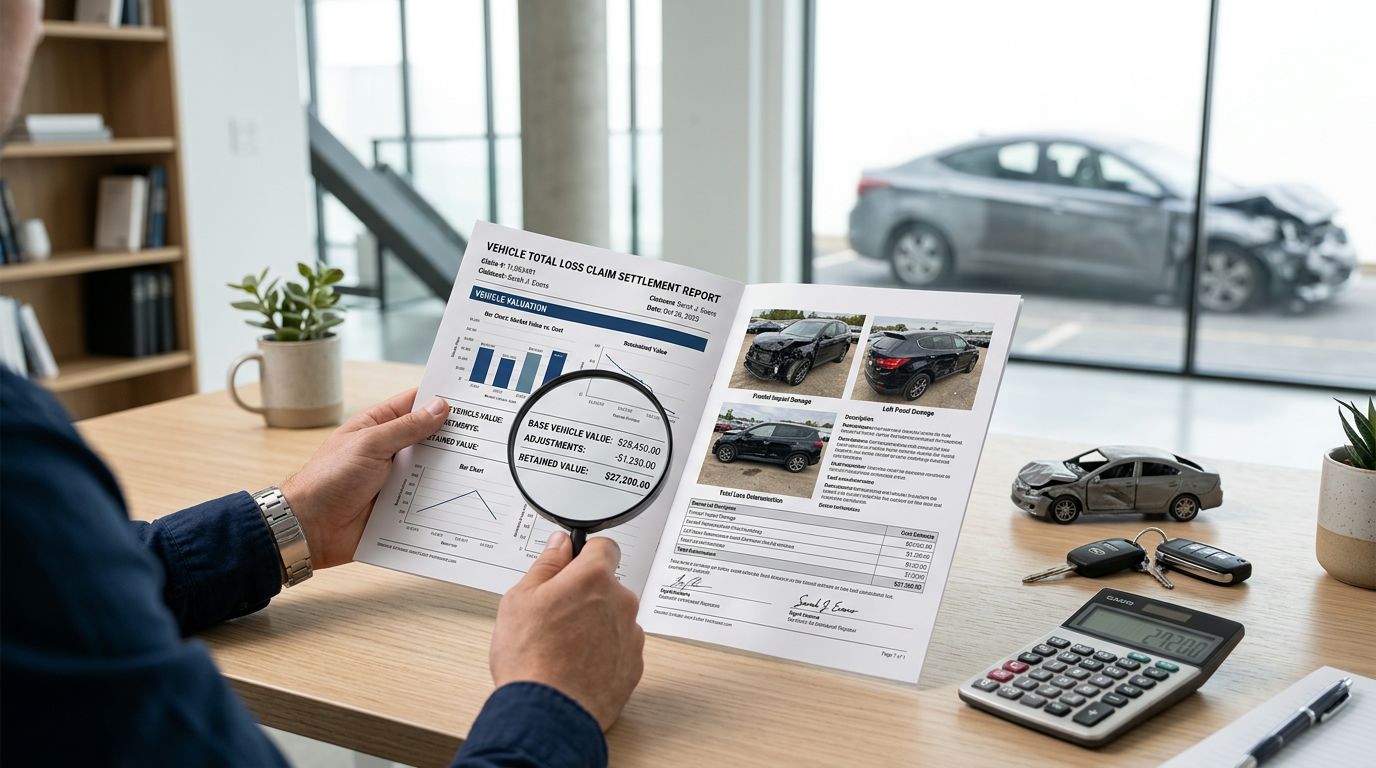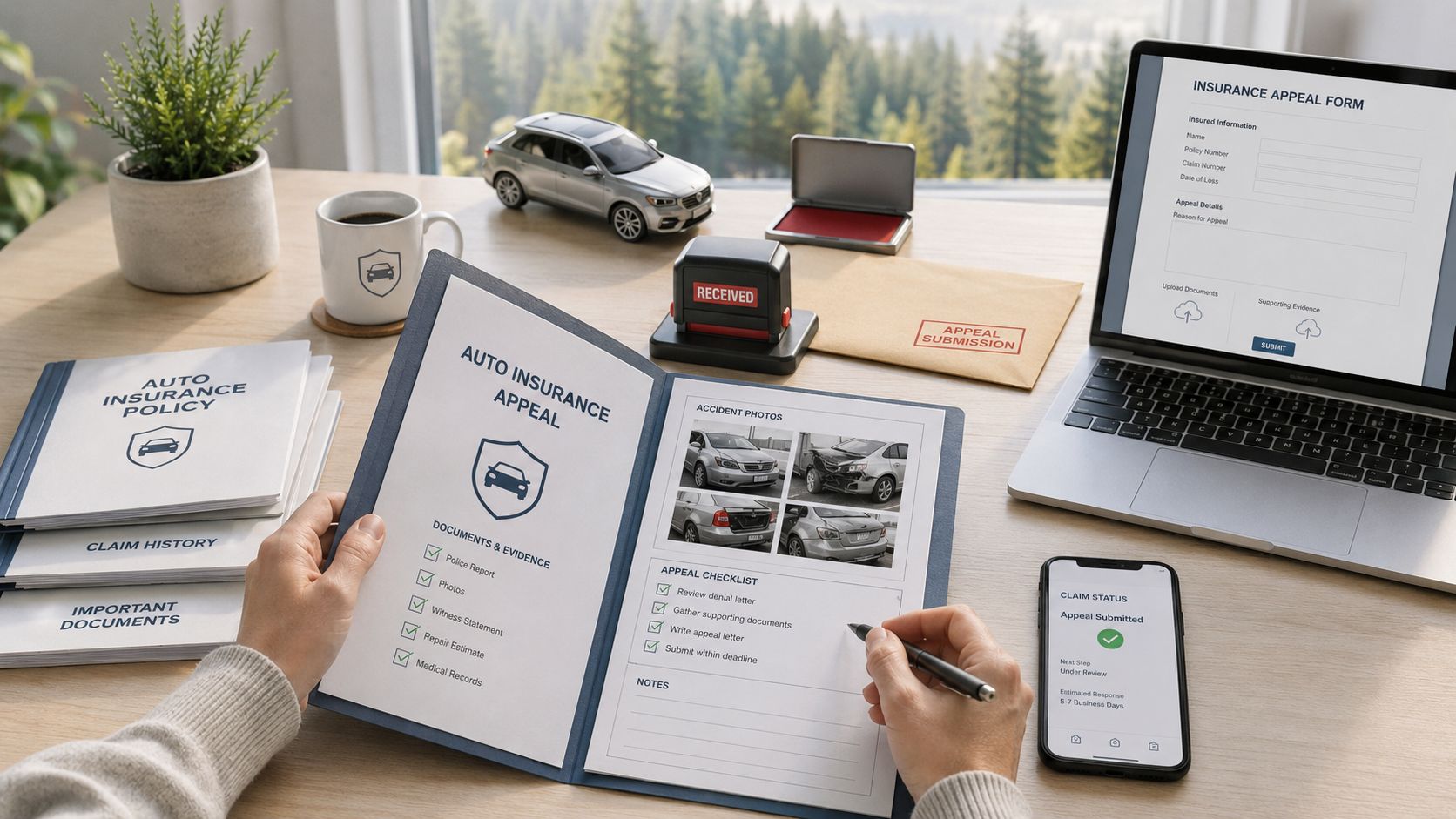
You're standing in your driveway with a denial letter in one hand and a repair estimate in the other, wondering how the carrier got from “not at fault” to “not covered” so fast. In Oregon and Washington, that usually means the fight has moved from the crash scene to the paperwork, where valuation software, policy wording, and deadlines decide whether you get paid fairly or get stalled.
A strong insurance claim denial appeal starts with one hard truth. The denial letter is rarely the end of the road, it's the insurer's position statement. If you can show the policy language, the damage history, the market value, and the claim timeline more clearly than the adjuster did, the file can move.
Why Auto Insurance Claims Get Denied in the First Place
A denial rarely means the carrier found a hidden problem. More often, it means the file was handled through valuation software, a short review window, and a claim summary that never got enough human scrutiny. I've watched a straightforward rear-end loss in Portland turn into a total-loss dispute because the offer came from a database snapshot that missed the local market and the car's actual condition.
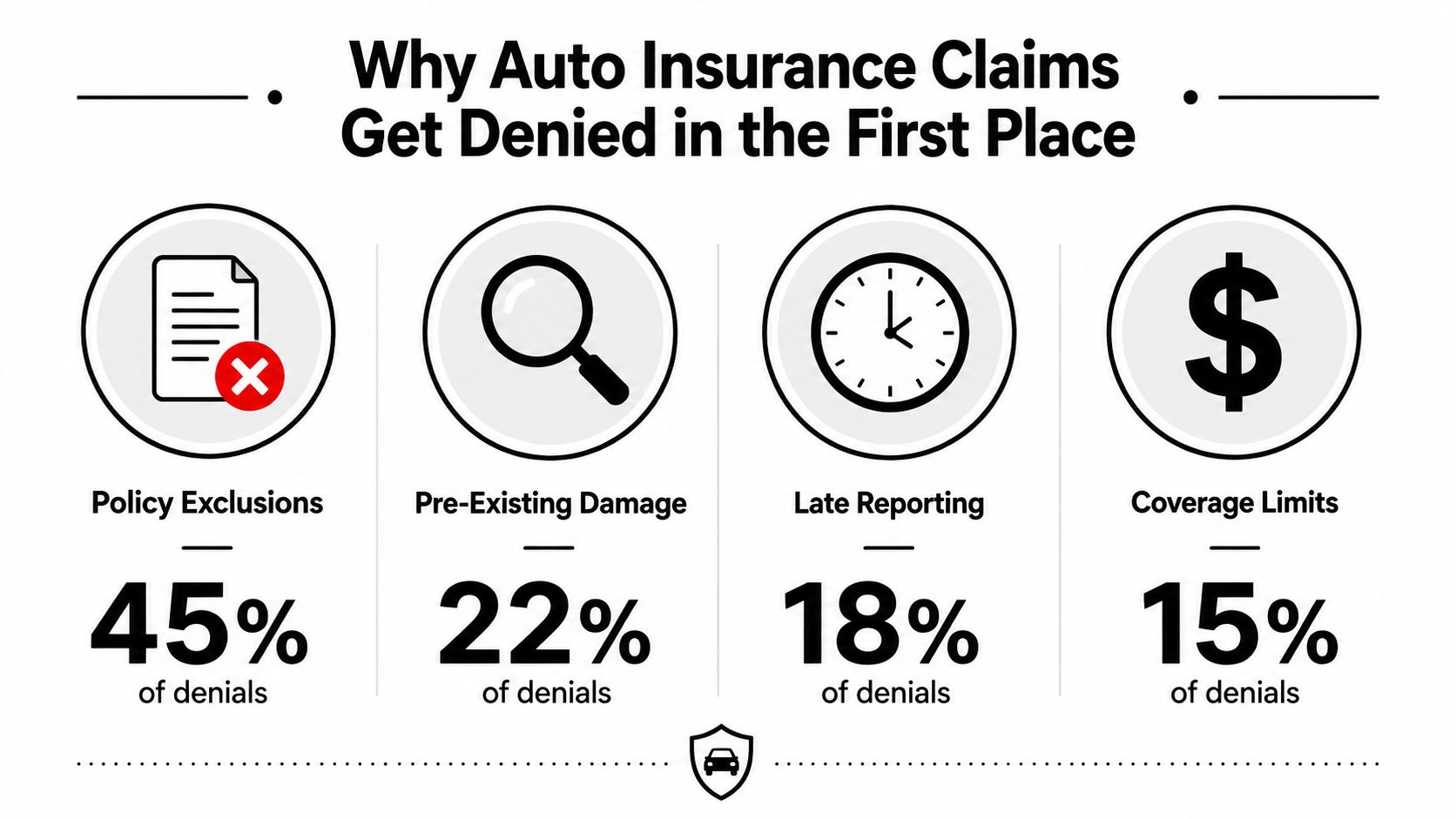
The denial usually starts with valuation, not injury or blame
Auto claim denials often begin with a fight over what the vehicle was worth before the loss, what damage was already there, or whether the policy term was applied the way the insurer says it was. Total-loss files get especially tight because the carrier's number depends on the inputs it chose, and those inputs can be challenged with the right records. If you want a closer look at protecting your car's value, that framing is more useful than generic consumer advice because it ties the coverage decision to the payout that actually matters.
A denial can also come from a missing report, a late claim, or a coverage reading the insurer treats as settled when it is not. The first reading of the letter matters more than the first phone call. You need the exact ground they used, not the broad theme they hope you'll accept.
Practical rule: if the letter cites a policy provision, your appeal has to answer that provision line by line, not just repeat that the loss was unfair.
Denials are more common than appeals, and that changes strategy
Claims denials are not rare, and that reality shapes how carriers expect files to behave. In ACA Marketplace plans in 2024, insurers denied 19% of in-network claims and 37% of out-of-network claims, with a combined average denial rate of 20%, which translated to about 85 million in-network denials and 44 million out-of-network claims denied KFF. Consumers appealed fewer than 1% of denied claims, and insurers upheld 66% of the appeals that were filed. That same dataset recorded at least 5,881 external appeals in 2024, which was only 4% of all upheld internal appeals.
For auto owners, the lesson is plain. Most denials are never challenged, so the insurer's first number often survives by default. If your file has real value, challenge it with a clean record and the right escalation path. A practical 2026 auto insurance lead blueprint can help agencies understand why these disputes are becoming a bigger part of the claims conversation.
The Most Common Reasons Auto Claims Get Denied
A denial letter is easier to beat when you know which bucket it falls into. Coverage denials, liability denials, valuation denials, and procedural denials each call for a different reply, and mixing them together usually weakens the file. The quickest way to sort the case is to ask whether the insurer is arguing the policy, the facts, the math, or the paperwork.
Coverage denials need a policy-level answer
Coverage denials usually involve exclusions, lapsed coverage, named-driver restrictions, or an argument that the loss doesn't fit the contract. The diagnostic question is simple, did the letter cite a specific provision, or did it hide behind a general phrase like “not covered under the policy”? If the answer is vague, the appeal should force specificity.
A second clue is whether the denial turns on timing. If the insurer says the policy wasn't active, the claim form was incomplete, or the driver wasn't listed, the file needs proof of the effective dates, declarations page, and any endorsement that changes the standard rule. The policy itself matters more than the adjuster's summary.
Liability and valuation denials fail for different reasons
Liability denials usually involve disputed fault, late notice, or comparative fault arguments. Those disputes are won with objective records, police exchange forms, photographs, dashcam footage, and the sequence of events, not with a blanket complaint that the other driver “was obviously at fault.” If the carrier is leaning on a police report, ask whether the report assigns fault or just records statements.
Valuation denials are a different animal. A low total-loss offer, refusal to recognize diminished value, or dispute over pre-loss condition usually means the insurer's database did not capture the actual market. In those cases, the question is whether the carrier used a narrow comp set, ignored options or condition, or missed a prior repair history that should have been disclosed.
Procedural denials are the most frustrating because they're often avoidable. Missed deadlines, unsigned forms, or coordination-of-benefits conflicts can sink an otherwise valid file. If the denial reads like a checklist failure, the first move is often a corrected claim or corrected submission, not a philosophical argument.
If the denial can be fixed with a document correction, do that first. If it turns on contract language, answer with contract language.
Building the Evidence File That Wins Appeals
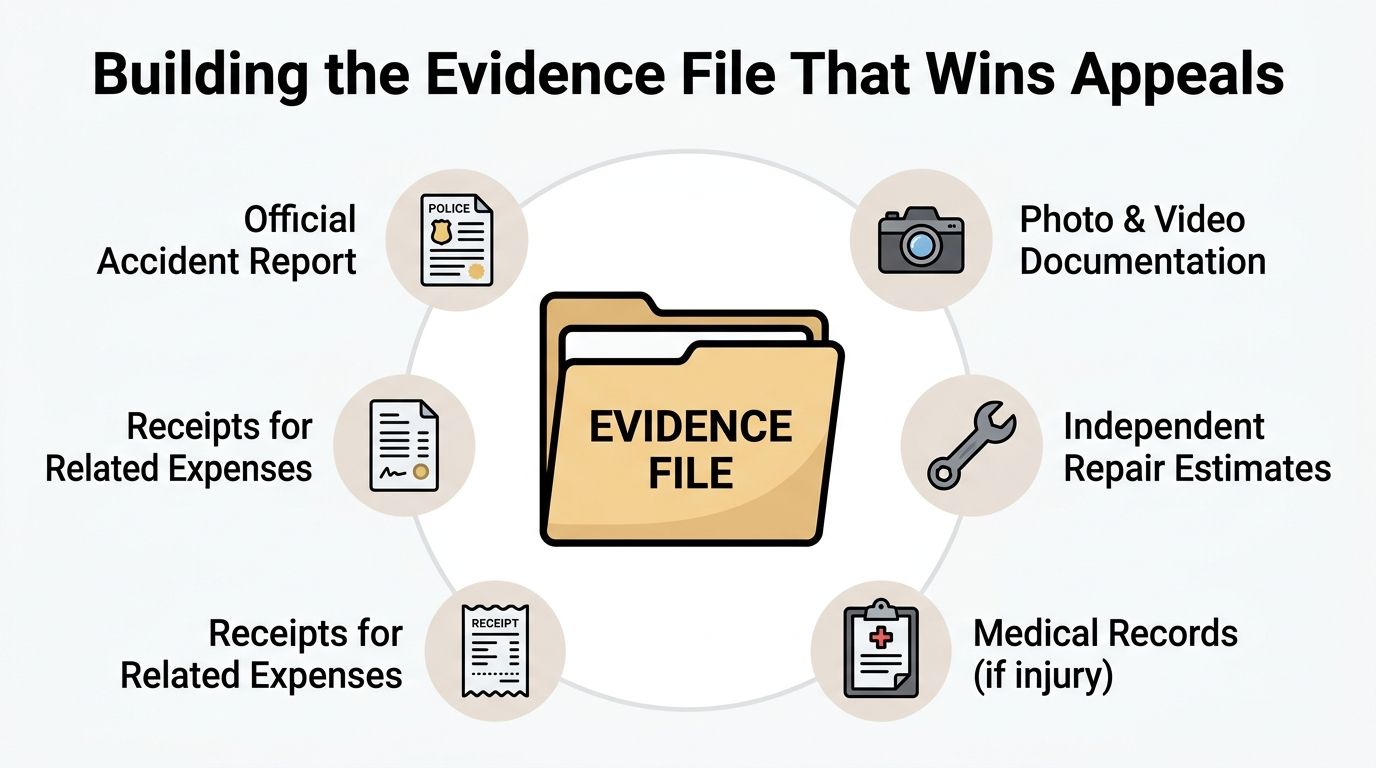
An insurance claim denial appeal rises or falls on the file you submit, not on how justified you feel. I tell people to build the packet as if a stranger will review it with no context and no patience for the story behind the loss. Every page should prove one point, and every point should tie back to the denial reason.
Start with the insurer's own paper trail
The core file should include the full denial letter with the date stamp, the declarations page, relevant endorsements, the police report or exchange form, photos, dashcam footage, and every repair estimate you can get. If the car was declared a total loss, add comparable vehicle listings from the local market and any records that show options, mileage, or condition the carrier overlooked. If there is an injury component, medical records belong in the same folder.
The insurer's complete claim file matters too. Consumer and regulatory guidance says to keep insurer communications, EOB-style paperwork when relevant, and every denial notice, then ask for a written explanation of the denial NAIC consumer guidance. That guidance also stresses policy language, claim number, plan ID, and service documentation. Those same documents carry the same weight in auto disputes when the problem is coverage, valuation, or missing paperwork.
Log every contact like it might be reviewed later
Every call should go into a simple log with the date, time, rep ID, and a summary of what was said. That sounds tedious until you need to show the insurer said one thing on Tuesday and something else on Friday. Written proof of submission matters for the same reason, especially if the carrier later claims it never received your appeal.
Practical rule: if you cannot prove the document was sent, the insurer can act like it never existed.
For a simple organizing framework, use this checklist before you send anything:
- Denial letter: Keep the original and scan the page that states the reason.
- Policy packet: Save the declarations page and every endorsement that changes coverage.
- Damage proof: Include photos, video, and any repair estimate that shows the dispute.
- Market proof: Save comparable listings that reflect the vehicle's actual local value.
- Communication log: Write down every call, email, and promised follow-up.
- Delivery proof: Keep certified-mail receipts, email confirmations, or portal screenshots.
A practical walkthrough of document gathering is also laid out in this auto claim documentation guide, and it pairs well with a denial file built for appeal rather than a memory-based argument.
Writing the Internal Appeal Letter That Gets Reopened
The internal appeal works when it reads like a rebuttal, not a rant. The insurer already knows you disagree. What it needs to see is a point-by-point answer to each denial ground, tied to policy language and supported by records it can't easily shrug off.
Use the letter to force a reset of the file
Start with the claim number, policy number, date of loss, and the exact denial language. Then answer each reason separately. If the carrier said the claim was excluded, cite the policy provision that covers it. If it said the valuation was too high, attach the competing market evidence and explain what it missed.
A clean internal appeal also tells the company exactly what you want. Request reopening, re-evaluation, corrected payment, or written confirmation that the denial is upheld. That prevents the adjuster from replying with a vague “review completed” note that doesn't resolve anything.
Sample structure for an Oregon or Washington auto appeal
Use this as a working format:
- Claim and policy identifiers: List the claim number, policy number, date of loss, and vehicle information.
- Denial language: Quote the exact reason the insurer gave.
- Your response: Rebut each reason with the policy wording, photos, estimates, or comparable listings.
- Attached evidence: Identify every exhibit, so the reviewer can match it fast.
- Requested action: State whether you want payment revised, the claim reopened, or the denial withdrawn.
- Deadline for response: Ask for a written response by a specific date and keep a copy.
If the dispute implicates Oregon's unfair claims practices rules or Washington's Insurance Fair Conduct Act, mention that the carrier should treat the file as a regulatory matter, not a casual review. I've seen that shift the tone immediately, because it tells the adjuster you understand the difference between negotiation and compliance.
For a detailed format that helps with demand language and submission discipline, this demand-letter guide is a useful companion. Send the appeal by certified mail or another trackable method, keep the confirmation, and save the email receipt if you submit electronically.
Submission rule: a written appeal without proof of delivery is just a draft.
Choosing the Right Professional Help for Your Dispute
Not every denial needs a lawyer, and not every valuation fight needs a full-blown claims team. The right help depends on what the insurer is disputing. When the issue is valuation methodology, a certified independent appraiser usually has more influence than a general consumer complaint.
Match the professional to the problem
A public adjuster is usually the better fit for broader claim handling issues, especially when the file spans multiple damage categories or the insurer is dragging its feet on the entire claim. An independent total-loss appraiser is the sharper tool when the dispute is about market value, comparable selection, or condition adjustments. A diminished-value appraiser makes sense when the vehicle is repaired but its post-loss value is still being shortchanged.
A consumer-protection attorney becomes more relevant when the carrier is not just wrong, but resistant in a way that raises bad-faith issues. That's the point where influence can shift from claim handling to statutory exposure and fee recovery. If your dispute is only about a few line items in the valuation grid, the legal route can be more expensive than the recovery.
| Dispute Type | Best Professional | Typical Fee Model | Break-Even Threshold |
|---|---|---|---|
| Total-loss valuation | Independent total-loss appraiser | Flat fee | When the offer is materially below the real market range |
| Diminished value | Diminished-value appraiser | Flat fee | When the value gap justifies the appraisal cost |
| Complex claim handling | Public adjuster | Percentage of recovery or flat fee | When the file is large or layered |
| Bad-faith conduct | Consumer-protection attorney | Hourly or contingency | When statutory remedies may be available |
Use the simplest expert that can change the outcome
I've handled enough disputed auto claims to know that more professionals don't always help. The file improves when the expert matches the dispute and speaks in the language the insurer respects. A clean appraisal report beats a scattershot packet every time.
For drivers using certified independent auto appraisals in Oregon and Washington, Total Loss Northwest fits the narrow lane of total-loss and diminished-value valuation disputes. If that's your issue, keep the work focused on the number, not the emotion.
Invoking the Appraisal Clause in Oregon and Washington
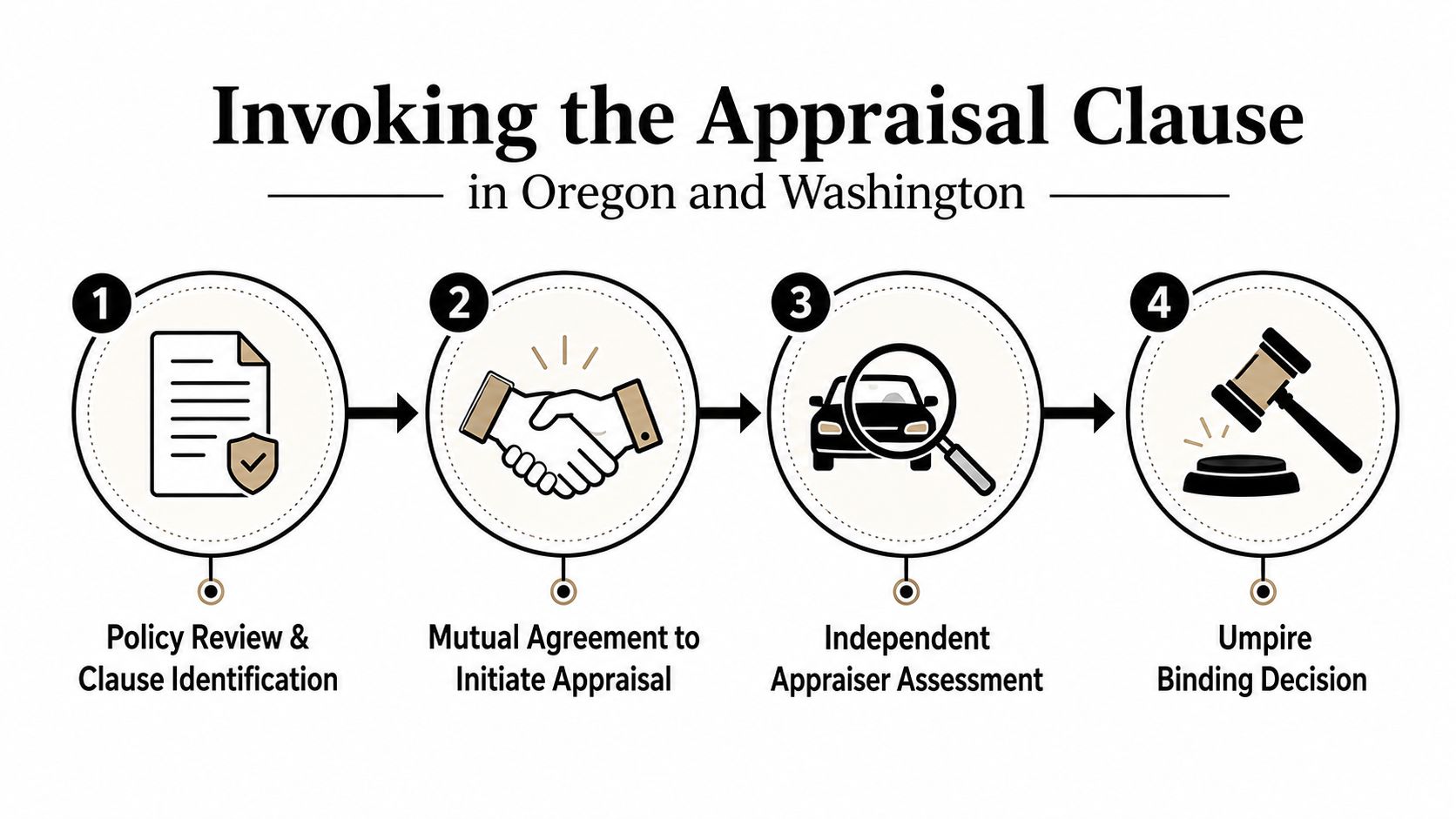
The Appraisal Clause is the most underused tool in Pacific Northwest auto disputes. It doesn't ask the insurer to “be fair.” It forces a second valuation from an independent appraiser, with a neutral umpire if the two appraisers don't agree. That structure matters because it moves the argument away from software estimates and toward evidence.
Read the policy before you argue the number
The clause won't help unless it exists in the policy and applies to the type of dispute you're fighting. Look for the appraisal language in the auto policy packet, then confirm whether it covers valuation disagreements, not just coverage questions. If the policy gives either side the right to demand appraisal, the insurer can't usually treat that request like a nuisance.
A good demand is short, written, and specific. It identifies the claim, states that you're invoking the appraisal provision, and names your chosen independent appraiser or requests instructions for selection if the policy requires a mutual process. That's the cleanest way to force the file off the adjuster's desk.
The clause changes the fight from opinion to process
Once appraisal starts, each side picks an appraiser, and the two appraisers try to agree on the value. If they can't, an umpire steps in. The umpire's decision becomes the binding number the insurer has to respect, which is exactly why carriers prefer to settle before the clause is triggered.
A Portland driver I worked with had a total-loss offer that was badly anchored to the insurer's database comps. After appraisal, the final number came in $4,800 above the original offer, which is the kind of difference that makes the process worth using when the valuation file is thin [KFF only provides the claim appeal data above, and this case is an illustrative practitioner example, not a cited statistic]. The key wasn't a loud complaint. It was a credible appraiser, clean evidence, and a clause the insurer had already agreed to honor.
If you want a fuller breakdown of how the process works, this appraisal-process guide is the right companion. Most drivers worry that invoking appraisal will hurt the claim. In practice, the risk is doing nothing and letting an unchallenged valuation stand.
Escalating When the Insurer Still Says No
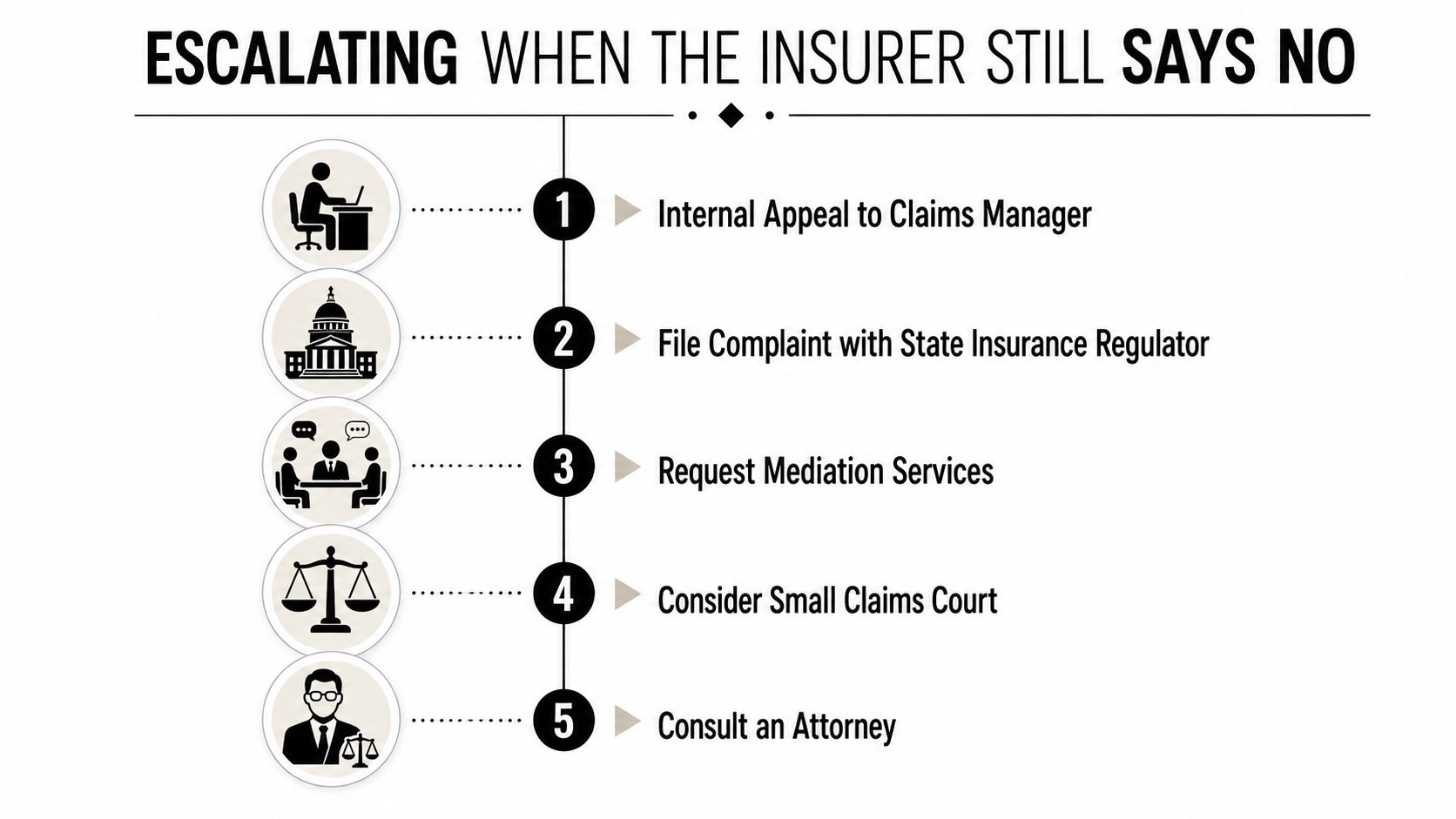
If the internal appeal stalls and appraisal doesn't resolve the dispute, the next move depends on the influence you still have. Some files respond to a regulator complaint, some need small claims pressure, and some belong in bad-faith counsel's hands. The mistake is treating every denial like it should be solved the same way.
Regulator complaints create a paper trail fast
In Oregon, the Division of Financial Regulation can receive consumer complaints, and in Washington the Office of the Insurance Commissioner has a similar intake process. These complaints matter because they force the carrier to respond in writing and create a record outside the claims department. That paper trail can be useful even when it doesn't immediately produce a payment.
I'd file a regulator complaint when the insurer keeps giving inconsistent answers, misses response commitments, or refuses to explain the denial clearly. It's not a magic wand. It is a pressure point that tells the carrier the file has moved beyond routine handling.
Small claims can help, but only in the right case
Oregon allows small claims filings up to $10,000, and Washington allows claims up to $5,000. Those limits matter because they define when the courthouse is a realistic hammer and when it's just another errand [the limits are from the verified brief, no additional source URL provided]. If the disputed amount is close to the court cap and the facts are simple, filing can push settlement faster than another round of adjuster emails.
If the dispute is complicated, small claims can waste time. A valuation fight with multiple comps, repair history, and appraisal issues usually needs a better forum than a simplified court process. Use it when the advantage is procedural and the amount in controversy fits the lane.
Bad faith is the line where the file changes character
Oregon's Unfair Claims Settlement Practices Act and Washington's Insurance Fair Conduct Act matter when the carrier's conduct goes beyond a bad number and into claim handling that looks unreasonable. At that point, the question isn't just what the vehicle was worth. It's whether the insurer handled the claim in a way that exposed it to statutory consequences, attorney fees, or other remedies.
Questions that come up most often
How long does the insurer have to respond to an appeal? The timing is usually controlled by the policy and the denial letter, and consumer guidance says health appeals often use a 180-day filing window while many auto and property policies are much shorter Healthcare.gov appeal guidance. For auto claims, don't rely on memory, read the letter and keep the deadline in writing.
Can invoking appraisal make the insurer drop the claim? No. Appraisal is part of the contract process, not a penalty. If the policy includes the clause, using it is a legitimate way to resolve the valuation dispute.
Are diminished value claims always recoverable? No. They depend on policy language, state law, the vehicle's repair status, and the facts of the loss. They're strongest when the file documents real post-loss value reduction and the insurer's offer ignores it.
What if the at-fault driver is uninsured? Then coverage may shift to your own policy, depending on your policy terms and applicable state rules. The first move is still the same, get the policy language, the denial reason, and the claim file in order before you argue.
If your total-loss offer, diminished-value dispute, or denied auto claim in Oregon or Washington still doesn't make sense after the first review, Total Loss Northwest can help you put the file back on evidence instead of guesswork. Visit Total Loss Northwest to compare your valuation dispute with a certified independent appraisal approach and get the claim organized before the carrier's number becomes the only number that matters.