You're standing beside a damaged car, waiting for the adjuster's estimate, while the insurer's first offer sits in your inbox. The vehicle may be repairable, or the repair bill may push it into total-loss territory. Either way, the number on the page isn't automatically the same as the property's true financial loss.
A property damage claim is a financial recovery process. Your job isn't only to prove that something was damaged. You also need to show what it was worth before the loss, what it costs to restore, and whether the insurer's valuation reflects the current market.
What a Property Damage Claim Really Means for You
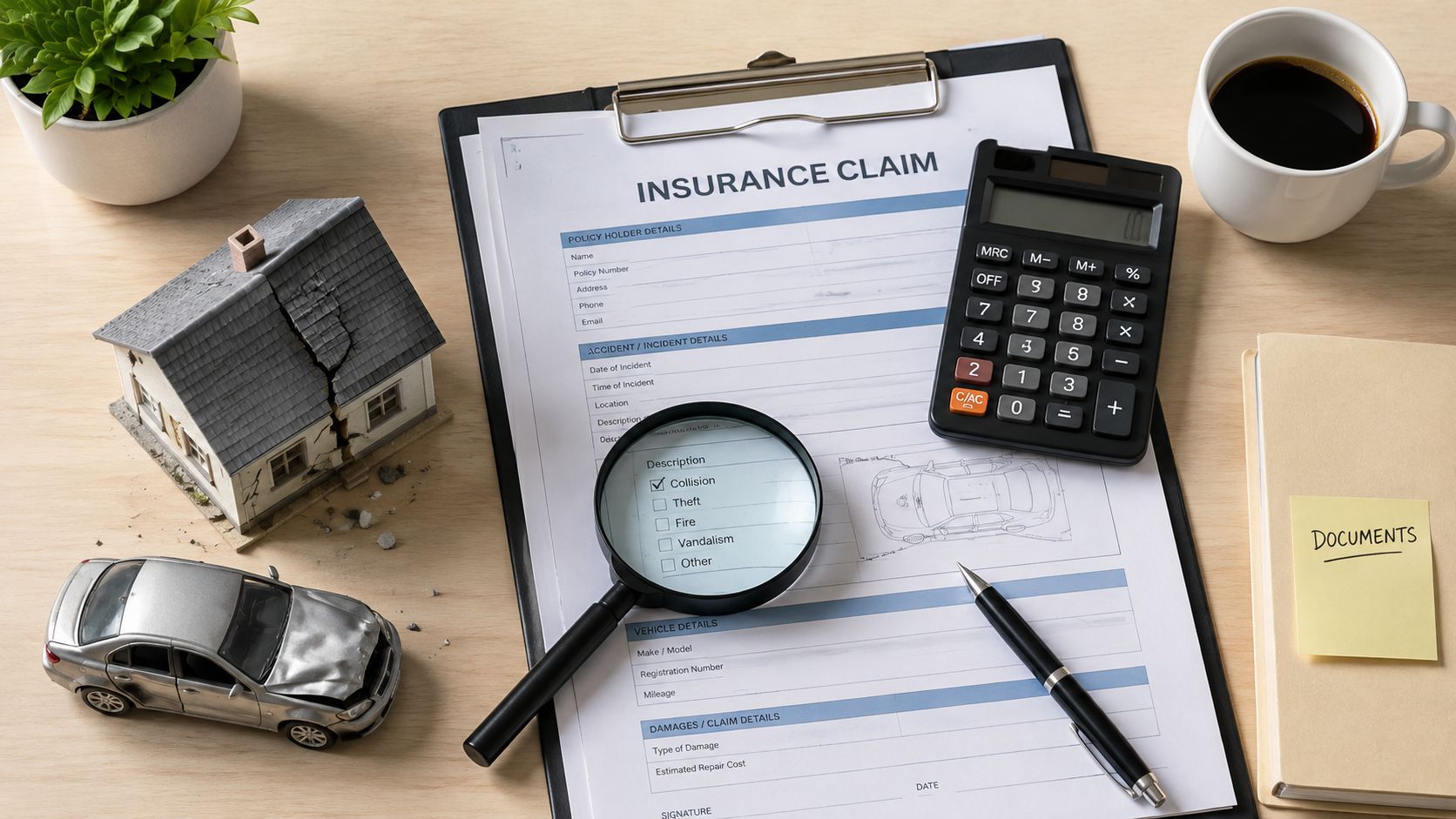
A property damage claim starts with a simple event. Another driver hits your vehicle, a storm damages your roof, or a fire destroys business equipment. You notify an insurer, an adjuster investigates, and someone calculates what payment should return the property to its pre-loss position.
That last part causes many disputes. Insurance handling often focuses first on whether the loss is covered, but payment depends on a second question, how much the loss is worth. A repair estimate may address labor and parts, while a total-loss settlement addresses the vehicle's pre-accident market value. A home claim may involve structural repairs, destroyed belongings, and temporary living costs.
Property damage is different from bodily injury
Bodily injury claims address physical harm, medical treatment, recovery, and related losses. Property damage claims focus on an object or place, including its repair cost, replacement cost, use, and market value. The evidence looks different too. Medical records may support an injury claim, while photographs, repair invoices, comparable vehicle listings, and ownership records support a property claim.
Suppose your car has a damaged bumper and a bent suspension. The insurer may authorize repairs based on an initial estimate, then add supplements when a repair shop finds hidden damage. If the projected repair expense and related losses become greater than the vehicle's pre-loss value after salvage considerations, the insurer may change the settlement from repair reimbursement to a total-loss payment.
Practical rule: Don't treat the first estimate as the final answer. It's a position in the claim, not proof that the valuation is complete.
Who pays and what you should expect
Depending on the circumstances, payment may come from the at-fault driver's liability coverage, your own collision or other coverage, or another applicable policy. The insurer still has to investigate coverage, responsibility, damage, and valuation under the governing policy and state rules.
Keep communication factual and organized. Save claim numbers, names, estimates, photographs, inspection notes, and every offer. If the vehicle's value is disputed, ask for the valuation report and the comparable vehicles used. The more specific your questions are, the harder it is for an unsupported adjustment to disappear inside a software-generated number.
The Three Main Types of Property Damage Claims Explained
Property damage claims become easier to understand when you separate what was damaged from how the insurer measures the loss. A vehicle is a movable asset, a home is a structure, and a business claim may involve many connected assets and income-producing functions.
Homeowners claims show why frequency and severity can differ. The Insurance Information Institute reports that 97.3% of homeowners insurance claims in 2023 involved property damage, including theft, and about 1 in 18 insured homes had a claim of any kind that year. The same Insurance Information Institute homeowners insurance data identifies wind and hail, water damage and freezing, fire and lightning, and theft as distinct loss categories.
Auto claims
Auto claims usually turn on repair economics or actual cash value. If a shop can restore the vehicle safely and the economics support repair, the insurer generally evaluates parts, labor, teardown findings, and supplements. If the projected economic loss crosses the total-loss threshold, the settlement shifts to the vehicle's pre-loss market value, less applicable deductions such as salvage.
Think of the car as a used asset with a specific identity. Trim, mileage, options, condition, local demand, and comparable sales can matter more than a generic book estimate.
Home claims
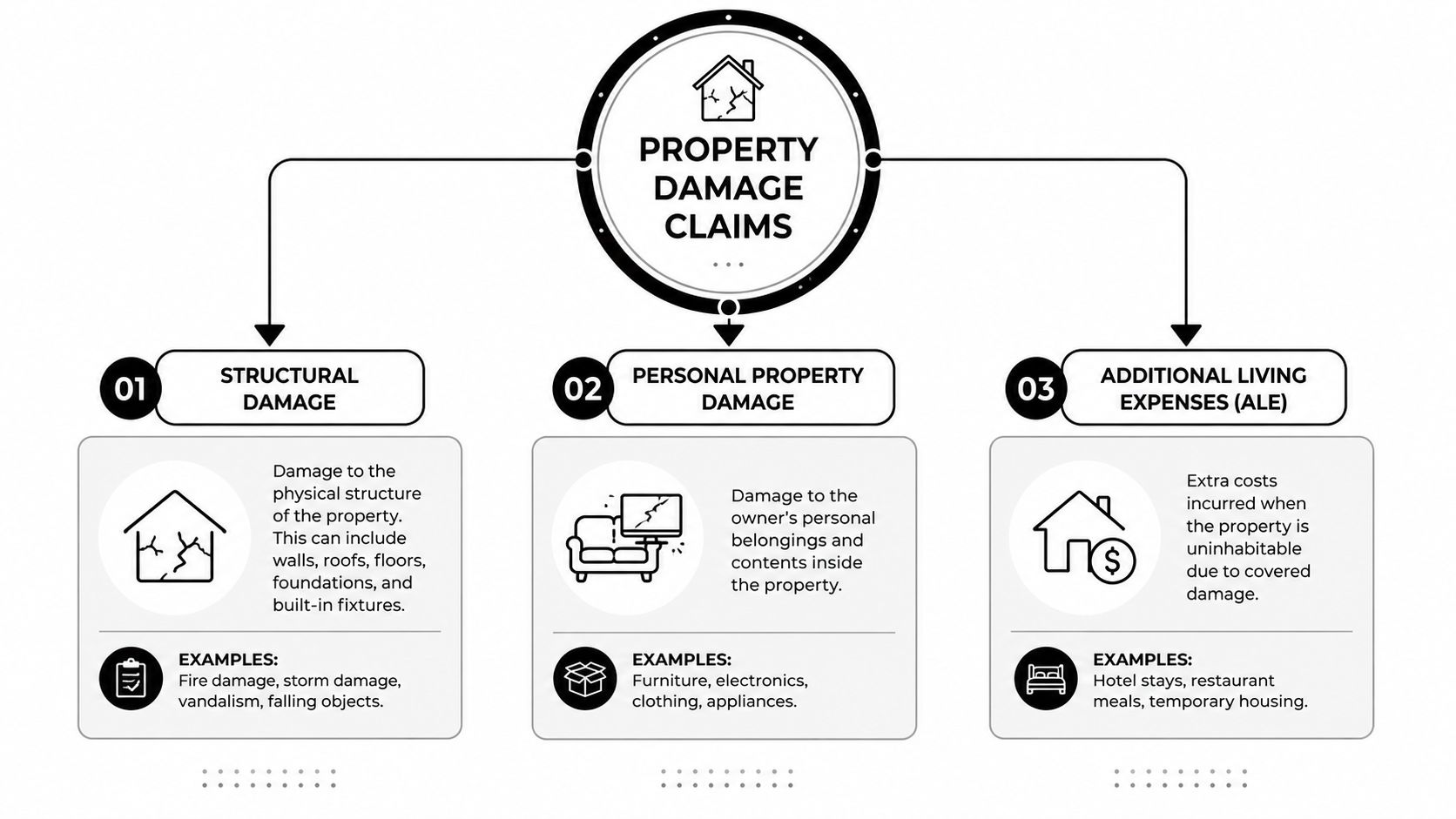
Home claims may involve the structure, personal property, and additional living expenses. A roof loss, water intrusion, smoke contamination, or fire can affect several categories at once. The insurer may need contractor estimates, inventories, receipts, testing, and records of temporary housing or other necessary costs.
The causes aren't evenly distributed. Historical homeowners data summarized by Policygenius homeowners insurance statistics reports an average property damage claim amount of $13,962 across 2016 through 2020, while a published summary of 2021 data placed the average payout at $14,935. Fire and lightning claims averaged $77,340 from 2016 through 2020, illustrating why less frequent severe losses can create much larger individual settlements.
Business property claims
Commercial claims can include buildings, machinery, inventory, computers, furniture, and property needed to operate. The valuation may involve repair or replacement, depreciation, specialized equipment, and sometimes the financial effect of being unable to use the property.
The common thread is proof. A damaged object establishes the event, but records establish the amount. That distinction drives almost every meaningful negotiation.
How the Property Damage Claims Process Works From Start to Finish
The process usually follows a recognizable path, even though coverage rules and handling practices vary. Your strongest position comes from treating each stage as a decision point rather than waiting passively for the insurer to finish.
First notice and immediate protection
Report the loss promptly and ask for the claim number, adjuster's contact information, inspection plan, and next required documents. For a vehicle, photograph the exterior, interior, warning lights, damage points, and surrounding scene before repairs or disposal. Don't authorize unsafe driving, teardown, or parts removal without understanding how the inspection will be documented.
For a home or business, take reasonable steps to prevent further damage when it's safe. Keep mitigation invoices and receipts. Don't discard damaged property before the insurer has had a fair opportunity to inspect it unless safety, sanitation, or official instructions require removal.
Investigation and estimating
The adjuster reviews coverage, cause, responsibility, and damage. A repair estimate may change after disassembly reveals hidden damage. The insurer may also assign a reserve internally, but that reserve isn't a promise of payment and doesn't establish the final value of your loss.
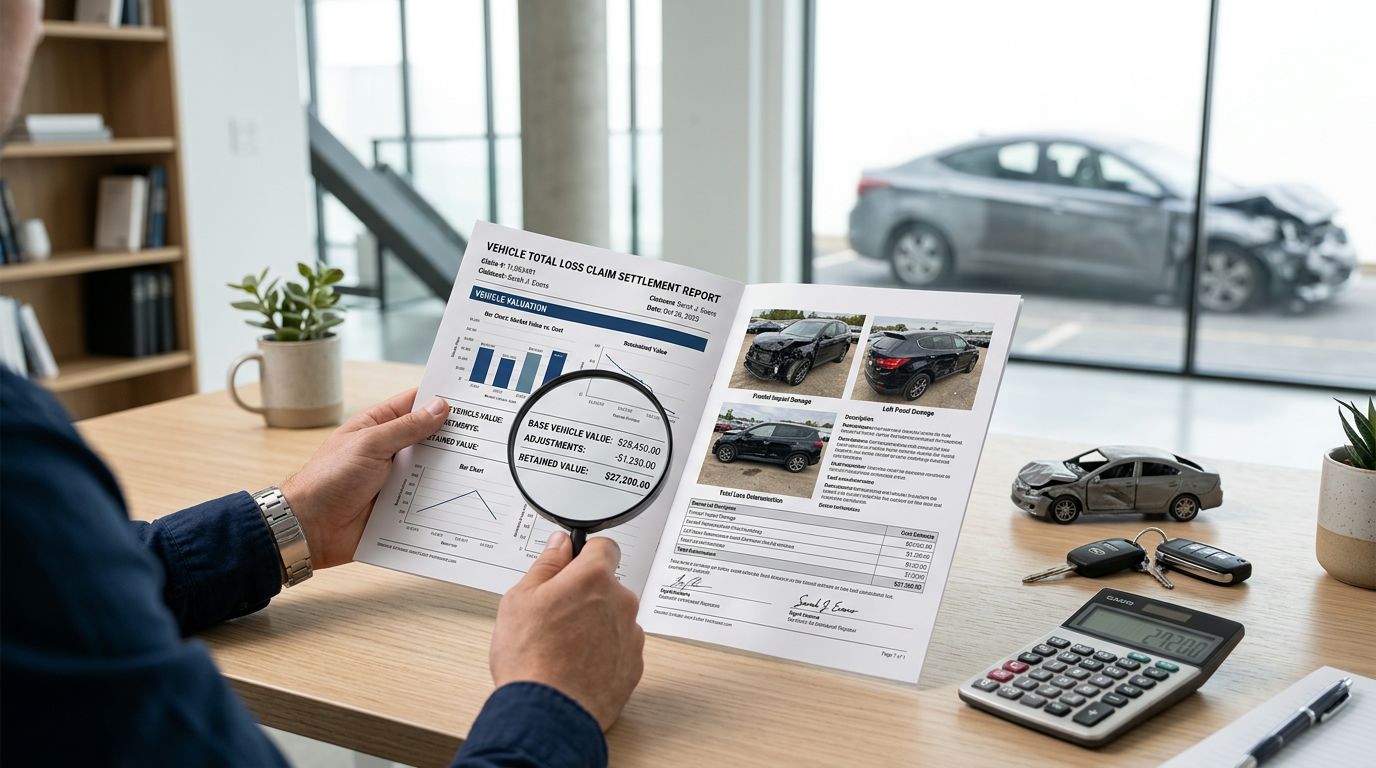
Respond in writing when something is missing or inaccurate. If an adjuster says a vehicle is a total loss, request the valuation report, the condition assessment, the comparable vehicles, and the treatment of taxes, fees, options, prior damage, and salvage.
For readers handling an auto claim in Texas, DFox Law Texas accident help provides additional guidance on filing and communicating with an insurer.
Negotiation, agreement, and payment
Once the insurer presents an estimate or settlement, compare it with your evidence. A repair payment may require supplements. A total-loss payment may require correcting the vehicle's market comparables. A property claim involving temporary displacement may require continuing receipts and proof of necessary expenses.
Claims handling creates friction even when liability isn't disputed. NAIC data cited by Claims Journal's report on insurance complaints states that claims handling represented 65.2% of U.S. insurance complaints in the cited 2025 data. That makes follow-up, written questions, and a complete file practical tools, not administrative busywork.
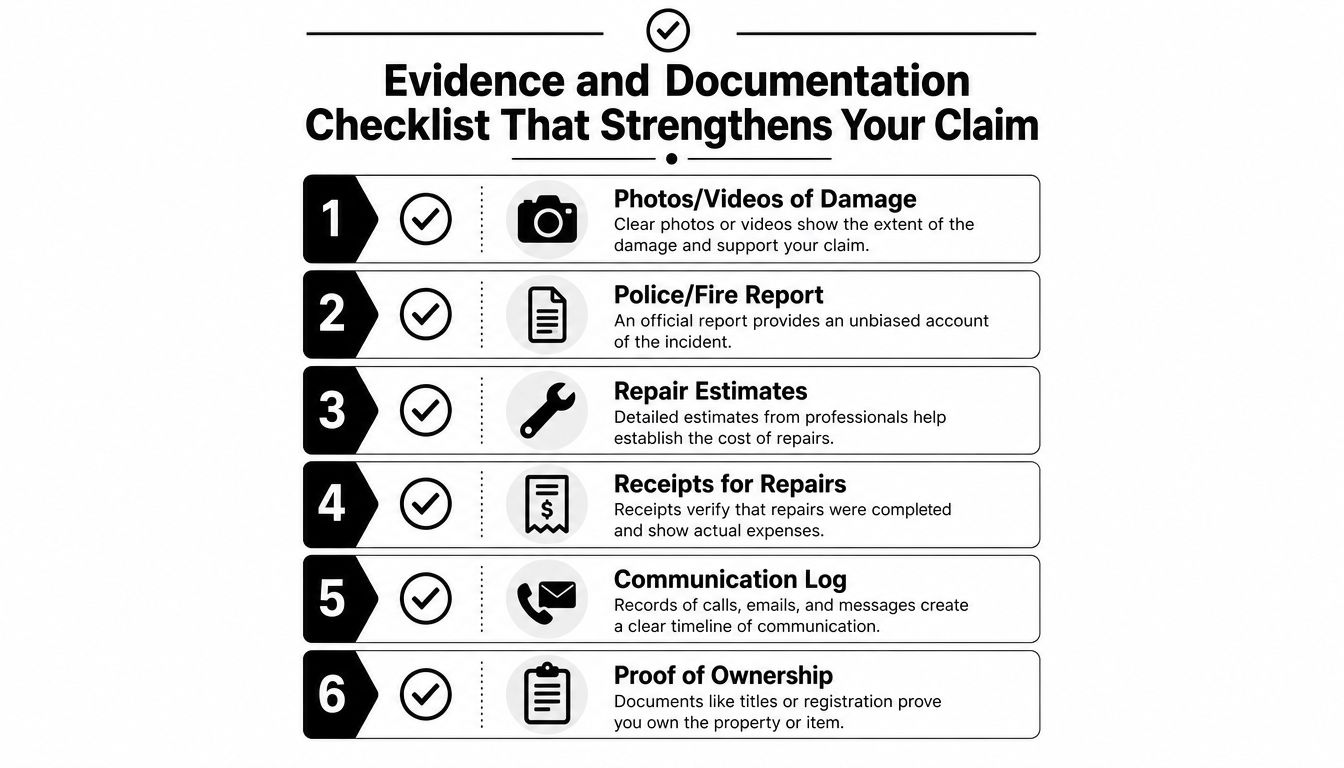
Evidence and Documentation Checklist That Strengthens Your Claim
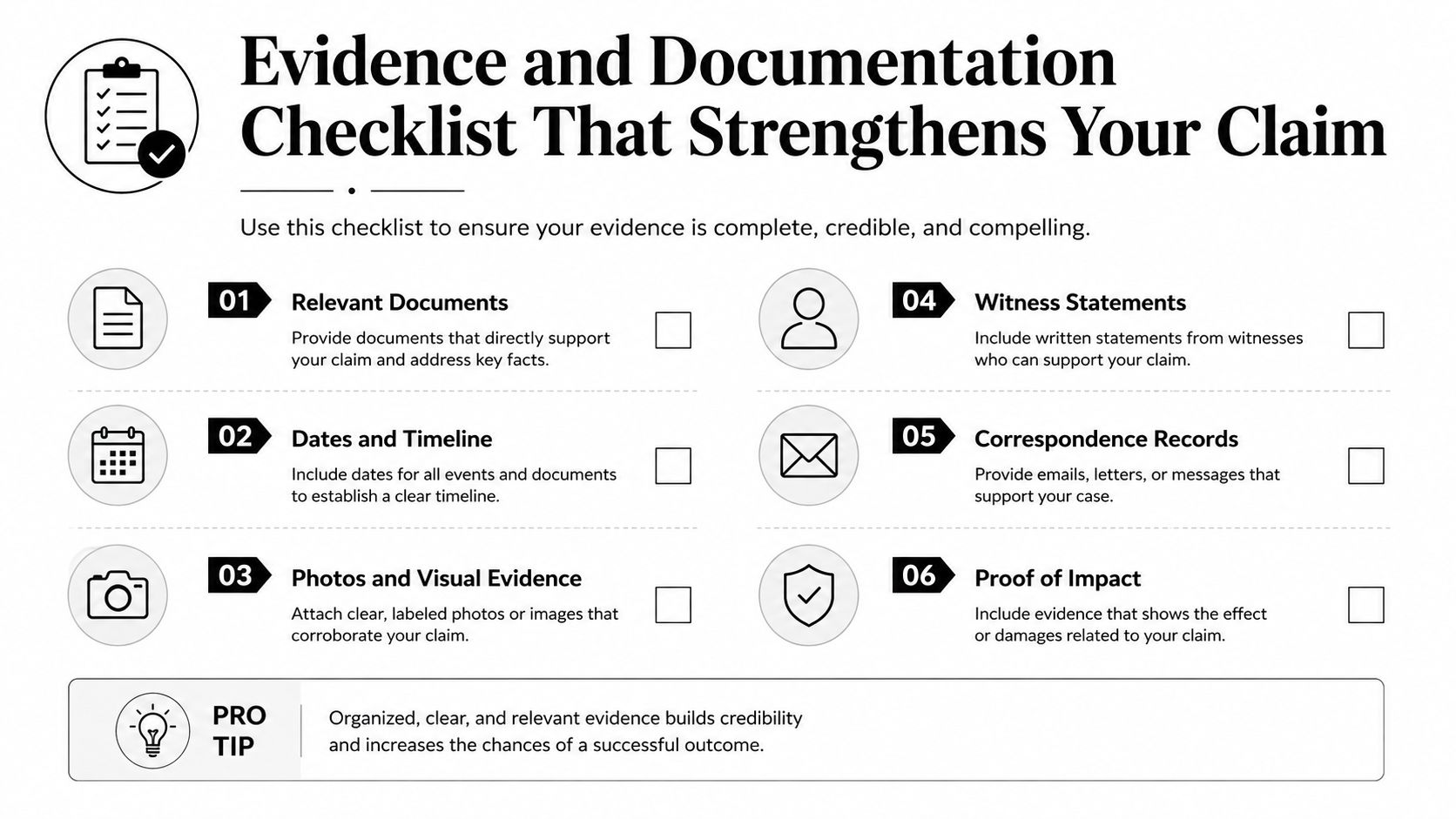
Strong evidence answers two separate questions: Did the damage happen, and what is the correct amount? Many policyholders document the first question carefully but leave the second to the insurer's estimate. That's where avoidable underpayment can begin.
Start a claim folder with separate sections for damage, ownership, value, expenses, and communications. Name files by date and description so you can locate the image or document quickly.
Build the loss record
- Photos and videos: Capture wide scene views, close damage, vehicle identification details, interior condition, and surrounding property. Take images before cleaning, repairs, or movement when it's safe.
- Official reports: Preserve police, fire, incident, or tow records. These documents help establish timing, location, and the reported event.
- Repair estimates: Obtain a detailed estimate that identifies parts, labor, hidden damage, paint operations, and necessary supplements. A vague total gives you little to challenge.
- Receipts and invoices: Save emergency repairs, towing, storage, mitigation, replacement purchases, and temporary-use expenses. Match each receipt to the date and purpose.
- Ownership proof: Keep the title, registration, purchase records, service history, photographs, and financing information. Maintenance records can counter an unsupported poor-condition deduction.
- Market evidence: For a vehicle, collect local comparable listings that match year, trim, mileage, options, drivetrain, and condition. For personal property or equipment, retain model information, purchase records, and comparable replacement evidence.
The auto claim documentation guide can help vehicle owners organize records before challenging an offer.
Match evidence to the type of loss
Minor repair claims need a clear scope and reasonable estimate. Severe losses need a broader file because averages may not reflect unusual property, extensive damage, or high replacement costs. The Insurance Information Institute data shows this uneven pattern clearly, with wind and hail producing frequent property damage claims while fire and lightning claims are less common but substantially more expensive on average, as documented in the source cited above.
For a total-loss vehicle, don't stop at the insurer's offer. Compare the report's equipment list with the actual car, check mileage and condition, and identify whether the selected comparables reflect the same local market. For diminished value, preserve pre-loss photographs, service records, purchase information, and evidence that the repaired vehicle now carries an accident history.
A photograph proves condition at a moment. A valuation report explains what that condition was worth.
How Insurers Value Your Loss and How to Negotiate Fairly
An insurer's first number often looks precise because it appears in a formatted report. Precision in presentation doesn't guarantee accuracy in the underlying inputs.
Vehicle valuation systems may pull market data, apply condition adjustments, and calculate a settlement from selected comparables. The result can be wrong when the system uses the wrong trim, misses options, selects distant or dissimilar vehicles, or applies a broad deduction for prior damage or total-loss history.
Challenge the inputs before arguing the total
Request the complete valuation report, not only the settlement page. Review:
- Vehicle identity: Confirm year, model, trim, drivetrain, mileage, options, and equipment.
- Comparable selection: Ask why each comparable was chosen and whether closer, more similar local vehicles exist.
- Condition adjustments: Compare the deduction with service records, photographs, inspection records, and documented upkeep.
- Prior history: Require an individualized explanation rather than accepting a standard haircut without supporting analysis.
- Fees and deductions: Check salvage, taxes, title charges, loan payoff treatment, and any unexplained reductions.
A 2024 FCA review of motor insurers found that some settlement values were lower than available guide prices and that some firms applied blanket deductions for prior total-loss history without fully considering individual circumstances. The review also flagged pre-accident condition deductions as potentially unfair.
Turn disagreement into a written demand
Don't send an emotional reply saying the offer is too low. Send a short written response that identifies each error, attaches replacement evidence, and states the corrected value you're requesting. Use a table if the report contains several disputed fields.
| Valuation issue | Evidence to provide | Requested correction |
|---|---|---|
| Wrong trim or options | Window sticker, registration, photographs | Replace vehicle specification |
| Weak comparable | Local listing with matching equipment | Add or substitute comparable |
| Poor condition deduction | Service records and pre-loss images | Remove or reduce deduction |
| Unexplained history adjustment | Vehicle history and market evidence | Require individualized support |
For a deeper explanation of the valuation basis, review this guide to auto insurance actual cash value. If the insurer won't correct the report, check the policy for appraisal, dispute-resolution, complaint, and escalation procedures.
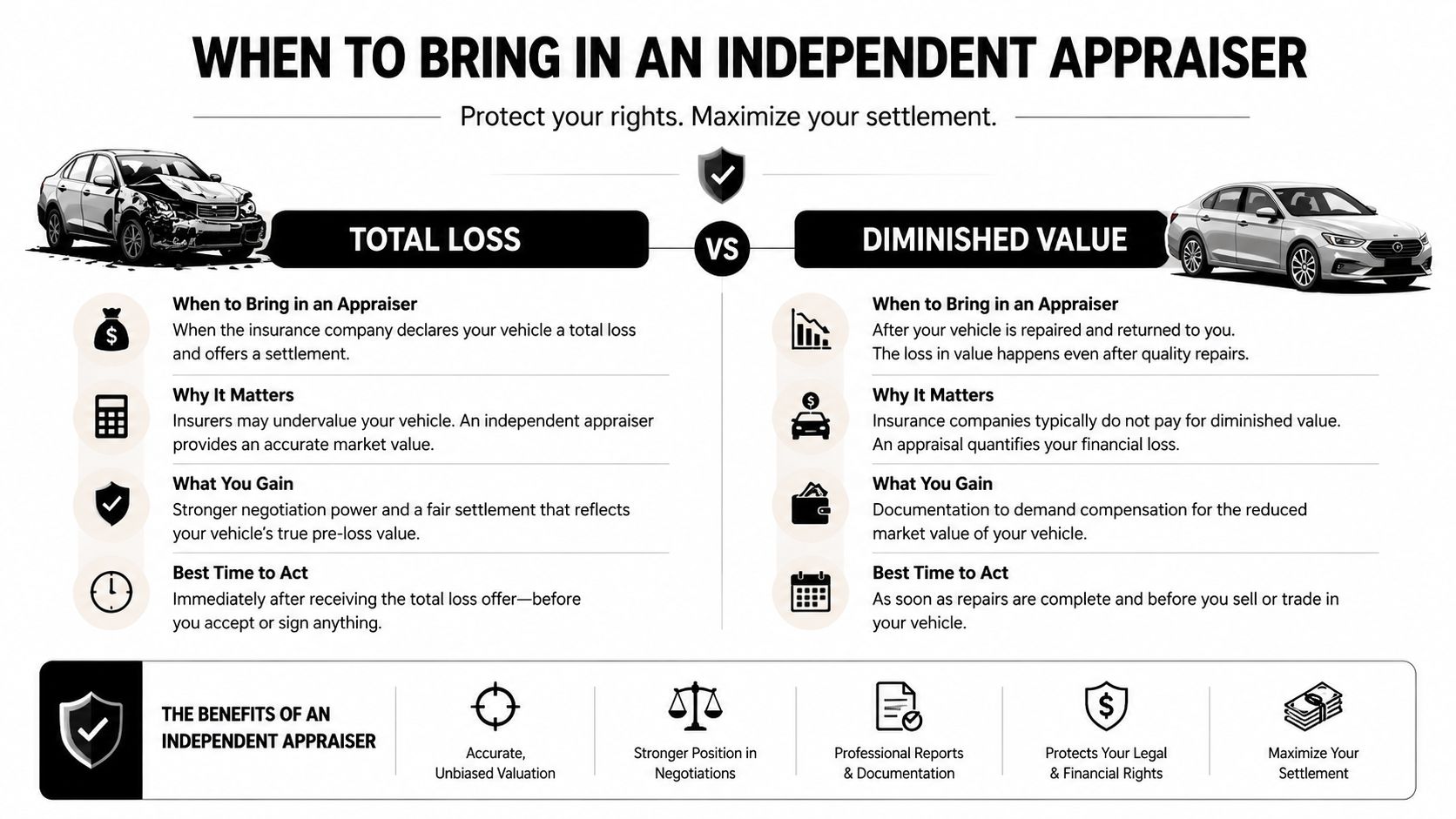
When to Bring in an Independent Appraiser for Total Loss and Diminished Value
You receive a total-loss offer that looks precise, yet the vehicle description is wrong, the comparable cars have different equipment, and the software has applied a broad condition deduction. The disagreement concerns amount, not whether damage occurred. An independent appraiser tests that offer against market evidence, repair economics, and facts specific to your vehicle.
For total loss, compare the repair cost, likely supplements, expected diminished resale value, and rental expense with the vehicle's actual cash value less expected salvage proceeds. If the combined economic impact exceeds that amount, the claim shifts from paying for repairs to settling the vehicle's pre-loss market value. The insurer's spreadsheet is a starting point, not proof that its number is fair.
Total-loss valuation in practice
Suppose the insurer selects comparables with different trim levels or options, then deducts for condition without maintenance records or pre-loss photographs. Finding a more expensive vehicle online will rarely resolve the dispute. A stronger response matches trim, mileage, equipment, condition, and local availability, then explains each difference in writing.
The independent car appraiser resource describes how an outside valuation professional can examine that evidence. Depending on the policy, the Appraisal Clause may let each side select an appraiser, with an umpire addressing the remaining disagreement. This process concerns the amount of loss, not coverage, but it can create a formal route when negotiations stall.
The issue affects more drivers as total-loss claims become more common. In practical terms, that means more owners face a valuation battle shaped by software inputs, selected comparables, and standardized deductions rather than a close review of the individual vehicle.
Diminished value after repair
A repaired vehicle may still sell for less because its accident history makes buyers compare it unfavorably with an otherwise identical vehicle that has a clean history. The claim addresses that post-repair stigma, not the invoice for replacing a bumper.
Appraisal methods commonly start with pre-accident fair market value and adjust for severity, mileage, repair type, age, and market segment. One diminished value appraisal guide states that insurers often cap the base loss at about 10% of appraised value before applying damage and mileage multipliers. The same source notes that diminished value may range from 10% to 33% of pre-accident value, depending on the circumstances.
Late-model, high-value, custom, and collector vehicles need careful review because buyers place greater weight on originality and a clean history. An independent report connects pre-loss value, repair history, market evidence, and post-repair stigma. It replaces a blanket formula with evidence tied to the vehicle and its market.
Oregon and Washington Property Damage Claims and Your Next Steps
Oregon and Washington drivers should begin with the same disciplined approach, then read the policy and state rules that govern the specific claim. Total-loss thresholds, appraisal rights, notice requirements, and treatment of taxes or fees can differ, so don't assume a rule from another state applies to your file.
Handle the claim yourself when the damage is straightforward, the repair scope is well supported, and the insurer's valuation uses accurate information. Request an independent review when the vehicle is unusual, the offer relies on poor comparables, condition deductions look generic, repair costs are close to the total-loss decision, or a repaired vehicle has meaningful resale stigma.
Your next steps are practical:
- Save the insurer's estimate, valuation report, photographs, and every written offer.
- Verify the vehicle's trim, mileage, options, condition, and comparable market.
- Ask the adjuster to explain each deduction in writing.
- Gather service records, ownership documents, repair invoices, and pre-loss photographs.
- Review the policy for the Appraisal Clause and dispute procedures.
- Consider a certified appraisal before signing a settlement release.
Total Loss Northwest offers certified total-loss and diminished-value appraisals for Oregon and Washington vehicle owners, with diminished-value support available nationwide. Its reports are designed to document market value and support a written negotiation or appraisal-clause request.
If your insurer's property damage offer doesn't match your vehicle's real market value, Total Loss Northwest can prepare a certified total-loss or diminished-value appraisal with supporting evidence. Visit Total Loss Northwest to review the appraisal options and start organizing your claim.