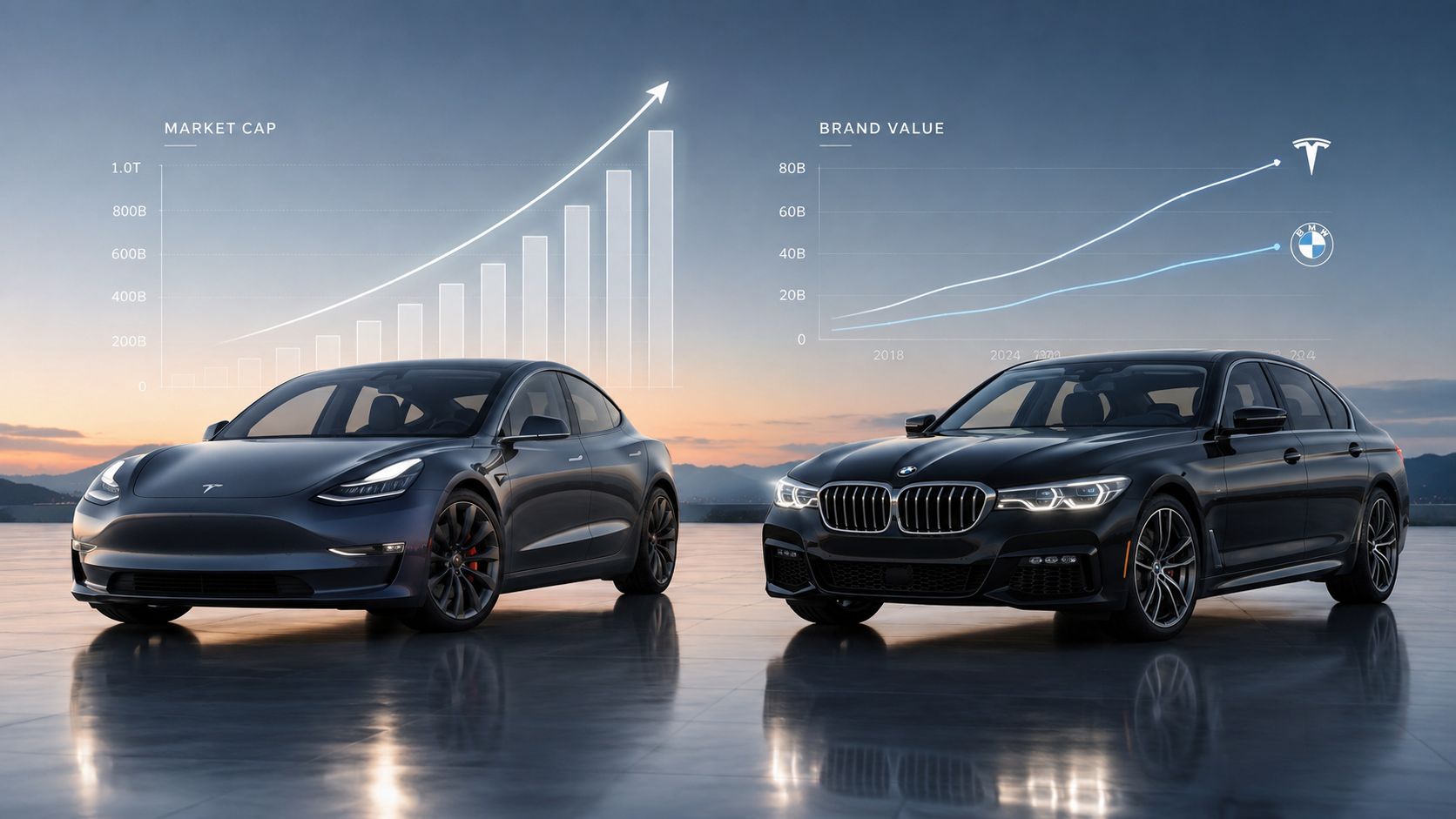
Tesla is the highest value car company by market capitalization in 2026, valued between $1.297 trillion and $1.4 trillion. Toyota sits far behind at roughly $198 billion, so Tesla's investor value is about 6.5 to 7.1 times larger.
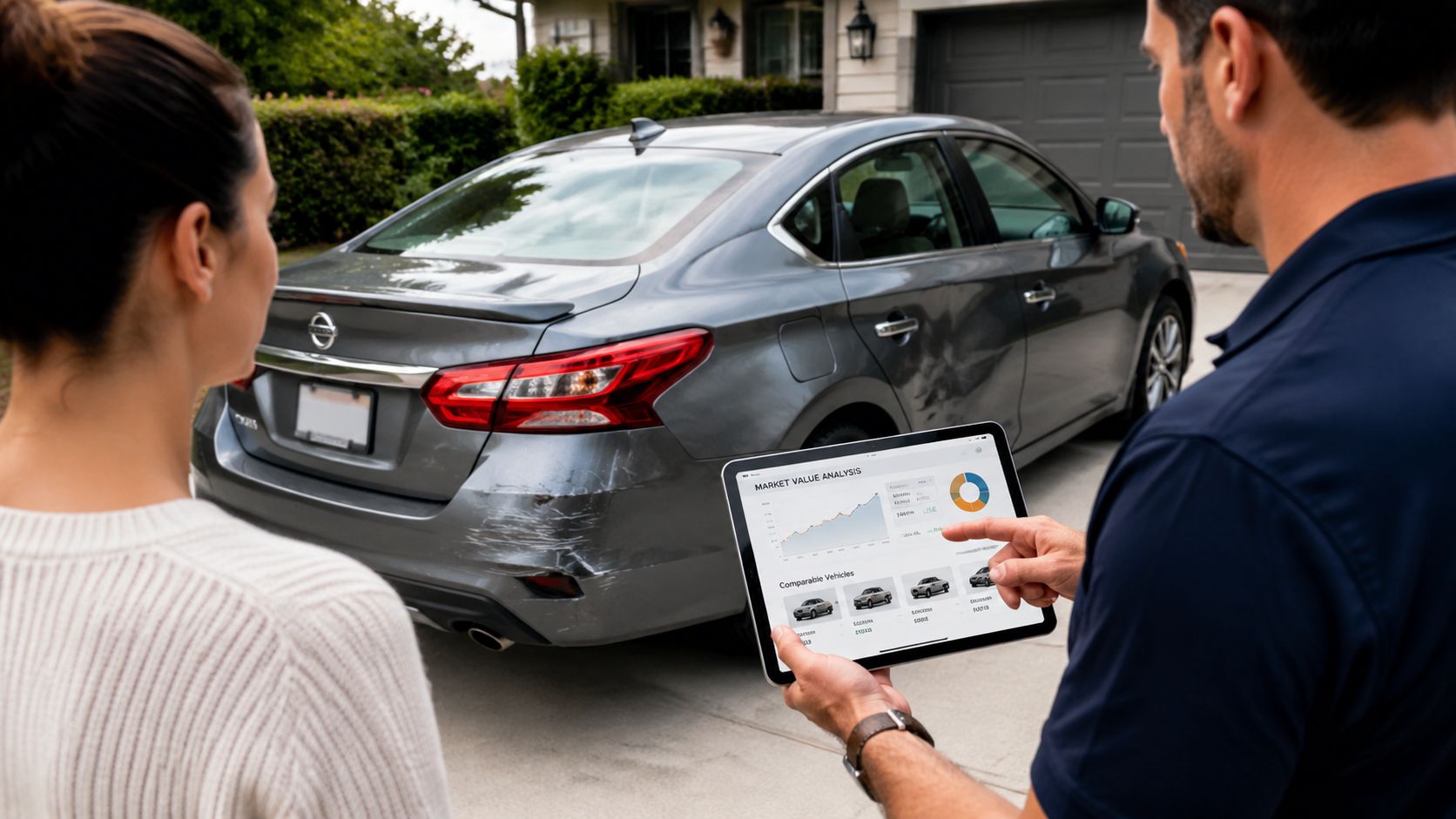
That gap gets attention because it says more about future expectations than about how many vehicles end up in driveways. Market capitalization is a Wall Street judgment, while drivers dealing with a totaled car or a diminished-value claim care about something much more immediate: the price their vehicle can command in the market.
| Rank | Company | Market Cap (USD) | Primary Focus |
|---|---|---|---|
| 1 | Tesla | $1.297T to $1.4T | EVs, software, energy, autonomy |
| 2 | Toyota | $198B | Mass-market vehicles, hybrids |
| 3 | BYD | $111.6B | EVs and plug-in hybrids |
| 4 | Hyundai | $87.2B | Mainstream vehicles, EVs |
| 5 | General Motors | $71.2B | Mass-market vehicles |
Why the Highest Value Car Company Depends on Your Metric
Tesla's lead over Toyota is real, but it only answers one version of the question. In the June 2026 ranking, Tesla was listed at $1.4 trillion and Toyota at $198 billion, which is why Tesla stands out as the highest value car company by market capitalization. A separate automaker ranking from Companies Market Cap also placed Tesla at the top of the table with $1.297T (Companies Market Cap automaker ranking).
That does not make Toyota less important. It means value changes depending on the lens you use. Investors look at market cap. Consumers think about brand trust. Insurers care about actual vehicle pricing, depreciation, and what similar cars sell for after a loss.
Practical rule: if a ranking does not say whether it measures market cap, brand value, or resale value, it is not telling you enough.
Toyota remains the most valuable auto brand in Brand Finance's 2025 automotive report at $64.7B, ahead of Mercedes-Benz at $53.0B and Hyundai at $46.3B (Brand Finance automotive 2025). That brand ranking reflects consumer perception and loyalty, not the price of the corporate equity. Tesla can dominate market cap while Toyota still leads brand value, and both statements can be true at the same time.
The insurance angle is where the distinction becomes practical. Total-loss payouts and diminished-value claims are built around vehicle condition, market comparables, and how the market treats the specific model, not around how traders price the parent company. A driver trying to challenge an insurer's figure usually needs a different framework, and the comparison at market value vs assessed value shows why those numbers can diverge. A separate example is consumer access to the used market, where it can make sense to find a used Tesla in Ireland without assuming the corporate valuation tells you what that car is worth on a claim sheet.
Four Ways to Measure Automotive Company Value
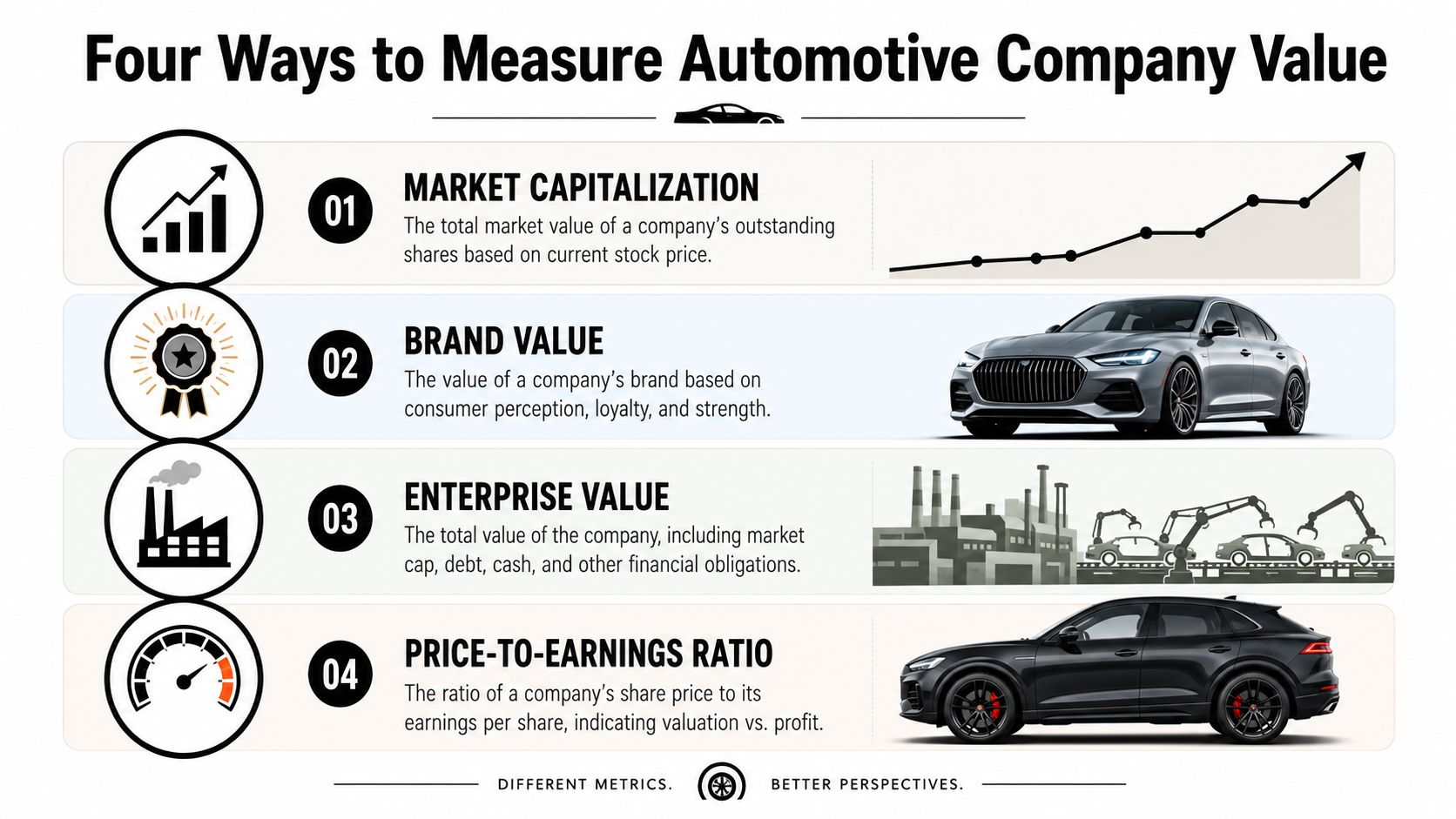
The phrase highest value car company sounds specific, but it usually points to different metrics that answer different questions. Market traders, brand analysts, insurers, and vehicle owners are rarely measuring the same thing, so a single ranking can be misleading if the yardstick is unclear.
Market Capitalization
Market capitalization is the public-market measure widely recognized. It equals share price multiplied by shares outstanding, so it reflects how investors price future earnings, growth, and risk. Tesla can sit above older automakers on this measure even when production scale and model mix tell a different story.
Brand Value
Brand value captures consumer trust, loyalty, and how much the badge influences buying decisions. Brand Finance's 2025 automotive report places Toyota at $64.7B, followed by Mercedes-Benz at $53.0B and Hyundai at $46.3B. That ranking speaks to perception and loyalty, not the value of the listed company's equity.
For claim analysis, that distinction matters. A strong brand can support pricing power in the showroom, but it does not determine what an insurer should pay after a loss. That is why a comparison of market value vs assessed value is useful when a policyholder is trying to understand why a company's public reputation does not match a settlement offer.
Enterprise Value
Enterprise value goes beyond market cap. It adds debt and subtracts cash, which gives a broader estimate of what it would cost to acquire the operating business rather than only its stock. Analysts use it to compare automakers with different balance sheets, especially when debt levels, cash reserves, and financing structure change the picture.
Resale and Diminished Value
For owners, the most practical measure is often resale value or diminished value. A car can lose value after a repair even if the work is done well, and that loss matters in a total-loss file or a diminished-value claim. If you want a market example outside the stock market, you can find a used Tesla in Ireland and see how buyers price the vehicle itself rather than the parent company behind it.
Insurers settle on vehicle-specific numbers, not equity-market theories.
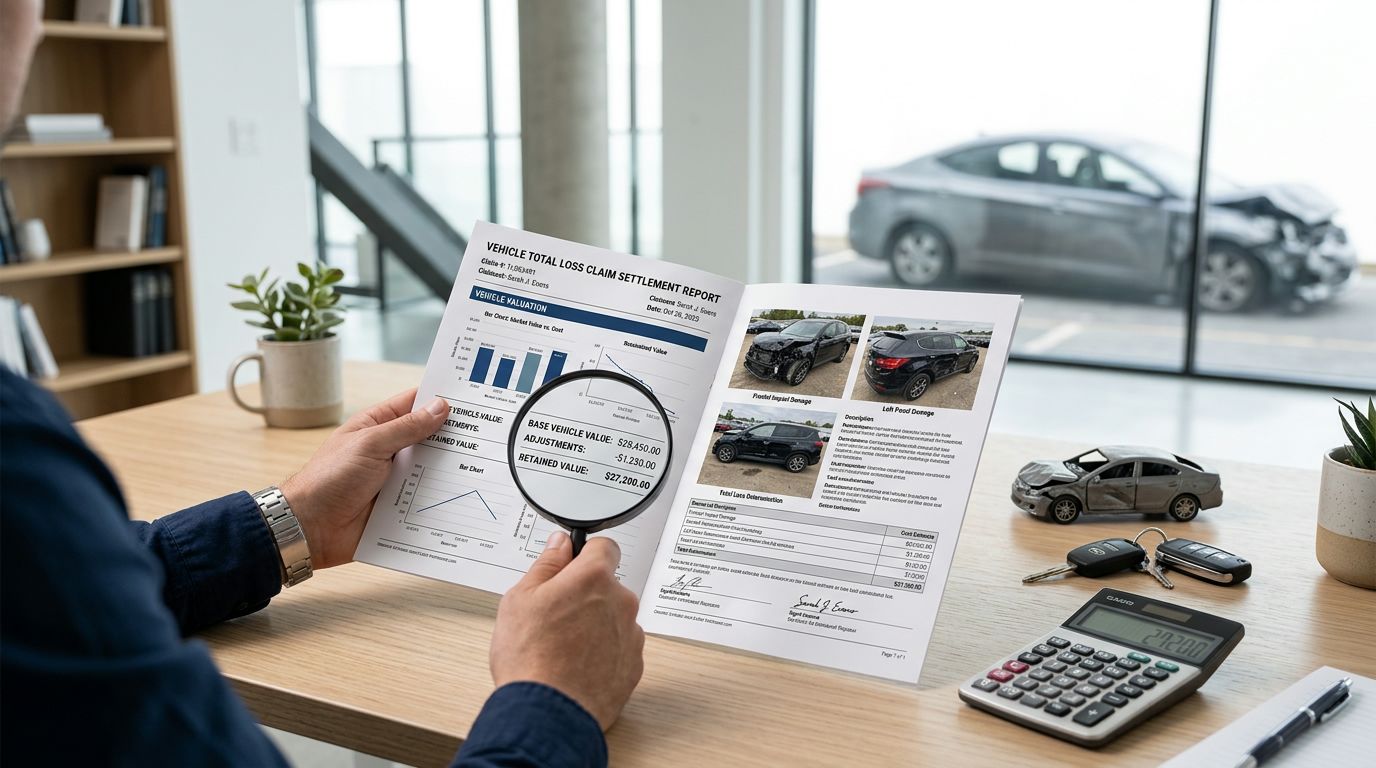
That means the key questions are simple. Which comparable vehicles did the insurer use, how strong is demand for the model, and how did the repair history affect the car's market position? Those answers matter more to a claim than a headline ranking, and a closer look at vehicle market valuation shows why the same car can produce different figures depending on the method used.
Market Capitalization Rankings for Top Automakers in 2026
Tesla's lead in 2026 is still in a class of its own. Across the available rankings, it sits around $1.297T to $1.4T, while Toyota, the nearest competitor, is far lower at roughly $198B to $317B depending on the source and the date used. BYD follows at $111.6B, Hyundai at $87.2B, and General Motors at $71.2B in the June 2026 list.
Top Automakers by Market Capitalization 2026
| Rank | Company | Market Cap (USD) | Primary Focus |
|---|---|---|---|
| 1 | Tesla | $1.297T to $1.4T | EVs, software, autonomy, energy |
| 2 | Toyota | $198B to $317B | Mass-market vehicles, hybrids |
| 3 | BYD | $111.6B | EVs and plug-in hybrids |
| 4 | Hyundai | $87.2B | Mainstream vehicles, EVs |
| 5 | General Motors | $71.2B | Mass-market vehicles |
The ranking matters, but the spread behind it matters more. Tesla is being valued as a technology and energy company as much as an automaker, so investors are pricing software, storage, and autonomy alongside vehicle sales. That helps explain why its market cap is so far above the rest of the sector, even though the production story is much closer than the equity story suggests.
For claimants, that gap has practical consequences. A large public valuation can strengthen a brand's visibility and resale demand, but it does not set a settlement amount by itself. Insurers still rely on vehicle-specific market evidence, comparable sales, and condition reports when they decide actual cash value or diminished value.
A close look at vehicle market valuation shows why the same model can produce different numbers in a total-loss file depending on the local market and the documentation in the record. The broader market also responds to policy timing, and EV demand can shift when incentives change, including the September 2025 EV tax deadline, even if brand value itself changes more slowly.
How Brand Value and Market Cap Affect Your Insurance Claim
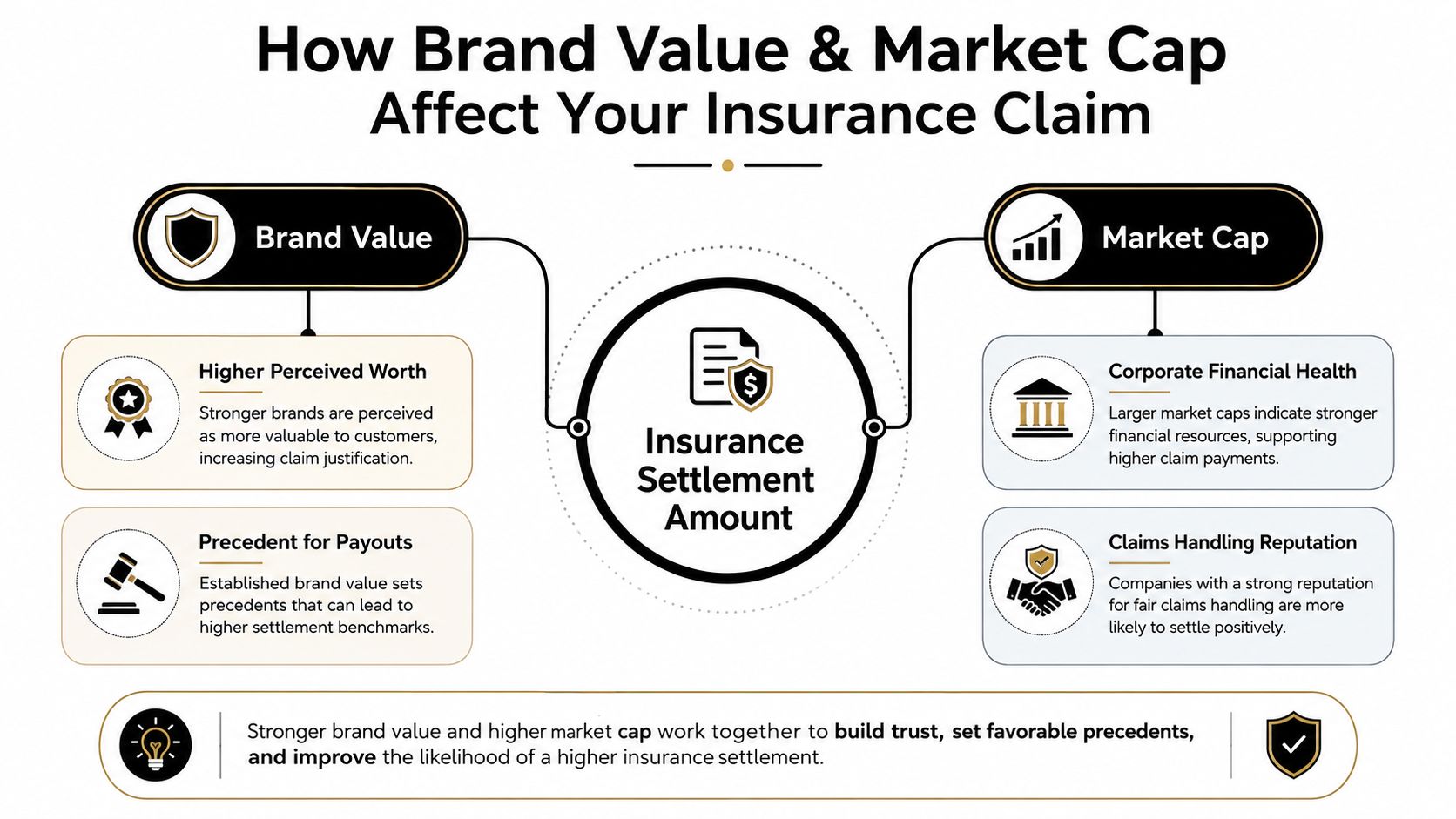
A company's market cap or brand value does not set an insurer's payout on its own, but both can influence the pricing environment behind a claim. Brands with strong consumer trust often support firmer resale demand, and that can help explain why some vehicles hold up better in pre-loss comparisons during total-loss disputes. For owners, that gap matters because Wall Street value and used-car value affect the same file in different ways.
Insurers still pay based on the vehicle, not the ticker. Adjusters look at comparable sales, condition, mileage, trim, and local demand before they settle an actual cash value or diminished value claim. Even so, the brand attached to a vehicle can shape how closely those comparables cluster, especially when the market already treats a badge as a signal of desirability or scarcity.
Brand strength shows up in comps
Adjusters rely on comparable sales and valuation software, not stock charts. Yet the way buyers respond to a brand affects the prices that show up in the used-car market, and those prices feed directly into settlement calculations. A brand with a steady reputation can produce tighter depreciation patterns, which gives a claimant more support for a higher actual cash value.
That matters most when the insurer's first pass uses broad software inputs. If the model overlooks local demand or trims with stronger resale performance, the claimant needs real-market evidence to correct it. The strongest file usually shows that the vehicle's market position was better than the insurer's template suggests.
Diminished value is where the spread becomes visible
After a repair, a car can still lose market appeal because buyers discount accident history. Diminished value claims matter in that setting, especially for vehicles where reputation, status, or scarcity helps sustain resale prices. The more the badge signals quality or exclusivity, the more a collision record can cut into buyer interest.
That effect is easier to see after a major repair than before it. A vehicle that once sat comfortably in a stronger price band may come back to market with the same mechanical function but a weaker transaction story. The settlement question then becomes whether the post-repair stigma has changed what a willing buyer would pay.
If the insurer's software treats your car like a generic unit, your documentation has to prove it isn't one.
A clean way to separate the two issues is to distinguish corporate value from vehicle value. Tesla's market cap reflects how investors price the company. Toyota's brand value reflects how consumers view the badge. Neither figure determines what your damaged sedan or SUV is worth after a crash, but both can influence the market conditions that frame the claim.
For claimants who need a more structured challenge, an independent appraisal can reset the conversation. Services like Snapsheet Chicago AI claims show how heavily modern claims handling can rely on software, which is why owners sometimes need an outside valuation to push back on a low number. The mechanics of that dispute are closely tied to the insurer's own assessment process, and a closer look at vehicle market valuation helps explain why two files for the same car can land at different figures.
Strategies for Maximizing Your Total Loss or Diminished Value Settlement
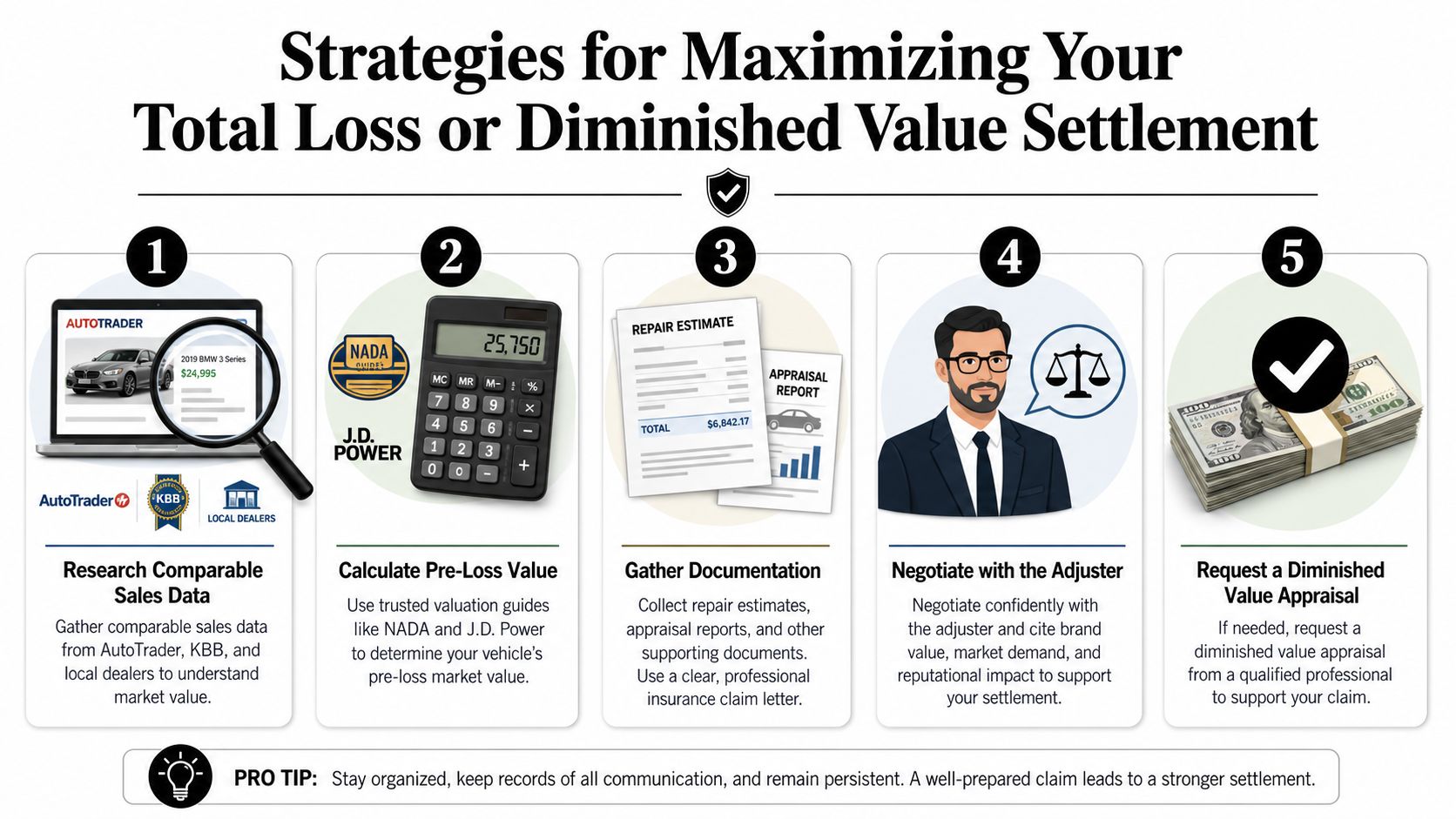
A strong claim starts with evidence the adjuster can't ignore. For a total-loss payout, that means proving the car's pre-loss market value with real comparables, not just the insurer's first software output. For diminished value, it means showing that the repair history changed what buyers will pay.
- Pull comparable sales first. Use listings from AutoTrader, KBB, and local dealers to show what similar cars are selling for.
- Document the vehicle's identity. Trim level, mileage, options, and condition matter because two cars with the same badge can sit in very different price bands.
- Save repair records and estimates. Those documents help prove what was damaged and why the car no longer carries the same market appeal.
- Push back on software when needed. If the insurer's valuation ignores your comps, ask how it handled local market conditions and feature packages.
- Request a diminished-value appraisal when the car is repaired. That's especially important when the damage history will follow the vehicle into resale negotiations.
The logic changes depending on the claim type. In a total-loss case, you're trying to raise the pre-loss number. In a diminished-value case, you're proving that the post-repair car is worth less than a clean-title equivalent. Those are different arguments, and they need different evidence.
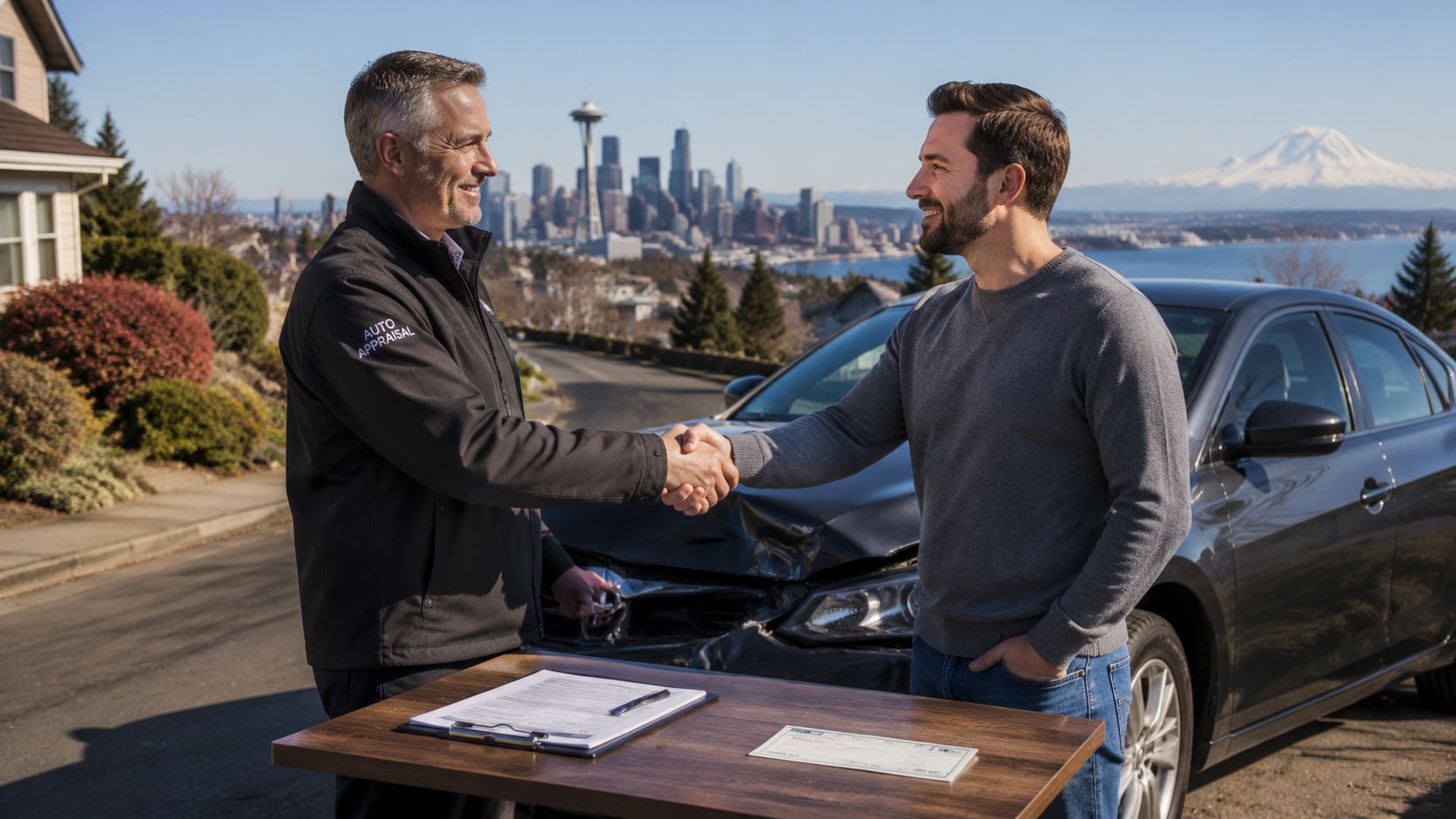
A single detailed report can do more than a stack of emails because it gives the adjuster a market-based figure to respond to. Total Loss Northwest, for example, provides certified independent appraisals for total loss and diminished-value disputes in Oregon and Washington, which is one path owners use when they want a valuation built from real market data instead of an insurer's first pass.
The Volatility Problem with Value Rankings
A car company can top the rankings one year and look far less dominant later, which is why the phrase highest value car company shouldn't be treated like a permanent title. Independent rankings show Tesla's market cap moving from about $689.6B in August 2024 to roughly $1.47T in May 2026 (Capital.com automaker market-cap ranking). Other automakers changed much less over the same period.
That swing says more about investor sentiment than about whether the cars themselves suddenly became better or worse. EV growth expectations, autonomy narratives, and valuation multiples can expand quickly, then compress just as fast. Those changes are financial, not mechanical.
For vehicle owners, volatility matters because prestige affects resale perception. A brand that feels untouchable in the market can support stronger comparables for a while, but the reverse can happen too, especially if consumer enthusiasm cools. Insurance claims live inside that real market, not inside a headline ranking.
The badge on the hood can influence the buyer's reaction, but the settlement still depends on local evidence.
That's why static lists are a poor substitute for appraisal work. A ranking tells you who investors favored at a point in time. It doesn't tell you what a repaired vehicle will fetch next month in your local market, which is the number that matters when a claim is on the table.
Getting a Fair Valuation Through Independent Appraisal
A certified independent appraisal is the cleanest way to challenge a low settlement because it replaces the insurer's first-pass software with a market-based report. That matters whether the vehicle is a daily driver, a classic, or a higher-end car with unusual options, because one-size-fits-all valuation tools often miss the details that move price.
Independent appraisers can also invoke the appraisal clause on behalf of the owner, which takes the fight out of the insurer's preferred workflow and puts actual market evidence at the center. If you're in Oregon or Washington and the total-loss number or diminished-value offer looks off, that process can be the difference between a rushed payout and a defensible figure. For a closer look at that role, the overview of independent car appraiser is relevant.
When the goal is fairness, the best evidence is still the simplest, comparable sales, repair documentation, and a report that explains how the valuation was built. A big automaker's market cap won't fix a low offer, but a strong appraisal can.
If your total-loss offer or diminished-value settlement feels too low, Total Loss Northwest can prepare a certified independent appraisal that puts real market data in the record. Visit Total Loss Northwest to see how their appraisal-clause and valuation services work for Oregon and Washington drivers.