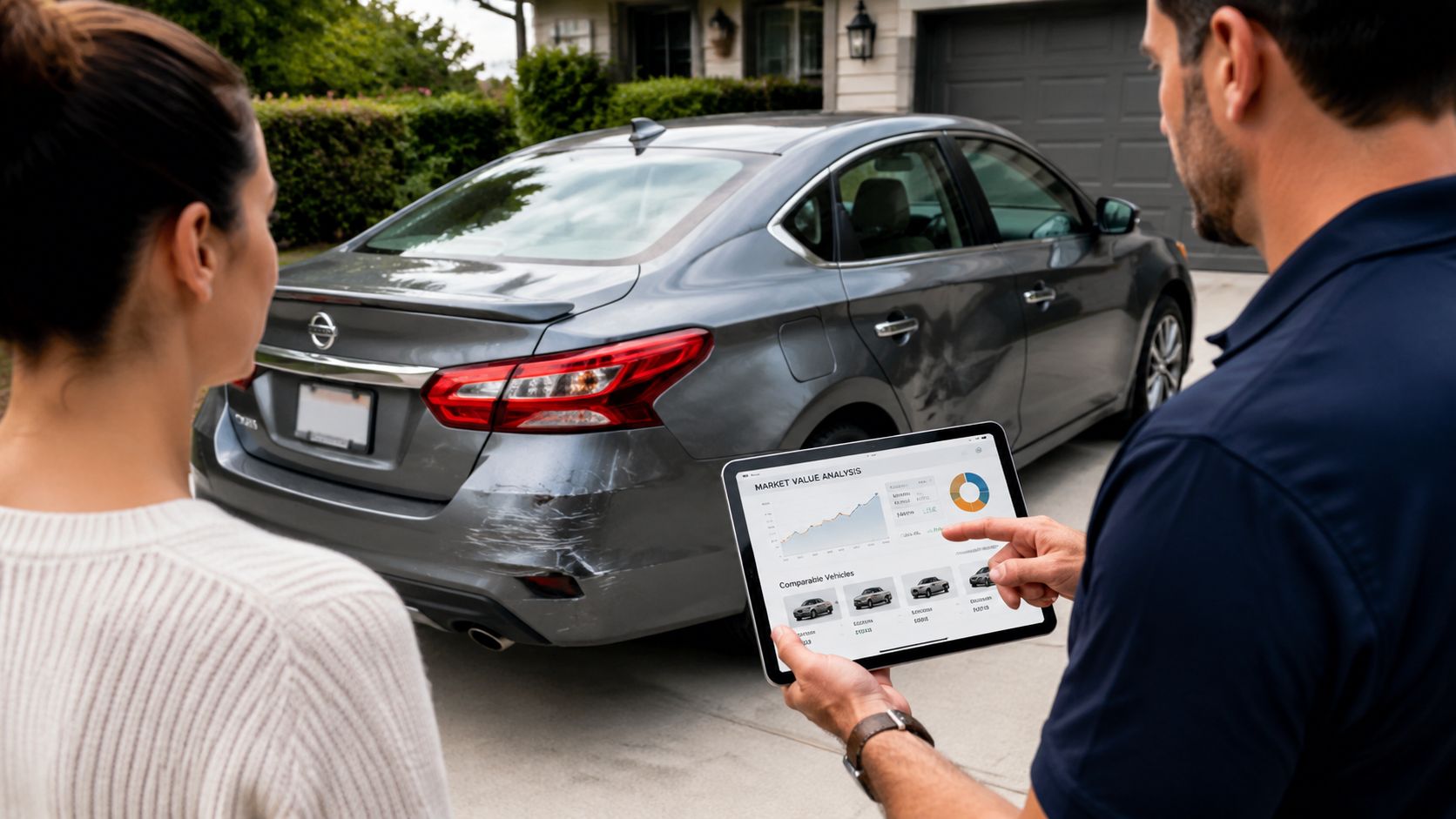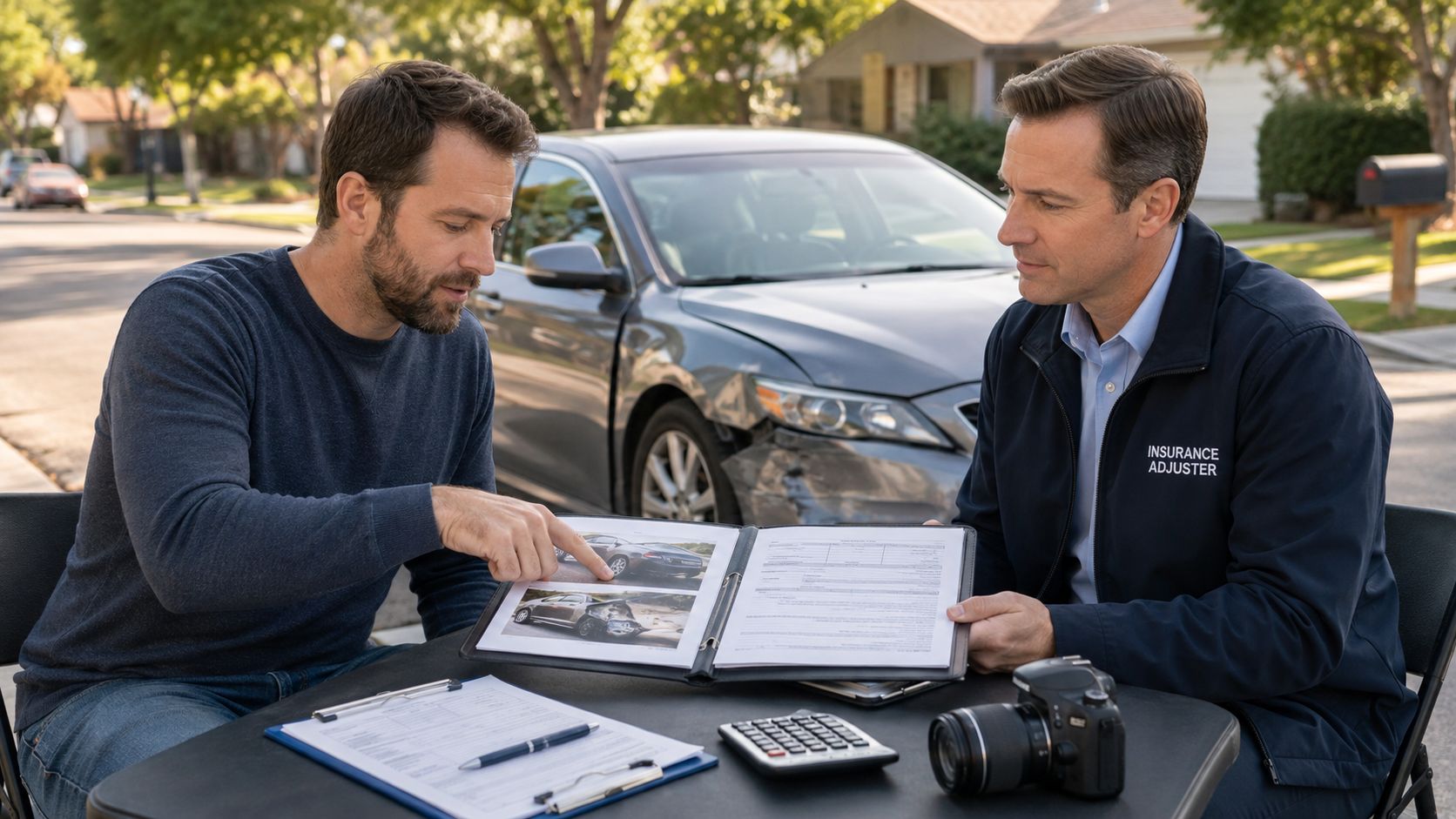
Total-loss claims accounted for 27% of collision claims in 2022, up from 24% in 2021, according to data cited by Kelley Blue Book. That changes how you should think about the accident settlement process. A large share of accident claims aren't repair negotiations at all. They're market-value disputes, and the insurer's first valuation often becomes the most important number in the file.
The adjuster doesn't owe you a settlement based on what you still owe on the loan, what a replacement vehicle costs at the dealership, or what the car meant to you. The dispute centers on the vehicle's actual cash value immediately before the crash, supported by accurate comparable vehicles, correct equipment, mileage, condition, and local-market adjustments.
Your job isn't to argue that your car was special. Your job is to prove that the insurer's valuation report doesn't describe the car you owned. That means documenting the accident, preserving evidence, obtaining the full valuation report, finding stronger comparables, and escalating through the appraisal clause when negotiation stops producing a fair result.
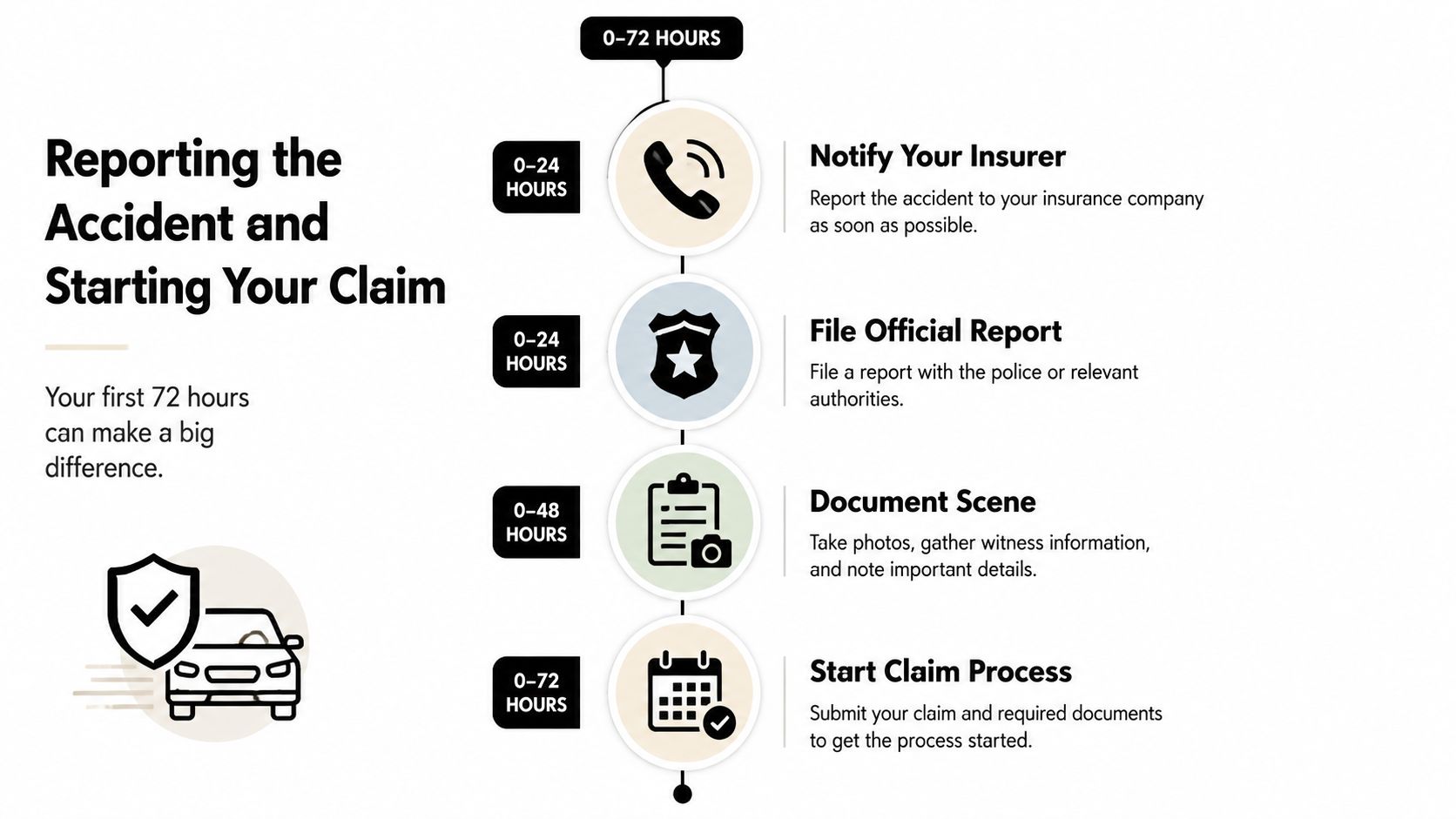
Reporting the Accident and Starting Your Claim
The accident settlement process starts at the scene, not when the adjuster calls. Protect your position before you discuss fault, vehicle value, or settlement.
Call emergency services when anyone is injured, traffic is obstructed, or the circumstances require an official response. Ask for the police report information and write down the responding agency, report number, and officer details. Don't guess about speed, distance, signal timing, or fault when speaking with the other driver or an insurer. Give accurate facts, but avoid speculation.
Notify your own insurer promptly, even when you believe the other driver caused the crash. Your policy may provide collision coverage, uninsured motorist protection, underinsured motorist protection, medical payments, or rental benefits. You should also identify the at-fault driver's insurer and open a third-party claim when possible. A first notice of loss guide can help you prepare the information the carrier will request.
Preserve the facts before they disappear
Use your phone to capture the position of each vehicle, visible damage, road markings, traffic controls, weather, debris, skid marks, and nearby businesses or homes that may have cameras. Photograph license plates and insurance information. Ask witnesses for names and contact details, then record a short statement while the event is fresh.
Don't repair, clean, modify, or dispose of the vehicle before the insurer has inspected it unless safety requires immediate action. If towing or storage is necessary, keep every invoice and photograph the vehicle before it moves. Those records can later support both liability and the valuation dispute.
Report injuries promptly and seek appropriate medical care. Some symptoms develop later, and an early medical record helps connect treatment to the collision. Keep communications factual. A recorded statement may be requested, but you don't need to volunteer theories, opinions, or information unrelated to the claim.
If the other driver has no usable coverage
Ask your insurer to explain whether uninsured or underinsured motorist coverage applies. Preserve the police report, identification details, photographs, witness information, and any coverage correspondence. Don't assume the absence of the other driver's insurance ends the claim. Your own policy may provide a path forward, subject to its terms and applicable state law.
Building Your Evidence and Documentation File
Insurers pay documented claims, not persuasive memories. Build a file that lets an adjuster, appraiser, or umpire verify what existed before the crash and where the carrier's valuation went wrong.
Start with the vehicle's identity. Save the VIN, registration, title information, purchase documents, loan records, maintenance history, mileage evidence, service invoices, and photographs taken before the accident. Dealer service departments may have records that don't appear in your glovebox. Previous owners, maintenance facilities, and the selling dealer may also hold useful documentation.
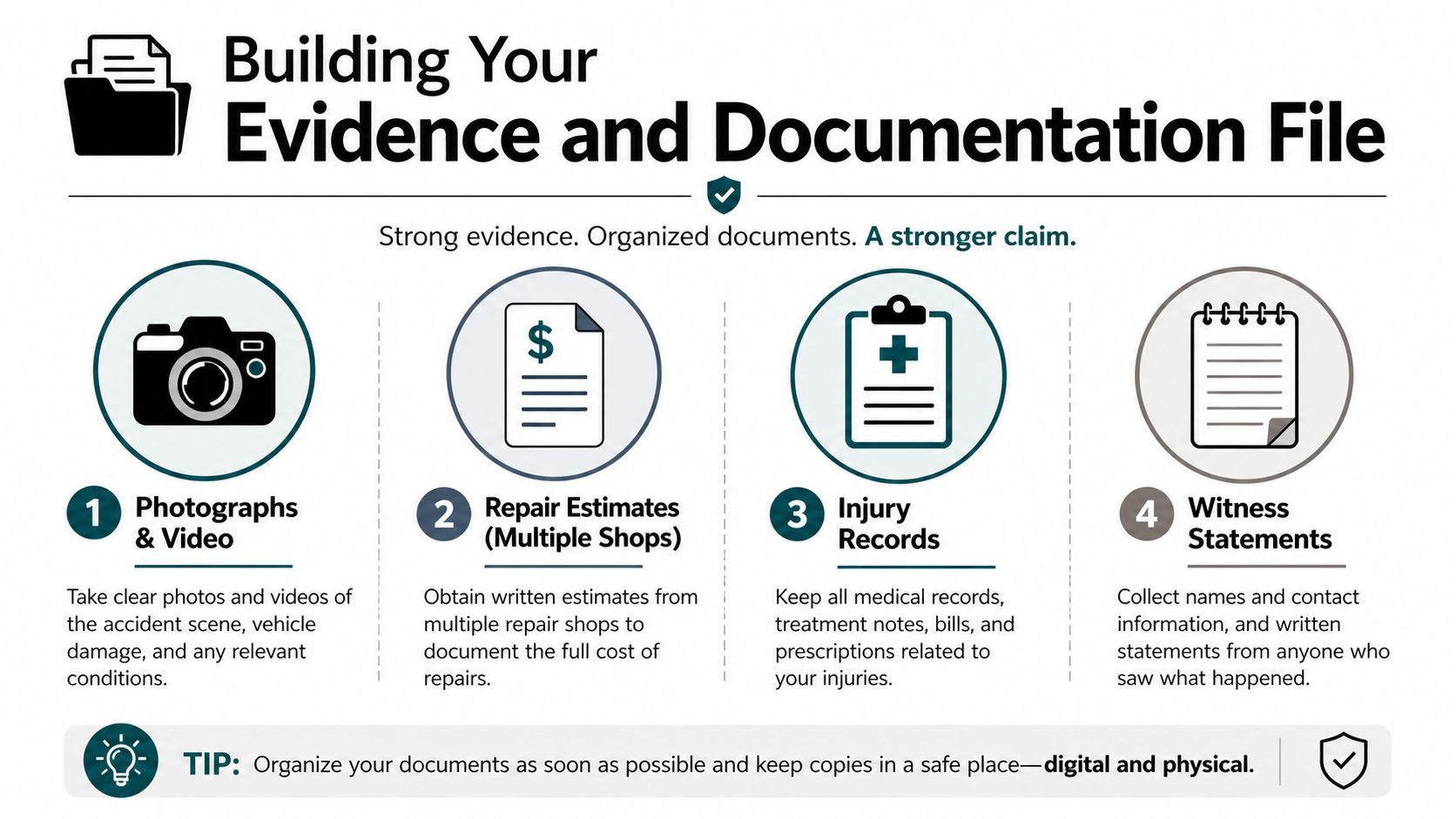
Build the file around value, not volume
A thick file isn't automatically a strong file. Put the most valuation-relevant material first:
- Vehicle configuration: Record the exact year, make, model, trim, drivetrain, body style, factory packages, and installed options.
- Mileage proof: Use service invoices, inspection records, registration documents, and dated photographs to verify the pre-loss mileage.
- Condition evidence: Gather clear pre-accident photographs showing paint, interior, wheels, tires, glass, and equipment.
- Upgrades and modifications: Document aftermarket wheels, suspension, audio, racks, camper equipment, custom work, and dealer-installed options with receipts and photographs.
- Maintenance history: Organize records that demonstrate mechanical care and condition, while recognizing that maintenance usually supports condition rather than adding its full cost to market value.
- Comparable vehicles: Save local listings that match the vehicle's trim, equipment, mileage range, condition, and market area.
For a total-loss valuation, focus especially on three to five strong local comparables rather than a long list of weak advertisements. A similar-looking vehicle with a different trim or missing factory package can mislead more than it helps.
Photograph the evidence like an appraiser
Take wide shots and close-ups. Photograph the VIN label, odometer, tires, wheels, dashboard warnings, interior condition, and every option the valuation report should recognize. Keep original files with their metadata when available, and create a dated folder for each new document.
Use a simple naming system, such as 2025-06-10-service-invoice or pre-loss-driver-seat. Keep claim emails, adjuster notes, estimates, towing bills, rental records, and settlement offers in the same file. A structured auto claim documentation checklist can prevent small omissions from weakening the valuation argument.
How Insurers Calculate Your Vehicle Value
The insurer usually begins with actual cash value, or ACV. In a total-loss claim, ACV means the vehicle's value immediately before the collision. It isn't the replacement cost of a new vehicle, and it isn't automatically the loan balance or the amount you originally paid.
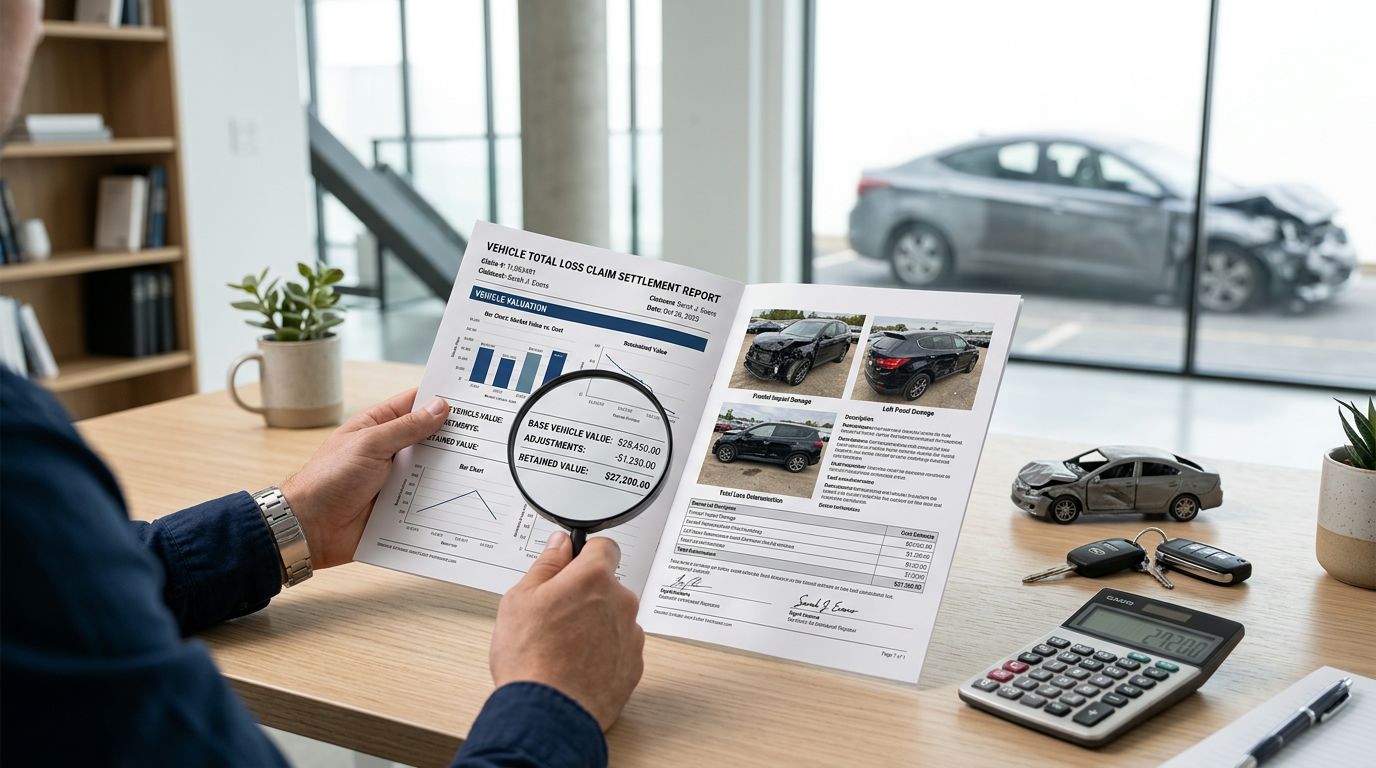
The carrier compares your vehicle with other vehicles through an automated or manual valuation process. Tools such as CCC One and Mitchell may identify comparable vehicles and apply adjustments for mileage, equipment, condition, geography, and market availability. The software can produce a polished report, but polished formatting doesn't make the underlying inputs correct.
Where the calculation breaks down
The most common failures are basic:
- The report lists the wrong trim.
- A factory package or major option is missing.
- Mileage is inaccurate.
- A comparable comes from a different market.
- Condition adjustments don't match documented pre-loss condition.
- The report relies on a vehicle with different drivetrain, body style, or equipment.
- Dealer or aftermarket improvements are ignored or handled inconsistently.
The insurer then compares the estimated repair cost with the vehicle's value and applies the relevant total-loss rules or threshold. Once the vehicle is declared economically unrecoverable, repair labor and parts no longer determine the settlement. The central question becomes whether the ACV is accurate.
Request the complete valuation report, not just the settlement figure. Review every comparable, adjustment, option entry, mileage entry, and condition description. If the report doesn't show enough detail to reproduce the math, request clarification in writing.
A vehicle's appearance also affects market presentation. If you're documenting a well-maintained car before sale or valuation, a guide to professional car deep clean for sale can help you understand the condition details buyers notice. Cleaning won't create value that didn't exist, but clear condition evidence can prevent a carrier from treating a maintained vehicle as ordinary.
Negotiating a Fair Settlement Payout
The first offer is a starting point, not a verdict. Accepting it without checking the report is the fastest way to leave value on the table.
Read the valuation line by line. Don't begin by demanding an arbitrary amount. Find the specific errors that change the number, then tie each correction to evidence. A wrong trim level, omitted equipment package, incorrect mileage, or distant comparable gives you a concrete reason to reject the calculation.
Use comparables that can survive scrutiny
Search for vehicles that match the same year, model, trim, drivetrain, body style, major options, and general condition. Prioritize the local market where you would reasonably replace the vehicle. Save the full listing, seller details, mileage, equipment, location, photographs, and date accessed. Listings disappear, so preserve them before sending your response.
Don't use a high asking price as proof by itself. A comparable is useful when it resembles your vehicle and helps establish the market range. Explain meaningful differences instead of hiding them. If the insurer's comparable has lower equipment or substantially different mileage, show why its adjustment doesn't represent the difference accurately.
Negotiation rule: Attack the inputs before arguing about the output.
Send a concise counteroffer package. Include a cover letter, a table of disputed entries, replacement comparables, option proof, mileage records, photographs, and your requested corrected ACV. Use language such as:
“I dispute the valuation because the report identifies the vehicle as [incorrect trim] and omits [specific equipment]. The attached records confirm the correct configuration. The replacement comparables reflect the same trim and local market. Please issue a revised valuation report that addresses each documented correction.”
Keep every conversation professional and in writing when possible. Don't threaten, exaggerate, or accuse the adjuster of fraud without evidence. Ask for a written response to each disputed adjustment.
Watch deductions outside the headline value
The gross vehicle value isn't always the amount you receive. Review salvage deductions, deductible treatment, taxes or fees where applicable, rental reimbursement, towing, storage, and any loan payoff handling. Ask the adjuster to explain every deduction and confirm whether the settlement requires you to transfer the vehicle or retain salvage.
Appraisal-clause outcome data compiled in one industry analysis found that 46 resolved disputes had insurer offers averaging 45.86% too low, with final awards more than double the original offers. The same analysis reported an average shortfall of $5,312.46 per claim and more than $244,000 collectively across those cases, as detailed by Gentry Locke's total-loss negotiation analysis. Those figures aren't a promise about your claim. They demonstrate why a valuation review deserves more than a quick phone call.
Invoking the Appraisal Clause When Negotiations Stall
The appraisal clause is the formal escalation tool for an actual cash value dispute. Washington insurance rules allow either the insurer or claimant to invoke appraisal when they disagree about ACV. Policy language controls the procedure, so read the notice requirements, valuation scope, and cost provisions before sending a demand.
Appraisal addresses the amount of loss, usually the vehicle's value and, depending on the policy, related valuation issues. It does not decide fault, coverage, or whether the insurer must pay for a particular repair.
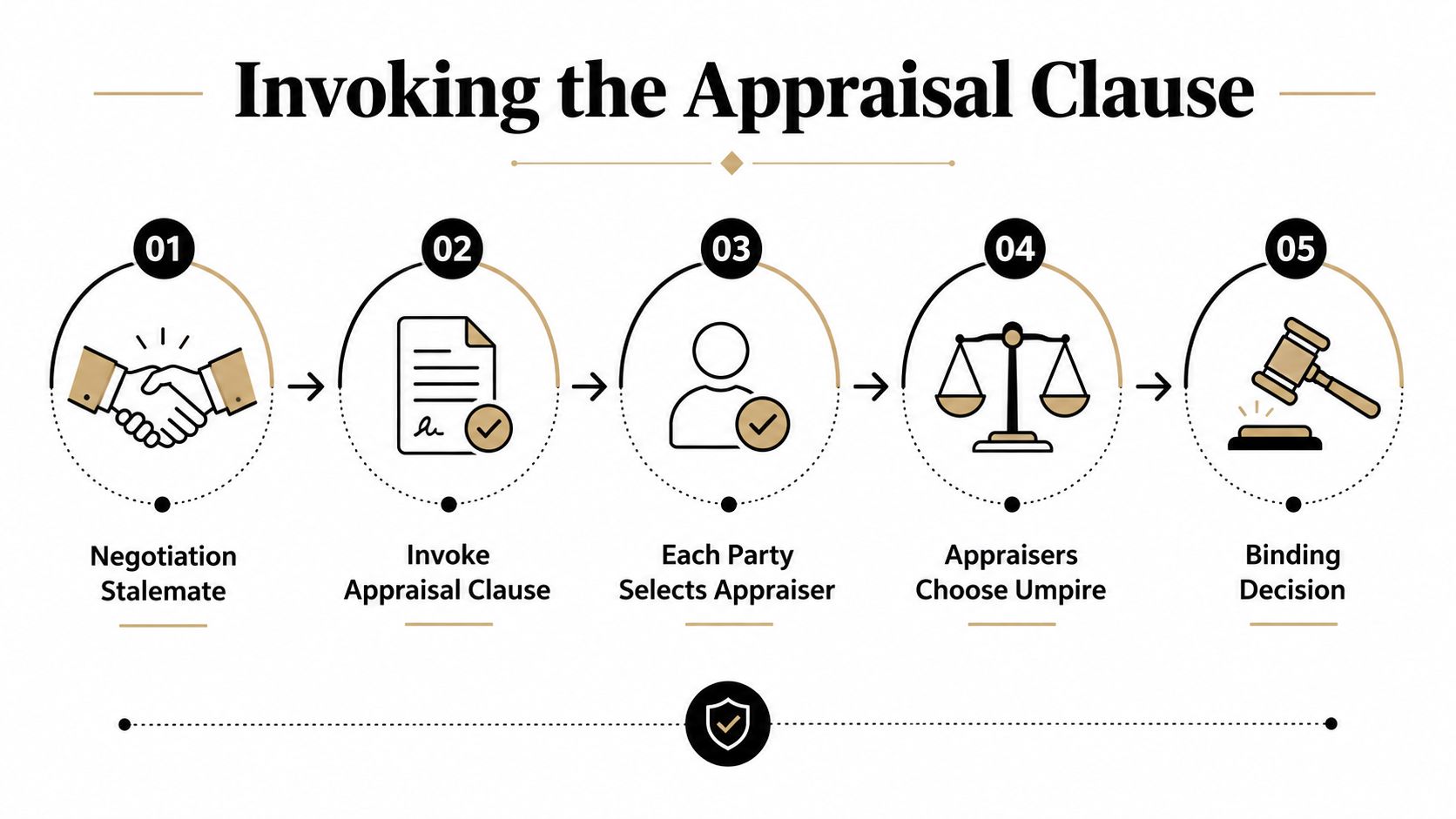
The appraisal procedure
Use this sequence:
- Review the policy: Confirm the appraisal language, notice deadline, valuation scope, and fee provisions.
- Send written notice: State that you invoke the clause for the unresolved ACV dispute, and identify the claim and disputed amount.
- Select an appraiser: Choose an independent appraiser with vehicle-valuation experience, not someone who only repeats the insurer's report.
- Build the valuation record: Give the appraisers independent local comparables, the correct trim and equipment, condition evidence, and written adjustment support.
- Use an umpire if necessary: If the appraisers cannot agree, an umpire resolves the difference under the policy procedure.
The decision may become binding under the policy. Do not invoke appraisal with a weak file. A poor comparable, missing equipment record, or unsupported adjustment can carry into the appraisal and limit the result.
Prepare your evidence before hiring anyone. Ask for each appraiser's fee, the umpire arrangement, and any other expected cost in writing. A guide to the insurance appraisal process explains the roles and procedure before you invoke the clause.
Appraisal can add time to a disputed claim. One timeline guide describes an additional 30 to 60 days at the back end and a broader process lasting 30 to 90 days once initiated, according to total-loss settlement timeline guidance. Treat those periods as planning guidance, not a guarantee.
Choose an appraiser who can explain comparable selection, local market conditions, adjustments, and vehicle configuration in plain language. The right appraiser challenges the insurer's lowball offer with documented market evidence, then keeps the dispute focused on value.
Understanding Diminished Value Claims
A repaired vehicle can still be worth less after an accident. Diminished value is the difference between the vehicle's pre-accident market value and its post-repair market value. The repair may restore appearance and function without restoring the car's market history.
This claim belongs in a separate lane from a total-loss valuation. A totaled vehicle is valued immediately before the crash because the insurer is settling the vehicle's ACV. A repaired vehicle may support a diminished-value claim because the owner still has the car, but the accident history can affect what a future buyer or dealer will pay.
Washington's insurance regulator describes diminished value as the difference between pre-accident and post-repair market value and explains that the claim is typically filed against the at-fault driver's insurer, not the claimant's own carrier, as stated in its auto insurance claim guidance.
First-party and third-party claims
A third-party claim is brought against the at-fault driver's liability insurer. First-party treatment depends on your own policy and state law, and you shouldn't assume that your collision coverage includes diminished value just because it covers physical repairs. Washington and Oregon can differ in how these claims are handled, so policy language and local rules matter.
Proof is the hard part. The claimant carries the burden of showing that the accident caused a measurable market loss, as noted by the National Association of Insurance Commissioners. A repair invoice alone usually proves the work performed, not the vehicle's remaining market loss.
A useful file includes the pre-accident configuration, mileage, condition, repair records, photographs, accident-history information, and a qualified diminished-value appraisal. Comparables should show how similar vehicles with clean histories differ from repaired vehicles in the same market. High-value, collector, late-model, and customized vehicles may deserve closer analysis because buyers can react strongly to accident history and originality.
Don't pursue the claim blindly. Compare the likely value of professional evidence with the time and cost required to obtain it. If the insurer dismisses the claim without addressing the evidence, request a written explanation and preserve the complete correspondence.
Timelines and Common Pitfalls to Avoid
A clean, uncontested total-loss claim can move quickly. Reporting may begin on Day 0, followed by inspection during Day 1 to Day 3, a total-loss decision during Day 3 to Day 7, valuation during Day 5 to Day 10, and a first offer during Day 7 to Day 14. Settlement and release commonly occur by Day 21 to Day 45 if you accept the offer, according to published total-loss timeline guidance.
The process takes longer when you challenge the valuation. Disputed claims can extend for weeks, and appraisal may add substantial time after negotiations stall. Delays also arise when the carrier lacks documentation, the vehicle has a complex configuration, liability remains contested, or storage and salvage issues are unresolved. Do not let an adjuster's schedule pressure you into accepting weak valuation evidence.
Keep the claim moving
Create a follow-up calendar. After every call, send a short email confirming what was discussed, which documents were supplied, and when you expect a response. Ask the adjuster to identify missing items instead of sending an unstructured flood of records.
The most expensive mistakes are avoidable:
- Accepting too quickly: Treat the first offer as a starting point, not proof of fair value. Compare the insurer's vehicles, adjustments, mileage, trim, equipment, and market area with independent comparables.
- Signing without reading: A release may end your ability to pursue additional payment for the same claim.
- Ignoring deductions: Check the deductible, salvage treatment, towing, storage, rental, and every other line item.
- Leaving the vehicle undocumented: Preserve pre-loss photographs, service records, options, mileage, and comparable listings.
- Allowing storage charges to grow: Ask who authorized storage, who pays it, and whether the vehicle can be moved.
- Missing policy requirements: Review notice, appraisal, proof-of-loss, and dispute provisions before deadlines pass.
- Using weak comparables: A different trim, market, or equipment package can undermine an otherwise valid argument.
Red flags include an unexplained valuation change, refusal to provide the complete report, repeated requests for records already supplied, pressure to sign immediately, or refusal to address specific equipment and mileage errors. Request a written explanation and preserve all correspondence. If negotiations stall, obtain an independent valuation review and check whether the policy allows appraisal. The earlier you challenge incorrect math with credible comparables, the more options you retain.
Total Loss Northwest reviews total-loss valuations, prepares independent appraisal reports, and represents vehicle owners through the appraisal-clause process in Oregon and Washington, with diminished-value support available nationwide. Visit Total Loss Northwest for a claim review when the insurer's number doesn't match your vehicle's documented market value.