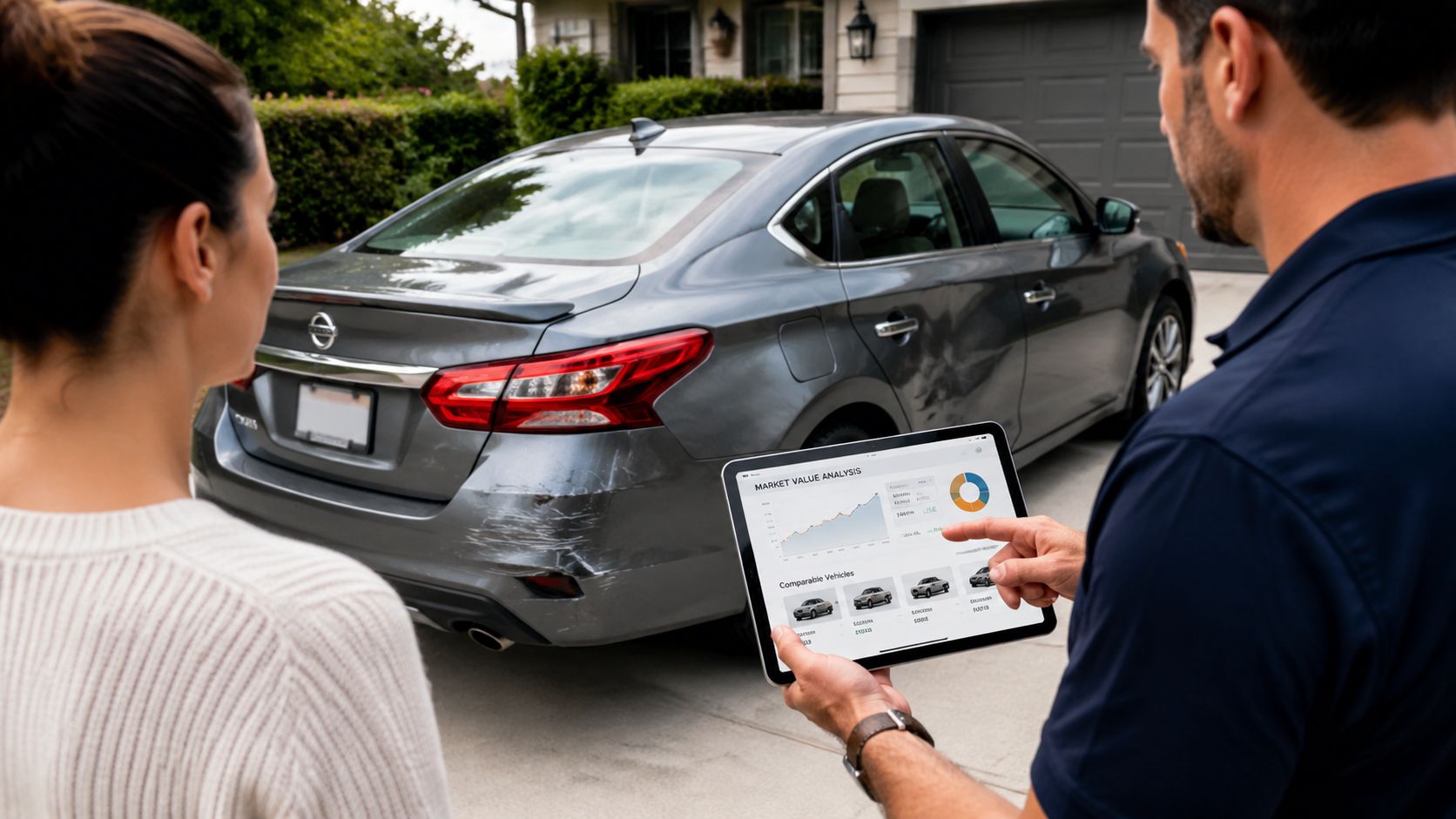
The bumper crumples, the other driver says, “I'm okay,” and you say it too because nobody's bleeding and the cars still roll. Then the headache starts. The tow truck arrives, the shop wants a deposit, the rental counter asks for a card, and the insurance company acts like a clean-looking fender bender should be cheap and simple.
That's the trap in a car accident settlement no injuries claim. No medical bills doesn't mean no loss, and it definitely doesn't mean the insurer is volunteering every dollar you're owed. In 2026, the average no-injury settlement was reported at $9,900, with a typical range of $500 to $25,000. The same source also says the average property-damage auto claim reached $6,770 in 2024, up from $3,628 in 2015. average no-injury settlement and property-damage claim data
A fair claim is usually built from the full paper trail, not the first number an adjuster throws out. If you treat the first offer like the finish line, you usually leave money on the table. If you treat it like a starting point, you can push for the value of the loss.
The Aftermath of a No-Injury Accident
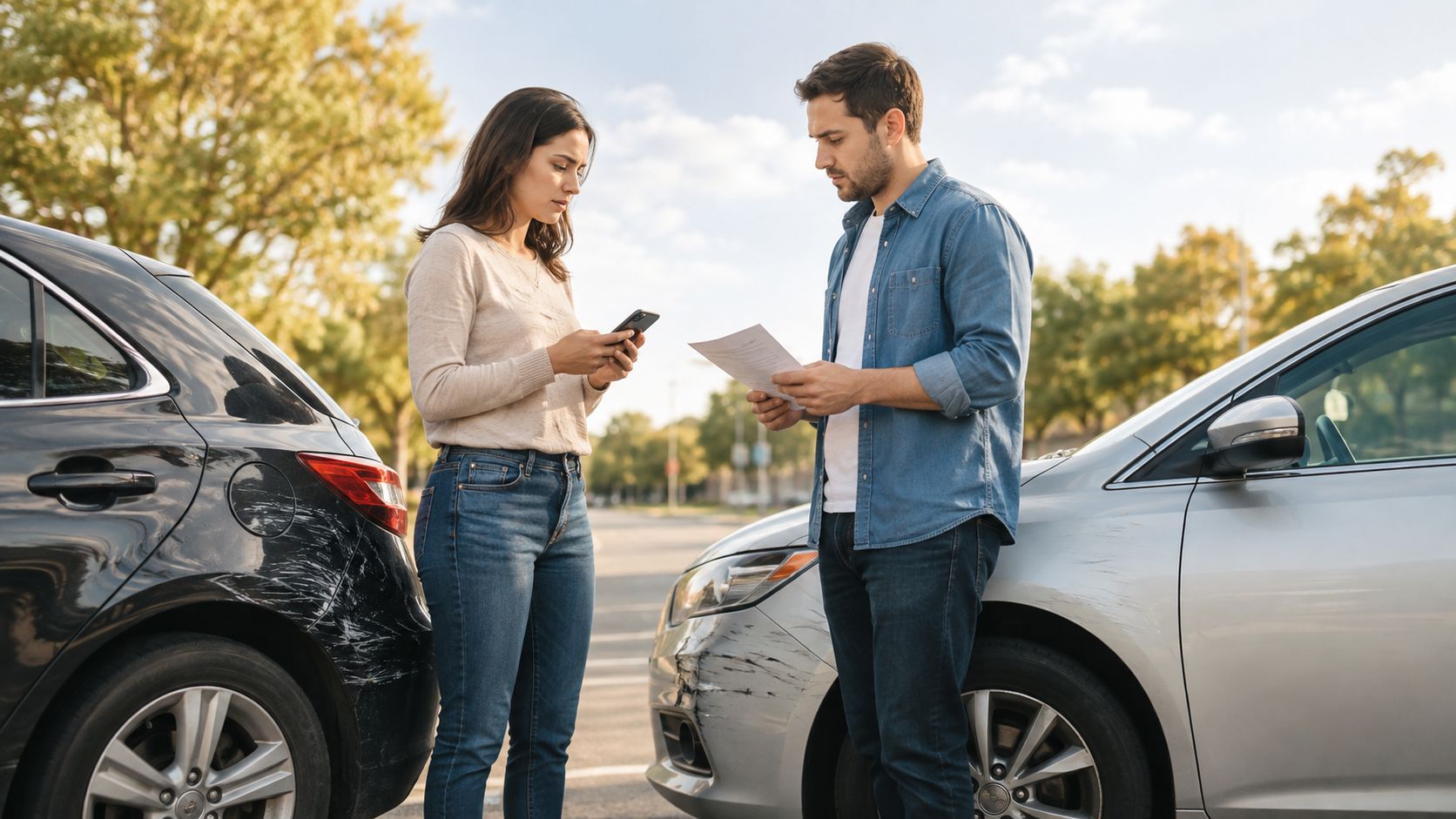
The scene is calm, but the financial damage starts almost immediately. One driver takes photos, the other checks for a police exchange form, and both say nobody needs an ambulance. By the time everyone gets home, the silence has turned into calls, emails, repair scheduling, and a rental bill that wasn't part of the morning plan.
The first offer is usually the narrowest version of your claim
An adjuster often starts with the easiest piece to measure, the visible repair estimate. That looks tidy on paper, but it misses the rest of the economic loss if your car was down for days, stored at a tow yard, or reduced in value after the repair. That's why a car accident settlement no injuries claim can still be meaningful even when nobody sees a doctor.
Practical rule: if the insurer is only talking about the body shop estimate, they're not talking about the whole claim.
A useful benchmark is that no-injury settlements often land under $10,000, but that number only makes sense when you remember the claim is driven by the vehicle loss, coverage limits, repairability, and state law. The consumer summary cited above puts the no-injury average at $9,900 and the range at $500 to $25,000. average no-injury settlement benchmark
Property damage is the center of gravity
Once bodily injury is off the table, the value shifts toward property damage economics. That means the insurer cares about repair cost, actual cash value if the car is totaled, and related out-of-pocket expenses. It does not mean the claim is limited to the cheapest visible dent.
The best mindset is simple. The crash created a money problem, and every dollar tied to that problem belongs in the file. That includes the days you couldn't use your car, the cost to move it, and the value it lost because it now has an accident history.
What Your Settlement Should Cover
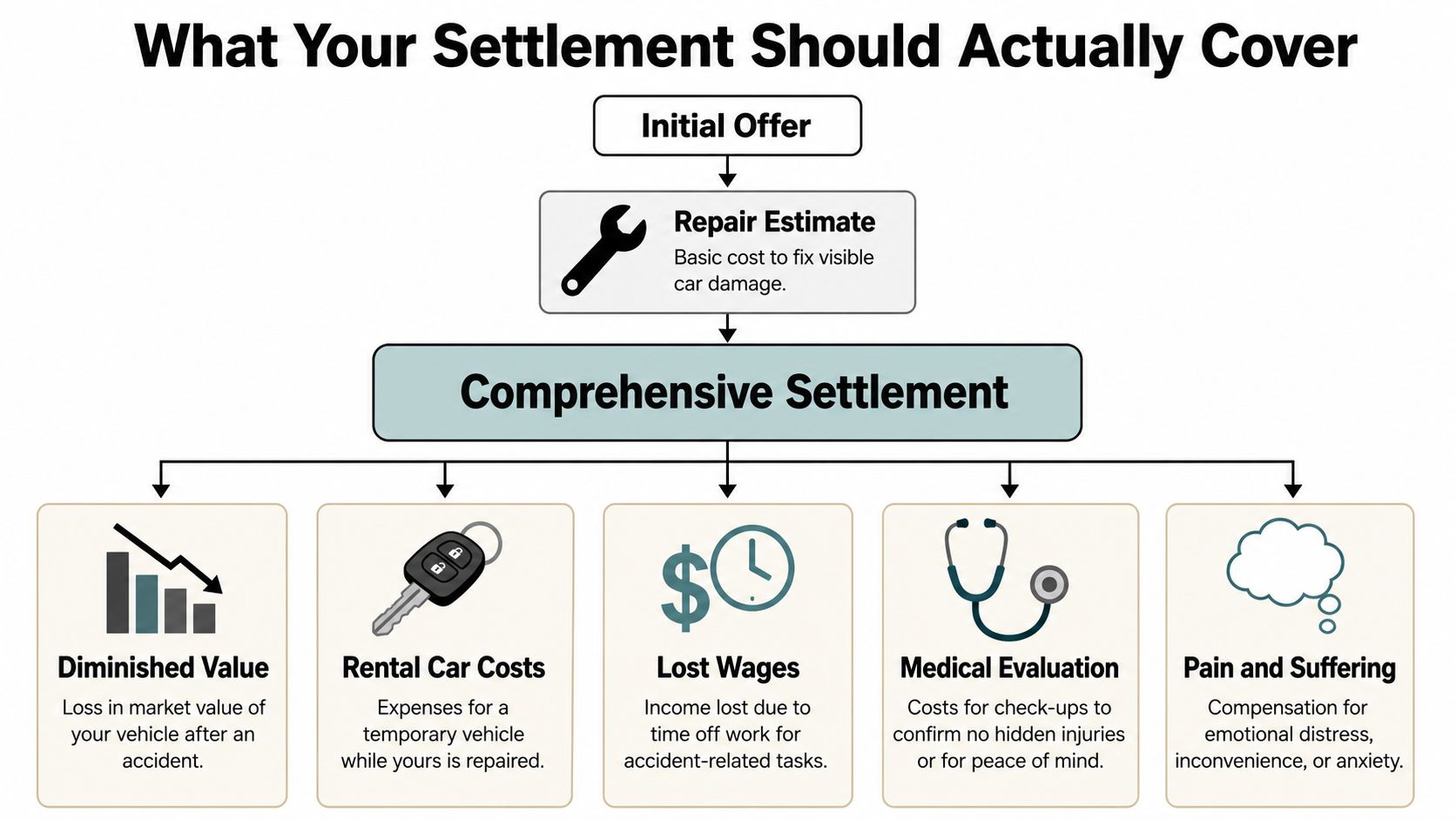
A fair property-damage settlement goes beyond a repair invoice. The right question is simple, what did the crash cost you in money, use, and value? In a no-injury claim, the measure is an economic-damages model, not a pain-and-suffering model, so the settlement should track actual financial loss rather than an injury multiplier. economic-damages model for no-injury claims
Repairs or actual cash value
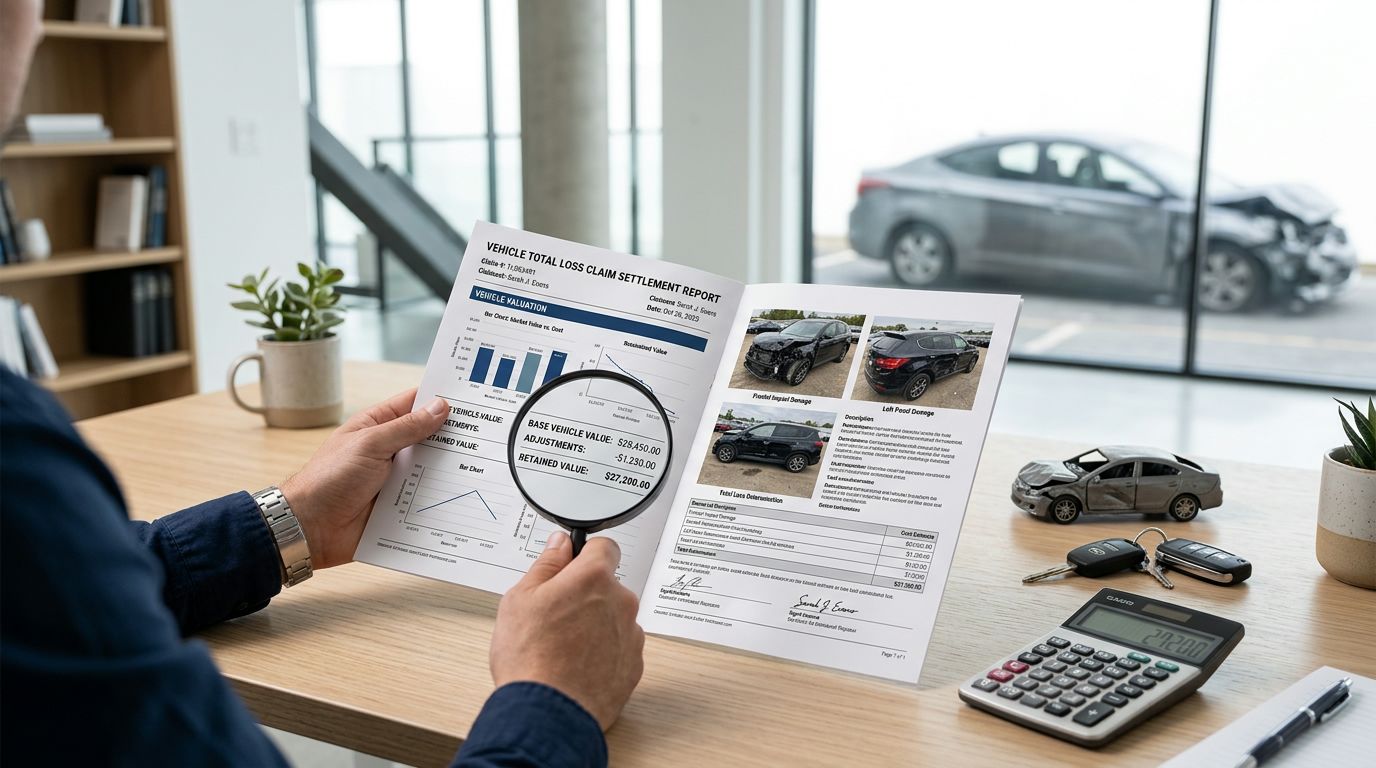
If the car can be repaired, the claim usually starts with the repair estimate plus the related out-of-pocket losses that came with the crash. If the vehicle is totaled, the focus shifts to actual cash value, which should reflect trim, options, condition, and real market comparables. That distinction matters because a totaled car is no longer a repair question, it is a replacement-value question.
The insurer may try to narrow the claim to the visible damage alone. That leaves money on the table if the car's true pre-crash value was higher than the first offer.
Diminished value
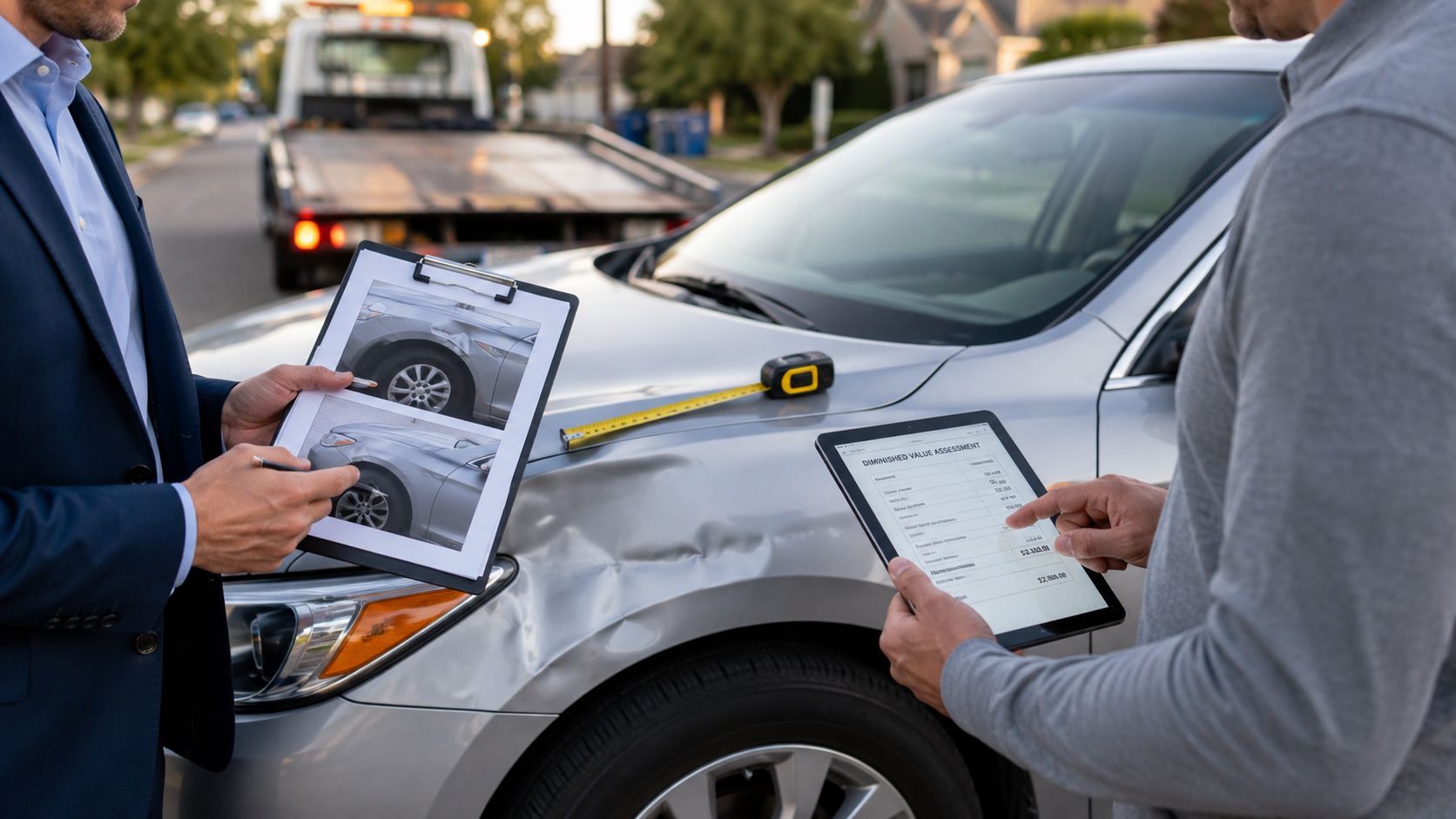
This is the loss many drivers miss until the file is already closing. Even after quality repairs, a car with accident history can bring less on the market than the same car with a clean record. For that reason, settlements should include diminished value when the market loss is real, supportable, and tied to the vehicle's history. diminished value and other overlooked losses
Loss of use and transportation costs
If you had to rent a car, pay for rides, or arrange other transportation while your vehicle was unavailable, those costs belong in the claim file when you can document them. The same applies to towing and storage. Those are direct crash-related expenses, not extras the insurer can ignore.
A car that sits at a tow yard can create avoidable costs fast. Keep every receipt and every invoice tied to the period your vehicle was out of service.
A complete loss list
A complete no-injury claim commonly includes:
- Repair invoices or total-loss valuation, depending on whether the vehicle can be fixed.
- Diminished value, when the market loss is real and supportable.
- Rental car expenses, for the time your vehicle was unusable.
- Towing and storage charges, if the crash forced the car off the road.
- Other documented out-of-pocket costs, as long as they tie directly to the accident.
If you want to push back on a low number, the insurer's first offer is only part of the story. A separate review of depreciation after an accident helps show why a post-repair loss in value belongs in the settlement file, not buried outside it.
Building Your Case with Rock-Solid Documentation
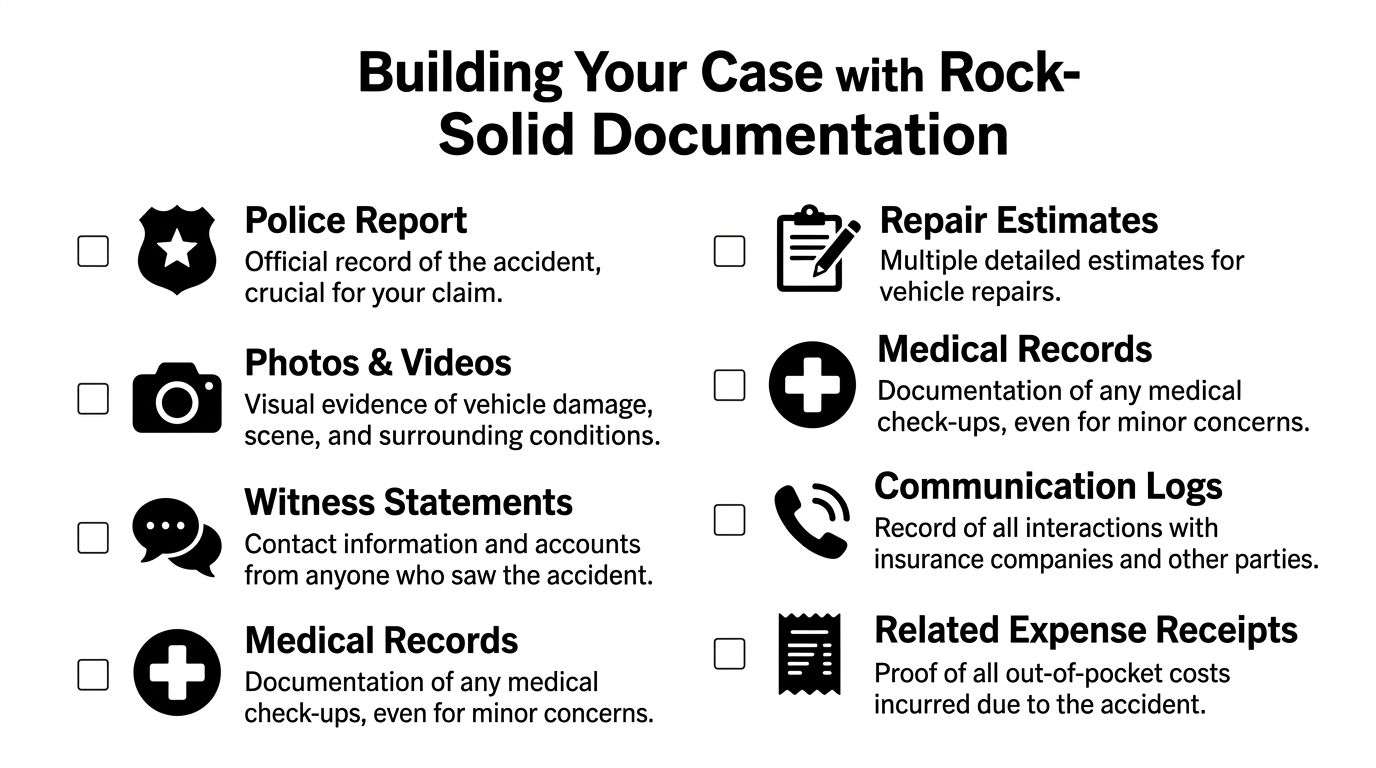
The strength of a no-injury claim usually comes down to proof, not argument. Adjusters respond to paper, photos, invoices, and valuation support more than frustration or urgency. The workflow is straightforward, document the scene, report the crash promptly, obtain independent estimates, and then negotiate from a file that already tells the story. standard no-injury claim workflow
What to capture at the scene
Take wide shots, then close-ups. Wide shots show lane position, intersection layout, skid marks, debris, and road conditions. Close-ups show the exact impact points, broken lights, bent panels, and any paint transfer. If there are witnesses, get names and contact details before everyone leaves.
Practical rule: a good photo set answers three questions, where the crash happened, how the vehicles ended up, and what got damaged.
Why multiple estimates matter
Relying on the insurer's first estimate is a common mistake. Adjusters often start low, and the first draft may omit hidden damage, necessary labor, or parts that aren't obvious from a quick look. Independent estimates give you a baseline for negotiation and make it harder for the insurer to pretend the first number is the only number.
How to prove pre-loss condition
If you want a fair result, you need evidence of what the car was worth before it was hit. That can include purchase records, service history, prior inspection reports, photos from before the crash, and any maintenance receipts that show the car was cared for. The cleaner the pre-loss story, the harder it is for the insurer to discount the vehicle.
Diminished value needs its own file
Many claimants get weak. A repair estimate proves what it costs to fix visible damage, but it doesn't prove market loss after repair. For newer or higher-value vehicles, the better file includes pre-accident photos, the repair history, comparable vehicles for sale, and a clear explanation of why the market will treat the repaired car differently.
A documentation guide like auto claim documentation is useful because it keeps the claim organized around evidence instead of instinct. That matters when the insurer tries to box the file into a single repair number.
Drafting a Powerful Insurance Demand Letter
A demand letter changes the tone of the claim. Instead of waiting for the adjuster to define the case, you define it first, in writing, with the losses itemized and the documents attached. That matters because insurers respond differently when the file looks prepared, organized, and ready for real negotiation.
The strongest letters stay factual. They identify the date of loss, the vehicles involved, fault as supported by the evidence, and every dollar sought. They do not need drama, but they do need precision. The standard workflow, including scene documentation, prompt reporting, independent estimates, and a paper trail of invoices and valuations, is the foundation for the letter. no-injury claim documentation and negotiation workflow
What the letter should include
A solid demand letter usually has four parts:
- Accident summary, written plainly and without argument.
- Liability explanation, tied to the evidence already in the file.
- Damage list, with each loss category itemized.
- Demand amount, supported by the attached documents.
If the car was repaired, the letter should identify the repair invoice, towing, storage, rental, and any other documented loss. If it was totaled, the letter should explain why the actual cash value must control instead of a lowball replacement number.
Good language versus weak language
Strong phrasing sounds like this, “The claim is supported by repair estimates, rental invoices, and vehicle valuation documentation.” Weak phrasing sounds like, “I feel this should be worth more.” The first one is evidence. The second one is a feeling.
A demand letter works best when it reads like a settlement file, not a complaint.
For a valuation-focused claim, the discussion of income approach valuation can help frame why a number should be anchored in real market economics rather than guesswork. Even if you never cite that method directly, the idea is the same, support the number with a transparent method the adjuster can't dismiss easily.
Navigating Negotiations with the Insurance Adjuster
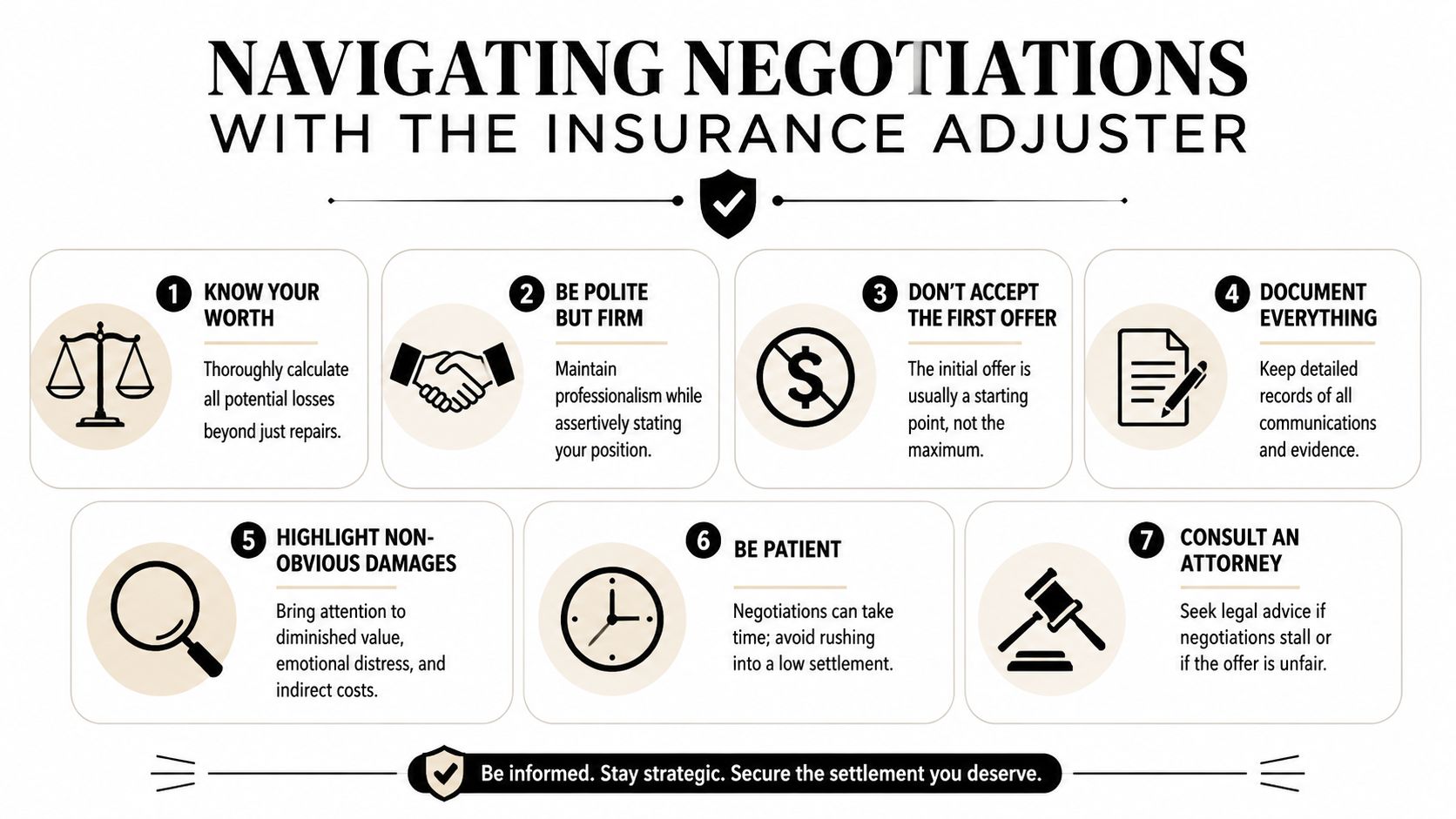
The adjuster's job is to resolve the claim for what the file supports, and the first number is often the insurer's opening position, not the full value of your loss. That does not make the adjuster your personal adversary, but it does mean you should stop treating the call like customer service. If you want a fair payment, you need to negotiate like someone who can prove the claim.
How to talk without giving ground
Keep your tone calm and your answers tight. Confirm the facts, avoid guessing, and do not volunteer side comments that can be twisted later. If the adjuster asks for a recorded statement beyond the basic loss information, slow down and read the request carefully before you agree.
A short, factual conversation protects the file. The less room you give for speculation, the harder it is for the insurer to turn your words into a reason to cut the claim.
The low-offer script you'll hear
A common pattern is some version of, “This is all we can pay,” followed by pressure to close the file quickly. Another pattern is the insurer acting as if a claim without medical treatment deserves little attention. Some carriers rely on that mindset in property claims, which is why the car damage, the rental loss, the towing bill, the storage charge, and any diminished value proof need to stay front and center. insurer no-treatment no-settlement mindset
Do not let the conversation drift into generalities. If the adjuster keeps circling back to a low figure, ask for the basis of the number and the specific documents used to reach it. That forces the discussion back onto the file instead of letting it stay vague.
How to counter without losing control
Your reply should match documents to dollars. Point to the second estimate, the rental receipt, the towing charge, the valuation support, and any evidence of diminished value. If the claim involves a totaled vehicle, insist that the valuation reflect your actual car, including trim, mileage, options, and condition, not a generic substitute that happens to fit the insurer's script.
Stay firm on the hidden losses too. A clean settlement should account for the full property loss, not just the visible damage the insurer volunteers first. That means push for every documented out-of-pocket cost that belongs in the file, because the first offer often leaves those items out unless you put them back in.
Professional reputation matters in these talks as well. Adjusters deal differently with claimants who sound organized, document-driven, and ready to escalate when needed. For a useful look at how credibility shapes negotiation pressure in professional services, see Digital Skyrocket's reputation insights.
When to Call for Backup an Appraiser or an Attorney
If the fight is about value, bring in an appraiser. If the fight is about fault or bad-faith conduct, bring in an attorney. That line matters because the wrong professional can waste your time and still leave the core dispute unresolved.
An appraiser is useful when the insurer undervalues the car, misses comparable vehicles, ignores trim or options, or shortchanges a total-loss figure. That's a valuation dispute, and an independent report can move the conversation back toward market reality. An attorney is the better move when the insurer is denying liability, shifting blame, or refusing to deal fairly with a legitimate property claim.
If you're already sensing a pattern, the clue is usually the argument the insurer keeps repeating. “Your car isn't worth that much” points toward an appraisal problem. “We don't owe anything because of fault” points toward legal help.
For drivers who want a value dispute handled by someone who lives in the appraisal lane, Total Loss Northwest focuses on total-loss and diminished-value appraisals, including reviewing insurer valuation reports, comparable vehicles, trim, mileage, condition adjustments, and deductions. If you need to understand how an insurer's number was built, that kind of independent review can matter more than another phone call with the adjuster.
If you're dealing with a low total-loss number or a repair settlement that ignores diminished value and loss of use, contact Total Loss Northwest and ask for an independent appraisal review. They work on valuation disputes in Oregon and Washington, and they can help you see whether the insurer's number matches the market value of your claim.