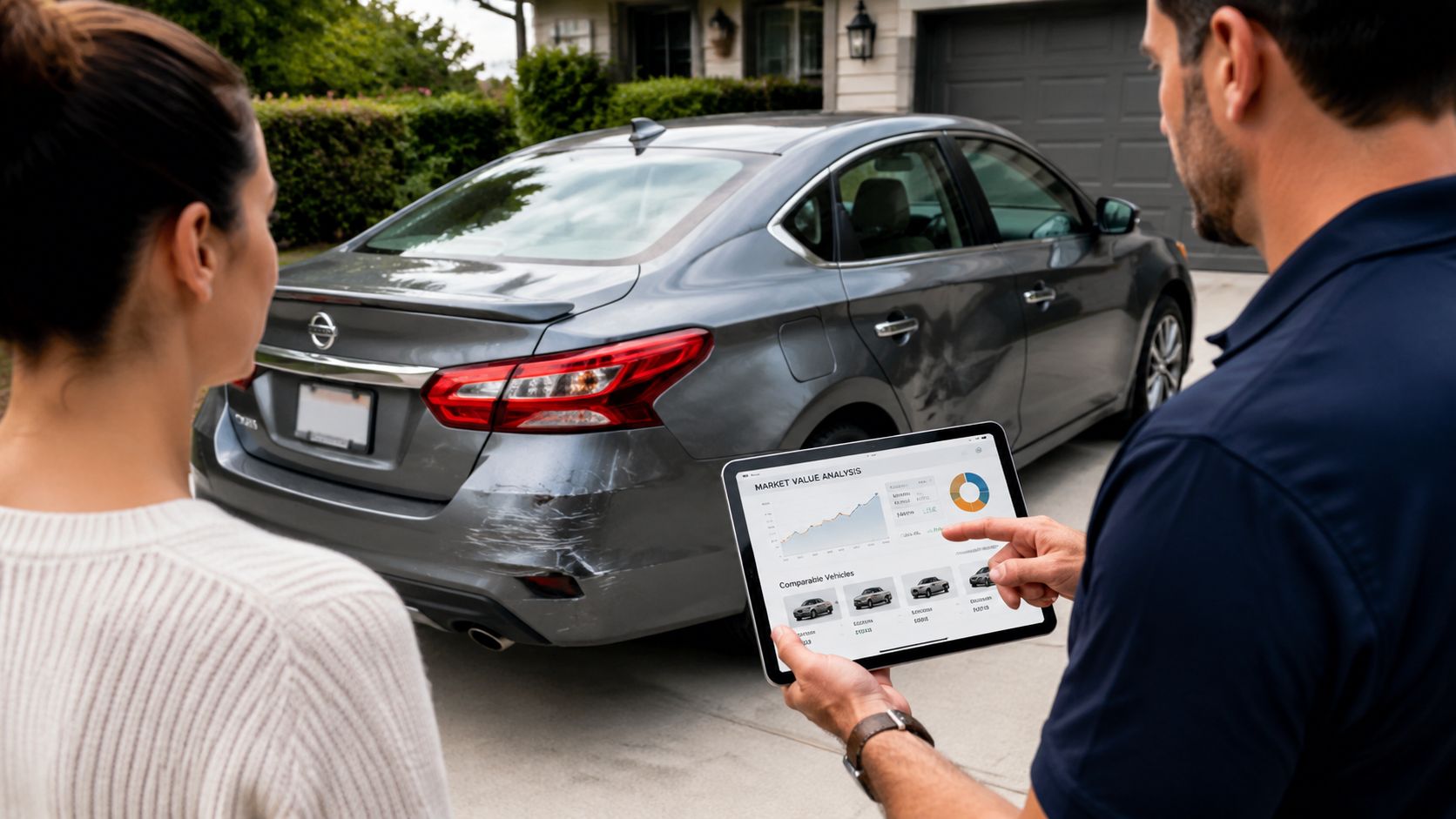
You're staring at a total-loss notice, the car is gone, and the lender still wants every dollar. That's the ugly part of car totaled no gap insurance. The insurer is going to talk in terms of actual cash value, the bank is going to talk in terms of the payoff, and you're stuck in the middle wondering how a wrecked car can still leave you with a bill.
The good news is this isn't a dead end. It's a claims problem, a valuation problem, and often a negotiation problem. If you push the process the right way, you can sometimes shrink the shortfall, slow the lender down, or force a better number before the deficiency balance becomes your problem.
Your Car Is Totaled and You Have No Gap Insurance
The first bad phone call usually goes like this. The adjuster calls the vehicle a total loss, gives you a payout number, and it comes in lower than what you still owe. You run the numbers once, then again, and realize the car can be gone while the loan stays very much alive.
That shock is normal. It happens because the insurer pays actual cash value, not your loan balance. If the payout is lower than the payoff, the borrower is left with the difference. As Kelley Blue Book explains in its total-loss guidance, a car can be fully insured and still leave an unpaid loan balance after a total loss.
Practical rule: Do not treat the first number as final. Treat it as the opening move in a claims file you still have time to challenge.
The part most borrowers overlook is the valuation file itself. You still have comparables to question, condition adjustments to dispute, and policy language to use if the number is weak. If your policy has an appraisal clause, that is the pressure point that can change the result. If you need a plain-English summary of what GAP coverage would have paid, see this overview of GAP coverage.
What you are dealing with is a deficiency balance, not a moral failure. The loan is a separate contract from the insurance claim, and the insurer does not care what you financed the car for. That is frustrating, but it also means your next steps are procedural, not emotional. Use the claim file, push for a better valuation, and make the lender explain the remaining balance before you accept it.
Why Insurers Pay Less Than Your Loan Balance
Insurers price a total loss by actual cash value, and that is not the same thing as what you owe on the loan. They look at comparable sales, condition, trim, mileage, and the local market, then they settle on a figure that reflects what the car was worth right before the crash. If you financed aggressively, rolled in taxes or fees, or kept the loan term long, the settlement can come in short and the gap lands on you.
Depreciation is the reason this happens so often. New vehicles can lose value fast, and that early drop is exactly how borrowers end up underwater before they have paid much principal. Total-loss claims also make up a meaningful share of collision claims, so this is not a rare edge case. It is a predictable one, especially for drivers who bought with little money down.
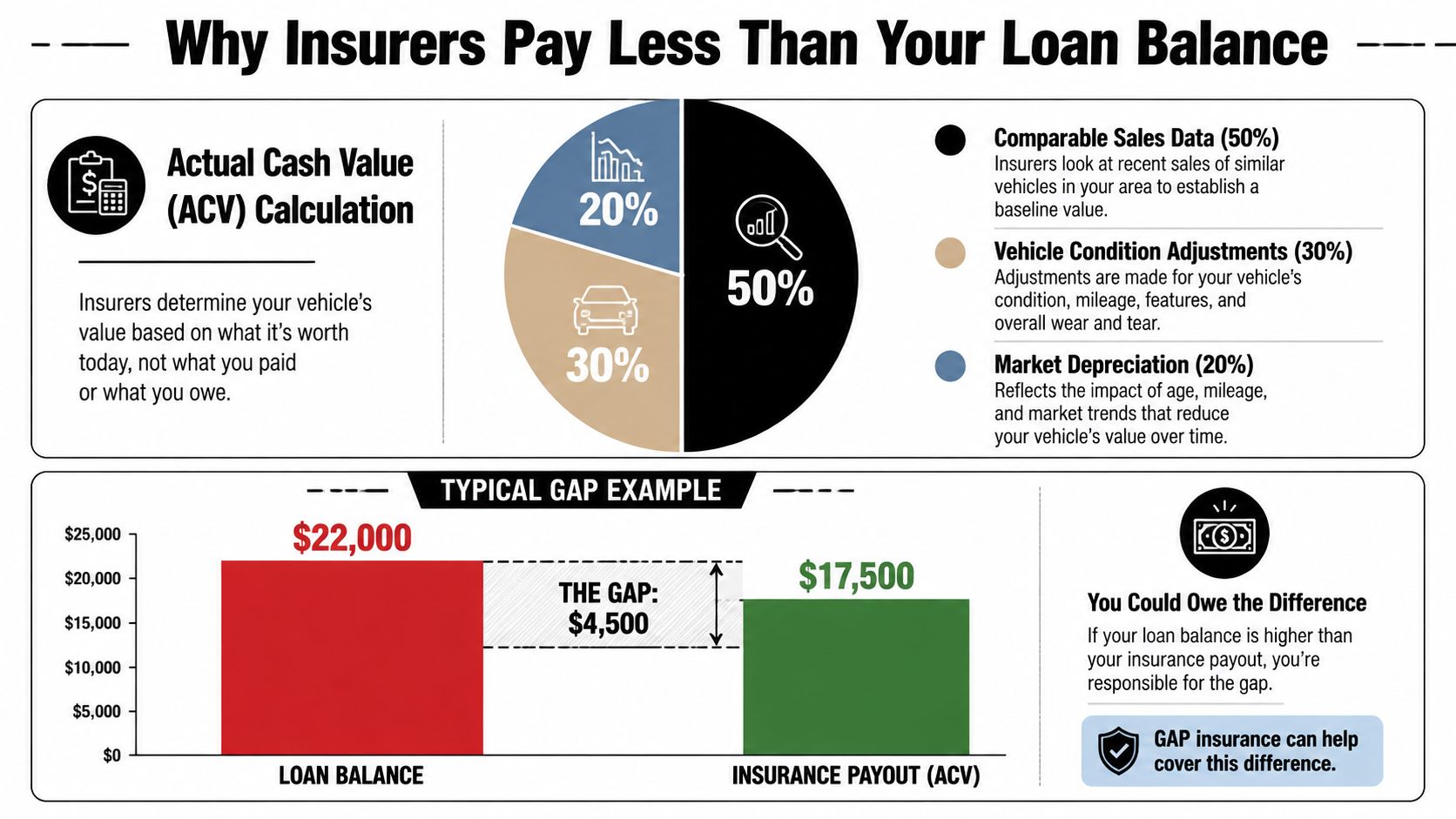
How the valuation gets built
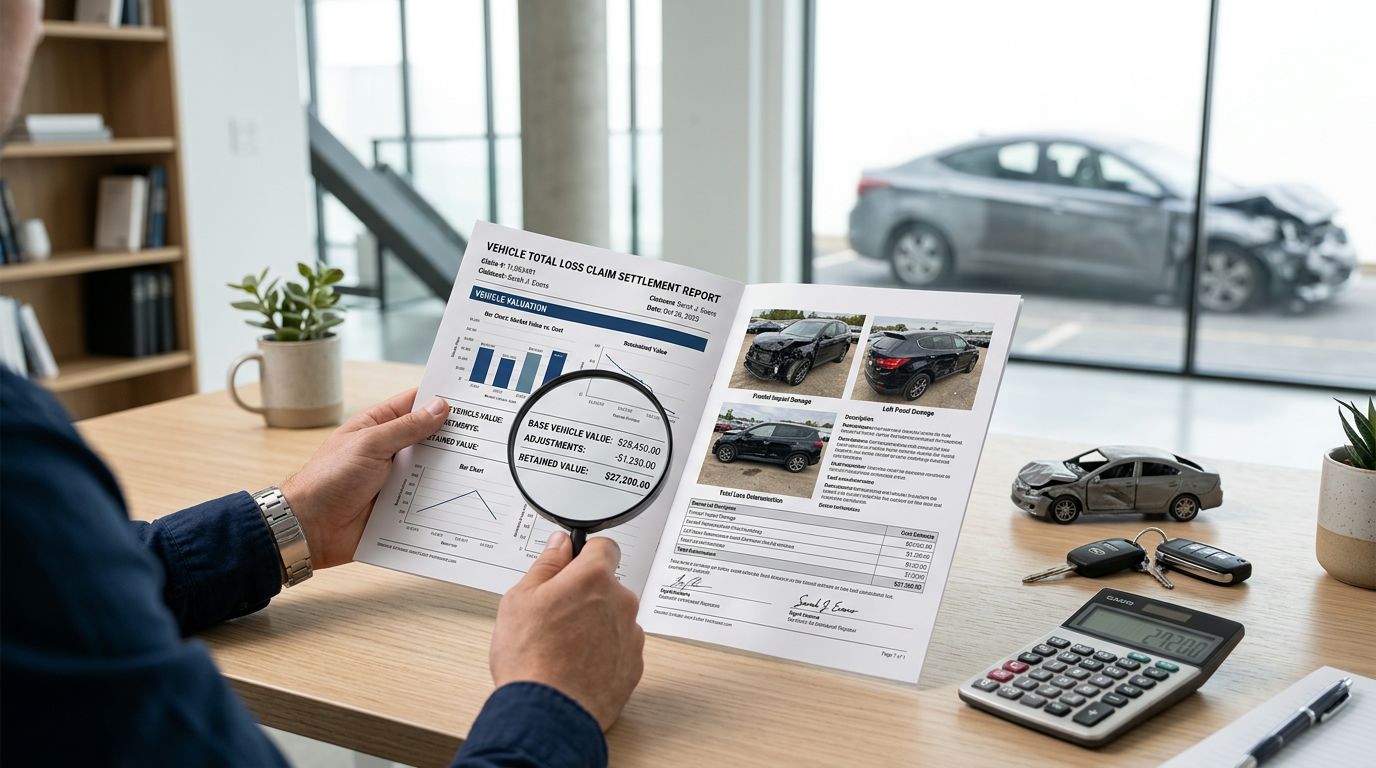
The insurer's report starts with recent sales of similar vehicles, then applies condition adjustments, mileage adjustments, and depreciation logic. If the file misses an option package, undervalues the trim, ignores aftermarket equipment, or assumes worse pre-loss condition than you had, the offer comes in low. That is why the first move is never to accept the number at face value. It is to inspect the math and force the adjuster to defend it.
Your own evidence matters here. Pre-loss photos, service records, tire receipts, repair invoices, and listings for cleaner comparables can all expose a weak valuation. When the report leans on bad comparables or sloppy condition notes, you push back with better data and demand a revised file.
A lender does not care that the insurer's number feels thin. It wants the check applied and the loan closed. That is why the payout gap turns into a deficiency balance, and that balance has to be handled with the insurer and the lender in separate conversations. The insurer is paying the car's value. The lender is still collecting the note.
Immediate Actions to Take After a Total Loss Declaration
The first 72 hours matter. Don't wait for the file to drift while everyone “reviews” it. Get the valuation, lock down your documents, and stop any sloppy paperwork from narrowing your options.
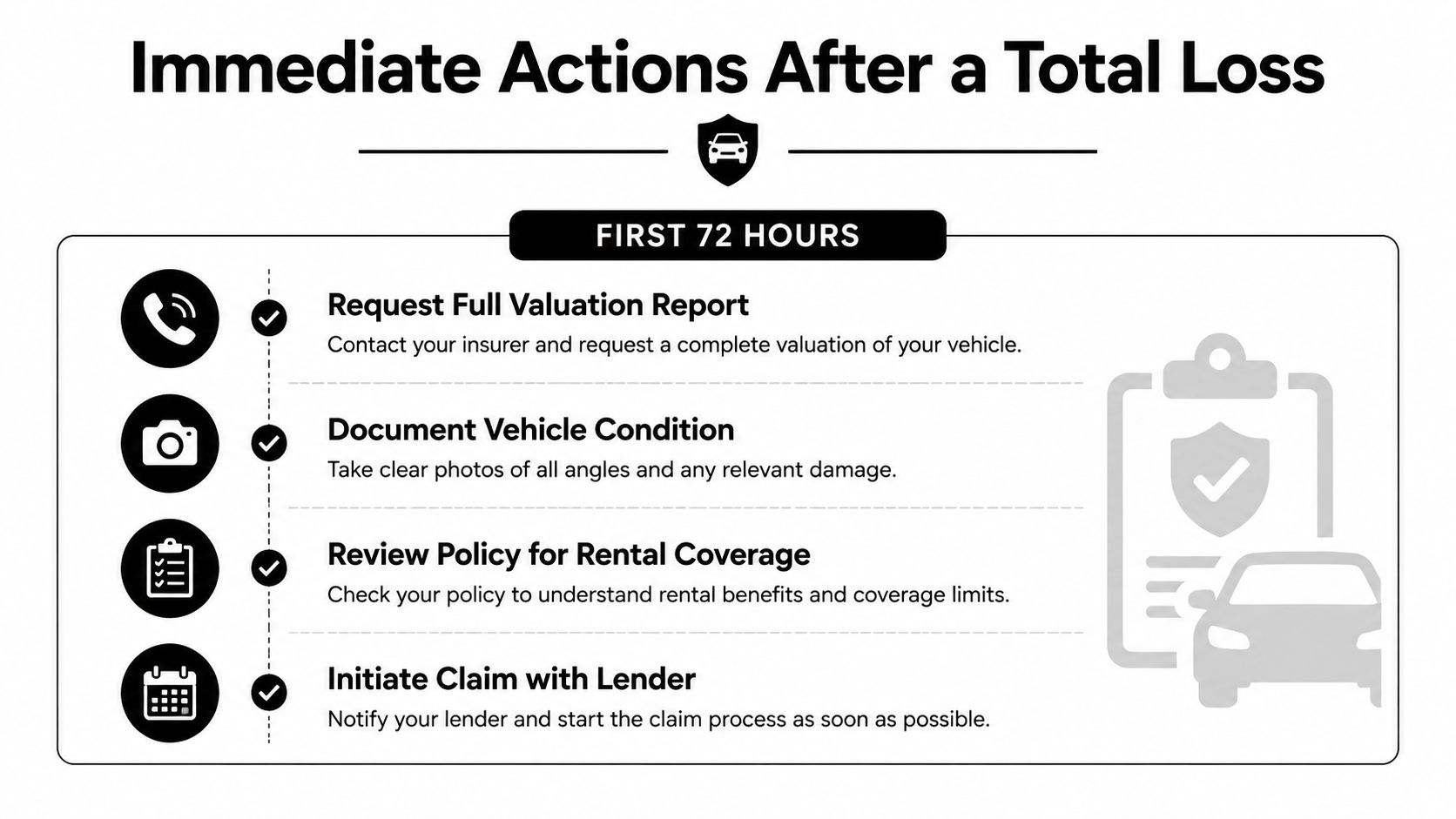
Start with the insurer. Ask for the full valuation report, not just the final number. You want the comparable vehicles, the condition assumptions, the mileage adjustments, and every line item that got used to reach the settlement.
Then build your own file.
- Document the car's condition: Gather pre-accident photos, service records, tire receipts, repair history, and anything that proves the vehicle was cleaner or better equipped than the report suggests.
- Notify the lender immediately: Tell the lienholder the car has been declared a total loss and ask for the exact payoff amount in writing.
- Protect your settlement rights: Don't sign a release until you've read the valuation and checked the numbers line by line.
- Track every call: Save names, dates, claim numbers, and what each person promised.
The tow yard is another place people forget. If you still have access, photograph the car before it moves again. Body damage, wheel condition, interior wear, and missing equipment can all matter if the insurer is trying to write the car down harder than it should.
The most common mistake is stopping loan payments because the car is wrecked. Don't do that unless the lender specifically tells you otherwise in writing. If the claim gets delayed and you stop paying, you're handing them a credit problem on top of a total-loss problem.
A phone call with the lender should happen early, not after the check is already moving. Ask what documents they need, whether they'll accept a payoff directly from the insurer, and what happens if the settlement is still short. That's boring work, but boring work protects credit.
How to Challenge a Low Total Loss Settlement Offer
Do not accept the first offer just because it arrived with official language. The first number is often the easiest number to produce, not the most accurate one. If the report misses real comparables or discounts the car too aggressively, you have room to push back.
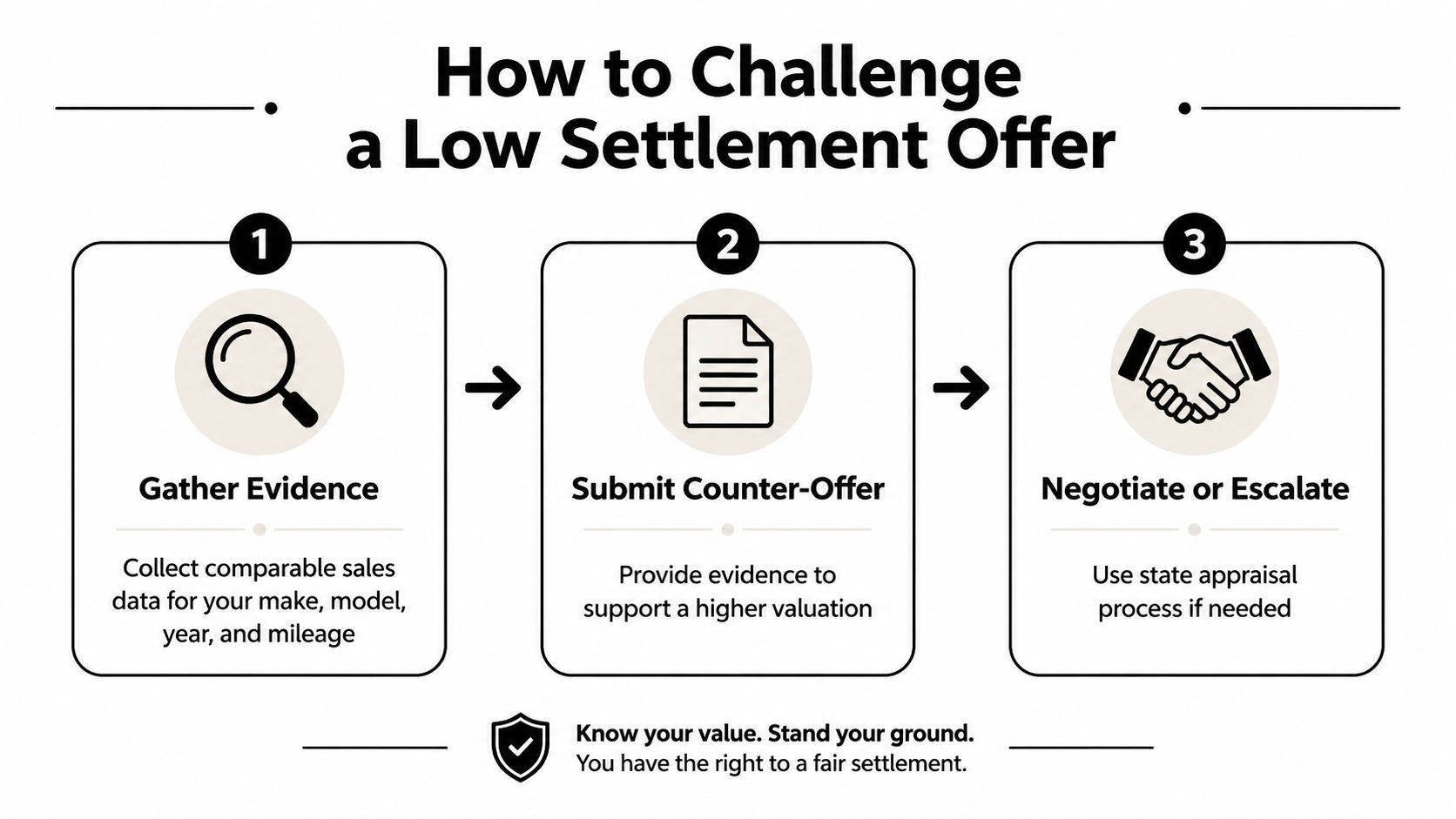
The strongest challenge starts with better evidence. Pull recent local sales for the same year, make, model, trim, mileage range, and equipment. Then match those against the insurer's comparables and look for the usual weak spots, wrong trim, missing options, geographic mismatches, or vehicles in worse condition than yours.
Use an independent appraiser when the file is thin
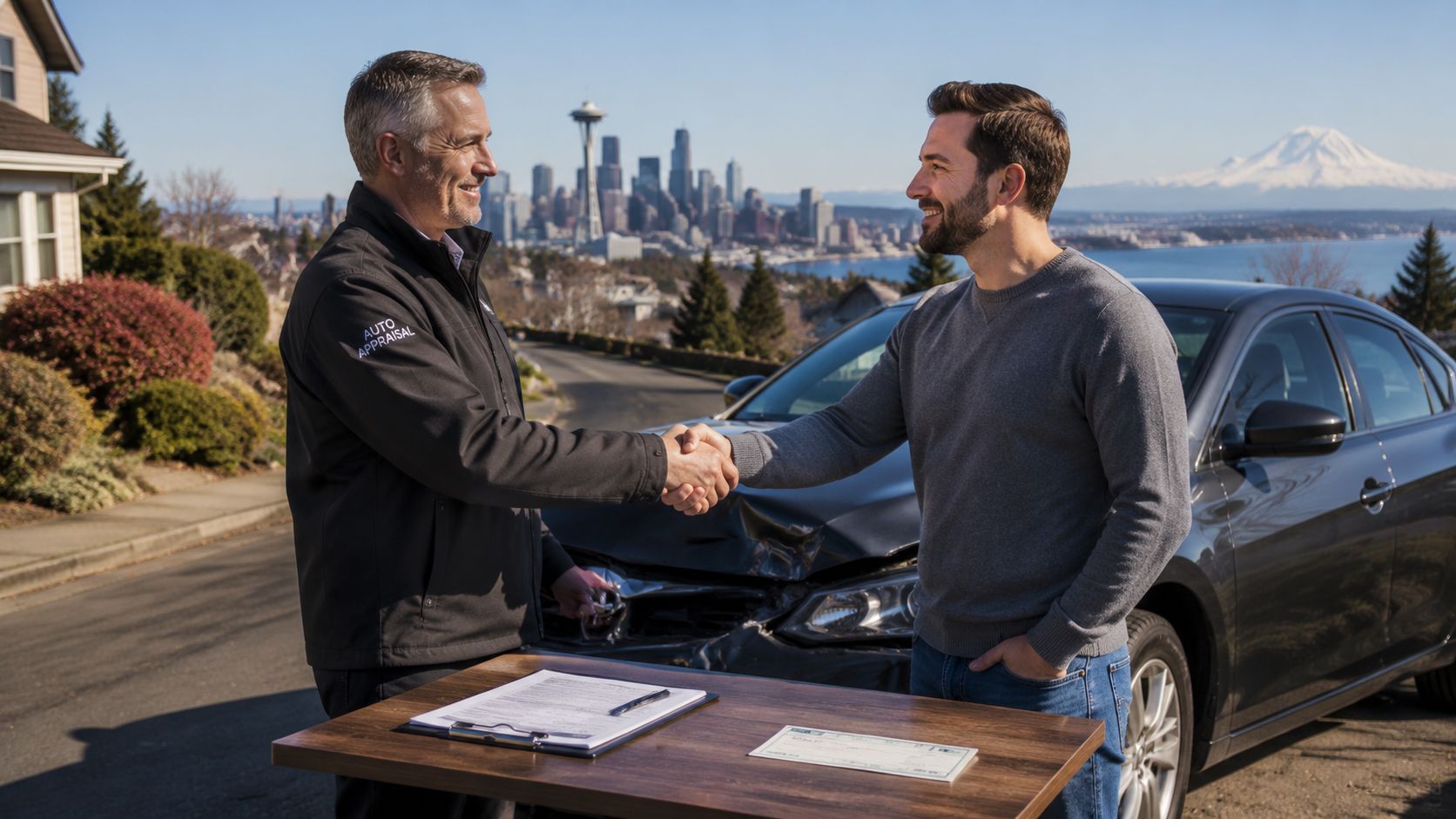
A certified independent appraiser gives you a cleaner valuation than a casual phone complaint ever will. Good appraisals explain why the insurer's number is off, identify the missing adjustments, and support a higher market value with a paper trail that can survive a real dispute.
That matters because the insurer's software isn't neutral. It's built to produce a settlement number from a database, and databases only work when the inputs are right. If your pre-loss condition was better than average, or the car had meaningful aftermarket upgrades, the report should reflect that.
Invoke the appraisal clause when the fight stalls
Most auto policies include an appraisal clause. In plain English, you hire an appraiser, the insurer hires one, and if the two disagree an umpire breaks the tie. That process moves the valuation out of the adjuster's comfortable lane and into a more structured dispute.
This is exactly the kind of fight Total Loss Northwest handles for drivers in Oregon and Washington, using the appraisal clause to pursue a real market-value report instead of a soft insurance estimate. If you want a deeper example of how that dispute path works on underwater claims, this guide on underwater car loans is the right companion read.
Use whatever evidence you have, but use it in the right order. First, compare. Then, counter. Then escalate if the insurer won't move.
Best leverage point: A well-documented counteroffer usually beats an angry phone call because it gives the adjuster something they can actually approve.
If you're fighting a low settlement, focus on facts that change price, not arguments about fairness. Recent sales, documented condition, and correct equipment data carry more weight than emotion ever will.
Negotiating the Deficiency Balance with Your Lender
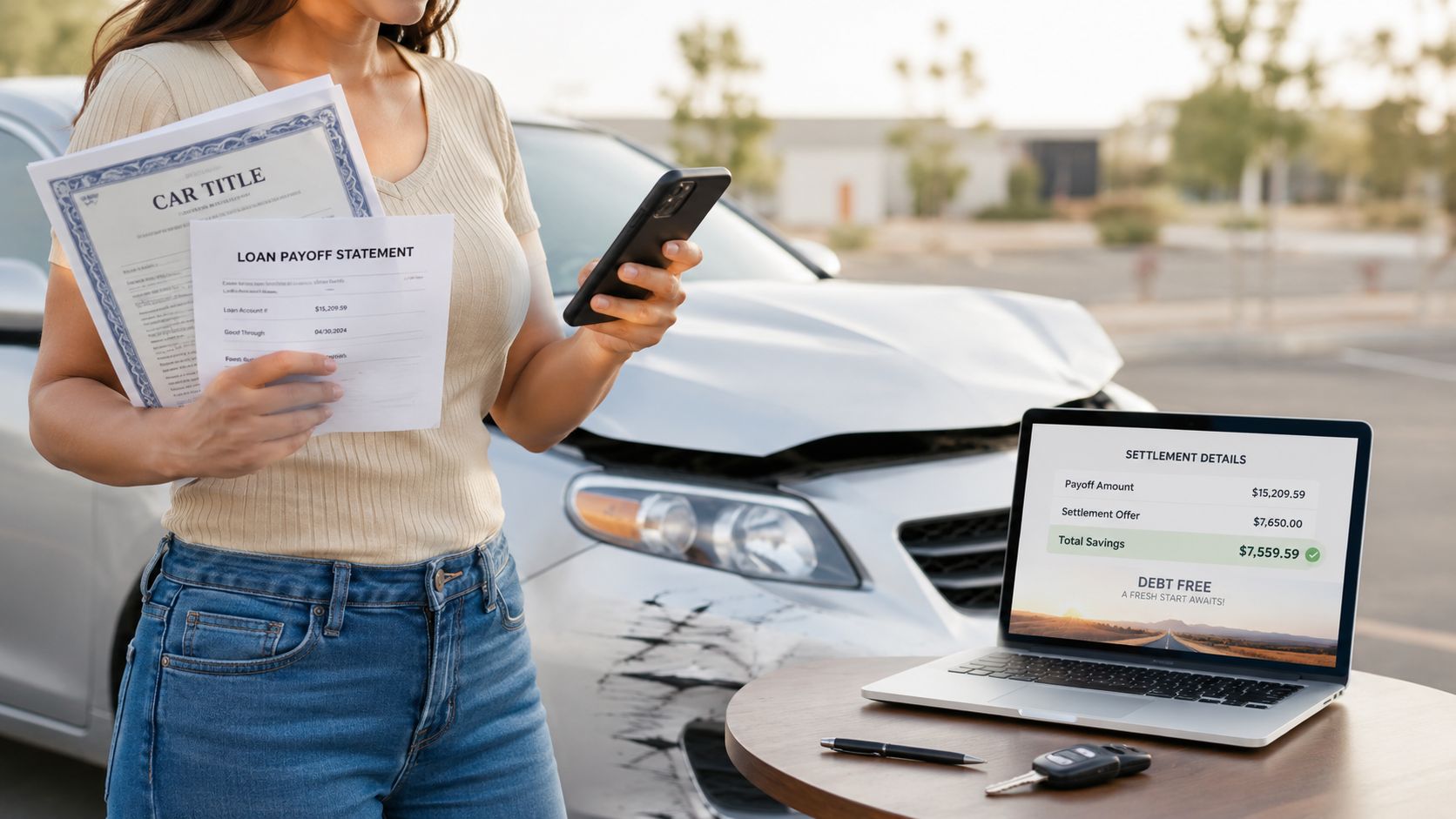
Once the insurance number is final, the lender still gets paid only what's left after the settlement. If the check doesn't clear the loan, the remaining amount becomes your problem, and that's where speed matters. Lenders usually want action quickly after the payout lands, so don't let the file sit untouched.
Start by asking for a payment plan. Some lenders would rather structure the deficiency than push it to collections, because a workable plan is cheaper than a messy recovery process. If you can't handle the full amount, ask whether they'll consider a reduced lump-sum settlement.
Get the agreement in writing
Do not send money on a verbal promise. If a lender agrees to a payment arrangement or a discounted payoff, get the terms in writing first. You want the exact amount, due date, and statement that the agreement resolves the remaining balance.
If the debt is large or the lender gets aggressive, talk to a consumer attorney before the file hardens into collections. That's especially true if they threaten litigation, charge-off, or repeated collection calls. For a useful comparison of debt outcomes in another state context, BDJ Express Law's discussion of bankruptcy versus repossession in Utah is a solid reference point on how lenders think about recovery versus write-down.
A few lender tactics help you.
- Ask for a hardship review: Some lenders will look at your income, expenses, and the total-loss timeline before deciding how hard to press.
- Offer a realistic lump sum: A modest settlement that gets paid now can be more attractive than months of chasing you.
- Keep every promise small and specific: Overcommitting only makes the follow-up worse.
The key is not to sound desperate. Sound organized. Lenders respond better when they see a borrower who understands the account and can move quickly, not someone hoping the problem disappears.
Salvage Title Options and State Rules for Oregon and Washington
A totaled car isn't always worthless as metal and paperwork. Sometimes the buyback makes sense, but only if the math works and the state rules won't create a second headache. If you're thinking about keeping the vehicle, treat that as a separate decision from the insurance claim.
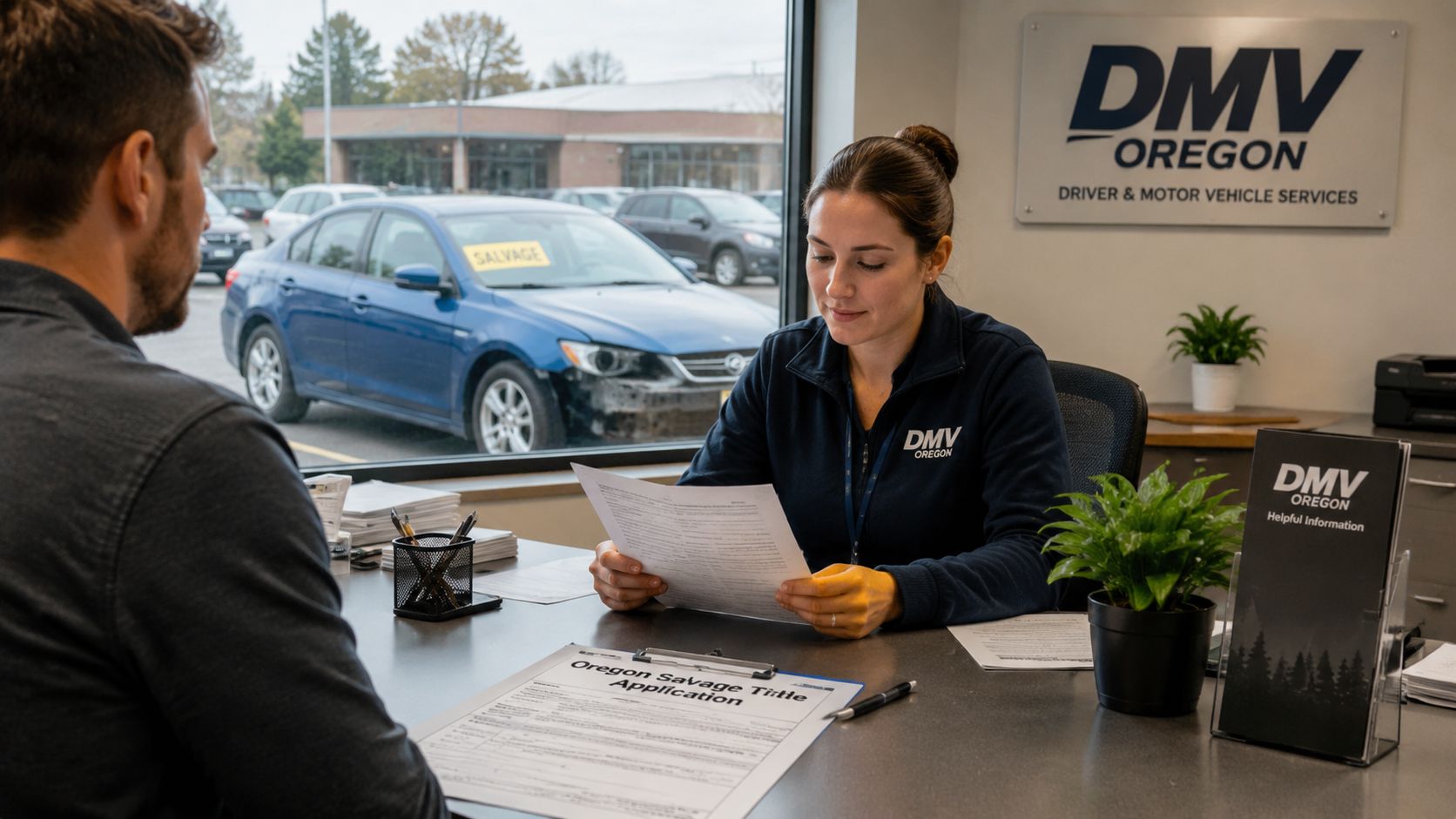
Start with the financial question. If the insurer lets you retain the vehicle, the buyback reduces the cash settlement, which can also affect how much room you have left to attack the deficiency balance. If the car is mostly cosmetic, rare, sentimental, or worth repairing for a very specific use case, the buyback can make sense.
Know the paperwork before you say yes
Oregon and Washington both treat salvage and rebuilt vehicles as a title issue, an inspection issue, and an insurance issue. A salvage car usually can't just go back on the road as if nothing happened. You'll need to follow the state's process for inspection and title branding before resale or normal use becomes realistic.
That's why the “keep it” decision should never be emotional. If you buy it back but can't afford the repairs, inspection, or insurance friction, you've traded one problem for another. The car might still be useful for parts, a hobby build, or a very specific rebuilt-title path, but that's a niche call, not a default move.
If you want the practical registration side spelled out, this salvage vehicle registration guide is the right starting point.
The clean rule is simple. Keep the vehicle only if the post-loss plan is real, the repair math is reasonable, and the title consequences won't trap you later. If those boxes aren't checked, let the insurer take it and focus on the claim balance instead.
Frequently Asked Questions About Total Loss Without Gap Insurance
What if I wasn't at fault?
You can still be left owing money if the at-fault driver is uninsured, underinsured, or the fault decision drags on. The insurance payout is still tied to actual cash value, so being right on liability doesn't automatically erase the shortfall.
Does subrogation solve the lender problem right away?
Usually not. Subrogation can take time, and your lender may still expect the payoff on its own timeline. That's why you shouldn't assume a third-party recovery will arrive before the deficiency becomes due.
Can I buy GAP after the loss?
No. GAP has to be in place before the total loss happens. Once the car is already totaled, you're in claim management and lender negotiation, not coverage shopping.
Is an independent appraiser worth it?
Yes, when the insurer's valuation is thin, the comparables are poor, or the settlement is far enough below payoff that a better number would change the outcome. If the gap is small, the appraisal might not be worth the fee. If the shortfall is large, it often is.
What if the lender keeps calling?
Respond quickly, keep it in writing, and ask for the account status plus next steps. Silence makes a small deficiency feel like a default problem, and that's a bad trade.
The core lesson is simple. A total loss without GAP insurance is stressful, but it's not the same thing as being powerless. The valuation can be challenged, the lender can be negotiated with, and the buyback decision can be made on purpose instead of panic.
If you're dealing with a totaled car, a low settlement, and a loan balance that still doesn't make sense, Total Loss Northwest can review the valuation, push the appraisal clause, and help you pressure the file the right way. Visit Total Loss Northwest if you want a straight appraisal review and a practical plan for the deficiency, not a shrug from the insurer.