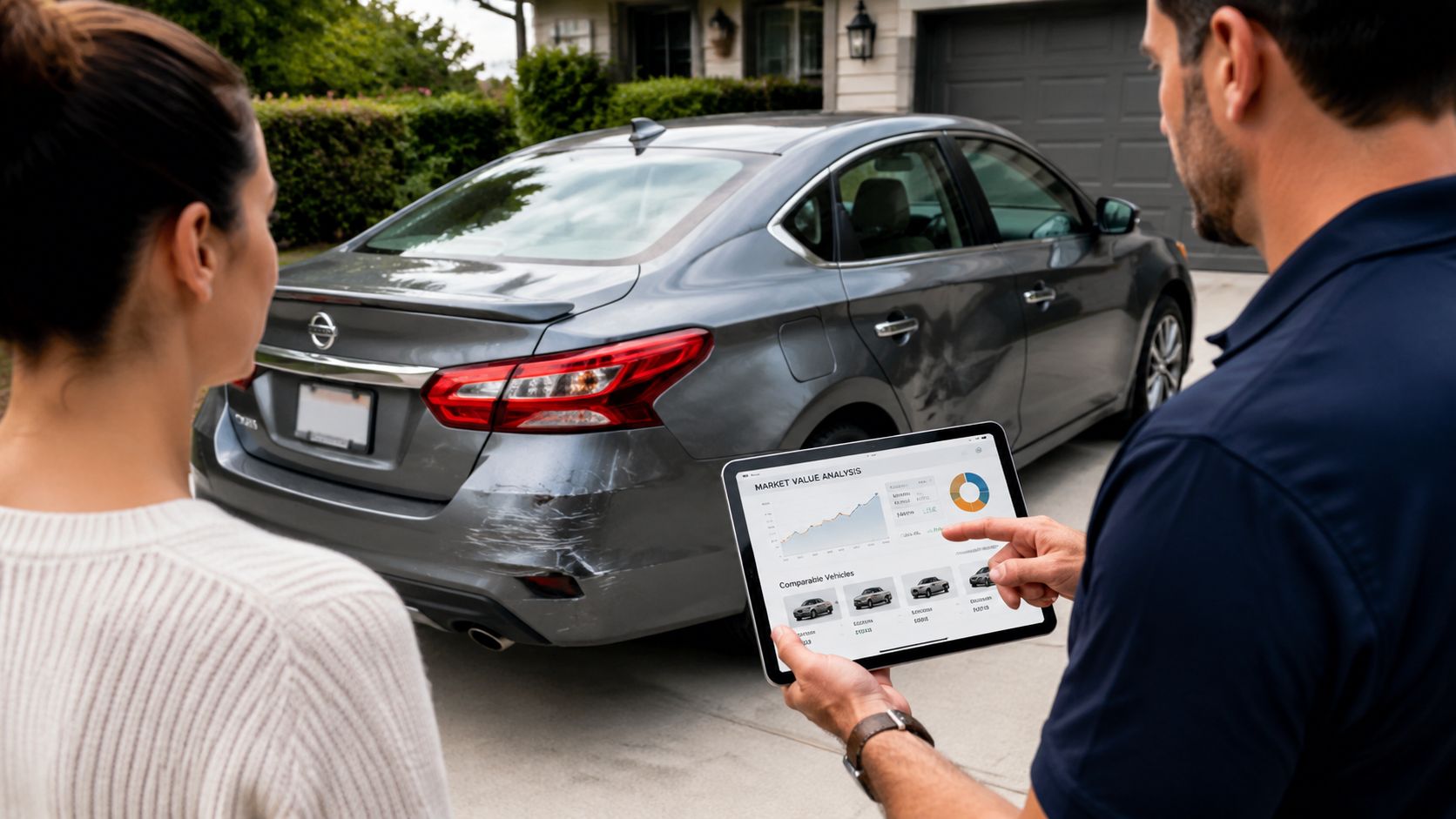
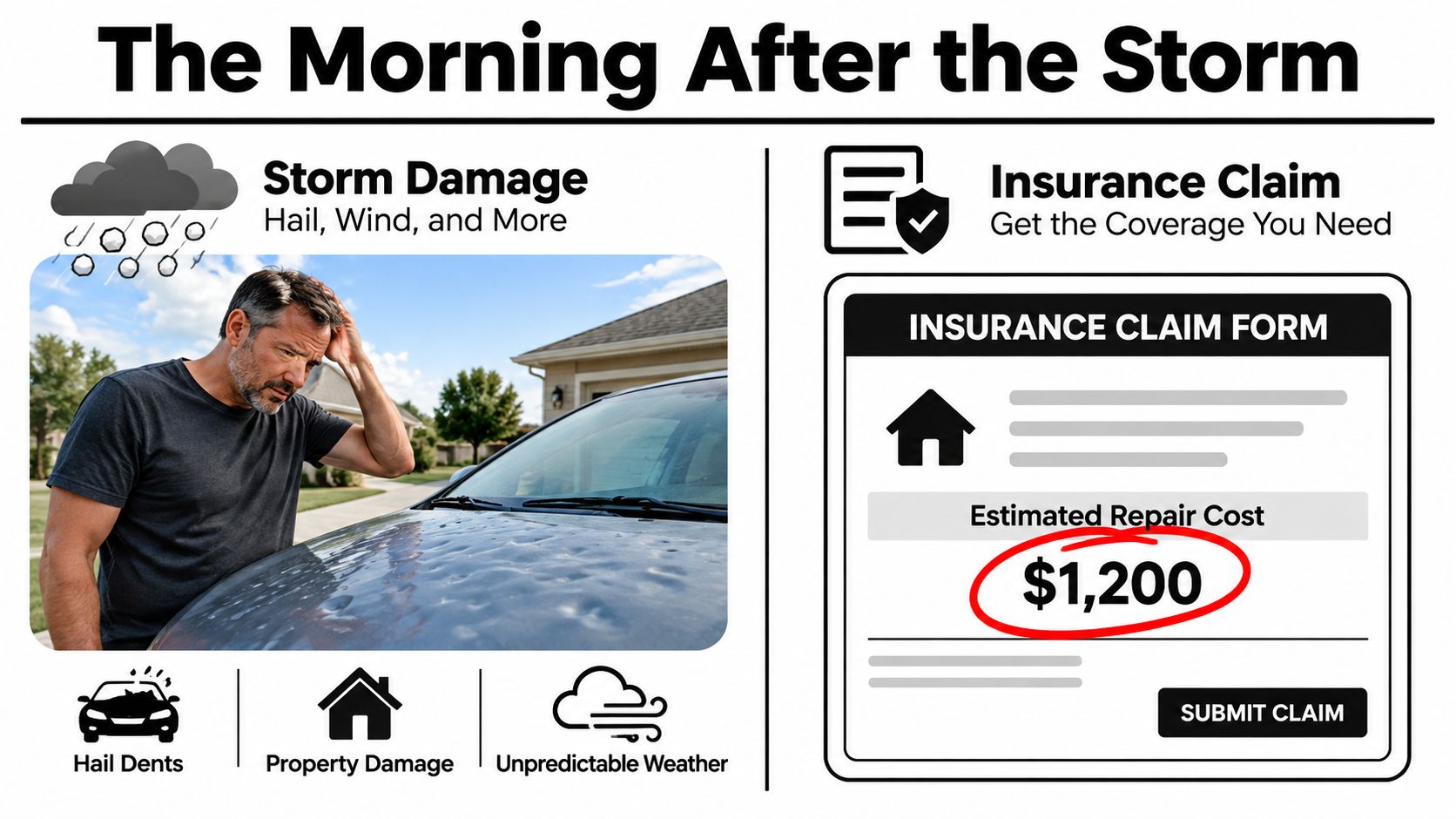
You walk outside after a hard storm and see the damage before you even reach the driver's door. Small dimples cover the hood, the roof looks uneven in the clearing light, and the insurer's first estimate treats the vehicle as if it needs nothing more than a quick cosmetic repair. That moment creates two separate questions: what physically happened to the car, and what is the car worth now?
A credible hail damage assessment has to answer both. Dent counting matters, but so do panel material, paint condition, repair method, local labor, prior damage, vehicle equipment, and the market value used in a total-loss calculation. The workflow below reflects the practical sequence independent appraisers use when inspecting vehicles in Oregon and Washington, where a rushed phone call rarely builds the evidence needed to challenge a weak estimate.
The Morning After the Storm
The first mistake many owners make is calling the insurer before documenting anything. The driver is understandably frustrated, but an emotional report over the phone doesn't show where the hail struck, how dense the dents are, or whether the carrier's estimate accounts for the vehicle's actual market position. Start with a calm record while the car remains in the same place and the storm is still easy to connect to the damage.
Take wide photographs of the entire vehicle, the driveway or parking area, and any nearby surfaces that show fresh impacts. Save the date and location, write down when the storm occurred, and preserve any weather alerts or neighborhood photographs. If the vehicle is under cover, don't move it until you've captured the condition as found, unless leaving it there creates a safety problem.
The same discipline applies to property around the vehicle. If the storm affected your home, a practical guide to roof damage from hailstorm can help you recognize visible indicators without walking onto the roof. Ground-level observations, gutter marks, and attic evidence can support the broader storm timeline, but they don't replace a vehicle inspection.
Separate the physical question from the value question
Not every hail-damaged vehicle is a total loss. A car with numerous shallow dents may be repairable through paintless dent repair, while a vehicle with fractured paint, damaged glass, aluminum panels, or extensive prior damage may require a very different scope. The repair estimate must reflect the actual method and parts needed, not just a software-generated count.
The valuation question comes after the physical inspection, but it shouldn't be ignored. A newer, unusually equipped, low-mileage, collector, or carefully maintained vehicle can be undervalued when the insurer's comparable vehicles don't match its condition or configuration. Keep your claim records organized with a vehicle claim documentation checklist before you accept a payment or sign a release.
Practical rule: Treat the first estimate as a starting document, not as proof that the claim has been fully measured.
Walking the Vehicle Panel by Panel
Hail inspection works best when you follow a fixed route. Randomly searching for the most obvious dents causes missed damage, especially on horizontal surfaces where reflections change as you move around the car.
Start where the storm usually lands hardest
Begin at the roof. Stand at an angle to the vehicle, use a bright inspection light if available, and move slowly enough to see breaks in the reflection. Record dents by location rather than relying on a single total. A roof with scattered marks needs a different explanation from a roof with dense impact patterns across nearly every section.
Move next to the hood and trunk. Check the front edge, body lines, ridges, and areas around emblems or washer nozzles. Aluminum hoods and other lightweight panels can respond differently from steel, and a repairer may need a different approach when the panel has limited access or resists reshaping. Photograph the whole panel first, then the individual damage.
Continue down both sides:
- Doors: Look along the upper rails, handles, lower skins, and character lines. A pre-existing crease usually has a directional shape, stretched metal, or paint disturbance that doesn't match round impact marks.
- Fenders and quarter panels: Inspect the wheel openings and the transition into the bumper. Hail can leave damage near edges that a quick hood-and-roof inspection misses.
- Glass and trim: Check the windshield, side glass, panoramic roof, mirrors, moldings, lamps, and exposed plastic. Small chips and fractures may only show under angled light.
- Paint and clear coat: Use reflected light rather than a direct flash. A fractured clear coat or paint break can change the repair decision even when the dent looks shallow.
Don't polish, wash, or attempt a dent repair before the inspection. Cleaning can remove useful residue, while a do-it-yourself repair can alter the evidence and make it harder to separate storm damage from later handling.
Why adjacent cars can look different
Two vehicles parked beside each other can show very different results. Their roof angles, panel materials, orientation to the wind, protective coverings, and prior condition all influence the final pattern. A vehicle's damage map matters more than an assumption based on what the neighbor's car looks like.
For a structured condition record, use this vehicle condition inspection guide and note existing scratches, repaired panels, aftermarket equipment, interior condition, tires, and options separately from hail impacts. That distinction protects both sides of the claim. It helps the appraiser identify storm damage while preventing the insurer from treating unrelated old damage as a reason to discount the entire vehicle.
How Hailstone Size Drives Real Damage
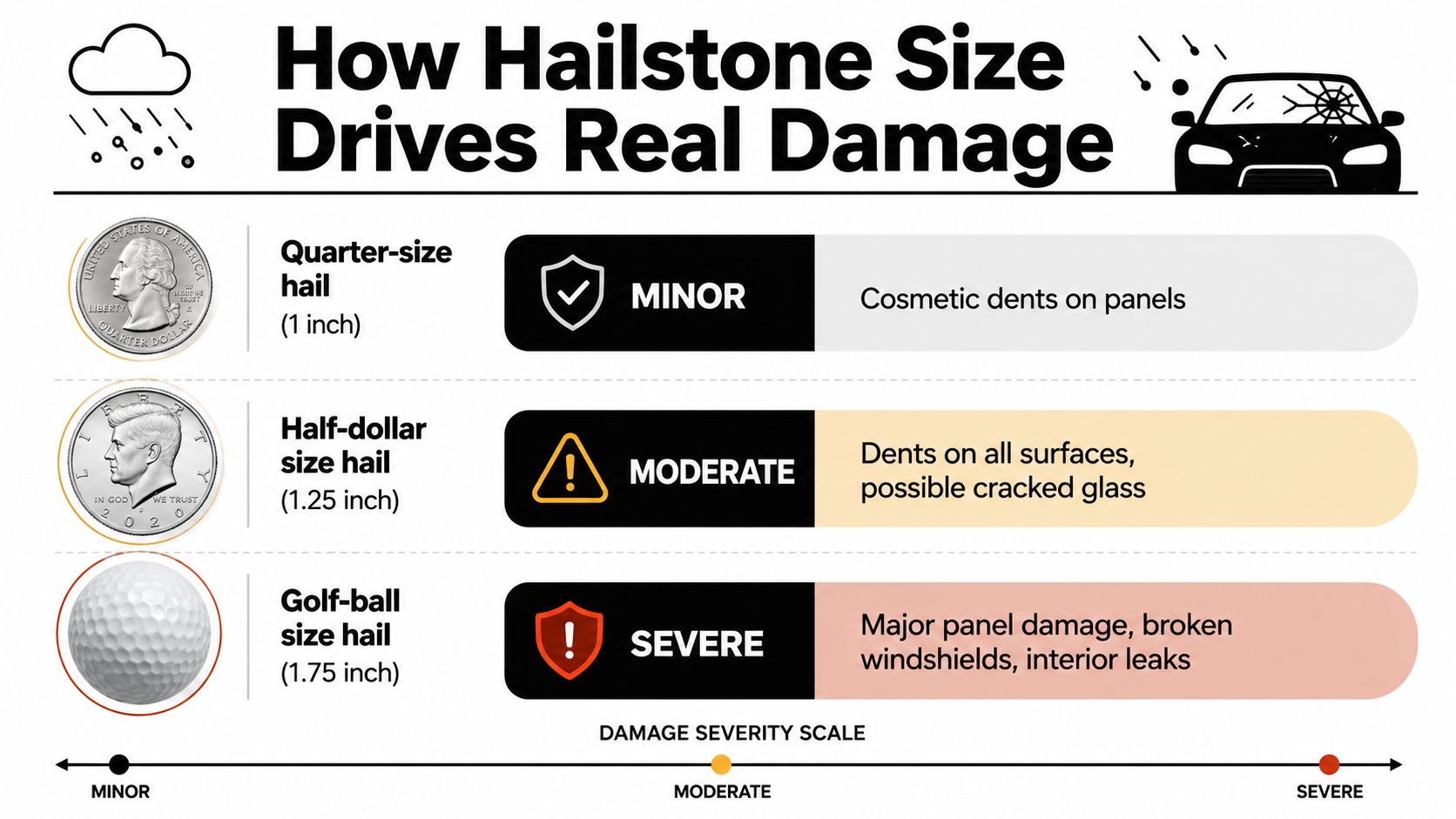
Hail size provides an important first check against an estimate that labels a storm “minor.” The European field research linked by the Atmospheric Measurement Techniques journal found that reported damage to roofs, windows, and vehicles rises sharply once hail exceeds 5 cm in diameter. Vehicle-body, roof, and window damage becomes most common around hailstones of that size, while vehicle-window damage peaks around 7 cm, according to the same study.
That doesn't mean every vehicle in a storm receives identical damage. Stone density, wind direction, impact angle, vehicle orientation, panel material, and shelter all matter. It does mean the reported hail size gives an appraiser a technical reference point when comparing the storm footprint with the physical pattern on the vehicle.
Use storm evidence as a screening layer
A storm report can confirm that hail occurred in an area, but it can't prove that a particular panel was damaged. Forensic-engineering guidance warns that storm-report databases may be imprecise, inconsistent, and biased toward populated areas. A sound assessment combines event verification, historical meteorological information, and an on-site inspection rather than treating one report as conclusive.
The research on automated hail-impact estimation illustrates why this matters. A 2024 radar and environmental-input study reported a critical success index of 0.88 and a coefficient of determination of 0.79 against observed damage, showing that automated methods can track real-world impact closely in the tested setting. Those results strengthen the value of data as a screening and corroboration tool, but they don't eliminate the need to inspect the individual vehicle.
Size changes the repair conversation
A storm with larger stones may affect glass, roof systems, trim, and interior components in addition to painted panels. A carrier that sees only “cosmetic dents” may be overlooking cracked paint, water entry, or a repair method that isn't economically sensible for the specific vehicle.
If the damage appears extensive, don't rely on a generic total-loss rule of thumb. The practical question is whether the full repair scope, combined with the vehicle's accurate actual cash value, supports repair or a total-loss settlement. This guide to how much damage can total a car can help you frame that decision without confusing a dent count with a valuation conclusion.
Documenting Damage the Insurer Cannot Ignore
A dark photograph taken straight down at a hood rarely proves much. The surface may look smooth, shadows can hide dent depth, and the image gives no reliable context about which vehicle or panel you inspected. Good documentation creates a chain from the storm, to the vehicle, to each disputed item in the estimate.
Build the record in layers
Use a repeatable sequence:
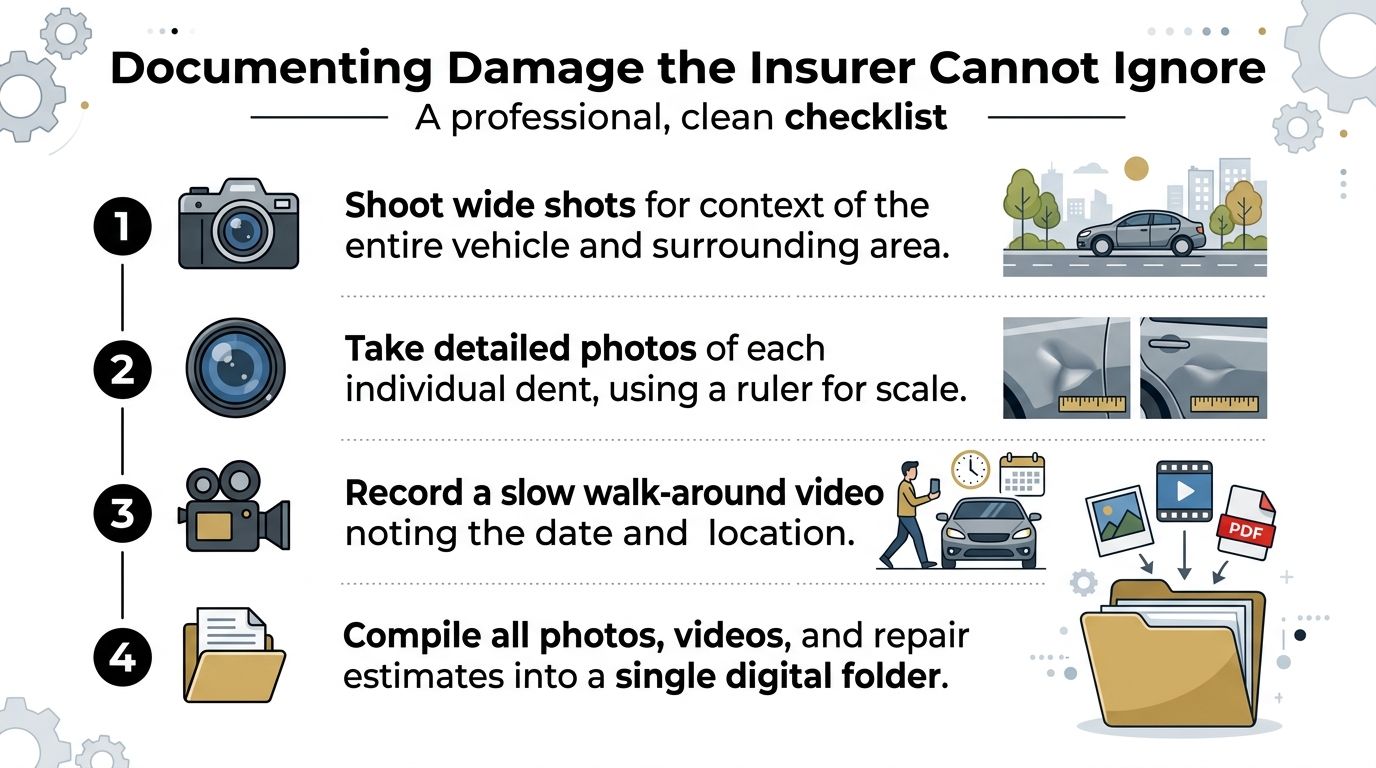
- Establish context: Photograph all sides of the vehicle, the license plate or identifying features, the parking location, and surrounding hail evidence.
- Map each panel: Capture the roof, hood, trunk, doors, fenders, quarters, glass, trim, and lamps in a consistent order.
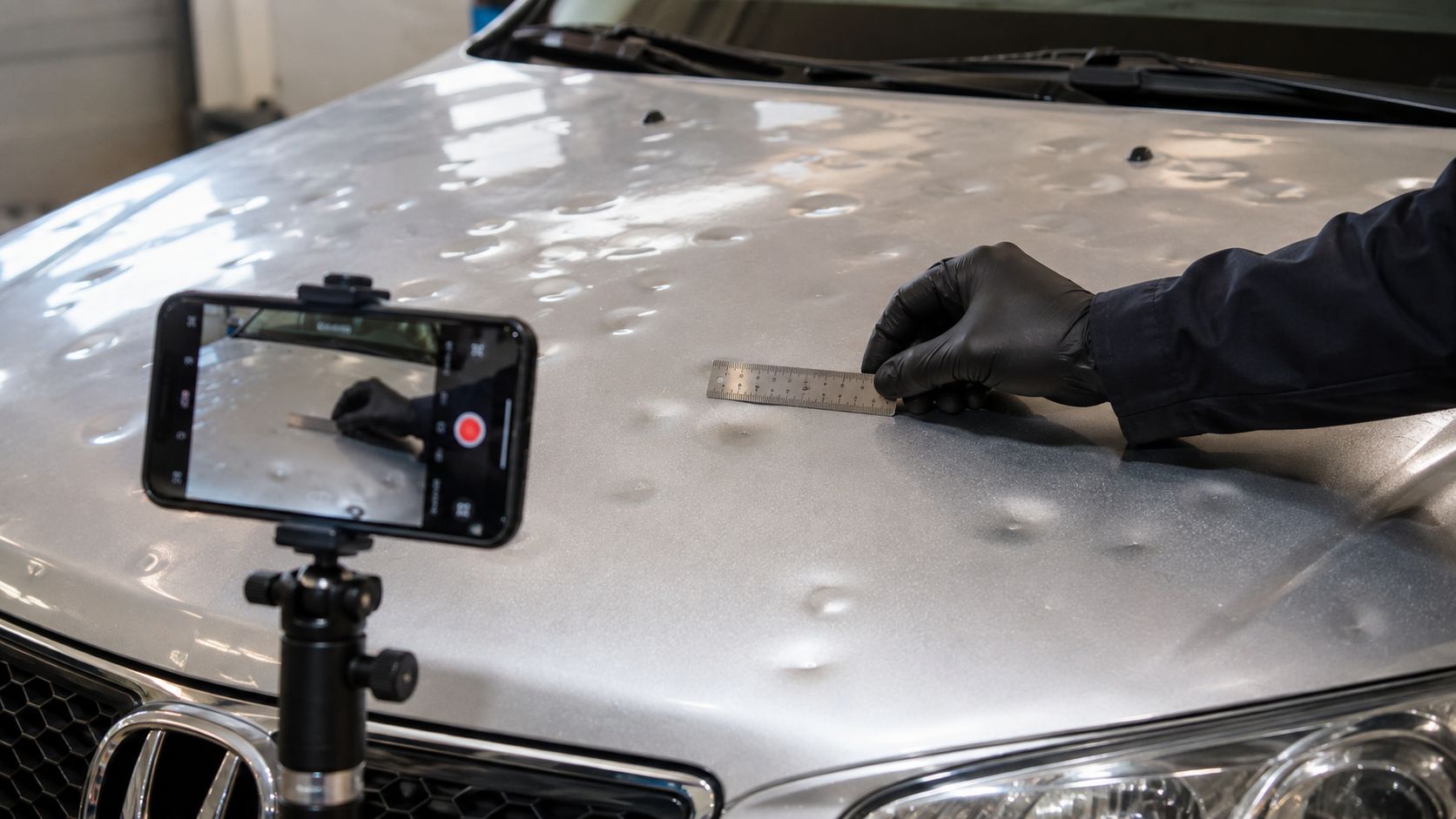
- Show scale: Place a ruler beside representative dents. A coin can help with quick reference, but a ruler gives a clearer record of size and spacing.
- Change the light: Photograph each panel with angled reflections or a controlled inspection light. Move the light rather than depending on the phone flash.
- Record a walk-around: Narrate the date, location, panel, and visible condition in a slow video. Mention pre-existing damage separately.
- Preserve the files: Keep original files with metadata, then make a backup. Don't rely only on edited or compressed versions sent through a messaging app.
A short video won't replace panel photographs, and photographs won't replace written notes. Together, they give an independent appraiser something that can be checked against the insurer's estimate line by line.
This broader 2026 construction photo documentation guide is useful for one reason that applies to vehicle claims too: consistent organization makes a large visual record easier to review. Put storm alerts, photographs, videos, estimates, repairer notes, maintenance records, and communications in one dated folder.
The video below demonstrates the kind of visual record a careful owner can create before an inspection:
Storm reports should support the file, not carry it. The National Association of Forensic Economics guidance on weather indicators emphasizes that high-resolution models need to account for timing and changing exposure, because broad regional averages can miss local concentrations of vehicle loss. For a disputed claim, your actual vehicle record remains central.
Repair Estimates vs. Total Loss Thresholds
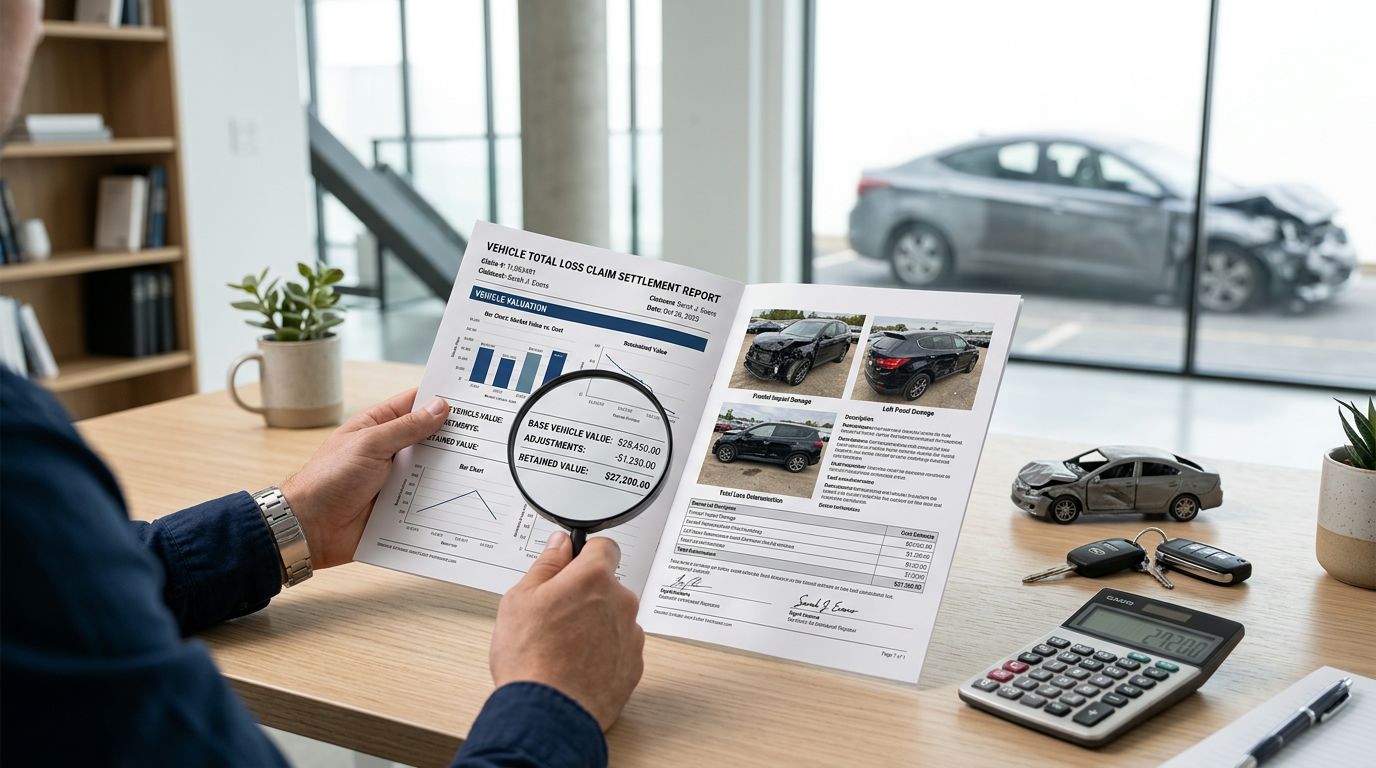
Insurers generally compare the anticipated repair cost with the vehicle's actual cash value, then apply the total-loss rules in the relevant policy and jurisdiction. The threshold isn't the only variable. If the insurer starts with an understated vehicle value, the repair-versus-total-loss calculation can look favorable to the carrier even when the owner sees a different market reality.
Vehicle valuation is especially difficult because condition, equipment, mileage, trim, regional availability, and comparable selection interact. A radar-based model evaluated across more than 100 large hail events identified the correct order of magnitude for damaged vehicles in 74% of cases and for total vehicle damage cost in 60%. For buildings, the same model reached 91% for damaged buildings and 77% for total building cost, as reported by Natural Hazards and Earth System Sciences. The practical lesson is direct: vehicle-loss estimates need event-specific calibration and careful human review.
| Decision Factor | What Insurer Calculates | Where It Usually Goes Wrong |
|---|---|---|
| Repair scope | Dent count, panel operations, paint, glass, trim, labor, and parts | Missed dents, unsupported repair assumptions, or a method that doesn't fit the panel |
| Actual cash value | Comparable vehicles adjusted for mileage, condition, equipment, and location | Weak comparables, missing options, or a condition grade that doesn't match the vehicle |
| Total-loss threshold | Repair-related cost compared with the applicable value and policy rules | The carrier may make the threshold look decisive while hiding a disputed ACV |
| Parts and labor | Replacement parts, labor rates, materials, and related operations | Aftermarket or recycled parts may appear without a clear explanation of their effect on value |
| Salvage and deductions | Expected salvage value and permitted claim deductions | Unsupported deductions can reduce the offer without showing the underlying calculation |
Read the estimate for omissions
Don't look only at the final dollar figure. Look for whether the estimate identifies every affected panel, includes access and teardown where necessary, accounts for aluminum or specialty materials, and distinguishes repair from replacement. Check whether paint blending, clear-coat damage, glass, moldings, sensors, cameras, and calibration appear where the inspection supports them.
A cosmetic estimate can be low because it assumes paintless dent repair across the board. That may be appropriate for shallow, accessible dents with intact paint. It becomes questionable when paint or clear coat is fractured, the panel has limited access, or the repair would leave a visible condition that affects resale.
Where AI Hail Tools Help and Where They Fall Short
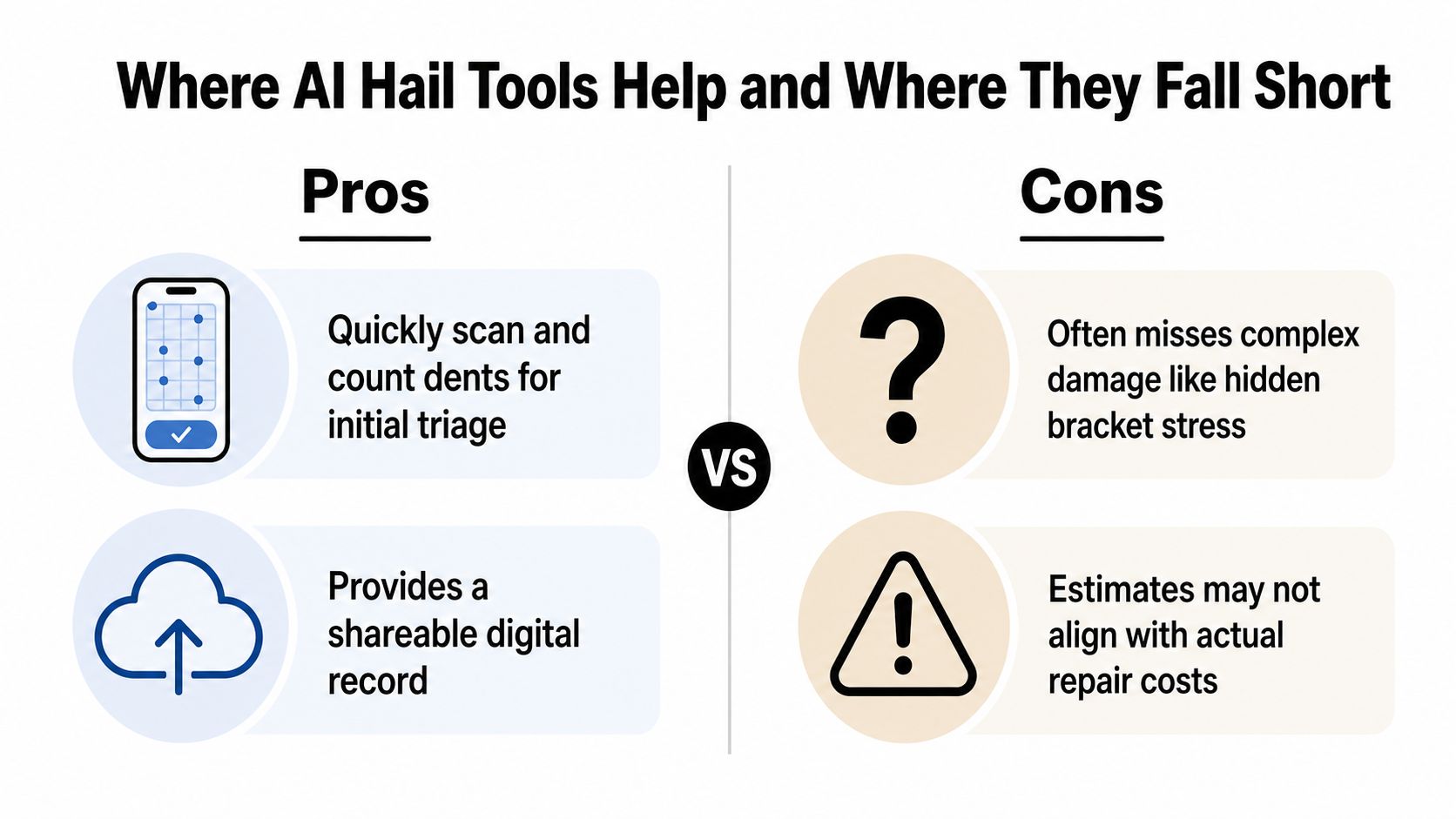
Computer vision has a useful place in hail claims. A mobile scan can help organize an initial inspection, identify panels that need closer attention, and produce a shareable digital record. For a fleet manager or adjuster handling many vehicles, that triage function can save time and reduce the chance that an obviously damaged panel is forgotten.
It isn't a valuation authority. An automated report can count visible marks while missing the factors that determine whether the proposed repair is realistic or whether the vehicle's market value has been understated.
What the camera sees and what it doesn't
Automated tools can struggle with glare, dark paint, curved panels, crowded dent fields, dirt, reflections, and damage close to trim. A camera may not identify hidden clear-coat fracture, micro-cracks in glass, restricted access behind a panel, stressed brackets, prior repairs, or a replacement decision that depends on the vehicle's construction.
The tool also may produce a repair estimate from assumptions that aren't visible to the policyholder. If the report doesn't show the images, dent map, confidence limits, labor assumptions, parts source, or excluded operations, you can't meaningfully audit the result.
The useful question isn't whether AI counted the dents. It's whether the report explains every repair and valuation assumption well enough for another professional to challenge it.
Preserve evidence around an automated estimate
If an insurer relies on a computer-generated inspection, request the complete report and the underlying images. Save the date of the scan, the vehicle condition before and after inspection, and any screen displaying the proposed operations. Ask a human repair professional or independent appraiser to inspect the vehicle under controlled lighting, then compare the findings panel by panel.
Don't delete your own evidence after the carrier produces a polished report. Your photographs, video, written notes, repairer observations, and market records may reveal omissions that a quick scan can't resolve. AI is a strong sorting tool. It isn't a substitute for judgment when the dispute concerns hidden damage, repair feasibility, or actual cash value.
When to Bring in an Independent Appraiser
The most important distinction in a hail claim is whether you're disputing coverage or amount of loss. Coverage asks whether the policy responds to the event and whether an exclusion applies. Amount of loss asks how much the covered damage costs to repair or how much the vehicle was worth immediately before the loss.
Those questions often get blended together in claim conversations. A carrier may describe a valuation disagreement as a coverage problem, or an owner may assume that an appraisal can resolve every denial. The Appraisal Clause usually addresses valuation disputes, not every question about whether the policy covers the loss. Read the policy language before invoking it.
Identify the point where negotiation stops working
An independent appraiser becomes useful when the evidence is no longer the main problem, but the parties still disagree about the number. Common warning signs include:
- A low total-loss offer: The comparable vehicles don't match your trim, options, mileage, condition, or local market.
- A compressed repair scope: The estimate treats dense damage as minor cosmetic work or omits glass, trim, calibration, access, or paint operations.
- A pre-existing-damage denial: The insurer labels storm-related damage as old without showing a credible basis for that conclusion.
- An unexplained valuation report: The carrier won't provide the comparable vehicles, adjustments, condition assessment, or deductions behind the offer.
- A moving number: The estimate changes after inspection, but the carrier doesn't explain which new evidence caused the change.
- A release presented too early: You're asked to accept a settlement that could limit your ability to pursue additional amount-of-loss evidence.
The appraisal coverage discussion involving a homeowner's hail dispute illustrates why the coverage-versus-valuation boundary matters. The court coverage described appraisal as capable of addressing certain causation questions when they relate to valuation, while still leaving policy-coverage questions outside the appraiser's authority. That distinction isn't a promise of a particular outcome for an auto claim, but it shows why a policyholder shouldn't accept the oversimplified idea that every hail disagreement is “covered or not covered.”
Understand how the Appraisal Clause works
Policies commonly provide an appraisal process when the parties disagree about the amount of loss. Each side selects an appraiser. Those appraisers work toward an agreed amount, and if they can't agree, an umpire may decide the disputed valuation issues under the policy's procedure. The exact language, deadlines, qualifications, and scope vary, so the policy controls.
An independent appraiser's job is not to repeat your preferred number. The appraiser should inspect the vehicle, analyze the carrier's estimate or valuation report, identify unsupported assumptions, document condition and equipment, and present a defensible amount. For a total-loss dispute, that can mean correcting comparable selection and condition adjustments. For diminished value, it can mean explaining how the repaired or hail-affected vehicle's market position differs from an undamaged equivalent, subject to the applicable policy and claim facts.
A strong appraisal file includes:
- The complete insurer file: Estimate, valuation report, photographs, correspondence, deductions, and settlement offer.
- A condition record: Mileage, equipment, service history, prior repairs, tires, interior, and exterior condition before the storm where available.
- A damage analysis: Panel-by-panel findings, repair feasibility, parts assumptions, glass and trim observations, and any disputed pre-existing conditions.
- A market analysis: Comparable vehicles selected for actual similarity, with adjustments explained rather than hidden in a final figure.
- A written position: The amount claimed, the evidence supporting it, and the specific items in dispute.
Don't hire an appraiser just because the estimate feels unpleasant. Hire one when you can identify the valuation or scope error and the carrier won't correct it through ordinary documentation. The best escalation is specific. “Your offer is low” is weak. “Your valuation omits the factory equipment, uses a materially different condition grade, and doesn't account for the comparable vehicle's inferior configuration” gives the dispute a professional foundation.
Follow a disciplined claim sequence
The practical order is straightforward:
- Document the storm: Preserve location, timing, alerts, and surrounding evidence.
- Inspect the vehicle: Follow a consistent route from roof to hood, trunk, sides, glass, and trim.
- Photograph with scale and light: Use wide views, close-ups, angled reflections, video, and original files.
- Request the full insurer valuation: Ask for the estimate, comparables, adjustments, deductions, and repair assumptions.
- Compare the numbers: Separate physical repair scope from actual cash value.
- Choose the response: Accept if the evidence supports it, negotiate if omissions can be corrected, or review the Appraisal Clause when the amount remains disputed.
Two mistakes cause disproportionate trouble. Signing a release before you understand what rights it affects can close off options, and trusting one automated estimate can leave hidden damage or market value errors unchallenged. Neither mistake is easy to repair after payment.
Drivers in Oregon and Washington who believe a hail settlement undervalues their vehicle should gather the complete claim file before agreeing to the carrier's number. A certified independent appraiser can then determine whether the disagreement concerns repair scope, actual cash value, diminished value, or an issue the Appraisal Clause can address.
Total Loss Northwest provides independent auto appraisals for diminished-value claims and total-loss disputes, with detailed reports designed to challenge unsupported insurer valuations. If your hail claim has been undervalued in Oregon, Washington, or elsewhere, visit Total Loss Northwest with your estimate, valuation report, photographs, and policy documents ready for review.