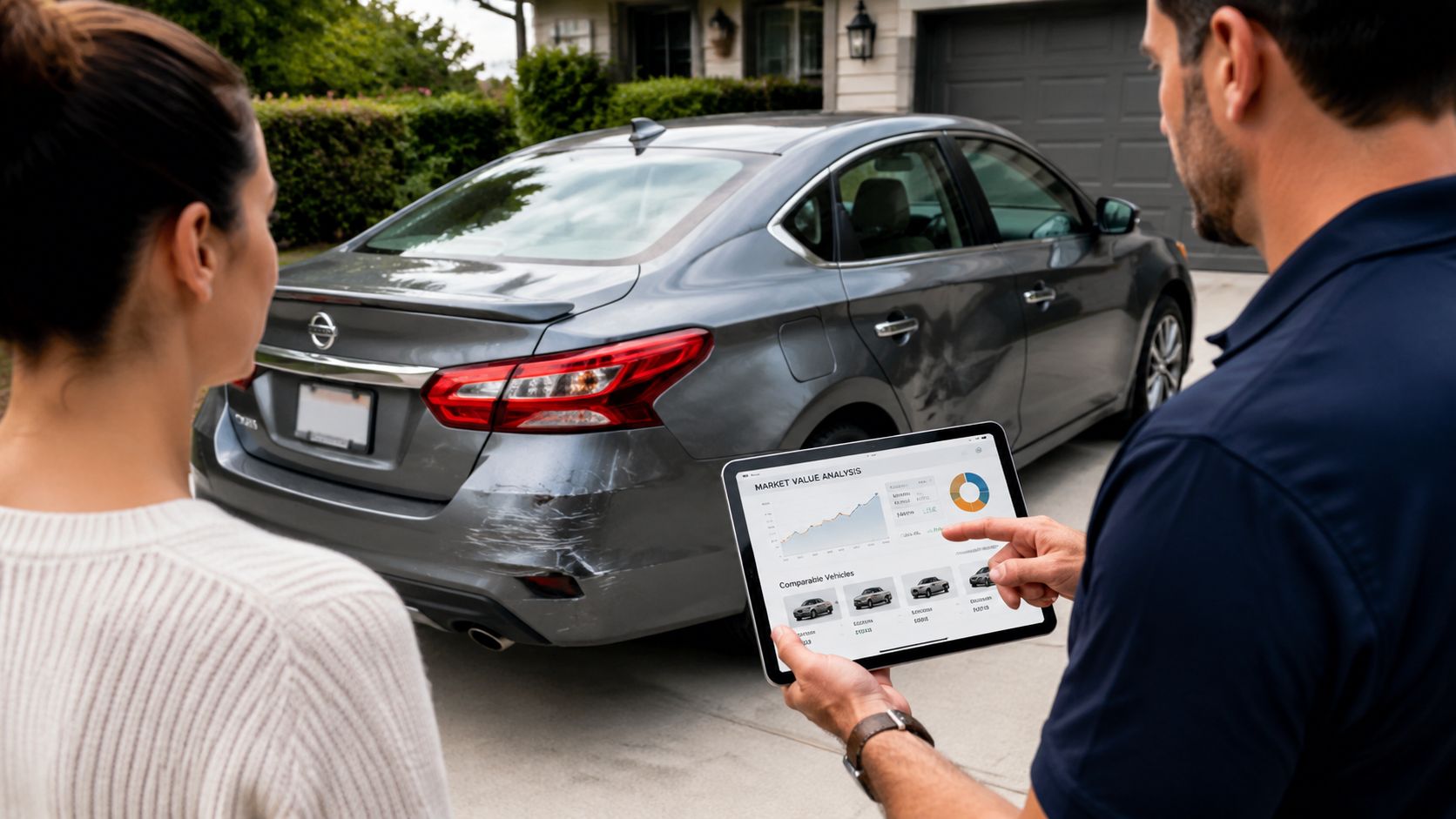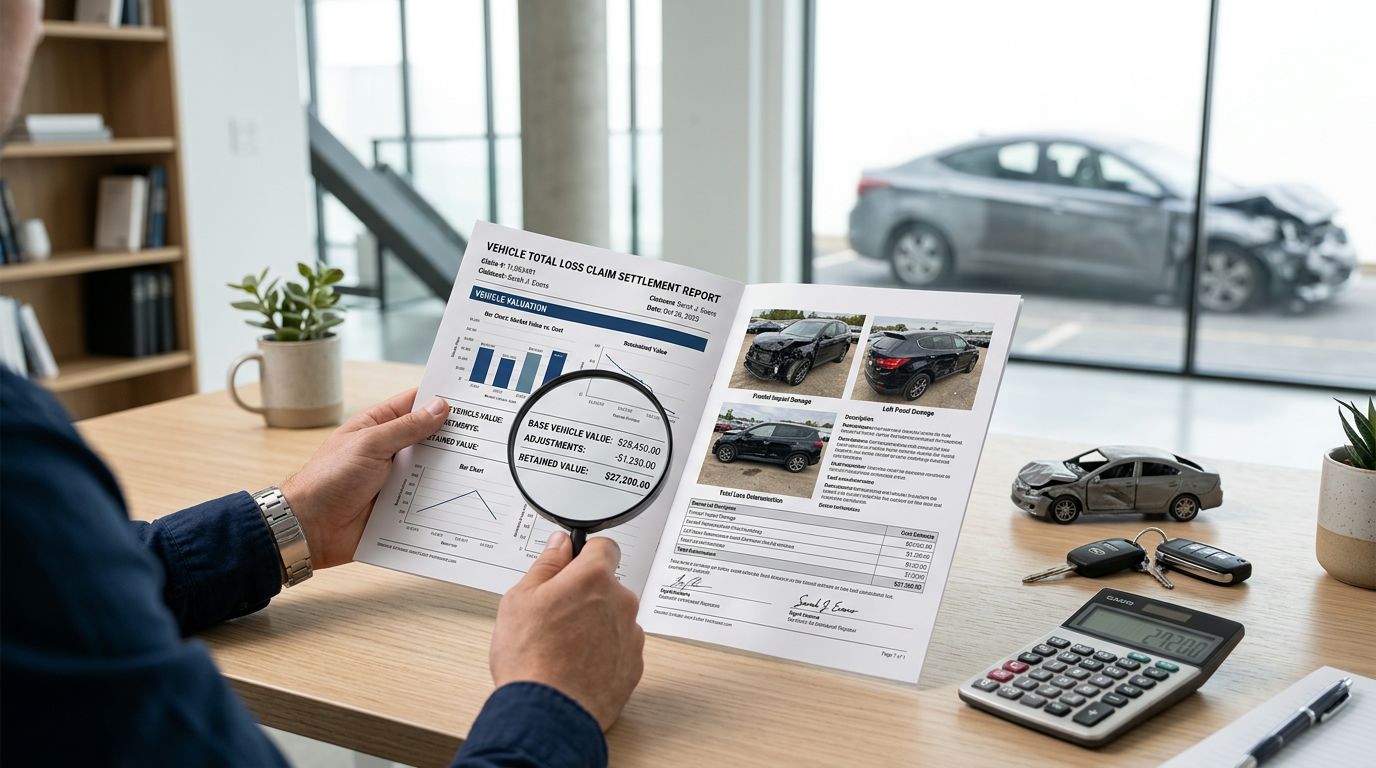
You're at the curb, looking at a car that was fine yesterday and is now sitting under a tow-company lot number. The adjuster has already said total loss, and the next words start to sound like a different language, salvage value, branded title, DMV paperwork, lien payoff. That is usually the point where drivers realize the settlement is not only about the repair estimate, it is also about what happens to the title record, the paperwork trail, and the money left after the insurer finishes its math.
A total loss claim title changes what your car is worth, what you can do with it, and what kind of title may be issued later. Once a vehicle is written off, the title brand follows it and acts like a permanent warning flag in the market, which can affect resale and buyer interest. If you are trying to replace a daily driver in Oregon or Washington, or trying to keep a modified car that still has value to you, the difference between settlement, salvage, and title transfer costs can change the outcome more than the first offer suggests.
Introduction to Total Loss Claim Title
A tow yard receipt can make a bad day feel worse, but the title issue is often the part people miss. The insurer may call the car a total loss before the paperwork has even settled, and that decision starts a chain that reaches the DMV, the lienholder, and the future buyer. The title doesn't just record what happened, it becomes the legal signal that tells everyone else the car was written off for collision, fire, flood, or scrap disposition North Carolina branded title rule summary.
That's why the first settlement check can feel disconnected from what you need to move on. A driver might focus on the vehicle itself, but replacement cost also includes title transfer tasks, registration steps, and the paperwork that turns the loss into a usable outcome. New York's regulator even acknowledges that title-transfer fees are not automatically part of ACV, though they can be paid if handled uniformly and without discrimination New York insurance opinion on title-transfer fees.
A branded title works a little like a medical record that follows the patient. It doesn't say the car can't be repaired or driven again in every case, but it does tell the market something serious happened. That's why drivers who understand the title side of a total loss usually ask better questions, keep better documents, and push back sooner when the valuation or paperwork feels off.
What Total Loss Claim Title Means
A total loss claim title starts with actual cash value, usually shortened to ACV, not with a simple “repair bill is higher than the car's value” rule. Insurers may compare the repair estimate plus projected supplements, diminished resale value, and rental costs against the vehicle's pre-loss ACV minus projected salvage proceeds. The same damage can therefore lead to a different outcome depending on the surrounding numbers, because the insurer is not only asking whether the car can be fixed, it is asking whether fixing it makes economic sense once the rest of the claim is included Total loss thresholds and economic comparison.
Why the math feels inconsistent
A household budget makes the logic easier to see. The repair estimate is one bill, the supplements are surprise charges, the rental car is another cost, and salvage is money the insurer expects to recover later. The final decision depends on the whole balance sheet, not one line item. That is why two vehicles with the same visible damage can still end up in different buckets if one has more rental exposure, a lower ACV, or stronger salvage value Total loss thresholds and economic comparison.
Practical rule: Do not judge the total-loss outcome by the first repair estimate alone. Ask what the insurer used for ACV, salvage, rental exposure, and any supplements.
The title brand is a legal record of that financial comparison. It affects how much money changes hands and what the car may be worth later, and it can also bring separate administrative costs that drivers often overlook, such as title processing, registration updates, and the paperwork needed to make the settlement usable. If the vehicle has unusual equipment, a rare trim, or recent improvements, the ACV side of the equation deserves the same attention as the damage estimate.
Types of Branded Titles
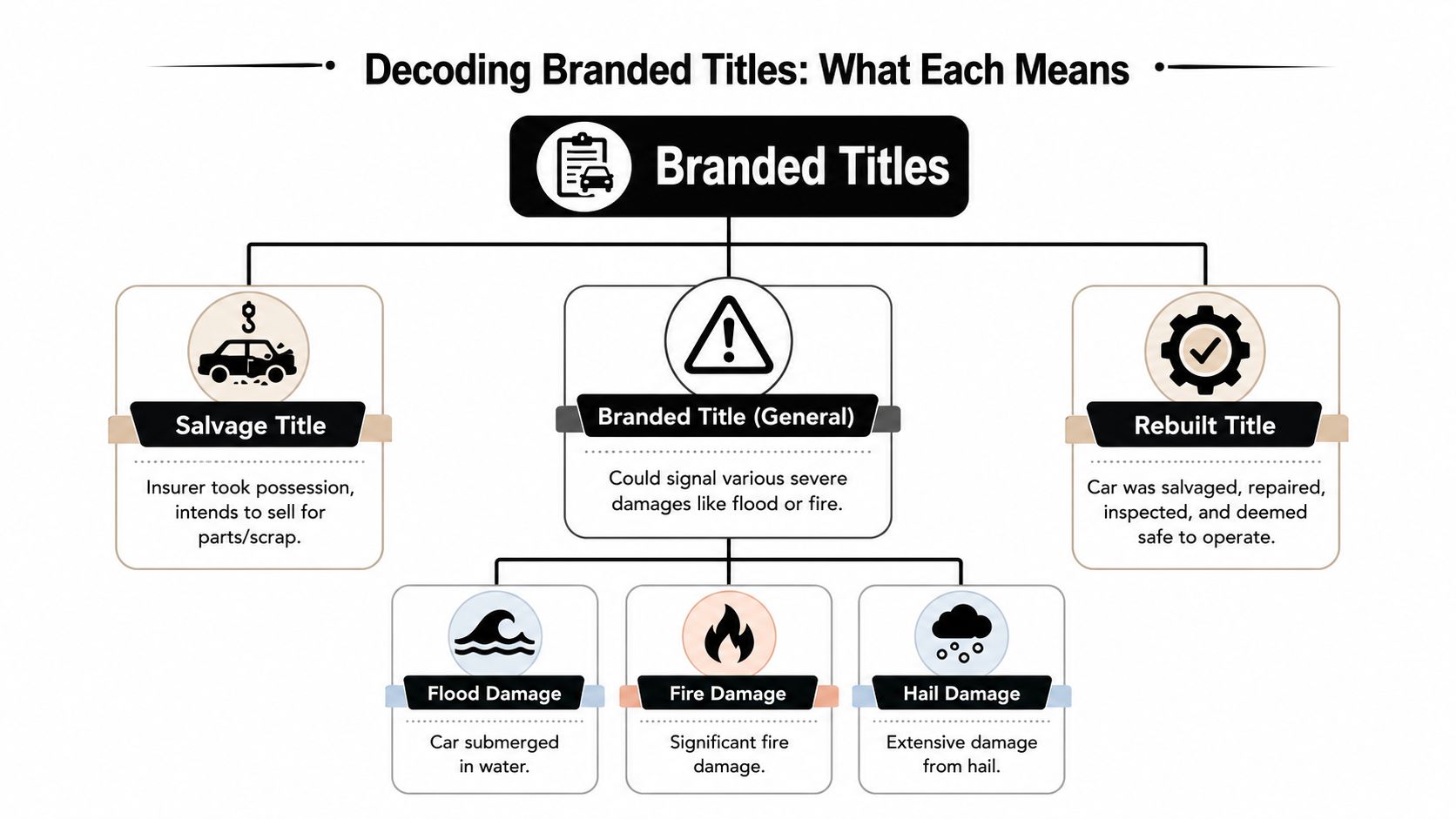
A branded title is the record's way of saying a vehicle has a serious history. Once a car is written off, many jurisdictions mark the title so the file shows the loss type, and that brand usually lowers resale value and limits the group of buyers willing to consider it. That is why buyers, lenders, and insurers treat a salvage title, a rebuilt title, and a clear title very differently.
Salvage, rebuilt, and clear are not interchangeable
A salvage title usually means the insurer treated the vehicle as a write-off and expects it to be sold for parts, scrap, or similar disposal. A rebuilt title means the car was previously salvaged, repaired, and inspected before being put back on the road. A clear title means the record does not carry that kind of total-loss branding, so the vehicle has not been publicly marked as written off.
A useful comparison is a patient chart. A clean chart does not promise a perfect outcome, but a chart with a major event marked on it changes how every later doctor reads the file. Branded titles work the same way for vehicles. They do not erase the car, but they change how the market prices risk and how carefully buyers inspect the history.
The title brand also carries practical costs that are easy to miss. Title processing, registration updates, and the paperwork needed to make the settlement usable can all affect what a driver keeps after a total loss. If the vehicle has unusual equipment, a rare trim, or recent improvements, the ACV side of the equation deserves the same attention as the damage estimate.
If you want a clearer side-by-side explanation, this guide on rebuilt title versus salvage title helps when you are deciding whether to keep a vehicle or move on.
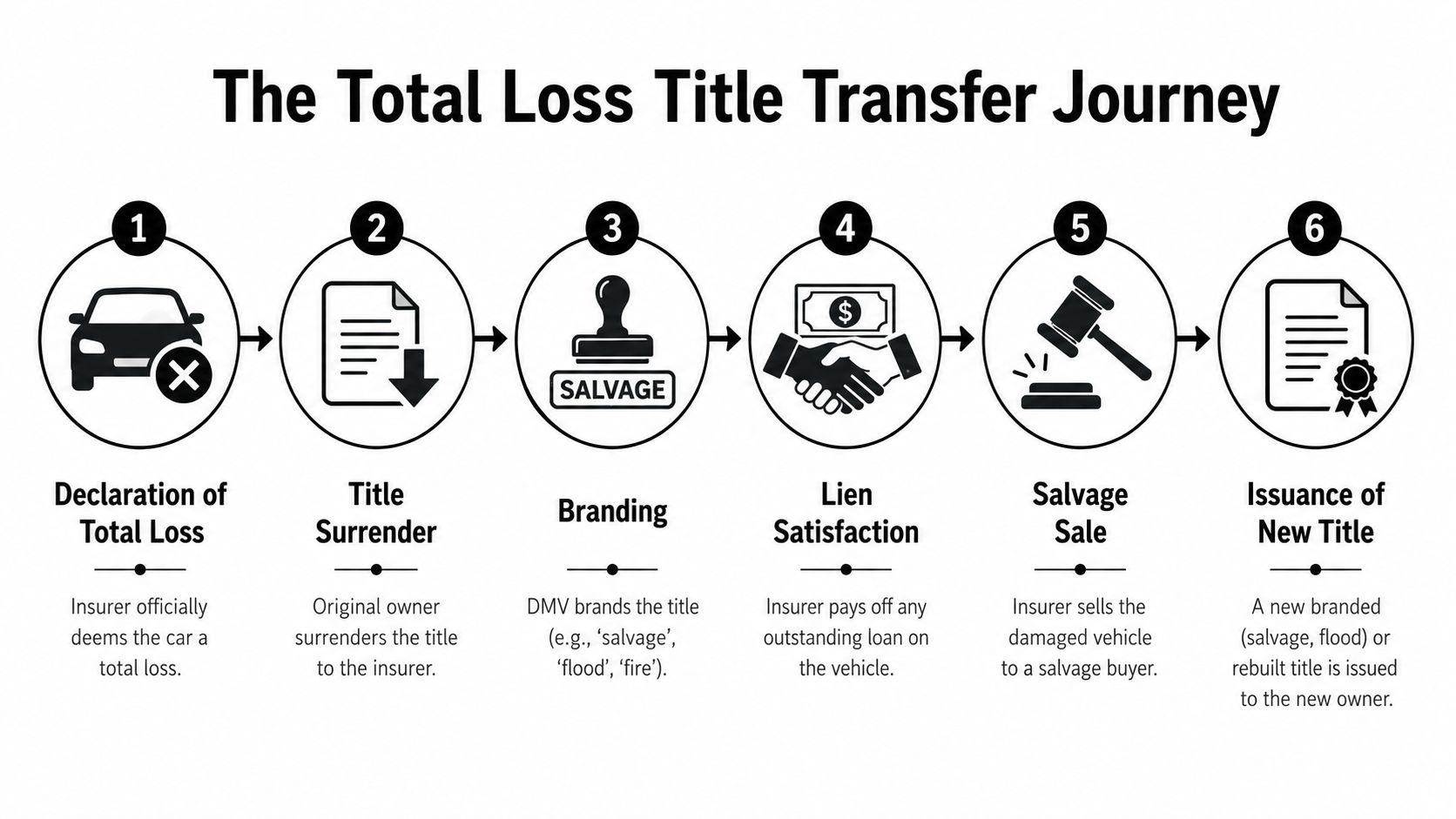
How Title Transfer Works After Total Loss
A total loss claim does not end with the insurer's valuation sheet. The title has to move through a separate administrative path, and that path can affect how fast you get paid, what documents you need, and whether the car can ever be put back on the road.
The process usually starts the moment the insurer declares the vehicle a total loss. From there, the original title is surrendered or otherwise processed, the DMV brands the record, any lien is resolved, and the damaged vehicle may be sold as salvage. If the car later returns to service, the state can issue a branded or rebuilt title. Each step depends on the one before it, so a missed form or a delayed signature can slow the settlement or leave the next owner without the right paperwork.
Where drivers get caught off guard
The check itself is only part of the story. Many drivers plan for the ACV payment and then run into title replacement costs, DMV filing requirements, and re-registration expenses before they can move into another vehicle. Those costs are often small compared with the claim payment, but they still come out of the driver's pocket or settlement if no one addresses them early.
New York regulators say insurers are not required to include title-transfer fees in ACV calculations, though they may pay them if they do so uniformly and without discrimination New York insurance opinion on title-transfer fees.
Useful habit: Before you sign a release, ask who is handling the title, who pays the filing fees, and what document you will need to register the replacement car.
A simple checklist helps. Confirm whether the insurer is surrendering the title, whether the lienholder must be paid first, whether you need a replacement title application, and whether the DMV will ask for extra forms once the vehicle is branded. The rules vary by state, but the same mistake shows up again and again, people accept the payout first and only later discover the extra costs and filing steps still waiting on their side.
Owner Choices After a Total Loss
A total loss decision rarely ends with the insurer's first number. One driver may care about keeping a modified car, another may want a quick payout, and another may be staring at the paperwork costs that show up after the claim amount is set. The title outcome changes with each choice, and so do the DMV steps, the branding on the record, and the money left in the final settlement.
Four paths, four different tradeoffs
If you retain salvage, you keep the damaged car and accept a lower payout because the salvage value comes out of the settlement. That choice can work for a vehicle with sentimental value, rare parts, or upgrades you can document clearly. It can also make sense when the car's paperwork matters as much as the metal, since a later rebuild will usually require extra filings and an inspection before the title can move back into regular use.
If you buy it back for rebuild, you are deciding to repair the car and work through the steps needed for a rebuilt title. That route can save a vehicle that still has useful life left, but it also adds administrative costs that drivers often overlook, such as title applications, inspection fees, and any DMV paperwork tied to the brand. The repair bill is only part of the comparison, because the title history can affect what you can do with the car later and how easy it will be to insure or sell.
If you accept the insurer's buyout, you hand over the vehicle and close out the claim with the least follow-up. For many drivers, that is the cleanest choice because it avoids the inspection chain, the title branding, and the extra time spent sorting out what the DMV wants before the car can return to the road. If your priority is getting into another reliable vehicle without spending time on salvage paperwork, this path usually keeps the process simpler.
If you let the insurer sell it at auction, the vehicle leaves your hands and the claim becomes a matter of records, release forms, and settlement accounting. That path is often handled behind the scenes, which can be useful if you want the claim wrapped up without managing the car yourself. It also means you should pay close attention to any fees or deductions tied to title handling, because small administrative charges can erode what you receive if nobody spells them out early.
Modified and high-value cars need a closer review. A standard valuation can miss the cost of custom work, rare equipment, or a restored configuration that does not show up well in ordinary pricing tools. Insurance guidance for modified or high-value vehicles explains that owners can submit evidence of upgrades or comparable listings, and if the value still looks wrong, the owner may press for the difference or use the appraisal clause Total loss valuation guidance for modified or high-value vehicles. That point matters when the car has a rebuilt motor, custom parts, or another feature that changes the actual replacement cost.
For drivers facing a low offer, Total Loss Northwest is one option that provides total loss appraisals and appraisal clause support in this kind of dispute. The practical value is simple. It brings market evidence into the discussion instead of leaving the settlement tied only to software output, which can help when the title status, the paperwork costs, and the vehicle's real condition do not line up neatly.
Lienholder Implications for Total Loss Titles
A lien changes the tone of the whole claim because the lender has a legal stake in the title. In practice, that means the settlement check may go to the lienholder first, and the title can't always move cleanly until the loan side is handled. If the payout doesn't cover the full loan balance, you can end up with a deficiency issue, and that's the part drivers often miss until the insurer and the bank start exchanging paperwork.
Why the lender matters before the DMV does
The lender's position usually comes before the branded title is fully resolved. If there's still a loan balance, the insurer's payment process has to address the lien before the title can be released or a salvage path can be completed. If you choose to keep the vehicle, the lienholder may also have its own rules about whether that's allowed and what must happen before the title changes hands.
The title may be your name on paper, but the lender's interest can control the timing until the payoff clears.
That's why communication matters so much. Ask the adjuster where the payoff is going, ask the lender when the lien release will be issued, and keep copies of every settlement page and payoff confirmation. If you're dealing with an underwater loan, this underwater car loan guide is useful when you're trying to understand how negative equity interacts with a total loss.
The safest move is to treat the lender, insurer, and DMV as three separate desks that all need matching documents. If one desk is waiting on another, your title can sit in limbo even after the vehicle is gone.
Oregon and Washington Title Rules
A total loss can feel straightforward until the settlement turns into title paperwork, fee questions, and DMV steps. That shift matters in Oregon and Washington because the insurance decision and the title record do not always move at the same pace. Drivers often see the payout first and the title consequences later, which is why it helps to sort out the paper trail before assuming the claim is finished.
| Requirement | Oregon | Washington |
|---|---|---|
| Title branding after total loss | A branded record is used to show the vehicle was written off, following the state's title-handling process | A branded record is also used to show prior total loss history |
| Administrative cost treatment | Title-transfer and re-registration costs are often separate from ACV unless the claim file handles them another way, so drivers should ask early | The same practical issue applies, since the insurer may not automatically include paperwork and filing costs unless the claim rules or local process require it |
| Rebuilt or salvage follow-up | Rebuilt status depends on inspection and title processing after repairs | Rebuilt status depends on inspection and title processing after repairs |
| Claim valuation disputes | Local-market comparables matter when the vehicle is unusual or undervalued | Local-market comparables matter when the vehicle is unusual or undervalued |
The administrative side can catch people off guard because it is easy to focus on the settlement number and miss the smaller costs attached to getting the car back on the road, or getting the title corrected. Those costs may include transfer fees, registration work, inspection steps, and time spent waiting on documents. For drivers who are deciding whether to rebuild or move on, the title path can change the ultimate value of the claim just as much as the payout itself.
That is why Oregon and Washington owners should treat the title record like the cover sheet on a file folder. The insurance company may handle the loss decision, but the DMV still has to accept the right title status before the vehicle can be sold, rebuilt, or registered again. If you are sorting through that next step, this salvage vehicle registration guide can help you see how the paperwork usually fits together.
Oregon and Washington owners usually get the clearest picture when they check the title path at the same time they review the settlement math. One side shows what the insurer is paying. The other side shows what the vehicle can legally become afterward.
Next Steps FAQs for Drivers
Can I challenge a total loss value if the offer seems low?
Yes. The strongest challenge usually starts with local comparable listings, proof of recent repairs or upgrades, and a clean record of what was on the vehicle before the crash. For modified or higher-value cars, guidance for total loss valuation recognizes that upgrades and comparable listings can support a dispute, and the insurer may need to pay the difference, find a better comparable, or use the appraisal clause.
What paperwork should I ask for before I sign anything?
Ask for the valuation report, the salvage estimate, the title-handling instructions, and any payoff details if there is a lien. Title fees can be part of the administrative side of a claim, but they are not always treated the same way as vehicle value, so it helps to ask how your insurer is handling them before you close the file.
What if the insurer delays title paperwork?
Start by asking who owns the next step, the adjuster, the lienholder, or the DMV filing desk. Delays often happen because one of those parties is waiting on a document from another. Keep every email, payoff notice, and settlement sheet so you can show where the hold-up started. A title issue can feel small, but it can still block sale, transfer, or registration the same way a missing key can keep a car from leaving the lot.
Should I keep a total-loss car or let it go?
That depends on whether the vehicle has special value to you and whether the damage, title brand, and future resale loss are worth the effort. A car with major upgrades or a rare setup needs careful documentation before you decide, because those details can change what the vehicle is worth after the loss. If you just need a replacement vehicle quickly, letting it go is usually simpler.
What's the smartest first move if I think the insurer undervalued my car?
Request the valuation details in writing, gather local comparable vehicles, and compare the insurer's assumptions against your own records. If the claim still feels off, an independent appraisal or appraisal clause support can bring the discussion back to market evidence instead of guesswork. That also helps you separate the vehicle's true value from the extra steps tied to title correction and transfer.
Can I get help with the dispute before the title is finalized?
Yes, and that is often the best time to act. Once the title is branded and the file is closed, there are fewer chances to influence the outcome. If you want a structured review of the numbers, the title path, or the repair history, reach out to Total Loss Northwest for a total loss appraisal review while the claim is still open.