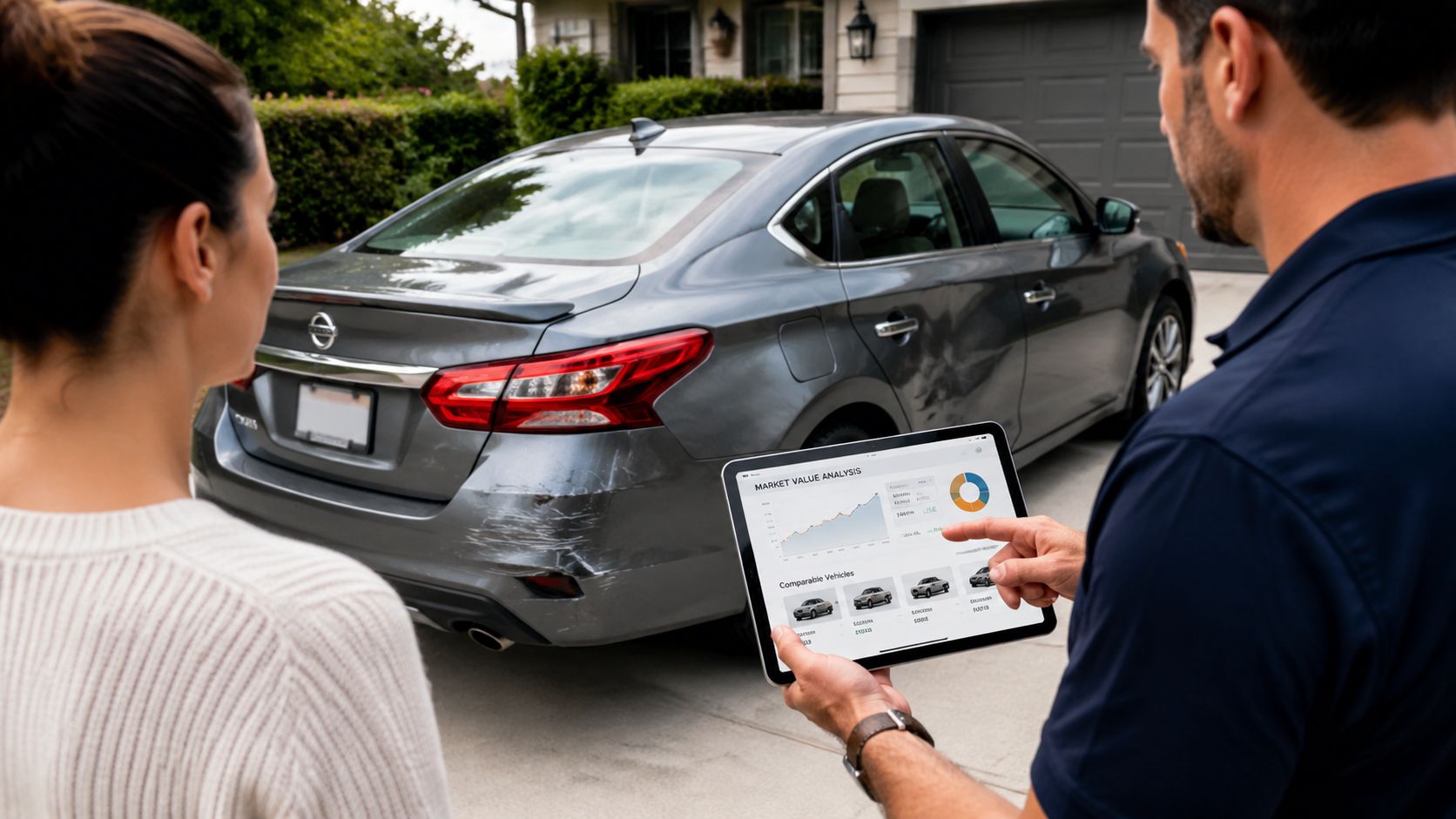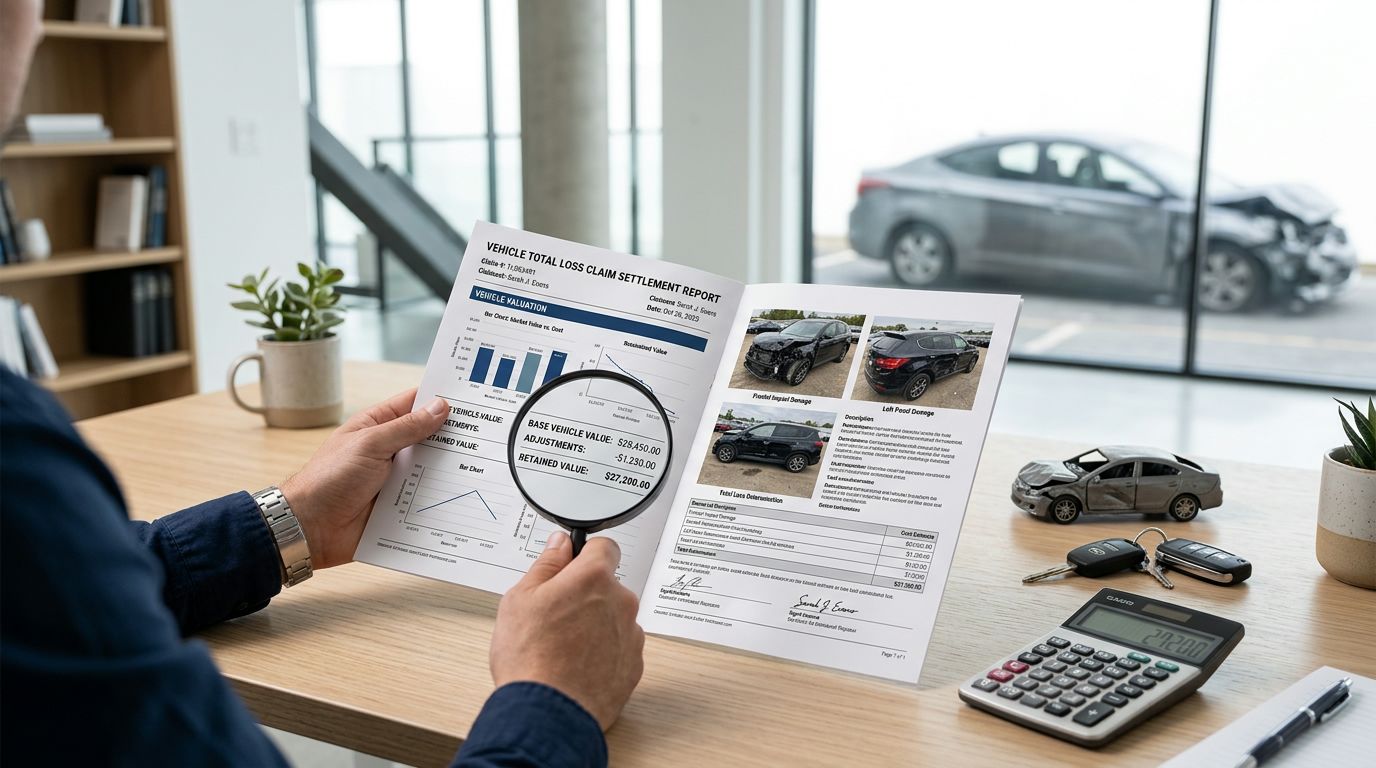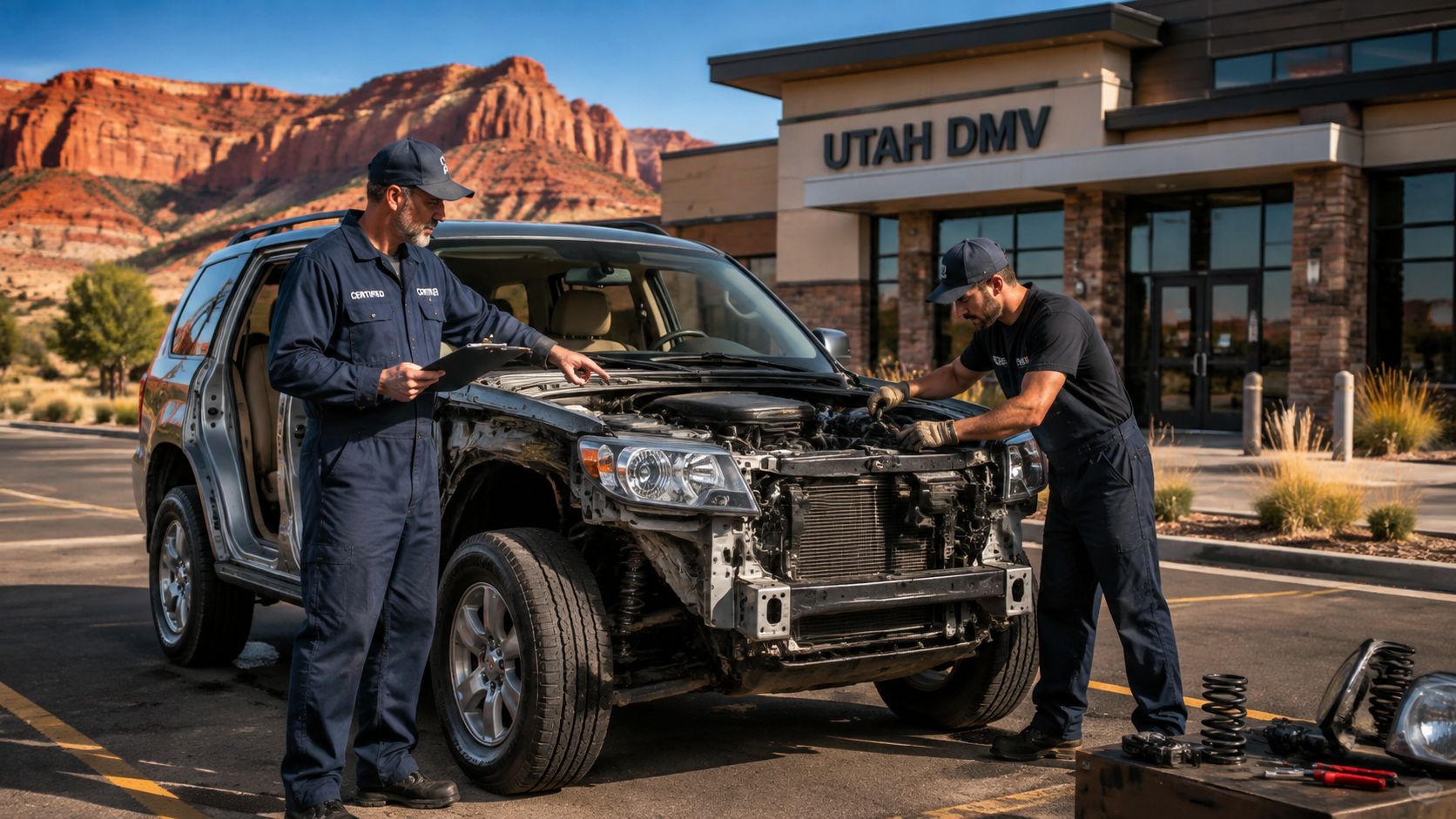
The phone call usually comes when you're least ready for it. Your insurer has finished the estimate, the car is being declared a total loss, and you're suddenly staring at a stack of questions about whether the vehicle can be repaired, whether the title is ruined forever, and what all of this does to the money you thought you'd still have in the car.
That moment feels final, but it's really a fork in the road. In Utah, the path after a total loss depends on how the damage is measured, how the title is branded, and what happens next with inspection, documentation, and resale history. If you're trying to protect yourself financially, a Utah salvage title isn't just a DMV label, it's a value event, an insurance event, and a buyer-protection issue all at once.
Your Car Was Totaled What Happens Next
The first confusing part is that “total loss” and “salvage title” are related, but they are not the same thing. Your insurer may decide the car is a total loss before the title record changes, and that timing matters because payment, ownership transfer, and repair choices all get decided in a tight sequence.
A totaled car can still end up in two very different places. One path is to surrender it for settlement and move on. The other is to keep the vehicle, repair it, and work through Utah's branding and inspection process so it can return as a rebuilt car.
The phone call is the start, not the end
The insurer's declaration usually means the company has decided the repair cost crosses its own economic-loss threshold. Utah's title rules use a separate benchmark, a vehicle can be branded salvage when repair costs exceed 70% of pre-accident actual cash value, while insurance companies may treat it as a total loss at 80% ACV under Utah Administrative Code R590-146, so those decisions can arrive at different times Utah DMV salvage vehicle guidance.
That gap catches owners off guard. You may be discussing settlement while still deciding whether to keep the car, and the wrong move can leave money on the table or create a title problem later. The safest mindset is simple, treat the total loss notice as a financial checkpoint, not the finish line.
Practical rule: do not sign away the vehicle until you know whether you want the settlement, the salvage, or the rebuilt path.
If you are unsure whether the insurer's valuation is fair, the question is not only “what will they pay?” It is also “what will this car be worth after the title brand hits?” A branded title changes the math the way a stain changes a used sofa, the item may still function, but its market value and buyer confidence drop right away. That is why car owners who want to protect resale value, lender rights, or import documentation often need to verify clean title cars for import before they compare offers or accept a settlement.
Salvage vs Rebuilt vs Clean Titles in Utah
A Utah title tells the story of a car's financial past as much as its mechanical one. A clean title means the vehicle has no major brand history attached. A salvage title signals that the car took enough damage to raise a legal warning. A rebuilt title means the vehicle was repaired, inspected, and cleared to return to the road, but the brand history stays with it.
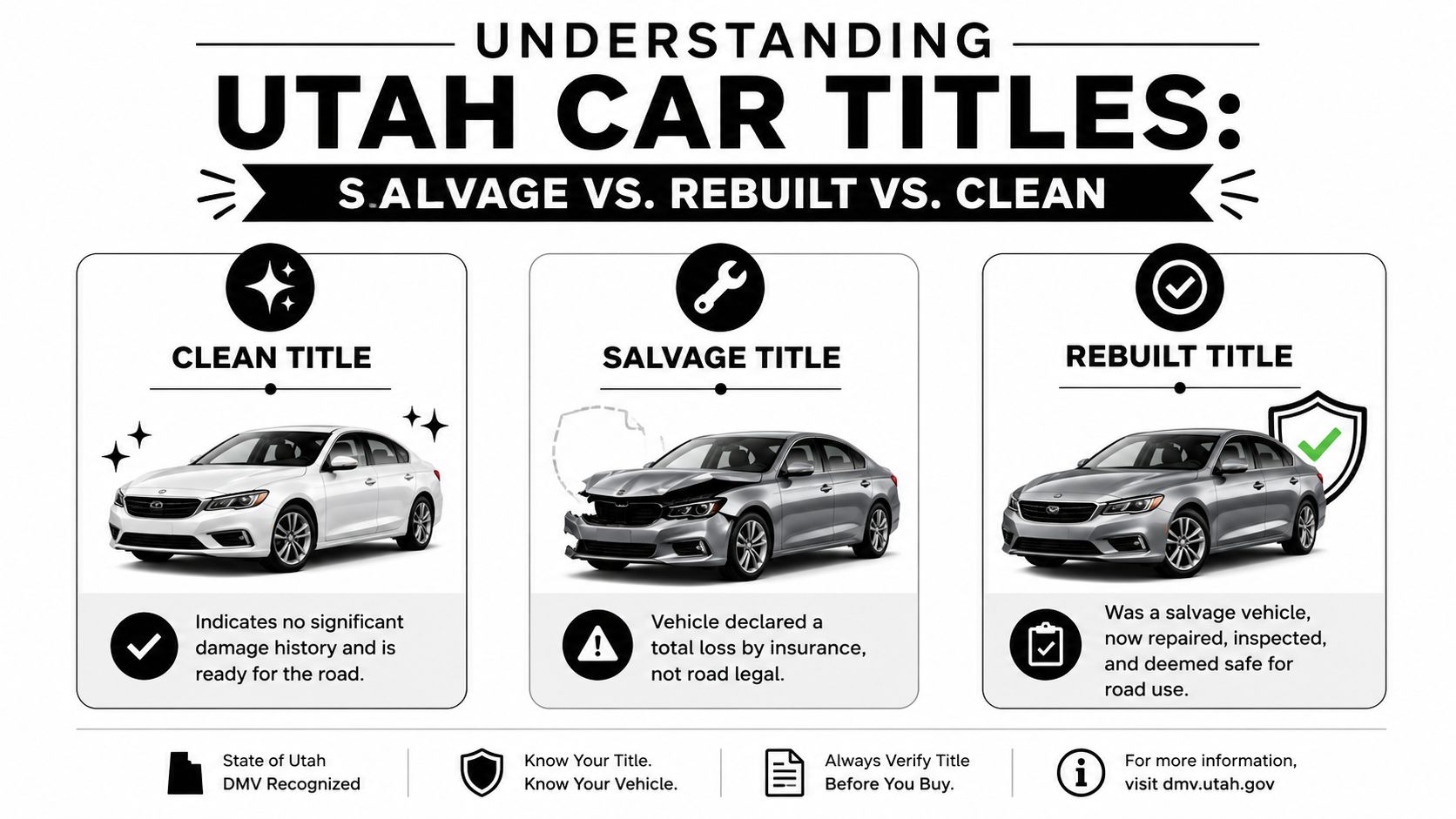
Utah ties the salvage brand to repair cost. A vehicle can be branded salvage when the cost to repair it rises past 70% of its pre-accident actual cash value, while insurance carriers may still treat it as a total loss at 80% ACV before the title record is updated. That timing gap matters because the insurer's file and the state title record do not always change on the same day.
For a car owner, that gap is more than paperwork. It affects settlement talks, whether to keep the vehicle, and how much value survives after the loss. A branded title can reduce buyer confidence the way a visible frame repair changes a home appraisal, the structure may still function, but the market reads it differently. That is why owners who want to protect resale value, lender rights, or import paperwork often need to verify clean title cars for import before they compare offers or accept a settlement.
The three title types side by side
| Utah Vehicle Title Comparison | Clean Title | Salvage Title | Rebuilt Title |
|---|---|---|---|
| Status | No major branded damage history | Branded after qualifying loss | Previously salvage, then repaired and inspected |
| Road use | Ready for normal use | Not road-legal as a regular repaired vehicle | Road-legal after inspection and approval |
| Value impact | Highest market confidence | Heavily discounted | Still discounted from clean-title market |
| History | Best case for buyers | Permanent brand stays with the vehicle | Brand remains in the history record |
| Buyer caution | Standard used-car review | Must verify history carefully | Must review repair records and inspection proof |
The part many owners miss is permanence. Once a vehicle carries a salvage brand, that designation stays attached through later repairs and resale history. State records and NMVTIS checks help buyers and sellers see the same story before money changes hands. If you want a plain-language breakdown of how the branding process works, the salvage title process overview gives useful context for the steps that usually follow a total loss.
A clean title remains the benchmark because it carries the least friction in the market. It generally gives lenders, buyers, and sellers fewer questions to answer, while branded titles require more proof and usually more discounting.
Your Step-by-Step Guide to a Rebuilt Title
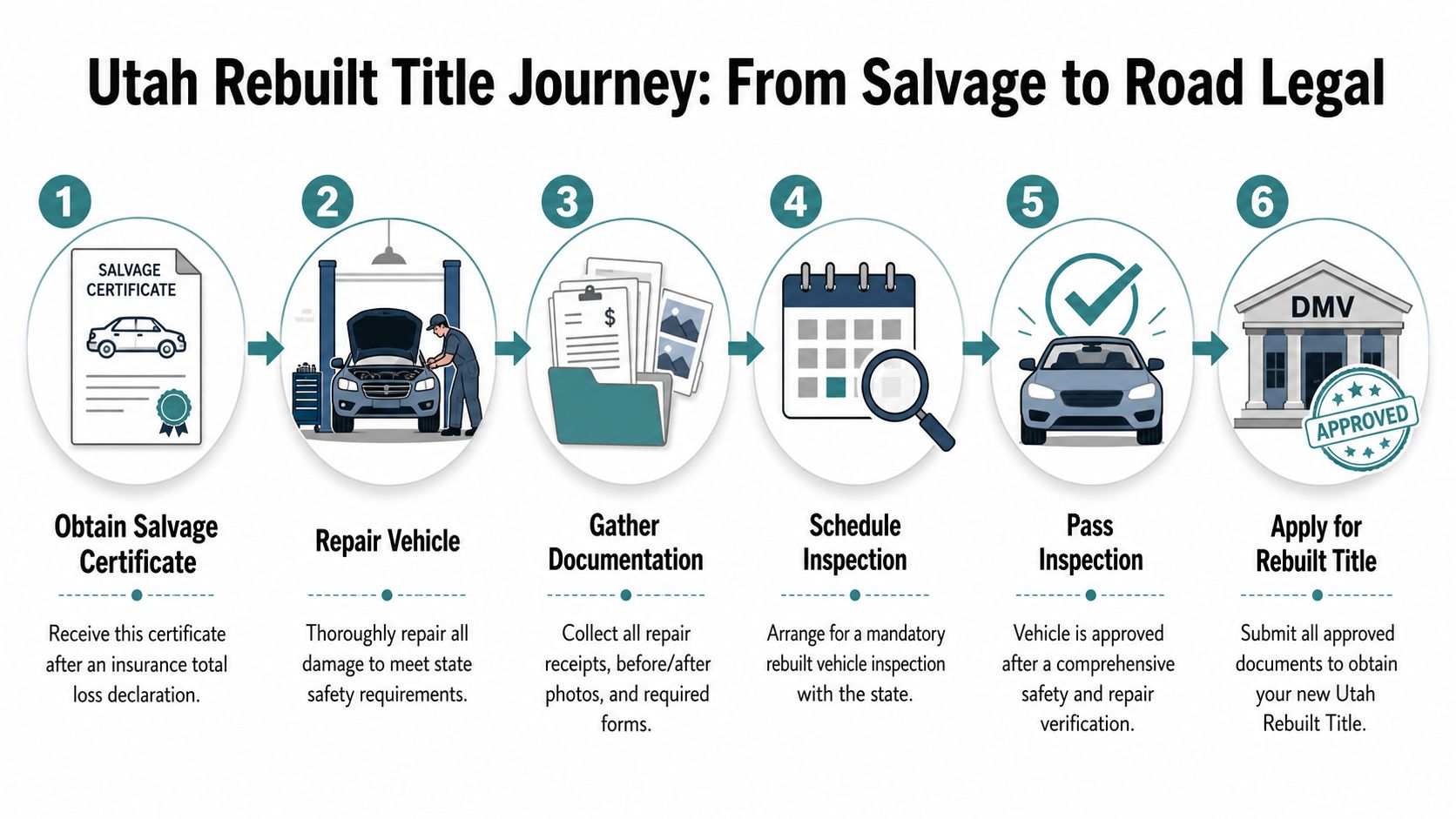
A rebuilt title is not a fresh start. It is the end point of a documented process that shows the vehicle was damaged, repaired, inspected, and approved for road use. In Utah, that process matters because the state is not just checking whether the car looks presentable again. It is checking whether the repair history is clear enough for the next owner, insurer, or lender to trust.
Start with eligibility, not enthusiasm
The first question is whether the vehicle is even eligible for the rebuilt path. Utah requires a certified vehicle inspector to look at the car before any repairs, and the vehicle cannot have major damage in more than one major component part Utah Admin. Code R873-22M-22. Utah also treats major damage as damage that takes 10 or more labor hours to repair or replace, and the repair estimate has to be current, certified, and notarized, with the parts, materials, and labor needed to make the vehicle safe for use Utah Admin. Code R873-22M-22.
That rule matters because repairability is not only about the size of the bill. Two vehicles can look similar from the outside and still be treated differently depending on where the damage sits and how the loss is documented. Utah's major component framework includes the front body, passenger body, rear body, and, where applicable, the frame Utah Admin. Code R873-22M-22.
For a plain-language overview of how salvage vehicles move into this process, the Utah salvage title process guidance is a useful place to start. It helps connect the legal requirements to the question owners usually have, whether the car can be repaired in a way that still protects its value and future saleability.
Repair with the inspection record in mind
Once the inspection timing is set, the repair phase becomes part hands-on work, part recordkeeping. Keep receipts for parts, keep before-and-after photos, and save every written estimate. The rebuilt application is not only about showing that the car looks sound again. It is about showing a traceable repair history that matches the state's requirements.
A good paper trail also helps when the car's value is later questioned. Buyers tend to focus on the visible repairs, while insurers and lenders look for proof that the work was documented from the beginning. When those records line up, the vehicle is easier to explain and easier to defend in a negotiation.
Submit only after the vehicle is clean on paper
The final step is the application itself. If the inspection passes and the paperwork matches the vehicle, the rebuilt title request goes to the DMV for processing. That is the point where the car stops being a project in progress and becomes a branded vehicle with a record that can be checked by future buyers.
Utah's system keeps the history visible on purpose. That protects buyers from hidden damage, and it also protects sellers who can show exactly what was repaired, what was inspected, and what was approved.
Paperwork and Fees for the Utah DMV
DMV paperwork feels tedious until you miss one document and have to start over. With a rebuilt title, the file has to show that the car was lawfully branded, repaired, inspected, and approved, not just cosmetically restored.
The core checklist usually includes the application for a Utah title, the inspection certificate, the original salvage paperwork, bills of sale for major component parts, and notarized repair statements. If the car used donor parts, you want those records organized the same way you'd organize closing documents for a home sale, because every missing page invites delay.
Keep the file clean and chronological
The strongest packet is the one that tells a story in order. Start with the salvage brand, then the pre-repair inspection, then the repair records, then the inspection result, and finally the rebuilt title application. If the sequence is scrambled, the DMV reviewer has to do extra work, and extra work usually means extra time.
For form references and filing support, the salvage vehicle registration process gives a useful consumer-facing overview of how branded vehicles move through the state system. Use it as a planning aid, not a substitute for the official Utah DMV instructions.
Paperwork tip: if a part matters to safety, assume the DMV may want proof of where it came from and how it was installed.
Fees can include the title fee, inspection-related costs, and any taxes that apply to the transaction. Utah's own published fee schedule should be checked before filing, because this is the sort of detail that changes the economics of whether rebuilding makes sense at all. The same is true of timing, a well-prepared file moves faster than an incomplete one, but no honest reviewer can promise a clean clock on a branded-title submission.
The strategic question is whether the time and paperwork are justified by the final value of the car. For some owners, they are. For others, the rebuilt path costs too much time and effort relative to what the car will be worth when it re-enters the market.
How a Salvage Brand Impacts Value and Insurance
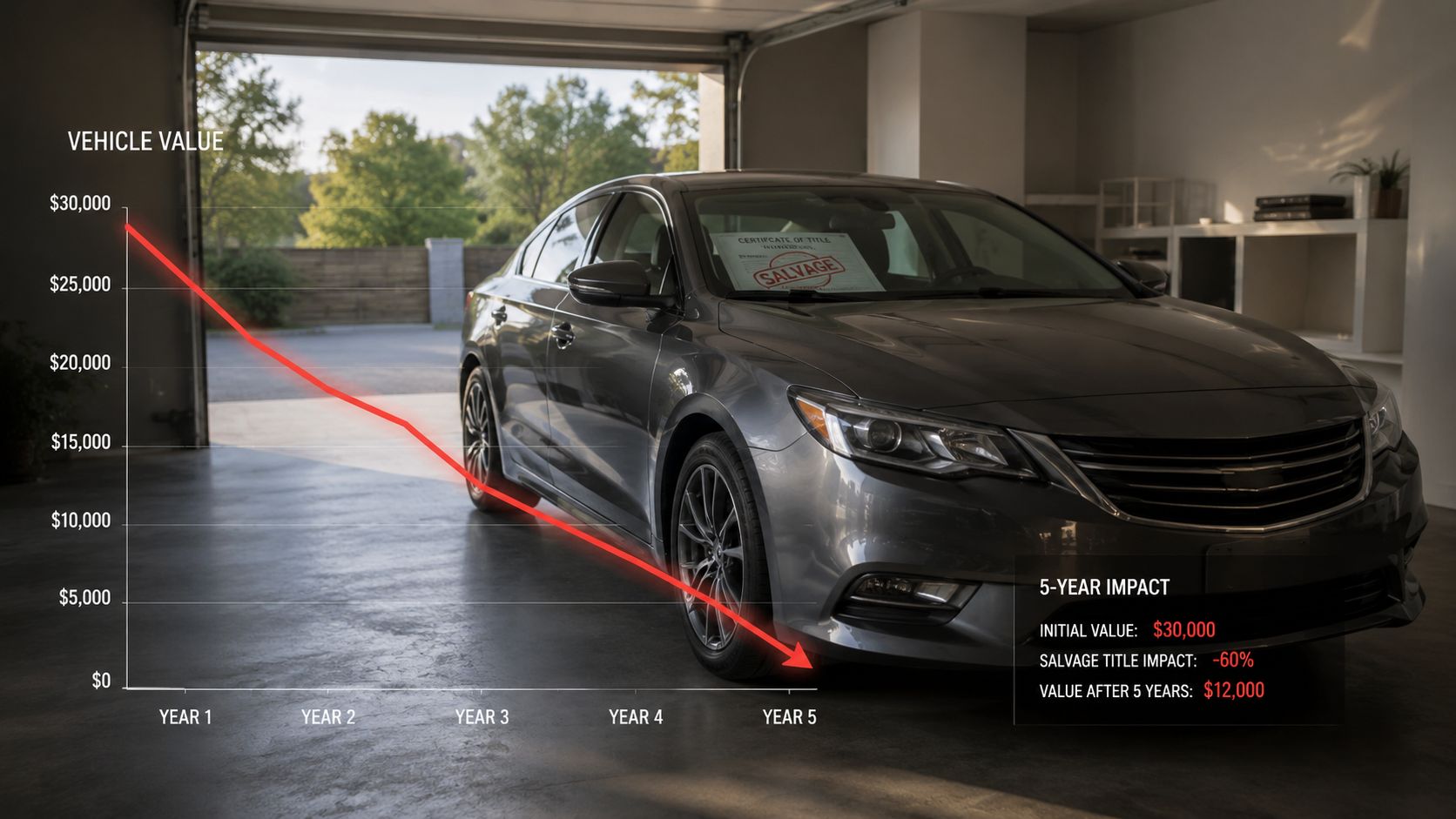
A salvage brand changes the economics of a car long before anyone starts talking about repairs. Buyers see it as a warning label, and the market responds the same way, with a steep drop in resale value compared with a clean-title vehicle. Even after professional repairs and a Rebuilt title, the car usually remains worth less because the brand stays attached to the history, much like a stain on a record that never fully disappears.
The title brand changes the buyer pool
A clean-title car and a branded car do not compete in the same market. A salvage or rebuilt vehicle attracts buyers who are willing to inspect history closely, accept more risk, and discount the asking price to account for unknowns. That narrower buyer pool is a big reason the price falls so sharply, even when the repairs were done carefully.
Insurance can narrow the field in the same way. Some carriers will insure a rebuilt vehicle with limits, while others may be reluctant to offer broad coverage because the car's past makes the risk harder to price. Financing can also become more difficult, since lenders often prefer collateral that does not carry a branding history.
The practical lesson is simple. A rebuilt title can still put a car back on the road, but it does not reset the car's financial story. Buyers, insurers, and lenders keep reading the title history, and they price the vehicle with that history in mind.
Think about ownership as a long-term balance sheet
The decision is rarely just repair cost. It is repair cost, the likely resale hit, and the added friction of insurance or financing once the car returns to the market. That is why one owner may decide the settlement is the cleaner exit, while another may choose to rebuild if the car is worth keeping for a long time.
The cheapest repair on paper is not always the cheapest ownership decision.
For a closer look at how early valuation choices affect the outcome, an independent salvage value assessment can help you compare the settlement, the repair path, and the vehicle's likely post-brand value before the title status becomes permanent.
Tips for Buying or Selling a Rebuilt Vehicle
A rebuilt vehicle can be a fair transaction, but only when both sides understand what the car is and what happened to it before the title changed. For a buyer, the first job is to verify the history before the price starts to look attractive. For a seller, the first job is to disclose the brand and show proof of the repairs, or a normal sale can turn into a dispute over trust.

Buyers should verify first, negotiate second
Start with the title history, then inspect the car itself. A branded title follows the vehicle like a permanent notation in the file, so the paper trail matters before shiny paint or a low asking price can distract you. If the seller cannot produce repair documentation, treat that as a warning sign even if the car presents well at first glance.
Look for mismatched body panels, uneven paint, rough underbody work, or a story that changes when you ask about the original damage. Ask which parts were replaced, who completed the repairs, and whether the vehicle passed the required inspection. A seller who answers clearly usually has the records to match, and that matters because the paperwork is often the best evidence that the car was repaired with care rather than hurried back onto the market.
Sellers win trust by showing their work
If you are selling a rebuilt vehicle, disclosure is your protection. A buyer who can review the inspection certificate, repair order, and receipts is less likely to assume the worst. That folder of records does more than support your asking price, it also reduces the chance that the buyer feels blindsided after the sale.
The repair history should be presented like a file, not a loose stack of papers. Put the title brand, inspection paperwork, and major repair invoices in order so the buyer can trace the vehicle's comeback from start to finish. That kind of organization signals that the car's past has been handled properly, which can matter as much as the condition of the car itself.
If the buyer wants a closer look at the car's condition, a good mechanic can review it again. That extra confidence often matters more than a polished ad or a hard sales pitch, because a rebuilt title is never just a cosmetic label. It affects how the buyer thinks about value, how much risk they are willing to accept, and how much room there is to negotiate.
Utah Salvage Title FAQs
Can I legally drive a car with a salvage title on Utah roads?
A salvage-branded car is not treated as a normal road-legal vehicle in that condition. It has to go through repairs, inspection, and the rebuilt-title process before it can return to regular use, as noted earlier in the state rules.
How long does the rebuilt title process usually take?
There is no single timeline that fits every case. The pace depends on how fast parts can be found, how complete the paperwork is, and whether the vehicle passes inspection the first time.
Can I dispute my insurer's total loss valuation if it seems too low?
Yes, and it is often smart to do so if the settlement does not reflect the car's real market position. The strongest response uses repair history, comparable vehicles, and an independent appraisal, not just frustration with the number on the offer.
Should I rebuild every totaled car I can keep?
No. Sometimes the title brand removes too much value, or the repairs are too involved for the result to make financial sense. The right choice depends on the car's pre-loss value, the shape of the damage, and how you plan to use the vehicle after it is repaired.
If you are facing a total loss settlement or trying to understand what a branded title does to your payout, Total Loss Northwest can help you challenge the offer with an independent appraisal centered on real market value. Visit Total Loss Northwest for help with a total loss claim, a valuation dispute, or a branded-title situation before you accept a payout that leaves money on the table.